




Safety Tip: Responding to a Traffic Stop
The Massachusetts Registry of Motor Vehicles offers advice on what to do when a police officer pulls over your vehicle.
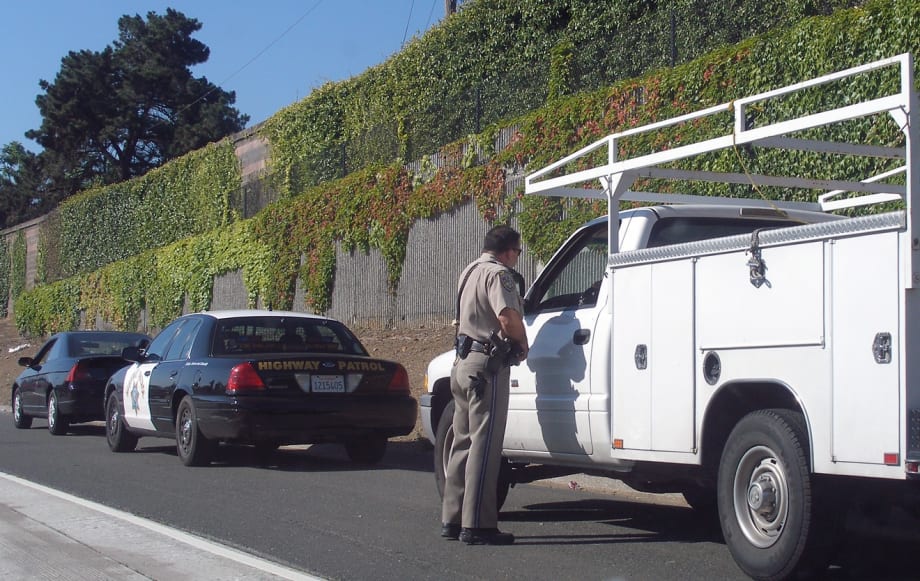
Photo by Coolcaesar at English language Wikipedia (via Wikimedia Commons).
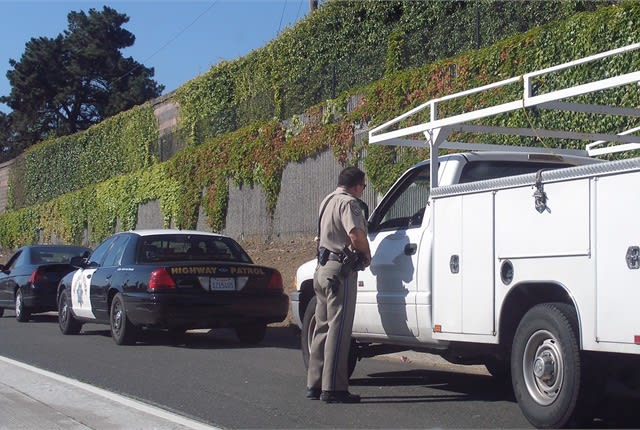
Photo by Coolcaesar at English language Wikipedia (via Wikimedia Commons).
When a law enforcement officer pulls your vehicle over for a traffic stop, the experience can be stressful. It's important for your own safety, however, to maintain control of your emotions so the officer never feels threatened. Here’s advice from the Massachusetts Registry of Motor Vehicles:
Don’t ignore the officer’s signal or pretend you didn’t see it.
Turn on your right-turn signal and check your mirrors. Carefully and slowly move your vehicle completely to the right side of the road. If the officer drives by and doesn’t stop, return to the travel lane when it is safe.
Do not stop your vehicle in an intersection, in front of a driveway, or in a travel lane. If the officer directs you to pull over in a certain place, pull over where directed.
Put the vehicle in park (if an automatic transmission) or in neutral with the parking brake on (if a standard transmission). Turn off the engine.
Stay in the vehicle (both you and your passengers). Only get out if you are instructed to by the officer.
If it is dark, leave your headlights on and put the interior overhead light on.
Roll down your window as the officer walks toward you.
Wait until the officer asks for your license and registration before reaching into your pockets or into the glove compartment. While you know you are only reaching for the appropriate documents, your movements may be reasonably seen by the officer as an attempt to reach for a weapon or to hide something. The officer may feel threatened and may react in a manner that you do not expect. Hand the documents to the officer when requested and do not present the documents in a wallet or holder.
Keep your hands in plain sight and tell your passengers to do the same.
Do not make any sudden movements or gestures that could seem threatening. Examples of this could be reaching under the seats or into unlit areas of the vehicle. Make sure your passengers do not do this either.
Stay in your vehicle when the officer goes back to the police car. If you have a question, wait until the officer returns. If you find something the officer requested, hold it out the window and wait for the officer to return.
Be polite when the officer returns your license and registration. If the officer gives you a ticket, do not argue. Once a citation is issued, the officer is required to file it and cannot take it back. You have the right to challenge the citation in court.
When the officer tells you that you can go, put on your left-turn signal, check your mirrors, and return to the travel lane. If you are on a highway, accelerate to a safe speed in the breakdown lane before merging into traffic.
If you believe that you were stopped by a police officer because of your race or your gender, you may report this by contacting the police department or law enforcement agency of the officer who stopped you.
Originally posted on Automotive Fleet
More Safety & Compliance
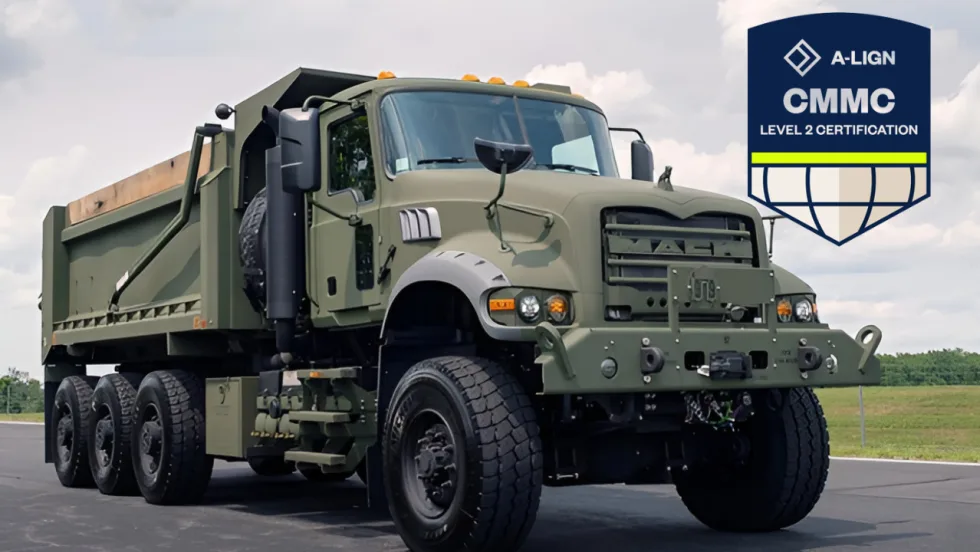
Mack Defense Achieves Cybersecurity Maturity Model Certification Level 2
After an assessment conducted by an authorized Certified Third-Party Assessment Organization (C3PAO), Mack Defense has achieved Cybersecurity Maturity Model Certification (CMMC) Level 2.
Read More →
When Work Trucks Under 26,001 Pounds Need IRP Registration
Think trucks under 26,001 pounds are automatically in the clear when it comes to IRP? Not always. Learn where lighter vehicles can still run into trip permit, apportioned registration, and IFTA compliance requirements when crossing state or provincial lines.
Read More →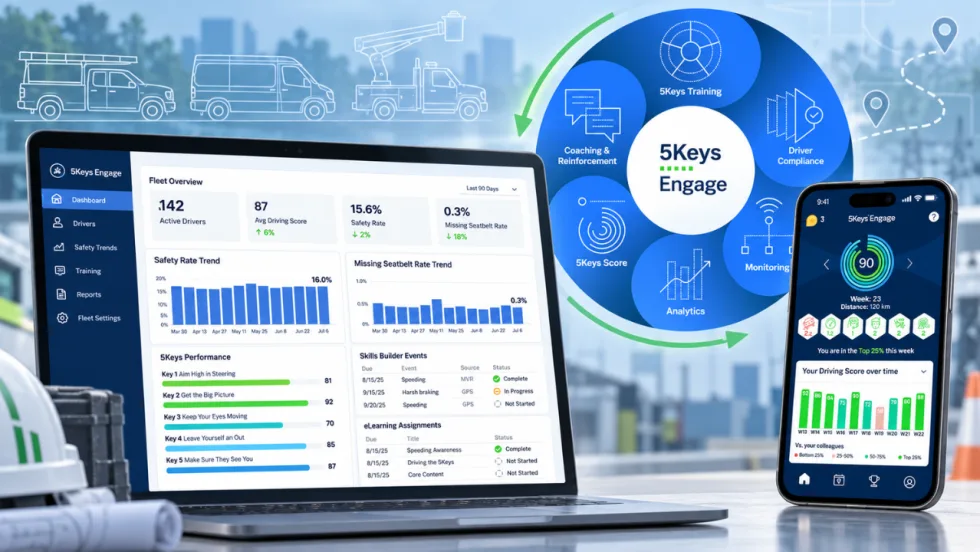
Smith System Wants Work Truck Fleets to Look Beyond the Driver Alert
Smith System’s new Driver Risk Management program is built to help mixed work truck fleets turn telematics alerts and observations into specific behaviors, coaching actions, and measurable follow-up.
Read More →

Volvo Trucks Releases New Safety Recommendations for Traveling with Pets
One of the most important recommendations for professional drivers traveling with pets is to ensure pets are properly restrained while the truck is moving. Other tips are available in the new guide from Volvo Trucks North America and Center for Pet Safety.
Read More →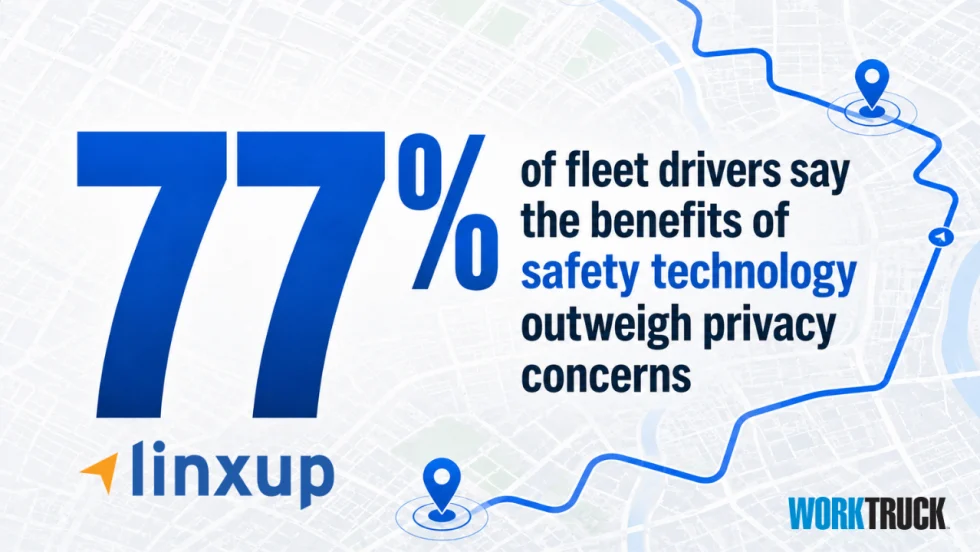
Are Work Truck Drivers Warming Up to Dash Cams and GPS Tracking?
A new survey finds field-service drivers may be more comfortable with dash cams and GPS tracking than fleet managers think, especially when the technology helps protect them after a crash.
Read More →
Recalls You Need to Know About in August 2026
If you have Altec, Chrysler, Ford, Heil, General Motors, International, Mack Trucks, Paccar, Rivian, Royal Truck, Toyota, US Truck Body, or Volvo Trucks vehicles in your fleet, you should check these important recalls issued by the National Highway Safety Administration.
Read More →
API Issues Refueling Safety Guidelines
The American Petroleum Institute offers a list of safe vehicle refueling guidelines, including ways to avoid potential problems with static electricity discharges in fall, winter, and early spring.
Read More →
Winter Fleet Prep: Expert Tips to Keep Vehicles Running Smoothly
Cold weather can expose weak batteries, tires, fuel systems, and maintenance gaps fast. Use this winter fleet checklist to prepare trucks and drivers before temperatures drop.
Read More →
When a Work Truck Breaks Down, the Job Can Stop, Too
A work truck breakdown can stop more than the vehicle. Discover how payloads, jobsites, and specialty equipment change the roadside response.
Read More →
What Stronger Long-Term Fleet Service Partnerships Actually Require
Fleet service partnerships rarely fall apart all at once. Learn the three warning signs that trust is eroding and what fleets and providers can do before downtime, frustration, and lost revenue follow.
Read More →