




Safety Tip: Preventing Drowsy Driving
A new report from NHTSA stresses the need to better educate American drivers about the dangers of driving when sleep-deprived.

Infographic courtesy of AAA Foundation. Source of data: CDC.
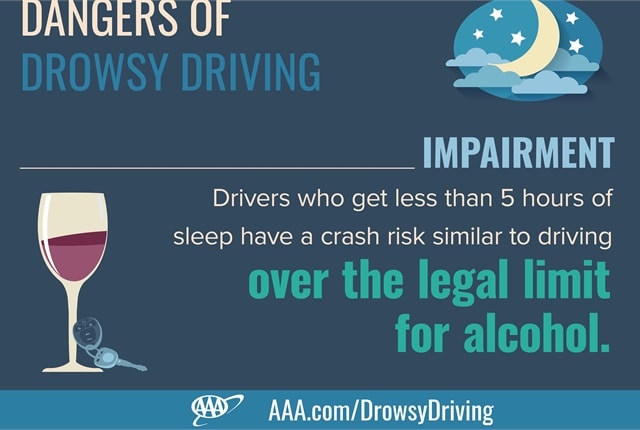
Infographic courtesy of AAA Foundation. Source of data: CDC.
The problem of drowsy driving is responsible for an estimated 16.5% of fatal crashes. But the driving public at large still hasn’t fully grasped the risks associated with getting too little sleep before driving.
Consider these two scenarios: A department manager has a few drinks at the office Christmas party and is too buzzed to drive. His colleagues make sure he gets a ride home. But are those same coworkers as willing to intervene if he pulls an office all-nighter to meet a tight deadline and starts to head for the parking lot? Maybe not.
The truth is, sleep-deprived drivers can be just as dangerous as drunken drivers. Fatigue impairs both cognition and driving performance, just as alcohol does. Sleep deprivation can lead to falling asleep at the wheel and to “microsleeps,” during which the driver’s head repeatedly drops down for a few seconds at a time.
Drowsy driving crashes usually involve well-meaning, sleep-deprived drivers who convince themselves they can fight through the fatigue and will themselves to stay awake and alert. Despite their best efforts, they nod off anyway because the rules of biology take over.
The fight against drowsy driving requires a cultural shift in how people view their responsibility to get enough sleep before they ever get behind the wheel, safety advocates argue. Adults ages 18 to 64 need seven to nine hours of sleep each day, according to the National Sleep Foundation. Adults 65 and older need seven to eight hours.
“Addressing these issues can be difficult when our values frequently do not align with avoiding drowsy driving,” a new NHTSA report on drowsy driving stated. “In a 24/7 society, with an emphasis on work, longer commutes, and exponential advancement of technology, many people do not get the sleep they need. Effectively dealing with the drowsy-driving problem requires fundamental changes to societal norms and especially attitudes about drowsy driving.”
To better combat the problem, the NHTSA report advocates for expanding and sharing crash risk research using various methodologies, improving crash reporting, documenting the economic impact of drowsy driving, and researching and developing new methods for detecting fatigue and sleep restriction.
Additionally, the federal agency recommends evaluating the effectiveness of new and existing laws, evaluating the effectiveness of corporate fatigue-management practices, developing fatigue risk management programs for high-risk professions, exploring the potential of graduated driver licensing laws for reducing drowsy driving, facilitating regular engagement of the sleep science community with corporations and the insurance industry, and providing technical assistance for state policy and program actions.
NHTSA is also working with automotive manufacturers, suppliers and aftermarket producers to advance development of drowsy driving detection systems. (To view a video news segment about the NHTSA report, click on the image or link below the headline.)
In the meantime, here are some drowsy driving-prevention tips from AAA Exchange that you can pass along to fleet drivers as a friendly reminder:
Get enough sleep the night before a long trip.
Travel at times when you’re normally awake. Stay overnight rather than drive straight through.
Schedule a break every two hours or every 100 miles.
Stop driving if you become sleepy.
Never plan to work all day and then drive all night.
Drink a caffeinated beverage. Since it takes about 30 minutes for caffeine to enter the bloodstream, find a safe place to take a 20- to 30-minute nap while you’re waiting for the caffeine to take effect.
Avoid driving during sleepy times of day, particularly between midnight and 6 a.m.
Travel with a passenger who’s awake, when possible.
Originally posted on Automotive Fleet
More Safety & Compliance

When Work Trucks Under 26,001 Pounds Need IRP Registration
Think trucks under 26,001 pounds are automatically in the clear when it comes to IRP? Not always. Learn where lighter vehicles can still run into trip permit, apportioned registration, and IFTA compliance requirements when crossing state or provincial lines.
Read More →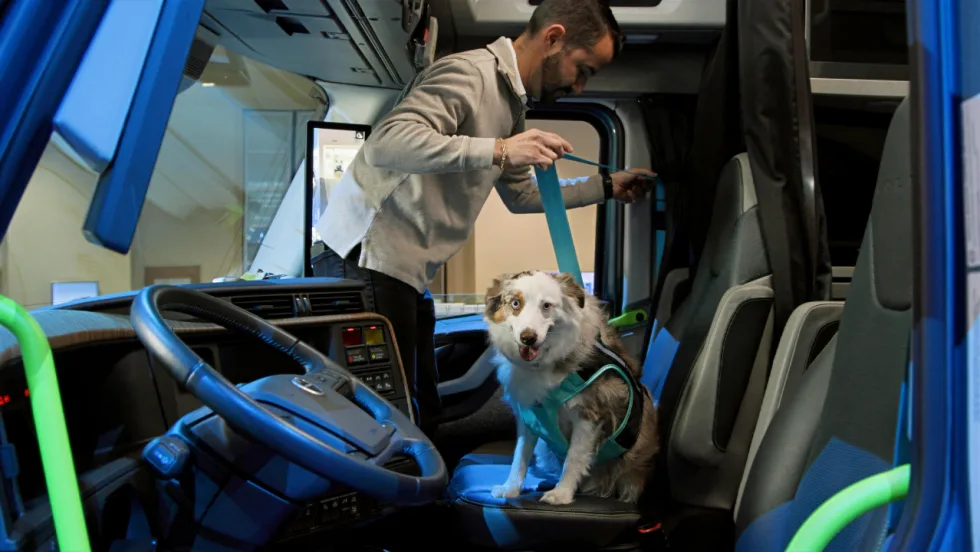
Volvo Trucks Releases New Safety Recommendations for Traveling with Pets
One of the most important recommendations for professional drivers traveling with pets is to ensure pets are properly restrained while the truck is moving. Other tips are available in the new guide from Volvo Trucks North America and Center for Pet Safety.
Read More →
API Issues Refueling Safety Guidelines
The American Petroleum Institute offers a list of safe vehicle refueling guidelines, including ways to avoid potential problems with static electricity discharges in fall, winter, and early spring.
Read More →


Winter Fleet Prep: Expert Tips to Keep Vehicles Running Smoothly
Cold weather can expose weak batteries, tires, fuel systems, and maintenance gaps fast. Use this winter fleet checklist to prepare trucks and drivers before temperatures drop.
Read More →
When a Work Truck Breaks Down, the Job Can Stop, Too
A work truck breakdown can stop more than the vehicle. Discover how payloads, jobsites, and specialty equipment change the roadside response.
Read More →
What Stronger Long-Term Fleet Service Partnerships Actually Require
Fleet service partnerships rarely fall apart all at once. Learn the three warning signs that trust is eroding and what fleets and providers can do before downtime, frustration, and lost revenue follow.
Read More →
Applause & TRUCE Software Partner to Improve Driver Safety Through AI-Powered Telematics & Employee Performance Management
Applause has integrated TRUCE driving metrics directly into its employee-first performance and safety platform that transforms mobile devices into AI-powered telematics.
Read More →
How Detroit Assurance with Active Brake Assist Works
Do you want to see what it is like to experience Detroit Assurance’s Active Brake Assist? In this video, Work Truck will put you in the cab to see how it all works and then hear more details from DTNA’s Mike Young.
Read More →
Get Left of Loss: A 5-Step Workplace Violence Prevention Framework for Fleet Operators
Violence risks do not stop at the driver’s door. Learn five practical steps fleets can take to spot threats early and protect workers before loss occurs.
Read More →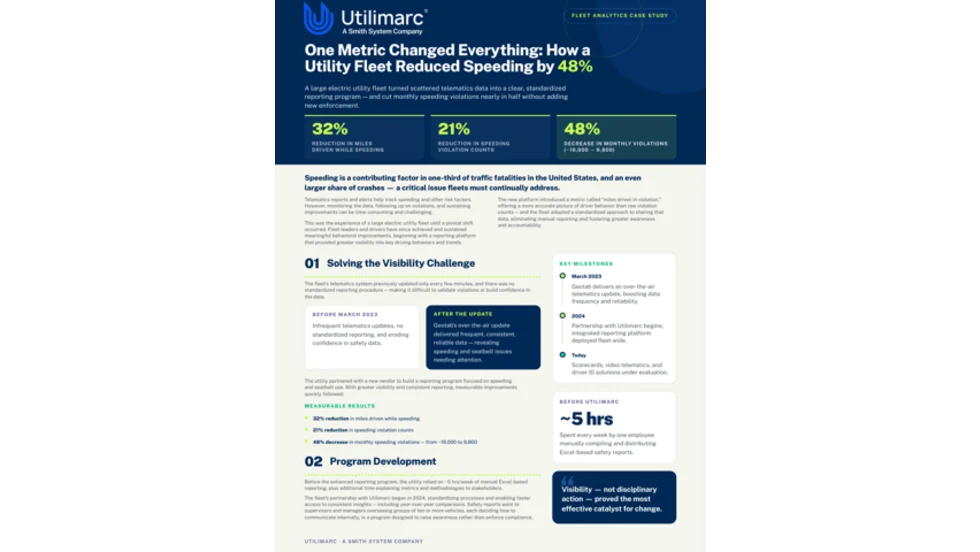
How Better Visibility Cut Speeding Violations by 48%
Fleet leaders don't need more data, they need clearer visibility into what the data is saying. This case study explores how one utility replaced speeding-event counts with a single metric — miles driven in violation — to strengthen safety and significantly reduce speeding violations.
Read More →