




PG&E Reaps the Rewards of Fleet Electrification
San Francisco-based Pacific Gas & Electric Company (PG&E) unveiled the environmental benefits and cost-savings from its fleet electrification efforts.
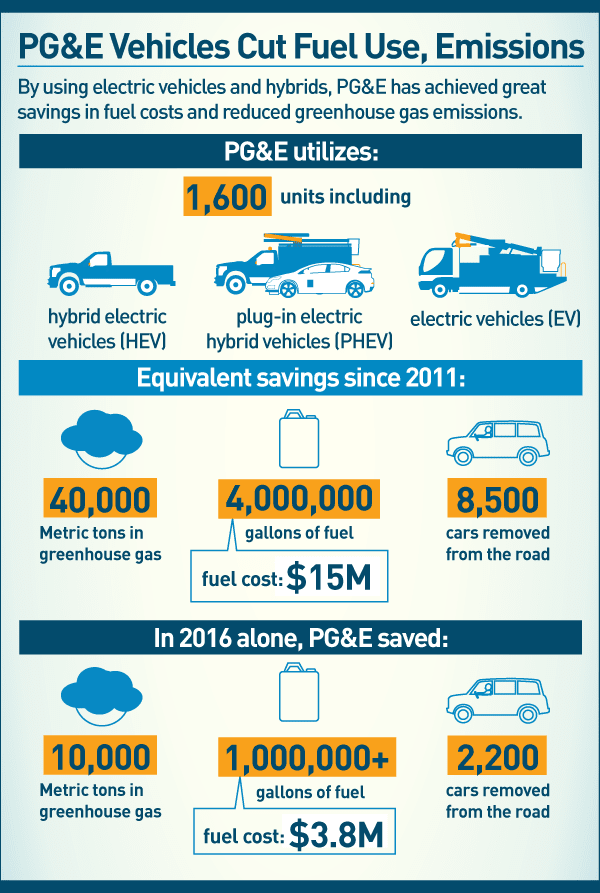
Infographic courtesy of PG&E
San Francisco-based Pacific Gas & Electric Company (PG&E) has seen many environmental benefits and cost-savings from its fleet electrification efforts.
PG&E has long been an innovator in adopting alternative fuel technologies into its fleet of nearly 14,000 vehicles. As of 2017, over 30% of its units are alternative fuel vehicles, including natural gas, hybrid-electric vehicles (HEV), battery-electric vehicles (BEV), and plug-in hybrid-electric vehicles (PHEVs). However, in recent years, the utility has changed its focus to adding more PHEVs and bucket trucks with electric power takeoff (ePTO) technology.
The end result of an aggressive fleet electrification approach has yielded major reductions in greenhouse gas (GHG) emissions from its fleet and equally impressive savings in fuel costs. In fact, through the deployment of over 1,600 EVs, HEVs, and PHEVs, the company has reduced its fleet emissions by nearly 40,000 metric tons since 2011, equivalent to taking almost 8,500 conventional fuel vehicles off the road for one year. In 2016 alone, PG&E saw a reduction of over 10,000 metric tons in GHG emissions, equal to taking approximately 2,200 gas powered vehicles off the road for one year.
The cost savings associated with the company’s electrified fleet have been equally impressive. For the same period of time, PG&E has saved over $15 million in fuel costs by displacing nearly four million gallons of diesel and gasoline. In 2016 alone, the utility reduced fuel costs by $3.8 million through its innovative approach to fleet electrification.
“We’ve seen impressive cost savings not only through the reduced fuel consumption from utilizing plug-in electric vehicle technology, but also significant savings in maintenance costs due to the simplicity of design that electric and electric hybrid drivetrains offer,” said Dave Meisel, senior director of transportation and aviation services for PG&E.
The Approach
When it comes to vehicle electrification, there is no one-size-fits-all solution when it comes to a territory that stretches from just north of Los Angeles to the Oregon border. Given that pure BEVs would not be practical in all applications given the company’s need to be able to respond 24/7 to provide safe and reliable service to its nearly 16 million customers, PG&E pioneered several technologies to help meet its operational goals.
ePTO Technology
One such application is the development and deployment bucket trucks equipped with electric power take-off (ePTO). PG&E, in partnership with Altec Industries, pioneered the development of these advanced vehicles and first deployed them in their operations in 2011. These vehicles utilize a series of on-board batteries to allow crews to operate the bucket and other onboard equipment without having to idle the engine. Through the broad implementation of ePTO technology alone, the utility has displaced over 2.6 million gallons of fuel, saving nearly $10 million dollars. PG&E currently operates 906 ePTO-equipped bucket trucks.
In addition to the resulting fuel savings, ePTO technology offers improved jobsite safety, since crews do not have to communicate over noisy, idling diesel engines. The quiet operation of these vehicles also allows PG&E to work around the clock to help shorten outages, which would not have previously been feasible in some areas due to noise concerns.
PHEV Technology and Exportable Power
PHEV technology has proven to be a sweet spot when it comes to vehicle electrification for the utility. PG&E has aggressively pursued vehicle electrification across a number of operational uses, including employee pool cars, off-road and warehouse equipment, and even Class 5 through Class 8 vehicles. But, when it comes to fleet electrification, PHEV technology has the broadest application when it comes to operational needs. While PG&E has been utilizing PHEV light-duty vehicles for over a decade, more recently the utility turned its attention to the higher end of the weight scale when it was the first utility in the nation to deploy Class 5 and Class 6 PHEV bucket trucks and work trucks, which were developed in partnership with Efficient Drivetrains, Incorporated, a Silicon Valley-based electric vehicle manufacturer. These vehicles were also the first to provide utility-grade exportable power, with a capacity of 120kW, enough to power over 80% of the transformers in its service area, or to keep the lights on in up to 100 homes during planned and unplanned outages.
“While we will continue to explore all available vehicle technologies when it comes to ‘greening’ our fleet, the benefits of plug-in electric vehicle technology not only help us save fuel and protect the air we all breathe, but also help us to provide safe, affordable, reliable and clean power to our customers. In fact, we are now deploying exportable power PHEVs that will help us shorten unplanned outages and could help make planned outages a thing of the past,” said Meisel.
PG&E operates the greenest utility fleet in the industry, with nearly 3,500 alternative fuel vehicles, including over 1,600 electric and electric hybrid units.
Editor's note: Jason King is a senior corporate relations representative with Pacific Gas & Electric.
More Utility Fleet
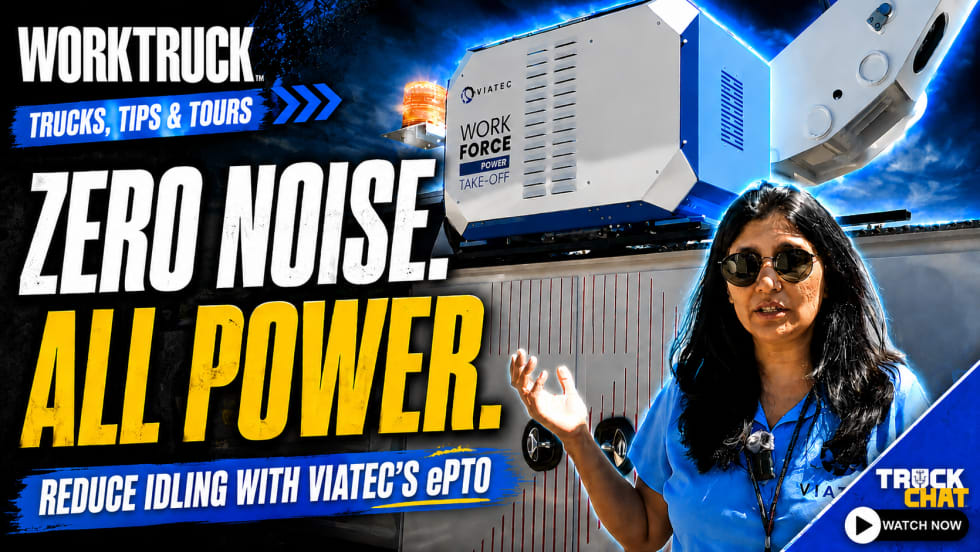
Reduce Noise & Idling with Viatec’s ePTO
Viatec's Workforce ePTO lets utility trucks power booms, outriggers, and auxiliary equipment using battery power instead of idling the engine. Learn how this technology helps reduce fuel use, noise, engine wear, and emissions while improving operator comfort.
Read More →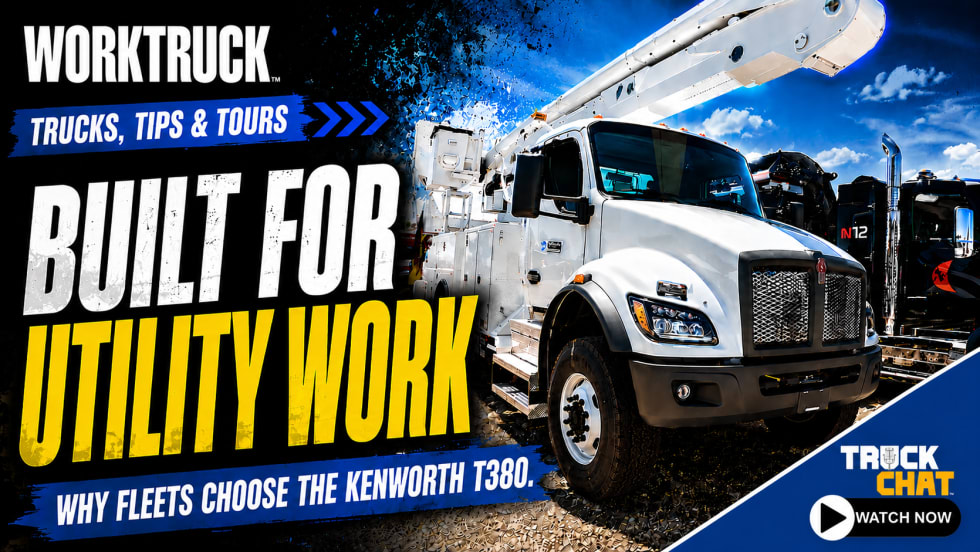
Why Utility Fleets Choose the Kenworth T380
The Kenworth T380 is engineered for utility fleets with custom chassis layouts, optimized frame rails, 4x4 capability, and improved driver visibility. See how its design helps maximize upfit flexibility and field performance.
Read More →
PALFINGER PB 38 AT P: Purpose-Built for Telecom Fleets
Purpose-built for telecommunications crews, the PALFINGER PB 38 ATP combines a 43-foot working height, flexible basket stowage, integrated cameras, and operator communication systems to improve productivity and safety during fiber and overhead cable installation.
Read More →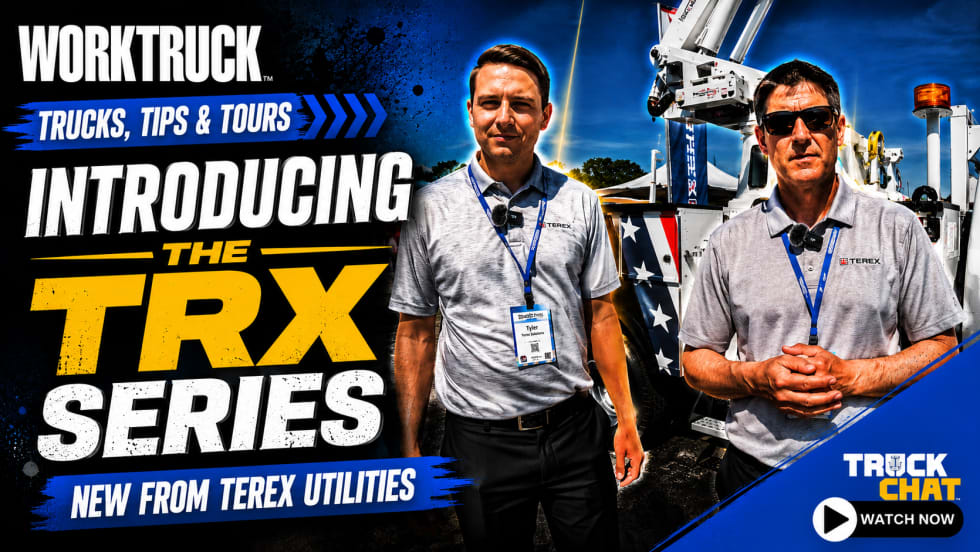
Inside Terex Utilities' Latest Work Truck Innovations
Terex Utilities is advancing utility fleet operations with its new TRX aerial platforms, Flex Pro controls, and AI-powered 3rd Eye safety technology. See how these innovations are helping fleets work safer, smarter, and more productively.
Read More →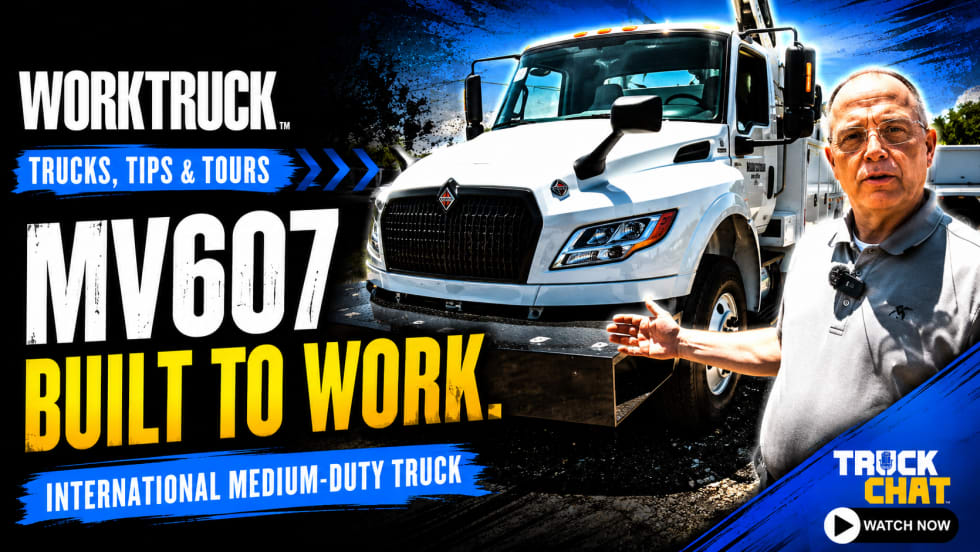
Walkaround of International MV607 Digger Derrick
The International MV607 combines advanced safety technologies, excellent visibility, vocational flexibility, and seamless body integration to create a powerful platform for utility fleet operations. Take a closer look at this Altec digger derrick configuration from EUFMC.
Read More →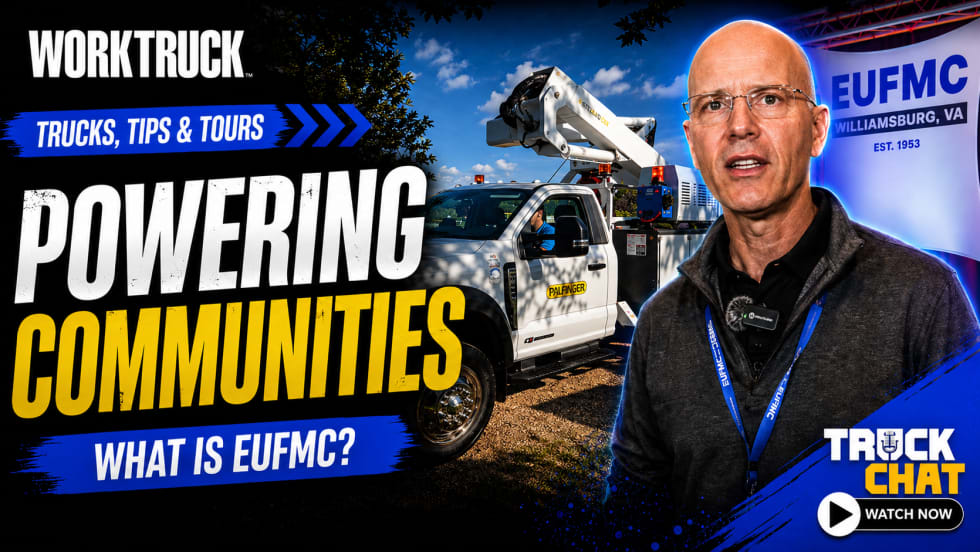
Inside the Electric Utility Fleet Managers Conference
What is EUFMC? For more than seven decades, the Electric Utility Fleet Managers Conference has served as a hub for collaboration, education, and innovation within the utility fleet industry. In this video, Work Truck talks to EUFMC President Greg Loew to learn more.
Read More →
Inside the EUFMC Equipment Expo & Drive-Through
Follow Work Truck as we check out the trucks and other vehicles that were showcased at the Electric Utility Fleet Managers Conference in Williamsburg, Virginia. Whether looking for something on tires or treads, it was there for fleet managers to see.
Read More →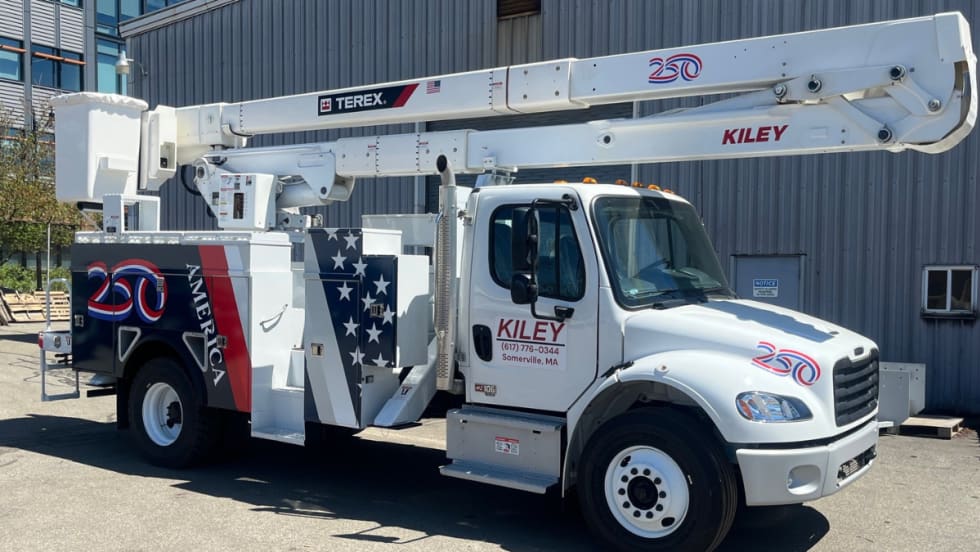
Terex Utilities & Kiley Unveil Custom America 250 Bucket Trucks at EUFMC 2026
Terex Utilities showcased a patriotic spirit in its booth this week during the Electric Utility Fleet Managers Conference in Williamsburg, Virginia, by debuting two custom-wrapped bucket trucks celebrating America’s upcoming 250th anniversary.
Read More →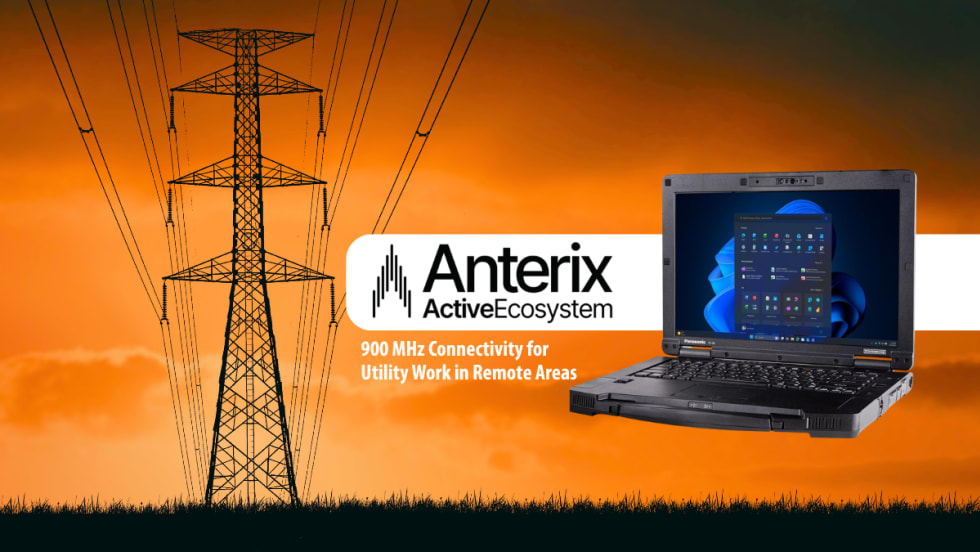
Panasonic Connect & Anterix Strengthen Connectivity Options for Utilities and Field Workers
The Panasonic Connect Toughbook 56 is the first Toughbook to earn the AnterixActive badge, which means it can connect to and operate on Anterix’s 900 MHz network even in the most remote locations.
Read More →
Streamlight Launches Portable Scene Light III & LiteBox 1Million
Streamlight has launched its Portable Scene Light III (PSL III), which delivers up to 10,000 lumens, and the LiteBox 1Million, a long-range search light that delivers one million candela.
Read More →