




NTSB Issues New Safety Recommendations for Commercial Vehicles
After investigating a 2020 multi-vehicle crash that included a motorcoach, three trucks and a passenger vehicle, the National Transportation Safety Board found that highway speed limits, commercial vehicle collision avoidance systems, connected technology, and more need to be addressed.


The NTSB found that although the second truck was equipped with collision-mitigation technology, a misaligned sensor rendered it inoperative.
Screen capture of NTSB virtual meeting

Speeding was linked to nearly 9,500 roadway deaths in 2019 alone. A 2020 multi-vehicle collision has safety experts re-evaluating ways to reduce crashes and fatalities.
Photo via pexels.com/Quintin Gellar
After investigating a 2020 multi-vehicle crash near Mt. Pleasant Township, Pennsylvania, the National Transportation Safety Board issued three new safety recommendations impacting commercial vehicles.
The collision involved a motorcoach, three tractor-trailers, and a passenger vehicle. Five people were killed and 50 others were injured.
The NTSB determined that the motorcoach driver was at fault. The coach was traveling around a curve at night and in light snow. The board said the probable cause of the crash was the motorcoach driver’s loss of control due to traveling at an unsafe speed on the wet curve and the driver’s likely excessive steering inputs.
Ultimately, these factors caused the motorcoach to run off the road, strike an embankment, and roll over across the roadway, where two commercial trucks ran into it. The high initial and impact speed of the second truck also contributed to the severity of the crash, the NTSB found. In addition, a westbound car and another tractor-trailer drove off the road to avoid the wreckage and came to rest wedged side by side against each other. The motorcoach driver, two passengers, and the driver and co-driver of the second truck died in the crash. Forty-nine of the motorcoach passengers and the co-driver of the first truck were injured.
The NTSB found during its investigation the regulatory speed limit on the turnpike was 70 mph. An advisory speed sign of 55 mph, posted at the curve where the crash occurred, recommended that motorists reduce their speed before entering. The motorcoach driver entered the curve at 77 mph and struck the embankment at about 60 mph before overturning.
The first truck hit the motorcoach at a speed of about 21 mph, causing minor damage. The second truck crashed into the first truck and the motorcoach, causing catastrophic damage; its last recorded speed was 56 mph. All three trucks involved were equipped with forward collision avoidance systems. The system on the second truck was inoperative at the time of the crash because of a misalignment in the radar on which the system depended. A fault code for the misaligned system was identified in July 2019. The investigation did not find any evidence that this had been reported on the driver vehicle inspection report.
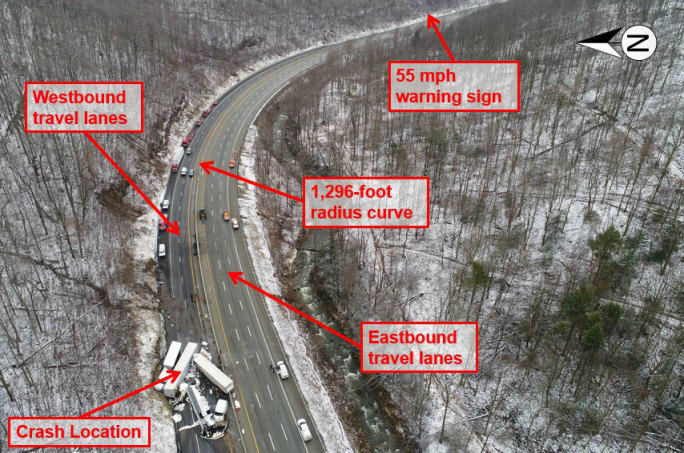
In this photo, the final rest positions of all vehicles involved in crash below the curve on westbound Pennsylvania Turnpike.
Photo: Pennsylvania State Police. Graphic overlay by NTSB
NTSB Calls for Speed Limiters, Collision Avoidance Standards
As a result of this investigation, the NTSB issued new safety recommendations related to three specific areas.
The first concerns excessive speed for wet pavement conditions.
Specifically, the NTSB recommended that the Federal Highway Administration evaluate the applicability and use of the 85th percentile speed input variable in its tools for setting appropriate speed limits. The NTSB also recommended the use of speed safety cameras on the turnpike outside of active work zones and that the Pennsylvania Turnpike Commission implement the use of variable speed limit signs to adjust speed limits based on real-time information on weather and road conditions.
The second area of recommendations concerns the lack of standards for commercial vehicle collision avoidance and mitigation systems to enhance safety, including forward collision avoidance systems and connected vehicle technology.
For starters, NTSB recommended that the Department of Transportation implement a plan for nationwide connected-vehicle technology deployment to address current limitations. In addition, they reiterated recommendations to the National Highway Traffic Safety Administration to develop minimum performance standards for connected-vehicle technology for all highway vehicles and to require this technology to be installed on all newly manufactured highway vehicles.
NTSB also urged NHTSA to develop performance standards for advanced speed-limiting technology for heavy vehicles and to require that all newly manufactured heavy vehicles be equipped with such devices. Similarly, NHTSA should complete the development and application of performance standards for forward collision avoidance systems in commercial vehicles.
Finally, NTSB recommended that all buses and trucks over 10,000 pounds gross vehicle weight rating be required to be equipped with onboard video event recorders. The Federal Motor Carrier Safety Administration, it said, should provide guidance to motor carriers to proactively use onboard video event recorder information to aid in driver training and ensure driver compliance with regulatory rules essential for safe operation.
The NTSB does not have rulemaking authority and can only make recommendations to other government agencies, as well as to industries, associations, motor carriers involved, etc.
Originally posted on Automotive Fleet
More Safety
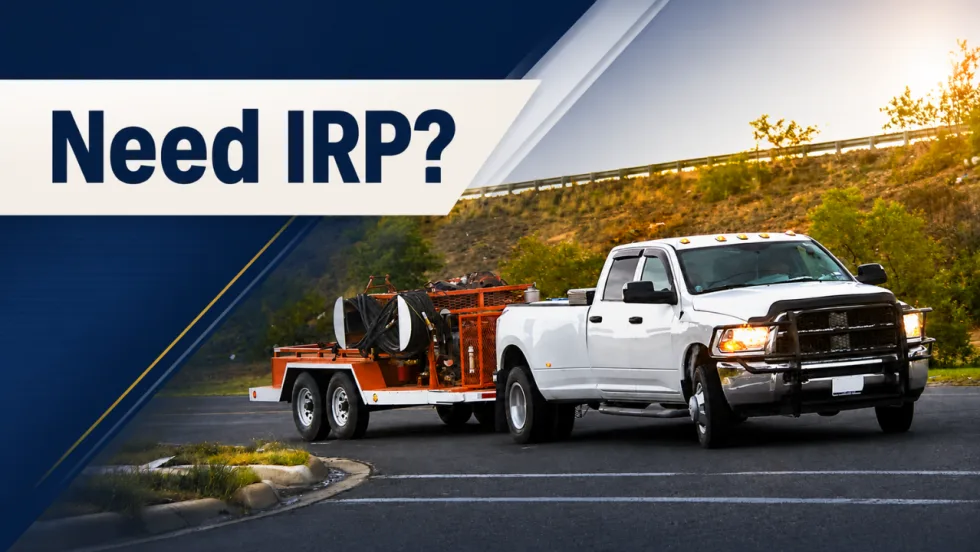
When Work Trucks Under 26,001 Pounds Need IRP Registration
Think trucks under 26,001 pounds are automatically in the clear when it comes to IRP? Not always. Learn where lighter vehicles can still run into trip permit, apportioned registration, and IFTA compliance requirements when crossing state or provincial lines.
Read More →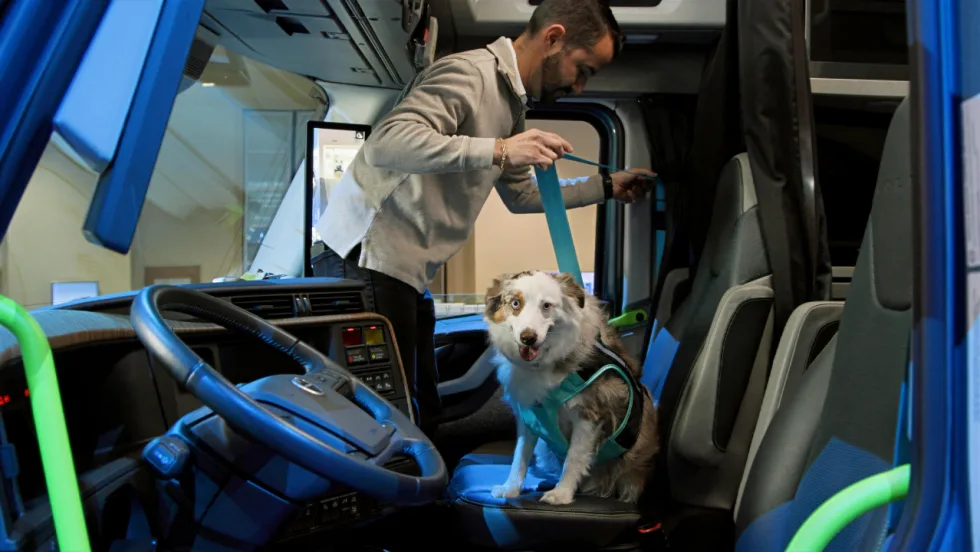
Volvo Trucks Releases New Safety Recommendations for Traveling with Pets
One of the most important recommendations for professional drivers traveling with pets is to ensure pets are properly restrained while the truck is moving. Other tips are available in the new guide from Volvo Trucks North America and Center for Pet Safety.
Read More →
API Issues Refueling Safety Guidelines
The American Petroleum Institute offers a list of safe vehicle refueling guidelines, including ways to avoid potential problems with static electricity discharges in fall, winter, and early spring.
Read More →
Winter Fleet Prep: Expert Tips to Keep Vehicles Running Smoothly
Cold weather can expose weak batteries, tires, fuel systems, and maintenance gaps fast. Use this winter fleet checklist to prepare trucks and drivers before temperatures drop.
Read More →
When a Work Truck Breaks Down, the Job Can Stop, Too
A work truck breakdown can stop more than the vehicle. Discover how payloads, jobsites, and specialty equipment change the roadside response.
Read More →
What Stronger Long-Term Fleet Service Partnerships Actually Require
Fleet service partnerships rarely fall apart all at once. Learn the three warning signs that trust is eroding and what fleets and providers can do before downtime, frustration, and lost revenue follow.
Read More →
Applause & TRUCE Software Partner to Improve Driver Safety Through AI-Powered Telematics & Employee Performance Management
Applause has integrated TRUCE driving metrics directly into its employee-first performance and safety platform that transforms mobile devices into AI-powered telematics.
Read More →
How Detroit Assurance with Active Brake Assist Works
Do you want to see what it is like to experience Detroit Assurance’s Active Brake Assist? In this video, Work Truck will put you in the cab to see how it all works and then hear more details from DTNA’s Mike Young.
Read More →
Get Left of Loss: A 5-Step Workplace Violence Prevention Framework for Fleet Operators
Violence risks do not stop at the driver’s door. Learn five practical steps fleets can take to spot threats early and protect workers before loss occurs.
Read More →
How Better Visibility Cut Speeding Violations by 48%
Fleet leaders don't need more data, they need clearer visibility into what the data is saying. This case study explores how one utility replaced speeding-event counts with a single metric — miles driven in violation — to strengthen safety and significantly reduce speeding violations.
Read More →