





Watch: How Geotab Helps Fleets Use Data and AI to Drive Smarter
North America Fleet Collisions Drop 38.7% as Risk Narrows to a Small Group of Drivers
Geotab’s 2026 State of Commercial Transportation Report highlights safety gains, a U.S. EV slowdown, and a pandemic-era replacement wave.
March 2, 2026
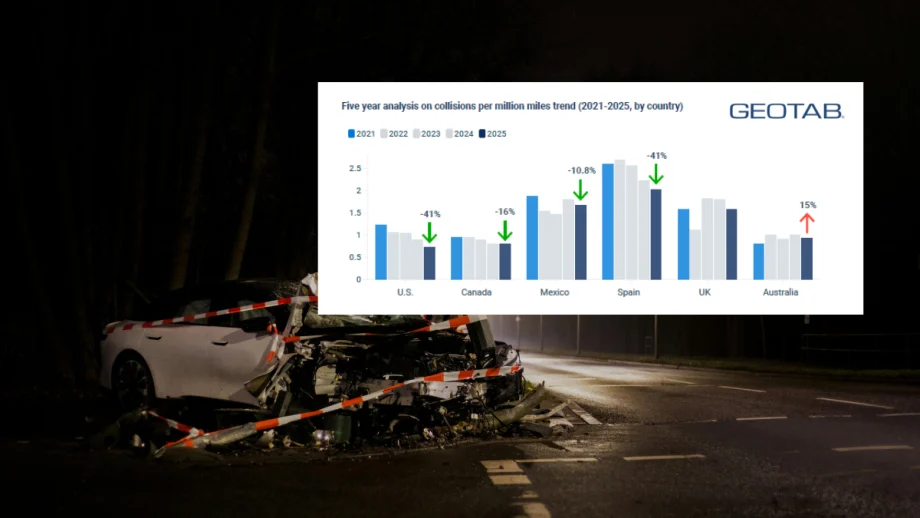
A five-year analysis shows collisions per million miles dropped 38.7% in North America between 2021 and 2025, even as other regions saw mixed results.
Credit: Work Truck | Geotab
5 min to read
Geotab’s 2026 State of Commercial Transportation report paints a picture of an industry under pressure but not standing still.
Drawing from nearly 6 million connected vehicles and more than 100 billion daily data points, the biennial report tracks how fleets are responding to inflation, high interest rates, and what it calls a “pandemic echo” in vehicle lifecycles.
For fleet managers, the message is clear. The margin for error is shrinking, but the data is getting sharper.
“The industry is navigating a perfect storm of economic pressure, but the data shows that fleets are responding with incredible adaptability,” said Mike Branch, VP of Data & Analytics at Geotab. “Our platform offers unmatched insight, proving that in a world of constant change, trusted data is the ultimate catalyst for a more resilient future.”
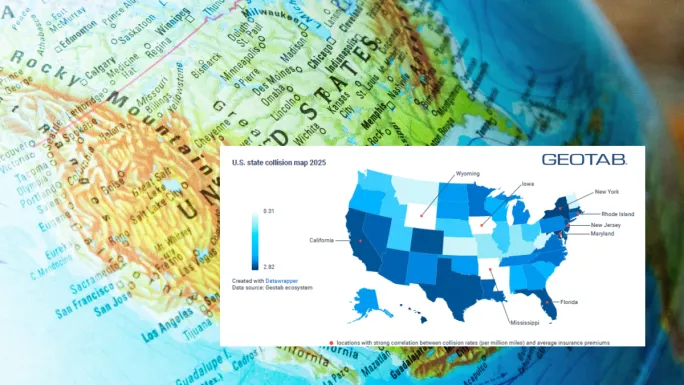
Geotab’s 2025 state collision map highlights regional differences in crash rates and their correlation with insurance premiums across the U.S.
Credit: Work Truck | Geotab
Collisions are Down, But Risk is Highly Concentrated
Across the U.S. and Canada, collisions per million miles dropped 38.7% between 2021 and 2025, led by a 41.3% decrease in the U.S.
That’s a meaningful improvement in a period marked by supply chain volatility, labor shortages, and rising repair costs. It suggests that telematics, in-cab coaching, and more disciplined safety programs are doing more than generating reports. They’re changing outcomes.
But the gains aren’t evenly distributed.
The riskiest 10% of drivers account for 1 in 5 collisions and are 7.4 times more likely to crash than the safest 10%. In other words, most of the risk lives in a relatively small slice of the workforce.
For fleet leaders, that changes the strategy. Instead of broad-brush safety campaigns, the biggest ROI may come from focused intervention, targeted coaching, and retention of top-performing drivers.
Speeding remains one of the clearest red flags. Severe speeding increases crash likelihood sevenfold in the first five seconds after the event, with elevated risk lasting roughly 100 seconds. That tight risk window reinforces why real-time coaching matters more than after-the-fact reporting.
Safety Tools Show Measurable Impact
The report also highlights what it calls a “dose-response” effect.
Active users of Geotab’s Collision Risk tool experienced 28.7% fewer collisions than non-users. Even new users saw an immediate 11.9% reduction.
The takeaway is not just that technology works. It’s that engagement with the technology matters. Fleets that operationalize their data, rather than simply collecting it, appear to see measurable gains.
That distinction is important as more platforms layer in AI and predictive modeling. Tools only move the needle if managers and drivers actually use them.
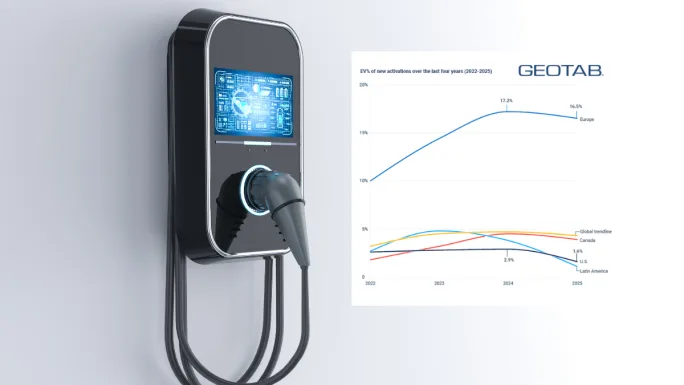
EV activation rates diverged sharply from 2022 to 2025, with Europe maintaining double-digit growth while U.S. new activations fell to 1.6% in 2025, according to Geotab.
Credit: Work Truck | Geotab
EV Adoption Slows in the U.S., While Europe Accelerates
Electrification tells a different story, and it’s one of divergence.
EVs account for 10.8% of Geotab-connected vehicles in the U.K. and 8.0% in the European Union. In the U.S., that figure sits at 1.6%.
While the U.S. added the highest absolute number of EVs year over year, it posted the lowest growth rate at 27.4%. The share of new activations that were electric fell from 2.9% in 2024 to 1.6% in 2025. That translates to nearly 60 ICE vehicles added for every EV.
For U.S. fleets, that suggests hesitation rather than rejection. The infrastructure conversation is still front and center, and range confidence remains a hurdle. Sixty-five percent of North American EVs are plugged in before battery charge drops below 50%, compared to 45% in Europe.
Yet the operational data undercuts some of the anxiety. More than half of heavy-duty vehicles travel fewer than 400 miles per day, and 56% of medium-duty trucks stay under 250 miles daily. Those duty cycles fall within existing EV range capabilities.
In short, the hardware may be ready in more cases than fleets think. The bottleneck may be confidence and charging strategy, not vehicle capability.
The Pandemic Echo Hits the Replacement Cycle
The report also captures a shift in asset lifecycles.
The 2021 Ford Transit, once the most acquired vehicle during the home-delivery boom, became the No. 1 retired vehicle in 2025. The data points to a four-year replacement cycle for high-utilization cargo vans.
That cycle matters. Fleets that ramped up quickly during the e-commerce surge are now cycling out large volumes of assets at once. Layer in higher interest rates and rising repair costs, and replacement decisions become more complex.
At the same time, utilization data raises a different question. On average, commercial vehicles were active 186 days per year in 2025 and driven about 3.36 hours per day.
That gap between availability and actual use suggests some fleets may be carrying excess capacity. In a tight cost environment, rightsizing may become just as important as modernization.
AI Moves from Reporting to Decision Support
Generative AI is also shifting how fleet managers interact with their data.
Sixty-five percent of user queries to Geotab’s AI assistant focus on vehicle performance and fuel efficiency, followed by safety and asset management. The trend is moving from basic reporting to multi-step, conversational problem-solving.
For fleet operations, that could mean faster answers to complex questions about utilization, fuel burn, or driver risk. It also signals a broader transition. Data is no longer just a compliance tool. It’s becoming an operational co-pilot.
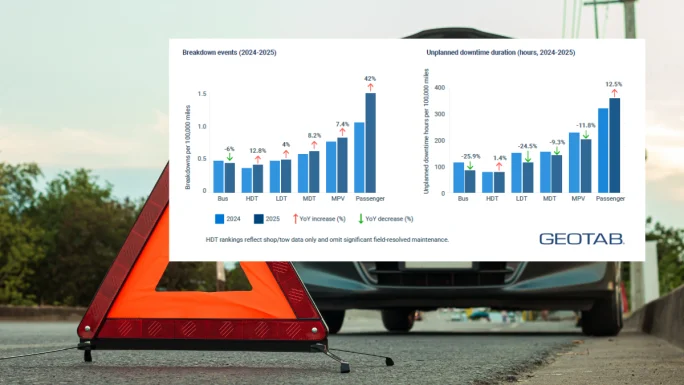
Geotab data shows breakdown events rose in most vehicle classes from 2024 to 2025, while unplanned downtime fell for several segments, signaling faster repair turnaround despite more incidents.
Credit: Work Truck | Geotab
A More Targeted Approach to Resilience
The throughline in the report is resilience. Not in the abstract sense, but in practical terms.
Collision risk is narrowing to a small group of drivers. EV adoption is stalling in some regions while accelerating in others. Assets bought during a boom are aging out in a tougher market. And AI is moving from dashboards to dialogue.
For Work Truck readers, the question is less about whether change is coming and more about where to focus. The data suggests that targeted safety management, smarter utilization, and disciplined evaluation of EV readiness may deliver more impact than sweeping transformation plans.
The full 2026 State of Commercial Transportation report is available from Geotab here!
More Technology
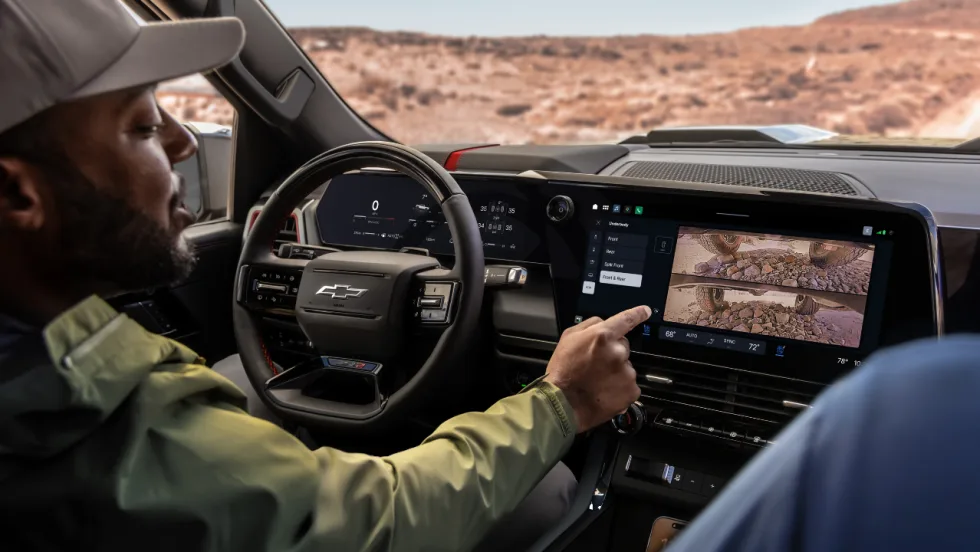
GM Brings New Truck Focused Interface to 2027 Silverado and Sierra
GM's new pickup interface puts trailering data, camera views, vehicle controls, and smartphone integration closer to the driver in the 2027 Silverado and Sierra.
Read More →
Samsara Driver Perks Expands Rewards Beyond the Long Haul Driver
Samsara’s new driver rewards program was built with a broader professional driver in mind, including employees who split their day between driving, job sites, service calls, and other work.
Read More →
AI Service Advisor Aims to Cut Fleet Repair Downtime
Fleetio said its AI Service Advisor can help fleets cut repair downtime by an average of 2.5 hours per repair while reducing manual maintenance work.
Read More →
Verra Mobility Launches AI-Driven Title & Registration Solution
Verra Mobility has launched a new AI-driven Title & Registration platform to help fleets move vehicles from acquisition to the road the same day while reducing compliance risk.
Read More →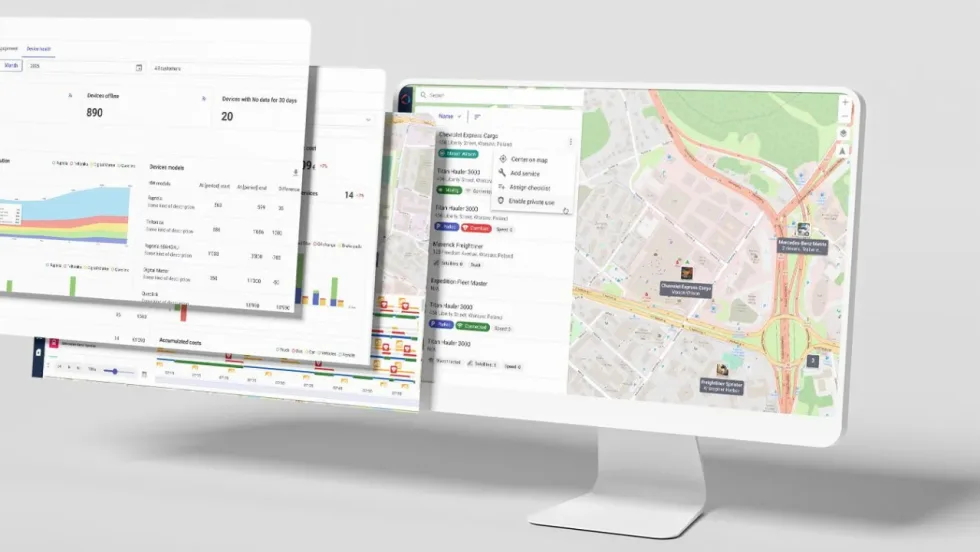
Wialon Unlocks OEM Data to Give Fleet Owners Data Ownership & Operational Clarity
Wialon has introduced hardware-free OEM integration as the EU Data Act accelerates the shift in vehicle data access across the fleet industry in many countries.
Read More →
Teletrac Navman Promotes New CEO from Within
Teletrac Navman’s next CEO, Ricardo Buranello, has served as the company’s chief financial and operating officer. He brings deep financial and operational expertise, a strong strategic orientation, and an intimate knowledge of the business to his new role.
Read More →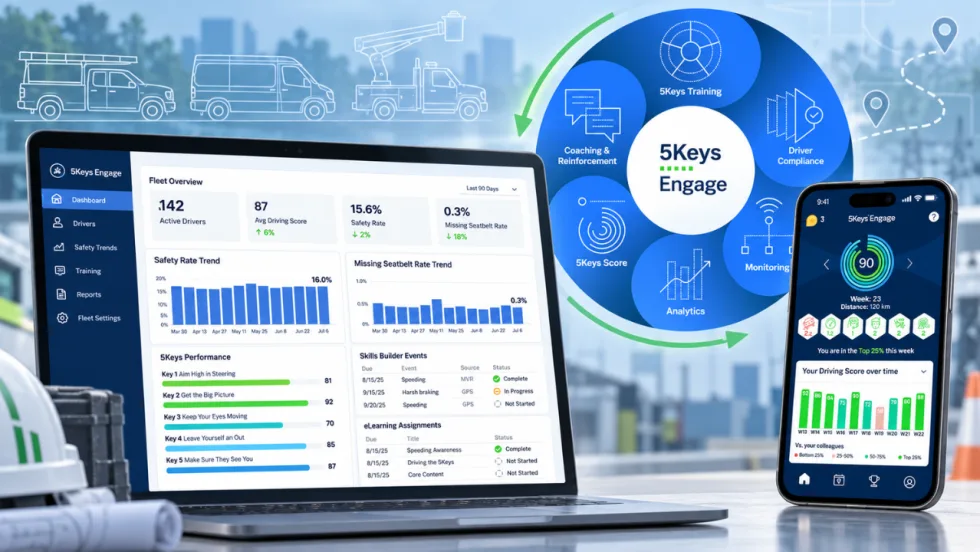
Smith System Wants Work Truck Fleets to Look Beyond the Driver Alert
Smith System’s new Driver Risk Management program is built to help mixed work truck fleets turn telematics alerts and observations into specific behaviors, coaching actions, and measurable follow-up.
Read More →
Ford Pro Software Updates: August 26
Check out the latest Ford Pro software updates, including Google Maps integration, Remote Vehicle Alarm integration, Motor Pool for easier management of shared pool vehicles, and more.
Read More →
Where AI Is Actually Saving Fleet Managers Time
AI is moving past the buzzword stage and into the daily fleet workflow. Fleetio’s Brianna Perry Lang breaks down where fleets are seeing real time savings, from maintenance and data entry to repair decisions, safety, and compliance
Read More →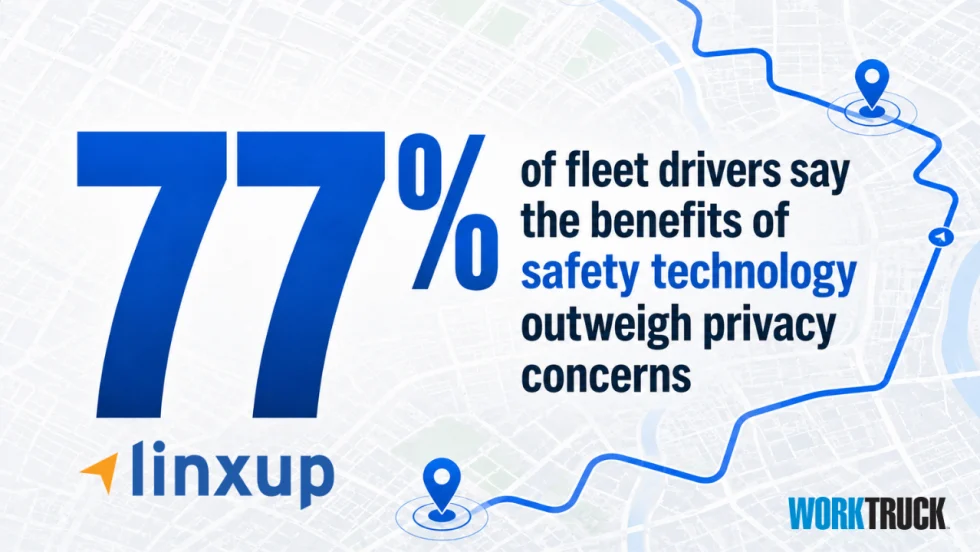
Are Work Truck Drivers Warming Up to Dash Cams and GPS Tracking?
A new survey finds field-service drivers may be more comfortable with dash cams and GPS tracking than fleet managers think, especially when the technology helps protect them after a crash.
Read More →