




New Truck Orders Increase, Could Impact Medium-Duty Resale
Fleet managers are presented with unique challenges ensuring maximum resale for medium-duty trucks, and understanding the reasons for this as well as current market conditions can help increase overall residuals.


BEGGS
The medium-duty truck segment, Class 4-7 in particular, is different than any other segment in regards to remarketing and resale. Because of this, fleet managers are presented with unique challenges to overcome to ensure maximum resale on these units.
New truck orders are increasing steadily, which should result in an increased number of trade-ins. Current emissions regulations are increasing the price of newer-model medium-duty units, which is driving more people to the used-truck market. Additionally, gasoline-powered models are entering the market and the gap between gasoline and diesel prices is narrowing, which could strengthen used-values for some applications.
Currently, prices are stable for this segment. According to the experts at Black Book USA, this is mainly attributed to a lack of volume, still as a result of the economic downturn. But, as the housing market, commercial construction and the service industries pick up, the models are selling again, and the increased volume could impact values in either direction. One factor to keep in mind is the level of pent-up demand currently felt in this market segment, which could help prices remain stable in the face of increased future volume.
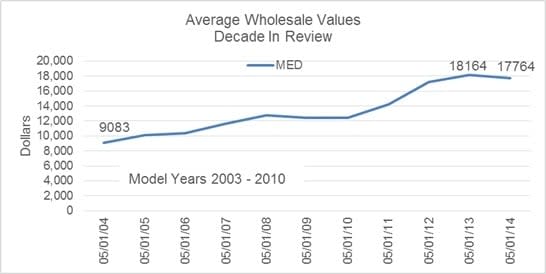
Over the past decade, average wholesale prices for 2003-2010 medium-duty truck models has steadily increased, starting at an average of $9,083 in May of 2004 and reaching $17,764 as of May 2014. Prices hit a peak of $18,164 in May of 2013, and have declined slightly in the past year.
According to the experts at Black Book, reasons medium-duty need to be treated different than other vehicle segments include:
Overall used supply volume. We are coming off of several years of lower than normal new medium duty truck sales that are just starting to increase again.
Vehicle age at resale is higher than other vehicle segments. For example, cars and light-duty trucks primarily turn in one to four years, while medium-duty trucks stay in service a minimum of three years, but normally on an average of five years. Utility trucks can stay in service even longer, up to eight to 10 years.
Overall condition of these units will be a little rougher, because these are work vehicles, used day-in and day-out, which will impact resale value.
Higher mileage at resale, because they stay on the road delivering and picking up products, etc. while also staying in service more years.
Wholesale channels used and the volumes of these channels, locations, and frequency. While some medium-duty trucks are included with the traditional auto auction circuit, traditionally these vehicles provide their best return at auctions focused on this specific industry.
Fuel type, whether they are gasoline or diesel fueled.
“One particular impact that vehicle age can have on resale value involves short cycling, or remarketing a medium-duty truck early or at the minimum age (two or three years),” according to Ricky Beggs, editorial director for Black Book. “These newer vehicles are at a premium in the resale market, and would garner a higher resale premium than a similarly aged and lower-mileage light-duty truck model.”
Additionally, fleet managers should remember that medium-duty trucks have a different buying audience than some of their other vehicles. In some medium- and heavy-duty auctions the owner/operators are allowed to attend, unlike other auctions that are traditionally closed to only dealers.

CATHEY
“Cabover trucks are also growing in popularity, with new offerings coming out. More manufacturers are putting gasoline-powered medium-duty trucks in the market as well. Ford just came out with the gasoline-powered F-750 to compliment the already available gasoline F-650,” noted Charles Cathey, medium and heavy duty truck editor for Black Book. “This changes the mix of vehicles that will be coming to the resale market, and, in the past, the gasoline-powered models didn’t obtain the same, higher resale values that their diesel-powered counterparts did. This will be something to watch as these vehicles enter the resale market. “
Additionally, the cost of fuel has an impact on this segment’s overall resale value.
“Diesel fuel prices have been stable over the past six months, whereas gasoline has experienced a steady climb since January. This week alone, the gap between gasoline and diesel is very tight, approximately 30 cents. The last time it was that close was back in August of 2013. The gap is narrowing somewhat, and this will be interesting to see if this will impact the marketplace and strengthen the diesel products,” said Josh Giles, senior truck editor for Black Book.
Finally, changing and developing emissions regulations are raising the price of new trucks going to market, turning some fleets more toward used vehicles.
“Current emission standards come into play, especially for Class 6-7, which are focused on emissions that is raising the price of the new trucks and cost of entry, which should help the values of the used trucks as the people who don’t want to step up to the more expensive, newer trucks can purchase a used truck that still meets the emissions regulations without the premium price,” Cathey said.
More Remarketing

AP Fleet Management Expands Remarketing Program for Commercial Work Trucks
AP Fleet Management expanded its commercial vehicle remarketing program with dedicated resale services and an online marketplace for used work trucks.
Read More →
REP Inspection Services Launches, Delivering Professional Equipment Inspections
REP Inspection Services, led by someone with more than 30 years of industry experience, has launched its professional inspection services for trucks, trailers, and equipment across the commercial vehicle industry.
Read More →
Introducing Work Truck’s 2025 Remarketing Report Series
Work Truck’s 2025 Remarketing Report Series uncovers how data, timing, and technology are reshaping resale value and driving smarter fleet strategies.
Read More →
Fleet Remarketing Outlook 2026: EVs, Policy, and the Power of People [Part 4]
From EVs to policy changes, the 2026 fleet remarketing outlook is all about people, progress, and finding opportunity in stability.
Read More →
Digital Fleet Remarketing: How Tech and Transparency Build Buyer Confidence [Part 3]
Technology and trust are reshaping fleet remarketing in 2025. See how data, transparency, and partnerships drive better resale outcomes.
Read More →
Fleet Replacement Strategy 2025: When to Hold and When to Fold [Part 2]
Knowing when to sell or hold is key in 2025. Discover how fleet professionals use data and TCO insights to make smarter remarketing calls.
Read More →
The 2025 Work Truck Remarketing Market: Prices, Pressure, and What Comes Next [Part 1]
Fleet remarketing in 2025 is stabilizing. Experts share how prices, rates, and new tech are shaping used truck values and resale strategies.
Read More →
Copart and One Inc. Partner to Improve Auto Claims Process
ChatGPT said: One Inc and Copart partner to speed up lienholder payments, helping insurers process total loss vehicle claims faster and improve customer experiences.
Read More →
Fleet Remarketing Industry Council Launches to Shape Future Resale Value
What if fleets could shape how their vehicles are valued after resale? Now they can.
Read More →
CAR Partners with NAFA Fleet Management Association For 2026 Event
The event will connect fleet managers with vehicle remarketers to delve into topics that help fleet operations find remarketing solutions.
Read More →