





Related: 8 States Sign Statement to Accelerate Transition to Zero-Emission Trucks and Buses
New-Gen Diesel-Powered Trucks Vital To Clean Air Goals
Rapidly accelerating the turnover of the existing fleet to the newest generation of diesel technology, as well as expanding the use of low-carbon advanced biofuels, can deliver benefits today, and should not be overlooked, said the Diesel Technology Forum.
July 20, 2020

The City of Los Angeles has its fair share of smoggy days. Working toward reduced vehicle emissions can make a big difference in big city air quality.
Photo: Work Truck
4 min to read
The Diesel Technology Forum issued the following statement on the recently announced Memorandum of Understanding (MOU) between 15 states and the District of Columbia concerning the goal of achieving 100% zero-emission commercial truck sales by 2050.
“While the recently announced MOU takes a long view for commercial trucks in the region to be all electric, there are equally important proven and available near-term opportunities to advance progress for cleaner air and lower greenhouse gas emissions right now. Rapidly accelerating the turnover of the existing fleet to the newest generation of diesel technology as well as expanding the use of low-carbon advanced biofuels can deliver benefits today, and should not be overlooked,” noted Allen Schaeffer, executive director of the Diesel Technology Forum, a not-for-profit association representing manufacturers of diesel engines and equipment, key suppliers of emissions control and other technologies and fuel producers.
“Diesel is the technology of choice for America’s trucking industry because of its unique combination of features: the most energy efficient internal combustion engine, power density, driving range, reliability, durability and widely available fueling, servicing and parts networks. Continuous improvement that has now achieved near zero emissions, improving energy efficiency and capabilities of using low-carbon renewable biodiesel fuels, ensure diesel’s place in the future," he said.
Schaeffer continued to note that, since 2010, a new generation of diesel technology has become the standard for heavy-duty trucks, delivering reductions of 98% of emissions of particulate matter and nitrogen oxide emissions.
"Getting more of this generation of vehicle into the hands of truckers now will pay large benefits in terms of lower emissions of nitrogen oxides and particulate matter, particularly trucks operating in the most sensitive communities," Schaeffer said.
According to the Diesel Technology Forum’s analysis of 2018-2019 U.S. vehicles in operation data (Class 3-8) provided by IHS Markit, 43% of the nearly 11 million diesel-powered commercial vehicles on U.S. roads – from box delivery trucks to 18-wheelers – are now powered by the newest generation of diesel technologies (MY 2010 and newer). Over just four years, the percentage of new-generation diesel trucks on America’s roads has nearly doubled – up from just 25.7% of the fleet in 2015. Even by 2040, IHS Markit projects that the newest-generation diesel technologies will retain the majority share of Class 8 vehicle sales.
“In the states covered by this MOU, 43% of registered diesel trucks in operation are of this newest generation, meaning that 57% are of an older generation that have higher emissions and lower fuel efficiency, making the opportunity for accelerating turnover substantial. Like cars, commercial vehicles are now subject to stringent fuel economy and greenhouse gas reduction requirements. Unlike cars, trucks are far more durable and longer lived with an estimated service life of about 23 years," Schaeffer said. "Replacing an older less efficient Class 8 tractor-trailer size truck with a new more efficient diesel model can eliminate almost 10 tons of greenhouse gas emissions during its lifetime. By 2027, EPA estimates that these more efficient trucks that meet these stringent standards will eliminate over 1 billion tons of greenhouse gas emissions."
Schaeffer noted that one impediment to investment in new commercial truck technology of any kind is the 12% federal excise tax now levied on new truck sales.
"The COVID-19 pandemic has exacerbated weak markets for replacing vehicles as truck dealers report that new truck sales are down 70%. One policy solution to help encourage the adoption of new cleaner trucks now is to temporarily suspend the federal excise tax on truck purchases. Given the average $150,000, price for a new Class 8 tractor, the 12% federal excise tax inflates the delivered price of a new truck and is a leading contributor to an aging and less efficient truck fleet. A tax holiday on truck sales through 2021 is a powerful option to encourage truck owner to replace less efficient models with new options to help deliver immediate term clean air and climate benefits. According to a recent survey, 60% of trucking fleets indicated they would consider buying more new trucks if the excise tax was suspended," Schaeffer said.
A major challenge for electricity, fuel cells and other technologies making inroads in the commercial market is the higher cost and availability of both charging infrastructure and vehicles.
One option without these concerns is expanding the use of renewable diesel fuel and blends of high-quality biodiesel fuels in both new and existing vehicles. Advanced biofuels capable of achieving 50% to 85% reduction in greenhouse gas emissions are growing in availability across the country. In California, the use of these fuels has achieved the most greenhouse gas emissions reductions from transportation sources in the State, including beating GHG reductions from electrification of cars, trucks and buses by a factor of almost four to one," Schaeffer added. “Beginning in 2011, all new heavy-duty trucks have been equipped with selective catalytic reduction (SCR) and particulate control technologies. These combine to achieve stringent new U.S. Environmental Protection Agency (EPA) and CARB emissions requirements for NOx emissions of no more than 0.20 grams per brake horsepower hour (g/BHP-hr). This is in addition to PM emissions levels of no more than 0.01 g/BHP-hr."
“Even as these 15 states and the District of Columbia work to accelerate zero emissions vehicles toward 2050, diesel technology in commercial vehicles will continue to play an important role in the regional and nation’s economy for decades to come.”
More Fuel

The Smart Way to Build a Mixed-Energy Fleet Isn’t About Picking a Side
Mixed-energy fleets aren’t about picking a winning fuel. Sarah Booth of WEX explains how vehicle data, duty cycles, charging strategy, and real-world costs can help fleets choose the right energy source for each job.
Read More →
Ignoring This Dashboard Warning Could Cost Your Fleet Thousands in Fuel
New research suggests neglected diesel aftertreatment systems could waste up to $30 in fuel per vehicle each day. Here's why vocational fleets should pay attention.
Read More →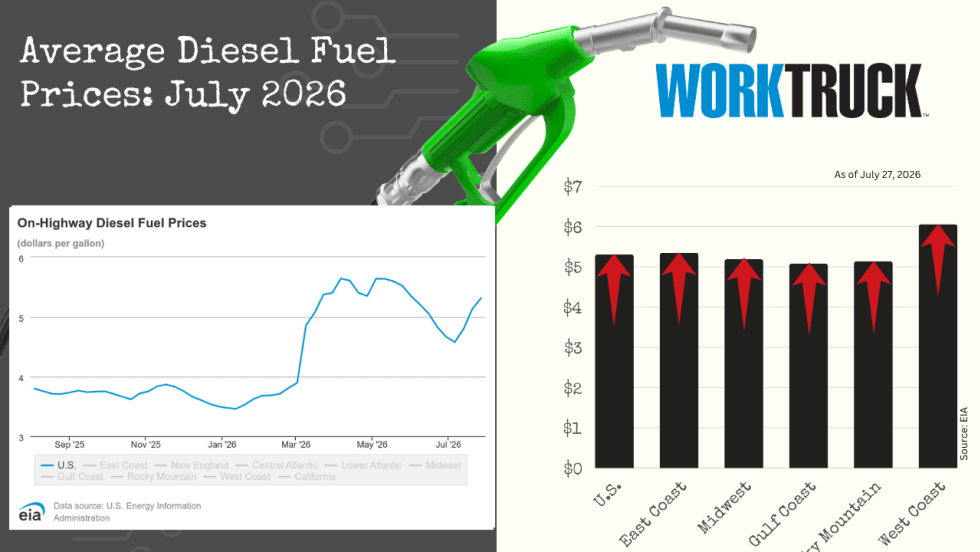
July Diesel Trends Update
The average price of a gallon of diesel increased again this week, and the EIA reported a new national average of $5.31 at the start of the week.
Read More →
WEX Brings Standard Fleet's Connected Vehicle Platform to Fleet Customers
This week’s product launch with Standard Fleet’s connected vehicle platform reflects WEX Venture Capital's strategy of turning startup innovation into customer solutions. Standard Fleet is now available to WEX fleet customers.
Read More →
Teletrac Navman Adds Mixed-Energy Fleet Tools to TN360
The new Energy Hub combines fuel transactions, EV charging data, vehicle range, and energy costs in one dashboard for fleets operating multiple vehicle and energy types.
Read More →
WEX DriverDash adds CITGO, Expands Nationwide Access for Fleets
The DriverDash mobile payment app, by WEX, has been integrated into the CITGO merchant network, which means WEX has expanded its U.S. station footprint with the addition of approximately 4,000 CITGO locations.
Read More →
Mixed Energy Fleet Tips for Balancing EVs, Gas and Diesel Vehicles
Mixed energy fleets are becoming the new normal. Learn how fleet managers are balancing EVs, gas and diesel vehicles while controlling costs and planning for the future.
Read More →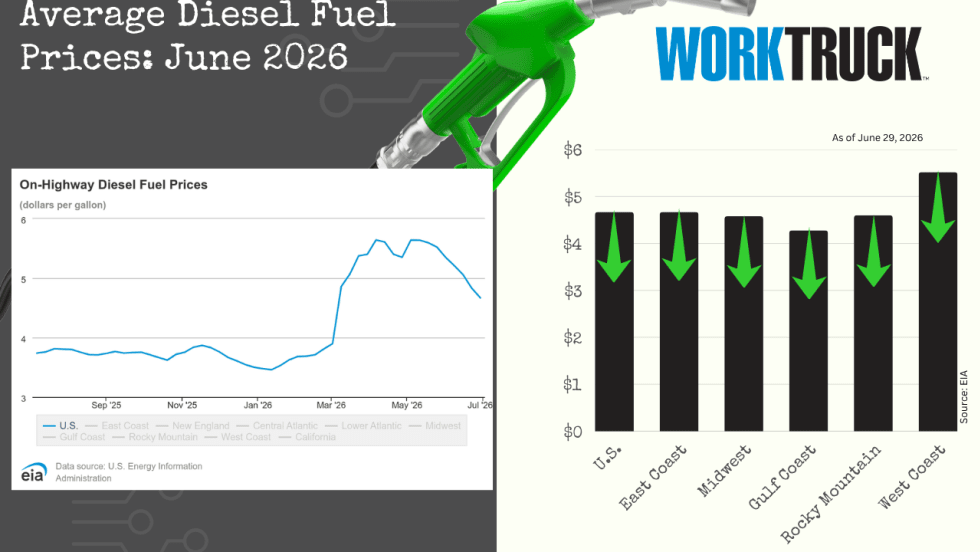
June Diesel Trends Update
The national average price of a gallon of diesel has dropped again, this week by more than 16 cents. All five regions reported lower average prices, ranging from almost 13 cents to more than 28 cents cheaper than a week ago.
Read More →
RoadFlex Launches RoadFlex Direct Open API Platform
RoadFlex Direct connects fuel cards, controls, and data to the telematics and fleet management systems fleets already run, from Geotab and Samsara to Fleetio and RTA, with no separate dashboard or double data entry.
Read More →
The Key to Fuel Efficiency Sits in the Cab
Learn how driver behavior, telematics, coaching, and fuel data can help fleets improve fuel efficiency, lower costs, and reduce emissions.
Read More →