




New Ford Transit Connect Taxi Begins Service in Hong Kong
Ford Motor Company said it has added Hong Kong to the list of global cities served by its Transit Connect Taxi, building on the vehicle’s popularity among taxi operators in New York City, Chicago, Miami and Los Angeles.
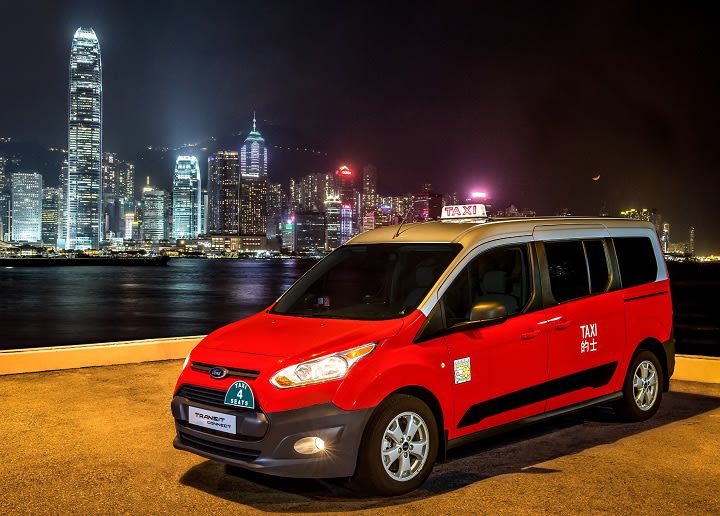
The Ford Transit Connect taxi has been added to fleets in Hong Kong.

The Ford Transit Connect taxi has been added to fleets in Hong Kong.
Ford Motor Company said it has added Hong Kong to the list of global cities served by its Transit Connect Taxi, building on the vehicle’s popularity among taxi operators in New York City, Chicago, Miami and Los Angeles.
“Ford Transit Connect Taxi has proven itself in taxi fleets across the U.S.,” said Raj Nair, group vice president, global product development. “Now, we are building on that success, offering the vehicle for sale in even more markets, including global cities like Hong Kong.”
The Transit Connect Taxi Ford unveiled in Hong Kong comes equipped with a Ford-engineered, clean-burning liquefied petroleum gas (LPG) also known as propane-autogas fuel system. It is designed to run on Hong Kong’s well-established LPG infrastructure, providing dependability, low maintenance and long-range travel, according to the automaker.
On sale since 2010, Ford Transit Connect Taxi serves passengers in some of the most demanding taxi markets, including Philadelphia and Boston.
The 2014-MY Ford Transit Connect Taxi comes with a new powertrain — a 2.5L four-cylinder engine paired with a new, fuel-efficient six-speed automatic transmission — providing drivers with quick response as well as durability, low-rpm cruising, and an expected best-in-class highway fuel economy rating, according to the automaker.
In addition, Transit Connect is available with a compressed natural gas (CNG) and LPG engine prep package. Conversion to CNG and LPG is supported by Ford Qualified Vehicle Modifiers, enabling significant fuel cost savings, according to Ford.
Ford’s second-generation Transit Connect Taxi features a lower vehicle height, providing improved roof clearance for taxicab companies to place advertising on the cabin roof. A new interior hood release gives drivers easy access to check fluid levels prior to starting a shift.
The new Transit Connect Taxi also is longer, offering seating for five and increased cargo capacity. It has 60.5 cubic feet of cargo volume behind the second row. The vehicle can accommodate a compressed gas tank, while still leaving ample room for luggage, according to the automaker.
The Transit Connect Taxi floor has been lowered for improved access to the cabin, and it can be modified for wheelchair accessibility through Ford’s Qualified Vehicle Modifier program.
In addition to Transit Connect Taxi’s success, Ford C-MAX Hybrid is being adopted by taxi operators right from dealer lots. A purpose-built taxi package isn’t available. The C-MAX Hybrid features an EPA combined fuel economy of 43 mpg. C-MAX Hybrid taxis are on the road in San Francisco and New York.
Originally posted on Automotive Fleet
More Small Fleet


Developing Budget-Friendly Driver Safety Programs
From driver training and safety meetings to one-on-one coaching and incentive programs, several small fleets share how they have developed a safety culture with their drivers using low- to no-cost resources.
Read More →
Boosting Last-Mile Fleet Uptime, Safety, and Value with AI Vehicle Inspections
AI-powered inspections are transforming last-mile fleets by replacing manual checks with highly accurate automated scans that detect defects in seconds. By giving fleet operations visibility into the daily condition of their vehicles, you can identify trends over the vehicle’s lifecycle that enable improved procurement decisions, route management, driver training and accountability.
Read More →
Five Ways Seat Belts Help Prevent Injuries
There are five ways seat belts protect occupants from injuries, according to the Tennessee Department of Safety and Homeland Security.
Read More →
It’s here: The 2026 Fleet Technology Trends Report
What does AI mean for fleets? Get the answer — and learn other top tech trends.
Read More →
Small Fleets, Big Impact: How Independent Drivers Power Wreaths Across America
Check out how small fleets and independent drivers power Wreaths Across America each December and why their impact matters more than ever.
Read More →
VMS Survey Finds 65% of Small Fleet Managers Run Operations Alone
A new VMS survey shows small fleet managers are stretched thin, with most handling operations solo and eager to adopt digital tools for relief.
Read More →
Tips for Driving Safely on Halloween Night
This video features a reminder from the Connecticut Department of Transportation (DOT) and the Connecticut Police Chiefs Association, urging drivers to prioritize safety this Halloween.
Read More →
AI, Access, and Uptime: VMS’s Next Chapter with David Prusinski
VMS’s new Co-CEO, David Prusinski, shares how an AI-first approach will give small fleets and repair shops the tools to compete like big players.
Read More →
Fleet Managers Share Winter Prep Tips: It's Never Too Early!
Three fleets share best practices to prep vehicles for winter and prevent downtime when the cold sets in.
Read More →