




Ford Says Gasoline-Equipped F-650 Offers Affordability and Flexibility
Ford Motor Co. brought a CNG-fueled dump truck version of F-650 medium-duty truck to the 2013 ATD show in Orlando and the automaker's Todd Kaufman, marketing manager, explained how this particular project came about.

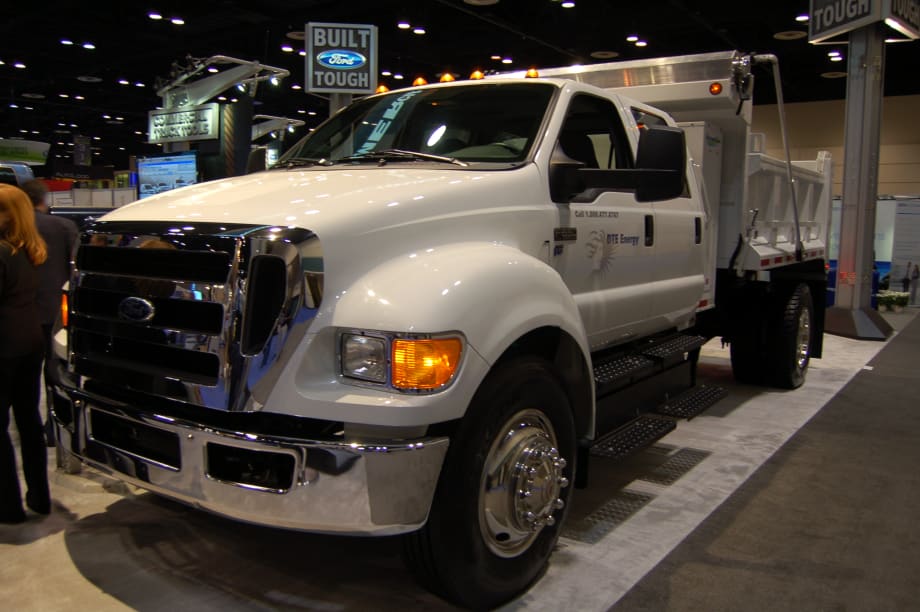
A CNG-fueled Ford F-650 the automaker brought to the ATD show in Las Vegas.
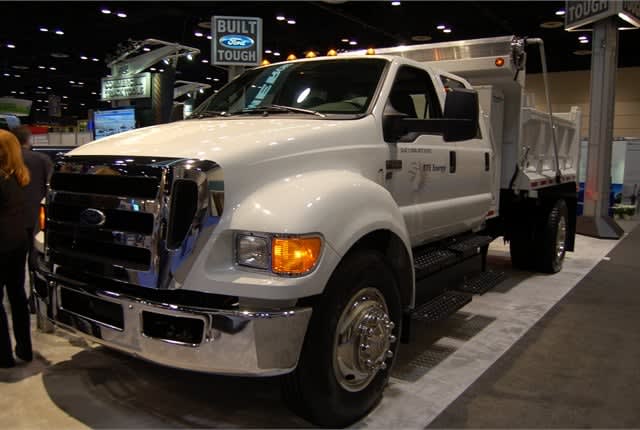
A CNG-fueled Ford F-650 the automaker brought to the ATD show in Las Vegas.
Ford Motor Co. brought a dump truck version of F-650 medium-duty truck to the 2013 ATD show in Orlando. This vehicle came equipped with a dedicated compressed natural gas (CNG) system, and Ford’s Todd Kaufman, marketing manager for the company, explained what makes both the gasoline and CNG variants of this vehicle stand out in the medium-duty segment and how this particular project came to be. The F-650 gasoline chassis cab can be configured in GVWRs that range from 20,500 all the way up to 30,000 lbs. – with a GCWR up to 33,000 lbs.
Kaufman explained that Ford partnered with DTE Energy, an electric and natural gas utility company, on this project. He said DTE has ordered a number of these vehicles and will likely order more.
The F-650 at ATD was equipped with a dump body provided by Truck Tech Engineers Inc. and a dedicated CNG fuel system. National Fleet Services handled the CNG conversion process. The CNG upfit cost between $16,000 and $17,000, according to Kaufman. The gasoline engine for the F-650 comes with a gaseous prep package that has hardened valves and valve seats, making the vehicle compatible with compressed natural gas or propane fueling system. The prep package made the F-650 at the show a fit for the dedicated CNG system and for DTE Energy. The vehicle is equipped with 3 15-gallon tanks, providing a total of 45 gasoline gallon equivalents.
Although CNG is a great option, Kaufman noted the gasoline engine-equipped F-650 offers a number of benefits to fleets. He explained Ford has been offering a gasoline engine option for its F-650 since the 2012 model-year and that this engine is a segment exclusive. The engine is a gasoline 6.8L V-10 that provides 362 hp and 457 lb. ft. of torque. One of the benefits of this engine in this vehicle is due to the overall drivetrain configuration.
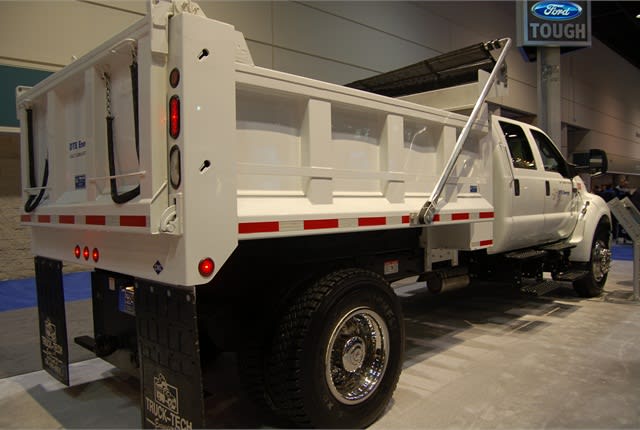
Truck Tech Engineers Inc. provided the dump body and National Fleet Services provided the dedicated CNG fuel system.
“You can start with very heavy loads even though you’re running with a gasoline powertrain and it gets great fuel economy because it’s has a six-speed double overdrive automatic transmission,” Kaufman explained.
Noting the pressure that many municipalities are under today, Kaufman said the gasoline engine option costs less than the equivalent diesel model, making it more affordable. The gasoline option is $9,441 MSRP less than the equivalent diesel model. The F-650 also comes standard with a five-year/100,000-mile powertrain warranty.
“Some folks will say, ‘Well, my diesel gets better fuel economy,”’ explained Kaufman. “This truck is within 9 or 10 percent of the fuel economy of an equivalent diesel. The maintenance costs for a gasoline engine is half that of diesel. So they save money on maintenance costs, the initial purchase price is half, and it has all the capabilities of a diesel equivalent.”
Kaufman noted that this is a new, efficient engine that Ford has experience building, making this technology proven but advanced.
“We’re very confident in this engine and transmission,” Kaufman said. “We’ve been building hundreds of thousands of this engine since 2005. It’s an ultra-efficient, highly modern gasoline engine. It’s here for the long run.”
By Greg Basich and Greg Arroyo
Originally posted on Automotive Fleet
More Green Fleet

Fleet Forward Conference Introduces One-Day Passes for 2026
New one-day registration gives fleet professionals the flexibility to attend Tuesday, Wednesday, or Thursday, with passes available for $199 through Sept. 18.
Read More →
CALSTART Rebrands as Catalyst Mobility, Will Combine with Forth in 2027
CALSTART has rebranded as Catalyst Mobility and will combine with Forth at the start of 2027. The new organization said it is poised to become one of the world's largest, strongest, and most impactful clean transportation nonprofits.
Read More →
Electric Truck and Charging Programs to Boost Sustainability at NY & NJ Ports
Together, the Port Authority of New York and New Jersey and CALSTART will electrify drayage and terminal operations serving the East Coast’s busiest container port. A pair of incentive programs totaling $45 million has launched to accelerate adoption of zero-emission drayage trucks and terminal tractors.
Read More →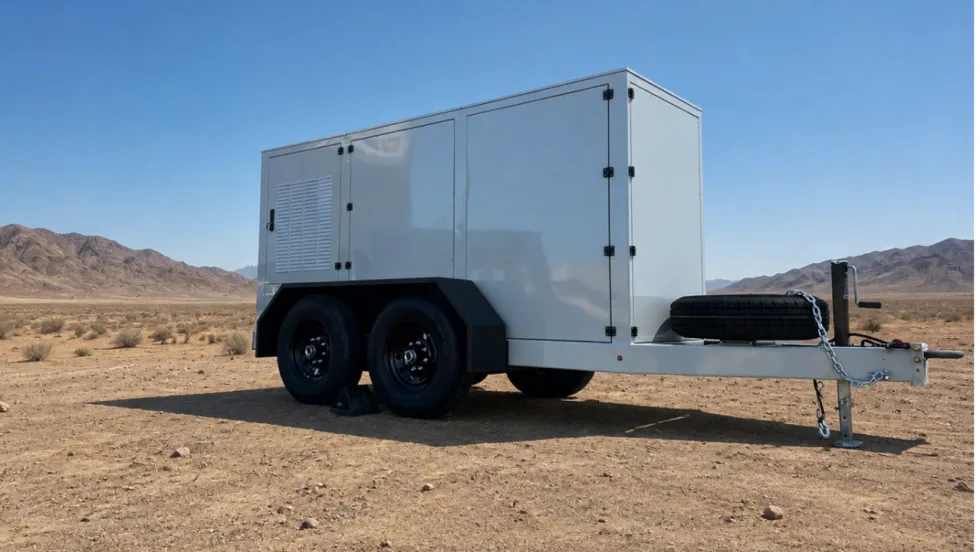
Xos Hub Surpasses One Gigawatt-Hour of Energy Delivered in the Field
A single Xos Hub has surpassed one gigawatt-hour of energy across more than 33,600 charging sessions in the field, demonstrating performance that supports Xos' expansion across new products and markets.
Read More →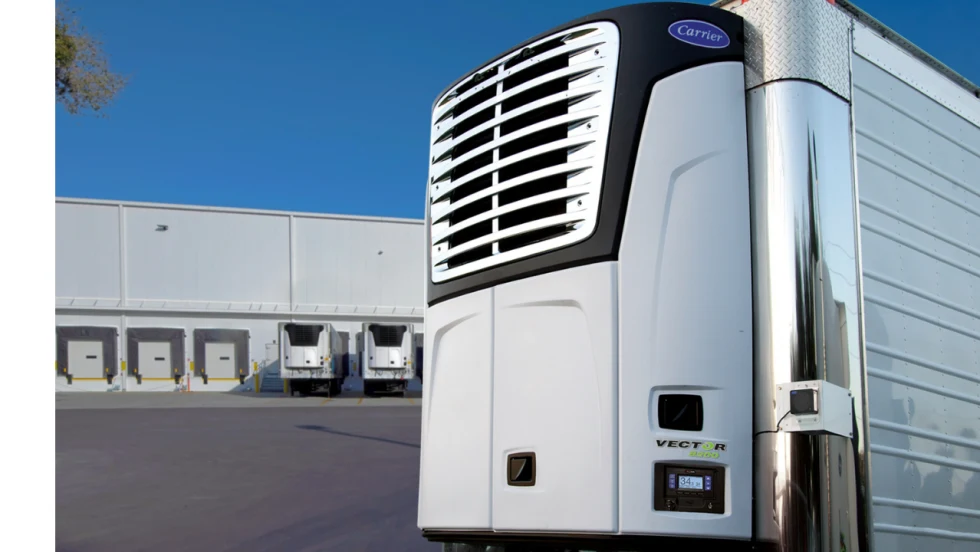
Carrier Transicold Launches All-Electric Vector 8200 TRU for Diesel-Free On-Site Cold Storage
Carrier Transicold’s first engineless multi-temperature TRU helps fresh- and frozen-food fleets add supplemental cold storage capacity during seasonal peaks.
Read More →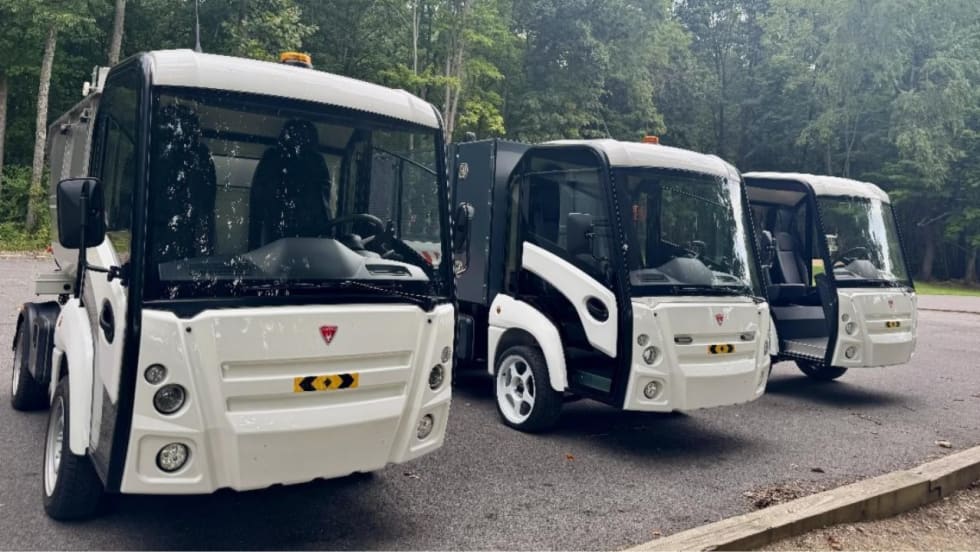
Narro Trucks Introduces Electric Utility Vehicle
Narro Trucks officially launched its operations on Aug. 20 and hosted a ride and drive to showcase its electric truck, which will be produced in Virginia.
Read More →
Samsung SDI Takes Full Control of GM Battery JV as Indiana Plant Pivots to Energy Storage
Samsung SDI is taking full control of its Indiana battery plant with GM, marking a major shift from the EV-focused joint venture Charged Fleet first covered in 2023.
Read More →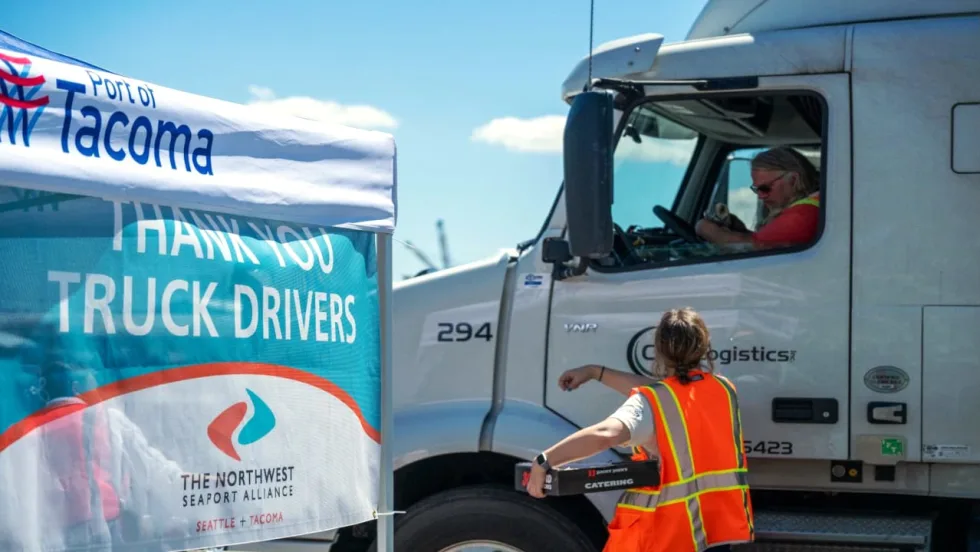
NWSA Taps CALSTART to Administer Zero-Emission Drayage Assistance Program
CALSTART will provide free technical assistance services to drayage fleets serving the Ports of Seattle and Tacoma and looking to transition to cleaner technologies and help decarbonize freight hubs.
Read More →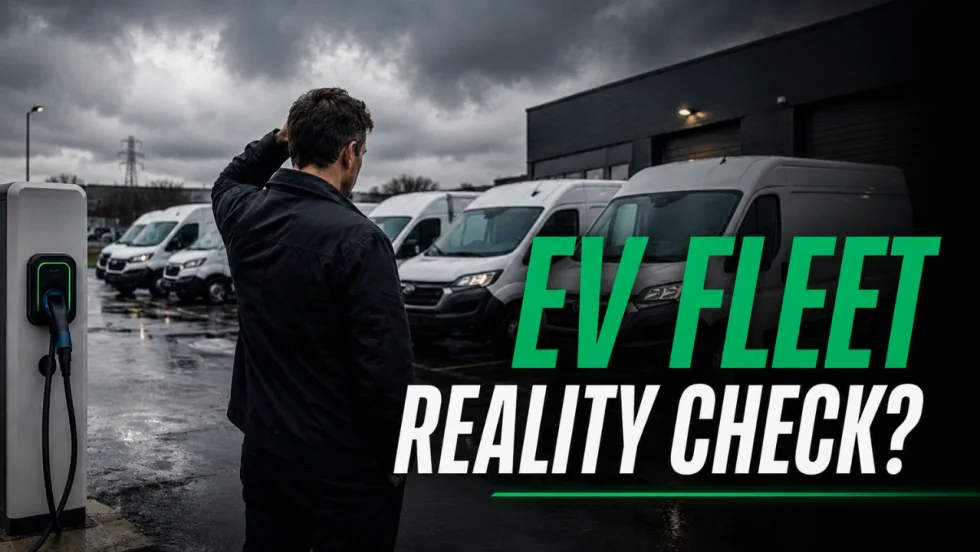
EV Fleet Reality Check: What Operators Wish They Knew Before Electrifying Their Work Vans
Electric work truck upfits bring new compatibility questions. Learn how parts availability, OEM guidance, power demands, and route planning can affect fleet performance.
Read More →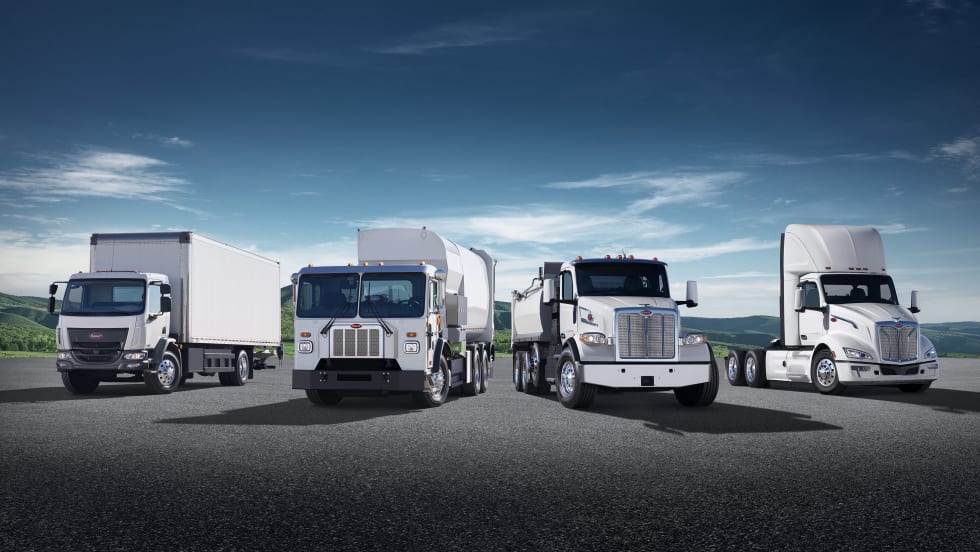
Peterbilt Expands Sourcewell Partnership with Electric Vehicle Lineup
Peterbilt Motors Company’s cooperative purchasing agreement with Sourcewell and its Canadian partner, Canoe Procurement Group, now includes including Peterbilt's battery-electric vehicle lineup.
Read More →