




Ford Revises 2013 C-MAX Hybrid Fuel Economy Rating and Plans Upgrades to 2014 Model
Ford is revising the fuel economy rating on its 2013 C-MAX Hybrid, changing it from the original 47 mpg city, highway, combined EPA rating to 43 mpg combined.

Ford's 2013 C-MAX Hybrid. Photo courtesy Ford Motor Co.
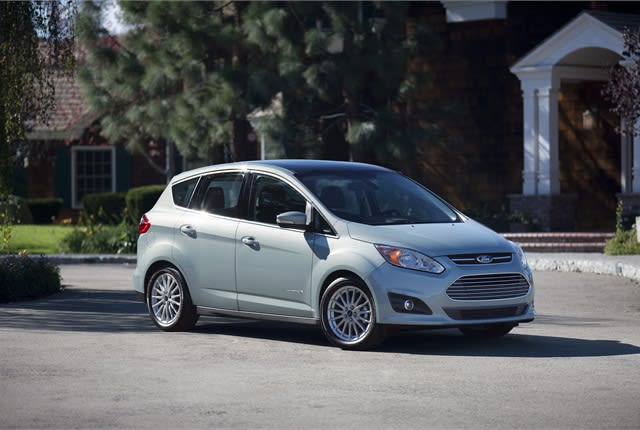
Ford's 2013 C-MAX Hybrid. Photo courtesy Ford Motor Co.
Ford is revising the fuel economy label on its 2013 C-MAX Hybrid, changing it from the original 47 mpg city, highway, combined EPA rating to 43 mpg combined. The U.S. Environmental Protection Agency commented on this change, noting the ratings are 45 mpg city, 40 mpg highway, 43 combined.
Ford said the difference in mpg during testing versus what others claimed the C-MAX achieved on road was due to the larger effect that small differences in driving behavior and road conditions have on hybrids versus traditional gasoline-fueled vehicles.
The automaker added that since this change means a difference in estimated fuel costs,customers who purchased the vehicle will receive a check from Ford for $550. Ford said it will notify customers and that those with questions can visit Ford's site here or call 1-800-392-3673.
Looking ahead to the 2014-MY C-MAX, Ford said it will make a number of hardware changes to its 2014-MY C-MAX, including gearing changes that result in a more efficient transmission drive ratio; new parts designed to improve aerodynamics, including a new hood seal, new front and rear tire deflectors, new A-pillar moldings, and the addition of rear liftgate deflectors; and new engine oil with reduced friction. The automaker said testing for the 2014 C-MAX Hybrid isn’t complete.
Commenting on changes to the tests that resulted in the revised fuel-economy figures, the EPA said the agency tested the C-MAX after receiving complaints from consumers that the vehicle did not achieve the original estimated 47 highway, city, combined mpg as stated in the original tests. The EPA added that the label regulations, developed in 1977, don’t require vehicles with the same engine, transmission, and weight class to use the same fuel economy label value data since, historically, those families of vehicles typically achieved close to identical fuel economy performance.
EPA said newer vehicles, the C-MAX in this case, are more sensitive to small design differences that can affect fuel economy. In addition, the EPA noted that Ford’s hybrids are one of two examples in the industry where an automaker uses the same engine, transmission, and hybrid components across a number of vehicles. The EPA said with the new Ford C-MAX label, each vehicle design in the two high-efficiency hybrid families in the industry now has its own label.
The EPA said it plans to work with the industry, consumers, and environmental organizations to propose revised fuel economy labeling regulations.
Updated 8/16/2013, 9:14 am with commentary from EPA.
Originally posted on Automotive Fleet
More Small Fleet

Developing Budget-Friendly Driver Safety Programs
From driver training and safety meetings to one-on-one coaching and incentive programs, several small fleets share how they have developed a safety culture with their drivers using low- to no-cost resources.
Read More →
Boosting Last-Mile Fleet Uptime, Safety, and Value with AI Vehicle Inspections
AI-powered inspections are transforming last-mile fleets by replacing manual checks with highly accurate automated scans that detect defects in seconds. By giving fleet operations visibility into the daily condition of their vehicles, you can identify trends over the vehicle’s lifecycle that enable improved procurement decisions, route management, driver training and accountability.
Read More →

Five Ways Seat Belts Help Prevent Injuries
There are five ways seat belts protect occupants from injuries, according to the Tennessee Department of Safety and Homeland Security.
Read More →
Basic Tracking vs Next Generation Fleet Technology
Fleet software is getting more sophisticated and effective than ever, tying big data models together to transform maintenance, safety, and the value of your existing tech stack. Fleet technology upgrades are undoubtedly an investment, but updated technology can offer a much higher return. Read how upgrading your fleet technology can increase the return on your investment.
Read More →
It’s here: The 2026 Fleet Technology Trends Report
What does AI mean for fleets? Get the answer — and learn other top tech trends.
Read More →
Small Fleets, Big Impact: How Independent Drivers Power Wreaths Across America
Check out how small fleets and independent drivers power Wreaths Across America each December and why their impact matters more than ever.
Read More →
VMS Survey Finds 65% of Small Fleet Managers Run Operations Alone
A new VMS survey shows small fleet managers are stretched thin, with most handling operations solo and eager to adopt digital tools for relief.
Read More →
Tips for Driving Safely on Halloween Night
This video features a reminder from the Connecticut Department of Transportation (DOT) and the Connecticut Police Chiefs Association, urging drivers to prioritize safety this Halloween.
Read More →
AI, Access, and Uptime: VMS’s Next Chapter with David Prusinski
VMS’s new Co-CEO, David Prusinski, shares how an AI-first approach will give small fleets and repair shops the tools to compete like big players.
Read More →