




Ford Explorer Hits 100,000 Unit Sales Mark & Gets New Safety Features
DEARBORN, MI - America's love affair with the Ford Explorer is stronger than ever with more than 100,000 Explorers sold this year - making it the fastest-growing mid-size utility in the nation.

2012 Ford Explorer
DEARBORN, MI - America's love affair with the Ford Explorer is stronger than ever with more than 100,000 Explorers sold this year - making it the fastest-growing mid-size utility in the nation, according to the automaker.
"The Explorer continues to be one of the strongest vehicles in the Ford portfolio, and we are excited to see it surpass the 100,000-sales plateau for the first time since 2007," said Amy Marentic, group marketing manager. "The success of this vehicle is further evidence we are delivering products that people want."
This year, the all-new Explorer has had stronger retail sales growth than any midsize utility, having either tripled or quadrupled sales in all regions of the country. In total, U.S. retail sales of Explorer are up 290 percent compared to the same period in 2010.
"With best-in-class fuel economy and technology like MyFord Touch, terrain management and the world's first second-row inflatable seat belts, Ford has shown that our dedication to customers' needs is paying off," said Marentic.
Explorer's retail share performance has also increased dramatically. Through August of this year, Explorer accounts for 6.3 percent retail share of the midsize utility segment, a 4.5 point share increase over last year, making it one of the best-selling midsize utilities in America.
Explorer sales in the U.S. have exceeded 100,000 for the first time since 2007.
2011 100,000Note: January through early October 2010 60,687
2009 52,190
The new Ford Explorer will also come with a "cup of coffee" for customers who opt for an innovative new Lane Keeping System that can warn drivers if it detects they are getting too tired to drive.
Ford will introduce in early 2012 an innovative Lane Keeping System with three unique features designed to help drivers stay in control behind the wheel, including a Driver Alert System that can notify drivers if it detects signs of drowsiness. In this case, a coffee cup light will appear on the dashboard instrument cluster to suggest the driver take a break.
"The Explorer is loaded with new innovations, including this new lane keeping technology that helps drivers stay in control of their vehicle if they drift out of their lane or show signs of drowsiness," says Raj Nair, vice president, Engineering, Ford Global Product Development.
Click here for animation of Ford's new Lane Keeping System.
The system uses a small forward-facing camera mounted on the windshield behind the rearview mirror, and is able to identify lane markings on both sides of the vehicle.
When the vehicle is on the move, the camera looks at the road ahead and predicts where the vehicle should be positioned relative to the lane markings. "Our engineering teams tested this technology for thousands of miles in many parts of the country to help ensure it performs on a wide range of roads with different lane markings," said Michael Kane, vehicle engineering supervisor for Driver Assistance Technologies for Ford, who helped develop the technologies.
Click the next page for further details on the new systems.
[PAGEBREAK]
Lane Keeping System
The Lane Keeping System is designed to help the driver avoid leaving his or her lane unintentionally. This new technology consists of the Driver Alert System, Lane Keeping Alert and Lane Keeping Aid.
Driver Alert System
The Driver Alert System is designed to help alert drowsy drivers by monitoring the vehicle's movement compared to lane markings that are tracked by a camera mounted on the windshield. If the system detects a driving pattern consistent with a drowsy driver, a first-level chime will sound and a coffee cup warning will appear on the dashboard instrument cluster to recommend the driver take a break.
If the driver does not respond to this alert and the system continues to sense the driver is fatigued, another warning and chime will be issued. Drivers can monitor their condition on the dashboard at any time, even without receiving warnings. If they approach the yellow warning range, they should rest as soon as possible.
All information is reset as soon as the driver stops and either opens the door or turns off the engine. More than 40 percent of Americans say they have fallen asleep or nodded off while driving, according to a survey conducted by the AAA Foundation for Traffic Safety.
Lane Keeping Alert
The Lane Keeping Alert is designed to help drivers avoid unintentional lane changes. When the system detects the vehicle drifting close to lane markings, it will alert the driver through a vibration in the steering wheel to naturally direct the driver's attention to where it is required.
This provides the driver with valuable time to react and steer the vehicle back into its lane. To calculate the lane position, Lane Keeping Alert uses data from the front camera on the windshield. A display in the dashboard instrument cluster lets the driver know when the system is operational as not all roads are well-marked.
Lane Keeping Aid
Lane Keeping Aid takes this technology even further by providing steering torque to alert the driver of the need to steer back toward the center of the lane. The system calculates the amount of steering required based on factors such as the distance to the lane markings, yaw angle and curve radius determined from the front camera and other sensors in the vehicle.
If the driver prefers, the Lane Keeping Alert can work in combination with the Lane Keeping Aid. When the driver signals, the system is deactivated so that the vehicle can change lanes without intervention. The driver can override the Lane Keeping Aid at any time through counter steering, hard braking or fast accelerating.
In these cases, the system recognizes that the driver has intentionally changed lanes. While steering torque is being applied, the system also can display a warning if a torque sensor determines the driver may not have his or her hands on the steering wheel based on the driver's steering efforts.
If the system still detects the driver's hands may be off the wheel after a few seconds, an audible chime is played to help prevent drivers from inappropriately relying on the Lane Keeping Aid.
Settings The sensitivity of the setting can be adjusted between normal and increased, which moves the warning zones in closer to the center of the lane. The intensity of the steering wheel vibrations can be adjusted as well between low, medium and high. The last-known setting for each selection is stored so it does not have to be set each time the system is activated.
The system features must be turned on by the driver, and will stay on unless the driver turns them off. The customer chooses which feature is preferred: alert, aid or both. The systems work both day and night with low-beam headlights.
Dashed lines, like those on highways, will appear when the system is activated. A green line indicates the system is available and ready to provide a warning. A flashing yellow line means the system has just provided a Lane Keeping Aid warning, while a flashing red line notifies the driver of a Lane Keeping Alert warning.
Gray lines indicate the system is suppressed because the vehicle is traveling at less than the 40-mph activation speed, the road is poorly marked, or adverse environmental conditions do not allow the camera to determine road markings.
More Safety
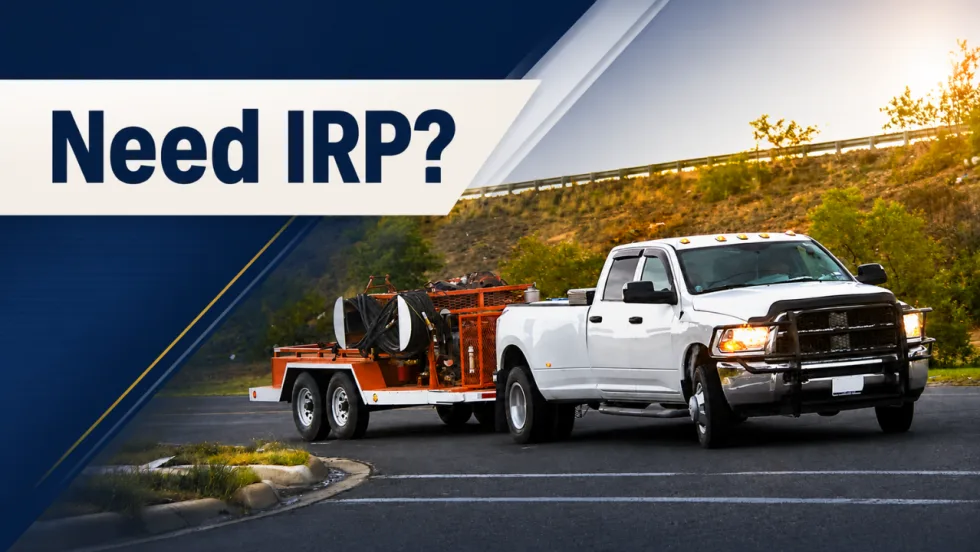
When Work Trucks Under 26,001 Pounds Need IRP Registration
Think trucks under 26,001 pounds are automatically in the clear when it comes to IRP? Not always. Learn where lighter vehicles can still run into trip permit, apportioned registration, and IFTA compliance requirements when crossing state or provincial lines.
Read More →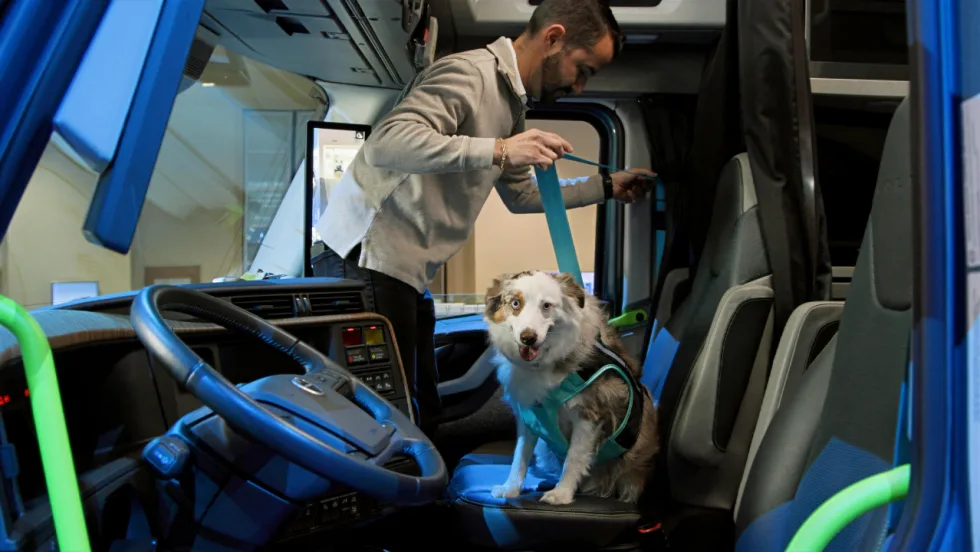
Volvo Trucks Releases New Safety Recommendations for Traveling with Pets
One of the most important recommendations for professional drivers traveling with pets is to ensure pets are properly restrained while the truck is moving. Other tips are available in the new guide from Volvo Trucks North America and Center for Pet Safety.
Read More →
API Issues Refueling Safety Guidelines
The American Petroleum Institute offers a list of safe vehicle refueling guidelines, including ways to avoid potential problems with static electricity discharges in fall, winter, and early spring.
Read More →
Winter Fleet Prep: Expert Tips to Keep Vehicles Running Smoothly
Cold weather can expose weak batteries, tires, fuel systems, and maintenance gaps fast. Use this winter fleet checklist to prepare trucks and drivers before temperatures drop.
Read More →
When a Work Truck Breaks Down, the Job Can Stop, Too
A work truck breakdown can stop more than the vehicle. Discover how payloads, jobsites, and specialty equipment change the roadside response.
Read More →
What Stronger Long-Term Fleet Service Partnerships Actually Require
Fleet service partnerships rarely fall apart all at once. Learn the three warning signs that trust is eroding and what fleets and providers can do before downtime, frustration, and lost revenue follow.
Read More →
Applause & TRUCE Software Partner to Improve Driver Safety Through AI-Powered Telematics & Employee Performance Management
Applause has integrated TRUCE driving metrics directly into its employee-first performance and safety platform that transforms mobile devices into AI-powered telematics.
Read More →
How Detroit Assurance with Active Brake Assist Works
Do you want to see what it is like to experience Detroit Assurance’s Active Brake Assist? In this video, Work Truck will put you in the cab to see how it all works and then hear more details from DTNA’s Mike Young.
Read More →
Get Left of Loss: A 5-Step Workplace Violence Prevention Framework for Fleet Operators
Violence risks do not stop at the driver’s door. Learn five practical steps fleets can take to spot threats early and protect workers before loss occurs.
Read More →
How Better Visibility Cut Speeding Violations by 48%
Fleet leaders don't need more data, they need clearer visibility into what the data is saying. This case study explores how one utility replaced speeding-event counts with a single metric — miles driven in violation — to strengthen safety and significantly reduce speeding violations.
Read More →