





What Are the Compliance Problems AI Can Solve for Work Truck Fleets Today?
Fleets Are Kicking the Tires on AI but Few Are Hitting the Gas
Fleets are exploring AI, but few use it broadly. Fleetio data shows what’s holding adoption back and what to watch next as AI moves beyond pilots.
February 18, 2026

More than half of fleets are piloting AI, but only 5.6% report broad use, raising questions about how quickly adoption will grow.
Credit: Work Truck
4 min to read
Fleetio’s 2026 Fleet Benchmark Report shows something we’re hearing more often in conversations with fleet leaders. AI is on the radar. It just is not fully in the cab yet.
According to the report, 53.3% of fleets are researching or piloting AI capabilities. But only 5.6% say they are using AI broadly today. That gap is worth paying attention to.
Fleetio’s data is based on 1.2 million vehicles, 17.5 billion miles, $7 billion in service spend, and input from more than 600 fleet professionals. So when more than half of fleets say they are exploring AI, that signals real curiosity. At the same time, broad adoption is still very limited.
Why the hesitation? About half of the respondents cited concerns about accuracy and reliability as their main barrier. In other words, fleets are interested. They just are not ready to bet the operation on it.
Is This A Familiar Pattern in Fleet?
It’s hard not to get telematics flashbacks here. Fleetio’s report shows 53.3% of fleets are researching or piloting AI, but just 5.6% say they’re using it broadly today. That “lots of interest, very little full rollout” split looks a lot like the early telematics era, when fleets were testing GPS tracking and early data platforms in pockets, but hesitated to scale because of ROI questions, data quality, driver buy-in, and integration headaches.
Over time, telematics shifted from “Should we do this?” to “How fast can we get it everywhere?” once the value was clearer and the tech was easier to operationalize.
The question now is whether AI follows that same path.
Will adoption grow gradually as accuracy and reliability improve and fleets build trust in the outputs? Or will AI move faster than telematics did, especially since it’s often arriving as an add-on inside tools fleets already use, instead of a whole new system that has to be installed, trained, and enforced?
That could be AI’s advantage. It might shorten the learning curve and speed up adoption. Or it could slow things down if early results feel inconsistent and fleets decide the “pilot phase” is the safest place to park it for a while.
For now, the data says fleets are curious, cautious, and still mostly experimenting.
Bigger Context in the AI and Fleet Conversation
AI is not the only pressure fleets are managing. Fleetio’s report found top concerns include rising costs at 54.4%, regulations and emissions mandates at 46.1%, EV transition and infrastructure at 35.1%, technician shortages at 32.5%, and parts and vehicle availability at 28.9%.
Layer on top of that the finding that vehicles more than 10 years old account for about 12.1% of miles, but roughly 33.5% of total service spend. Estimated service cost per mile jumps from $0.20 for vehicles 0 to 5 years old to $1.10 for those more than 10 years old.
When fleets are juggling aging assets, tight labor markets, and cost pressure, any new technology has to prove it can reduce downtime or control spend. Fast.
The report also highlights maintenance bottlenecks. Communication gaps, technician availability, and unscheduled service volume are among the top reasons maintenance falls behind schedule. The median time to start work orders is 31 minutes, but the average is 6.7 days, suggesting significant delays in some cases.
That is exactly the kind of operational friction AI vendors say they can help solve. Smarter scheduling. Better parts forecasting. Predictive maintenance insights. So the need and the appetite are there. The trust still needs to catch up.
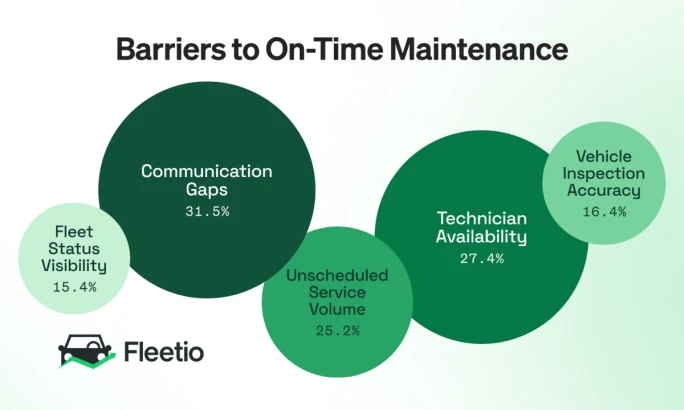
Fleetio’s 2026 Fleet Benchmark Report highlights communication gaps and technician availability as top barriers to on-time fleet maintenance.
Credit: Fleetio
What to Watch out for with AI Adoption
If AI adoption grows from 5.6% to double digits in the next year or two, that signals confidence is building. If it lingers in the single digits, fleets may still be waiting for clearer ROI or stronger reliability.
For fleet managers, the takeaway right now is not that you are behind. It is that you are in the majority if you are still exploring. But, as with telematics, it's easy to get left behind with the tide shifts.
AI is in the pilot phase for most fleets. The real story will be how quickly those pilots turn into policy. And that is a trend worth tracking. Make sure you are subscribed to Work Truck's newsletters so you never miss a trend, insight, or update!
More Technology
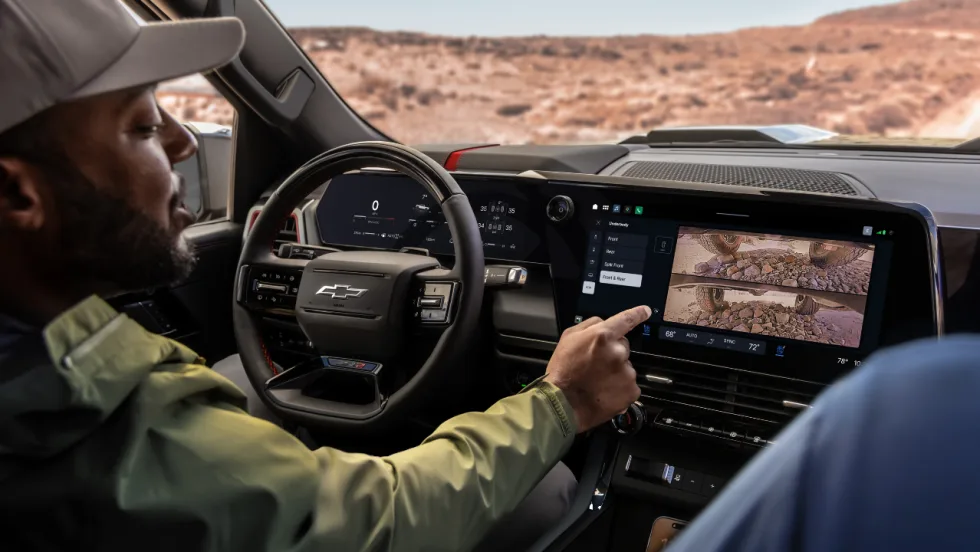
GM Brings New Truck Focused Interface to 2027 Silverado and Sierra
GM's new pickup interface puts trailering data, camera views, vehicle controls, and smartphone integration closer to the driver in the 2027 Silverado and Sierra.
Read More →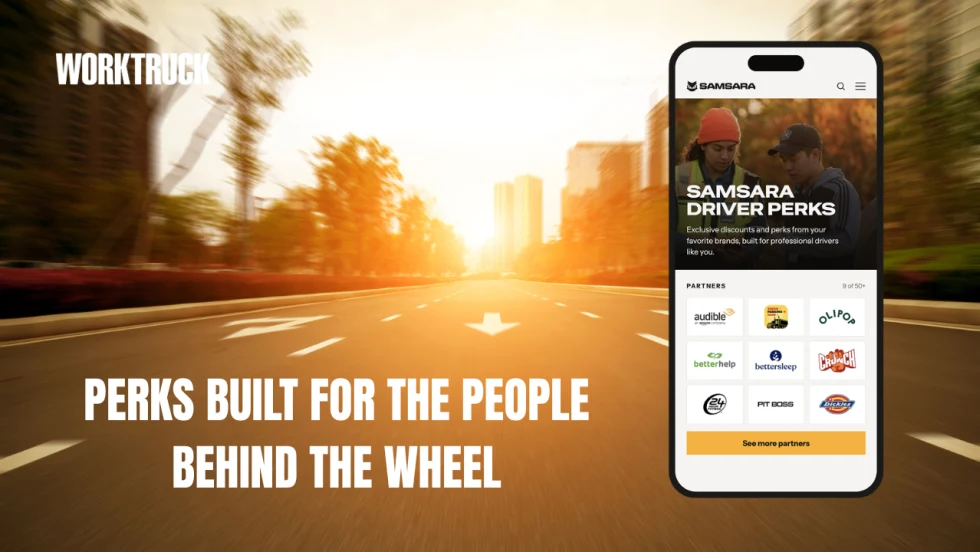
Samsara Driver Perks Expands Rewards Beyond the Long Haul Driver
Samsara’s new driver rewards program was built with a broader professional driver in mind, including employees who split their day between driving, job sites, service calls, and other work.
Read More →
AI Service Advisor Aims to Cut Fleet Repair Downtime
Fleetio said its AI Service Advisor can help fleets cut repair downtime by an average of 2.5 hours per repair while reducing manual maintenance work.
Read More →
Verra Mobility Launches AI-Driven Title & Registration Solution
Verra Mobility has launched a new AI-driven Title & Registration platform to help fleets move vehicles from acquisition to the road the same day while reducing compliance risk.
Read More →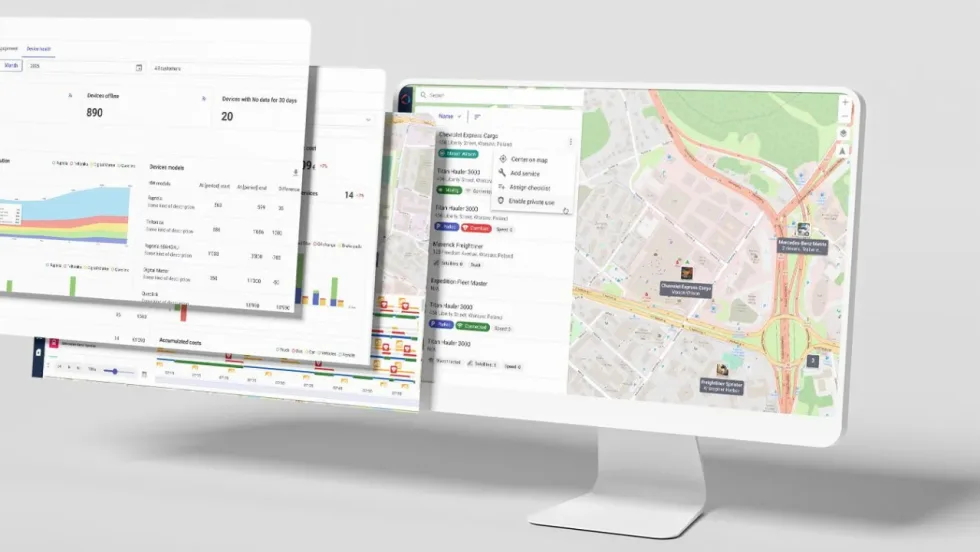
Wialon Unlocks OEM Data to Give Fleet Owners Data Ownership & Operational Clarity
Wialon has introduced hardware-free OEM integration as the EU Data Act accelerates the shift in vehicle data access across the fleet industry in many countries.
Read More →
Teletrac Navman Promotes New CEO from Within
Teletrac Navman’s next CEO, Ricardo Buranello, has served as the company’s chief financial and operating officer. He brings deep financial and operational expertise, a strong strategic orientation, and an intimate knowledge of the business to his new role.
Read More →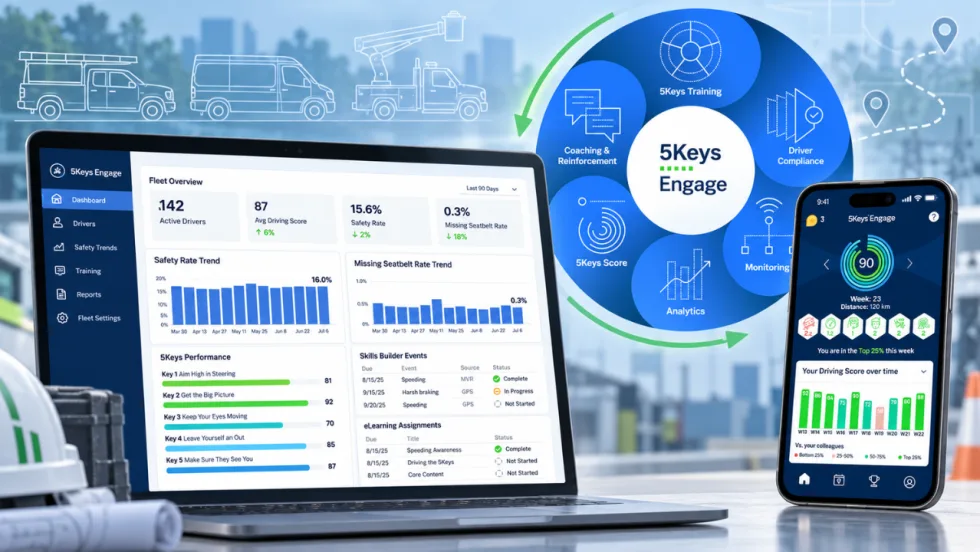
Smith System Wants Work Truck Fleets to Look Beyond the Driver Alert
Smith System’s new Driver Risk Management program is built to help mixed work truck fleets turn telematics alerts and observations into specific behaviors, coaching actions, and measurable follow-up.
Read More →
Ford Pro Software Updates: August 26
Check out the latest Ford Pro software updates, including Google Maps integration, Remote Vehicle Alarm integration, Motor Pool for easier management of shared pool vehicles, and more.
Read More →
Where AI Is Actually Saving Fleet Managers Time
AI is moving past the buzzword stage and into the daily fleet workflow. Fleetio’s Brianna Perry Lang breaks down where fleets are seeing real time savings, from maintenance and data entry to repair decisions, safety, and compliance
Read More →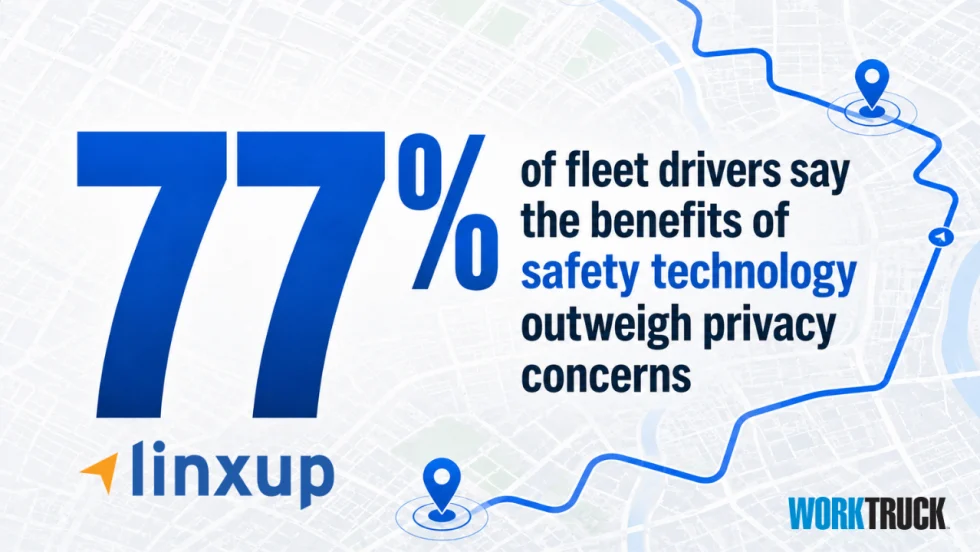
Are Work Truck Drivers Warming Up to Dash Cams and GPS Tracking?
A new survey finds field-service drivers may be more comfortable with dash cams and GPS tracking than fleet managers think, especially when the technology helps protect them after a crash.
Read More →