




Feds Add 35M More Air Bags to Takata Recall
This expansion, which more than doubles the size of the Takata recall, is aimed at replacing all Takata frontal air bag inflators that contain ammonium nitrate but don’t contain a drying agent.
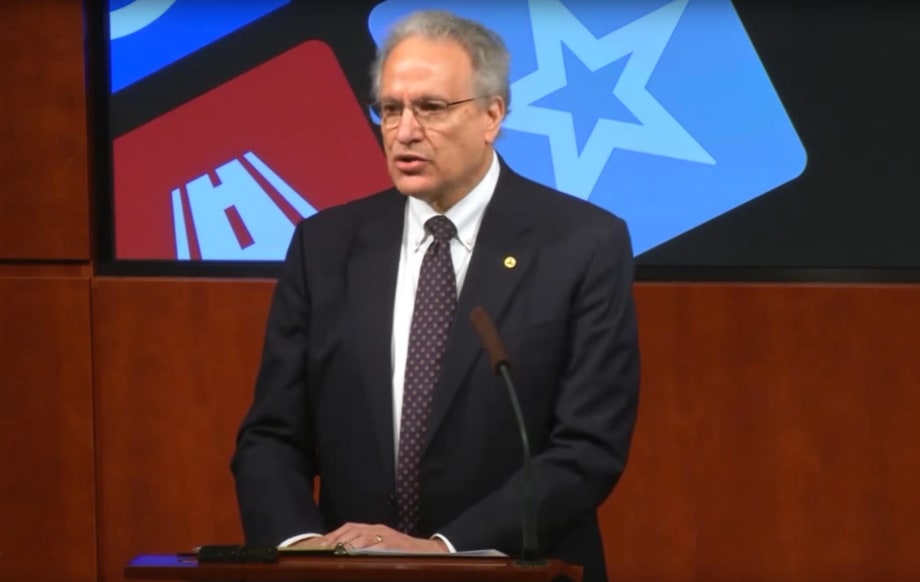
NHTSA Administrator Mark Rosekind discusses the latest Takata air bag inflator recall expansion during a May 4 press conference. Screen shot courtesy of NHTSA via YouTube.

NHTSA Administrator Mark Rosekind discusses the latest Takata air bag inflator recall expansion during a May 4 press conference. Screen shot courtesy of NHTSA via YouTube.
The National Highway Traffic Safety Administration announced plans to accelerate and further expand the Takata air bag inflator recall, adding 35-40 million more frontal air bag inflators that use an ammonium nitrate-based propellant.
The majority of the inflators included in this expansion are in front passenger-side air bags. Affected vehicles will eventually be added to NHTSA’s recalls lookup tool.
The decision to further expand the recall follows the federal agency’s confirmation of the root cause behind the inflators’ propensity to rupture. Exploding Takata air bag inflators have been linked to 10 deaths and more than 100 injuries in the U.S., according to NHTSA.
Under an amended consent order issued to Takata this week, the beleaguered automotive supplier must make a series of decisions acknowledging defects. These decisions will support vehicle manufacturer recall campaigns of the additional inflators.
A total of 28.8 million inflators have been previously recalled. The new expansion is set to take place in phases between now and the end of 2019, according to NHTSA. As a result, all Takata ammonium nitrate-based propellant frontal air bag inflators without a chemical drying agent, also known as a desiccant, will be recalled. That includes both driver-side and passenger-side frontal air bag inflators.
“Today’s action is a significant step in the U.S. Department of Transportation’s aggressive oversight of Takata on behalf of drivers and passengers across America,” said Transportation Secretary Anthony Foxx. “The acceleration of this recall is based on scientific evidence and will protect all Americans from air bag inflators that may become unsafe.”
NHTSA is an agency within the U.S. Department of Transportation.
The five recall phases are based on level of risk, determined by the age of the inflators and exposure to high humidity and fluctuating high temperatures. These factors accelerate the degradation of the chemical propellant.
“NHTSA’s aggressive actions in 2015 mean this recall is already a year ahead of where it would have been if the agency had waited for this research,” said NHTSA Administrator Mark Rosekind. “As a result, all of the most dangerous inflators responsible for the deaths and injuries are already under recall.”
NHTSA and its independent expert reviewed the findings of three separate investigations into the Takata air bag ruptures and confirmed the conclusions about the root cause of inflator ruptures. A combination of time, environmental moisture, and fluctuating high temperatures degrades the ammonium nitrate propellant in the inflators. Such degradation can cause the propellant to burn too quickly, rupturing the inflator module and sending shrapnel through the air bag and into the vehicle occupant area.
“The science clearly shows that these inflators become unsafe over time, faster when exposed to humidity and variations of temperature,” Rosekind added. “This recall schedule ensures the inflators will be recalled and replaced before they become dangerous, giving vehicle owners sufficient time to have them replaced before they pose a danger to vehicle occupants. NHTSA will continue to evaluate all available research and will act quickly to protect safety.”
NHTSA said it will consult with affected manufacturers before revising the remedy order that governs the accelerated program. More details about the revised remedy program will be announced this summer, including an updated vehicle prioritization schedule and manufacturer deadlines for procuring replacement parts.
The Takata air bag inflator recall is the largest and most complex safety recall in U.S. history. NHTSA and the involved vehicle manufacturers have committed to seek a 100-percent recall completion rate. A total of 8.16 million air bags have been repaired already. Of those, 4.6 million are driver-side and 3.5 million are passenger-side.
“Everyone plays a role in making sure that this recall is completed quickly and safely, including manufacturers, suppliers and vehicle owners themselves,” Rosekind said. “People who receive notification that there is a remedy available for their vehicle should act immediately to have their inflator fixed. All vehicle owners should regularly check SaferCar.gov for information about any open safety recall on their vehicle and what they can do to have it fixed free of charge.”
The recall expansion doesn’t include inflators with a chemical desiccant that absorbs moisture. There have been no reported ruptures of the desiccated inflators due to propellant degradation, NHTSA said. But under the amended consent order, Takata must redirect its research toward the safety of the desiccated inflators. If the company can’t prove they’re safe, Takata must recall them as well.
For more information about the Takata air bag recalls, click here.
Originally posted on Automotive Fleet
More Small Fleet

Developing Budget-Friendly Driver Safety Programs
From driver training and safety meetings to one-on-one coaching and incentive programs, several small fleets share how they have developed a safety culture with their drivers using low- to no-cost resources.
Read More →
Boosting Last-Mile Fleet Uptime, Safety, and Value with AI Vehicle Inspections
AI-powered inspections are transforming last-mile fleets by replacing manual checks with highly accurate automated scans that detect defects in seconds. By giving fleet operations visibility into the daily condition of their vehicles, you can identify trends over the vehicle’s lifecycle that enable improved procurement decisions, route management, driver training and accountability.
Read More →
Five Ways Seat Belts Help Prevent Injuries
There are five ways seat belts protect occupants from injuries, according to the Tennessee Department of Safety and Homeland Security.
Read More →
It’s here: The 2026 Fleet Technology Trends Report
What does AI mean for fleets? Get the answer — and learn other top tech trends.
Read More →
Small Fleets, Big Impact: How Independent Drivers Power Wreaths Across America
Check out how small fleets and independent drivers power Wreaths Across America each December and why their impact matters more than ever.
Read More →
VMS Survey Finds 65% of Small Fleet Managers Run Operations Alone
A new VMS survey shows small fleet managers are stretched thin, with most handling operations solo and eager to adopt digital tools for relief.
Read More →
Tips for Driving Safely on Halloween Night
This video features a reminder from the Connecticut Department of Transportation (DOT) and the Connecticut Police Chiefs Association, urging drivers to prioritize safety this Halloween.
Read More →
AI, Access, and Uptime: VMS’s Next Chapter with David Prusinski
VMS’s new Co-CEO, David Prusinski, shares how an AI-first approach will give small fleets and repair shops the tools to compete like big players.
Read More →
Fleet Managers Share Winter Prep Tips: It's Never Too Early!
Three fleets share best practices to prep vehicles for winter and prevent downtime when the cold sets in.
Read More →