




EPA Proposes More Road Testing for MPG Rating
The Environmental Protection Agency will recommend that automakers be required to perform additional road testing to confirm the fuel-economy claims posted on their vehicles, rather than relying on laboratory measurements.
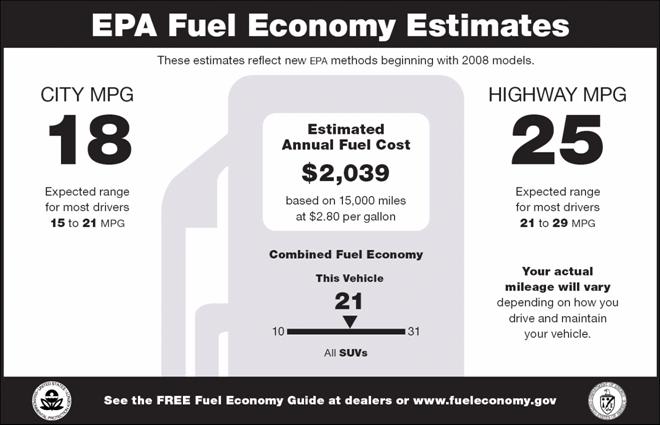
Photo via Wikipedia.
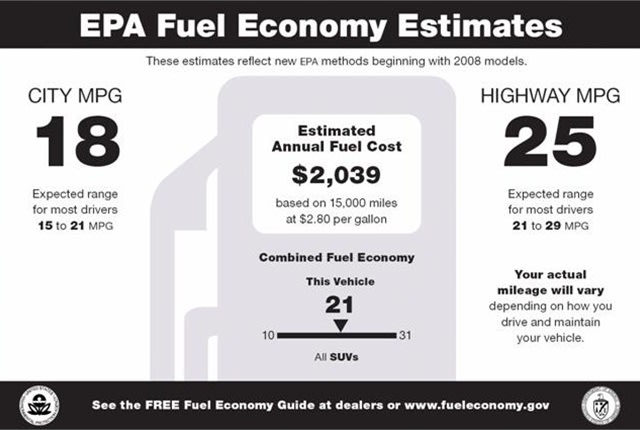
Photo via Wikipedia.
The Environmental Protection Agency will recommend that automakers be required to perform additional road testing to confirm the fuel-economy claims posted on their vehicles, rather than relying on laboratory measurements.
The Wall Street Journal reported last week that the EPA proposal comes after recent cases where some mileage estimates from Ford Motor Co., Hyundai Motor Co., and Kia Motors Co. turned out to be overstated.
The EPA wants automakers to measure vehicles’ air resistance and rolling friction on a test track rather than rely on computer modeling, according to the Journal.
Chris Grundler, director of the EPA's Office of Transportation and Air Quality, told the Journal that some companies already do this kind of testing, "but we are establishing a regulatory requirement for all automakers."
Changes made to the testing in 2008 have helped make the numbers more closely align with what consumers can expect, but there are still some inconsistencies, the Journal said. Its own analysis has found that hybrids tend to underperform lab results while diesel engines often do much better than their posted numbers.
AAA issued a statement lauding the EPA proposal.
“For most Americans, a new vehicle is the second largest investment they will make and it's imperative they have accurate information to inform their purchase,” the statement says. “While reports show that many consumers actually experience better fuel economy than promised, it is important for the ratings to be as accurate as possible and not overstate real-world performance.”
Before the EPA can take action on the proposal, a public comment period is required.
Originally posted on Automotive Fleet
More Small Fleet


Developing Budget-Friendly Driver Safety Programs
From driver training and safety meetings to one-on-one coaching and incentive programs, several small fleets share how they have developed a safety culture with their drivers using low- to no-cost resources.
Read More →
Boosting Last-Mile Fleet Uptime, Safety, and Value with AI Vehicle Inspections
AI-powered inspections are transforming last-mile fleets by replacing manual checks with highly accurate automated scans that detect defects in seconds. By giving fleet operations visibility into the daily condition of their vehicles, you can identify trends over the vehicle’s lifecycle that enable improved procurement decisions, route management, driver training and accountability.
Read More →
Five Ways Seat Belts Help Prevent Injuries
There are five ways seat belts protect occupants from injuries, according to the Tennessee Department of Safety and Homeland Security.
Read More →
It’s here: The 2026 Fleet Technology Trends Report
What does AI mean for fleets? Get the answer — and learn other top tech trends.
Read More →
Small Fleets, Big Impact: How Independent Drivers Power Wreaths Across America
Check out how small fleets and independent drivers power Wreaths Across America each December and why their impact matters more than ever.
Read More →
VMS Survey Finds 65% of Small Fleet Managers Run Operations Alone
A new VMS survey shows small fleet managers are stretched thin, with most handling operations solo and eager to adopt digital tools for relief.
Read More →
Tips for Driving Safely on Halloween Night
This video features a reminder from the Connecticut Department of Transportation (DOT) and the Connecticut Police Chiefs Association, urging drivers to prioritize safety this Halloween.
Read More →
AI, Access, and Uptime: VMS’s Next Chapter with David Prusinski
VMS’s new Co-CEO, David Prusinski, shares how an AI-first approach will give small fleets and repair shops the tools to compete like big players.
Read More →
Fleet Managers Share Winter Prep Tips: It's Never Too Early!
Three fleets share best practices to prep vehicles for winter and prevent downtime when the cold sets in.
Read More →