




Related: EPA Proposes Modest Renewable Fuel Increase for 2017
EPA Approves Modest Renewable Fuel Increase for 2017
The U.S. Environmental Protection Agency has approved a 6% increase in the level of biofuels that producers must blend with gasoline and diesel in 2017 that falls significantly short of amount required by the Renewable Fuel Standard by 2022.
by Staff
November 30, 2016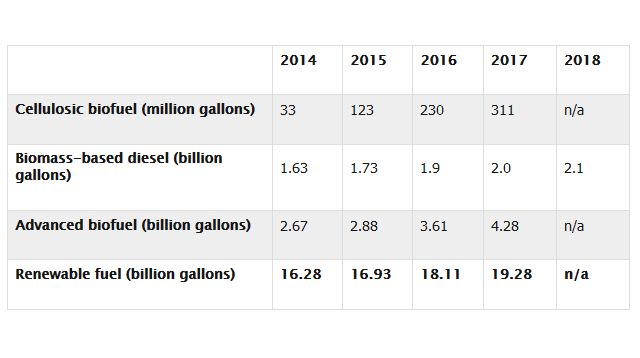
Chart courtesy of EPA.
1 min to read
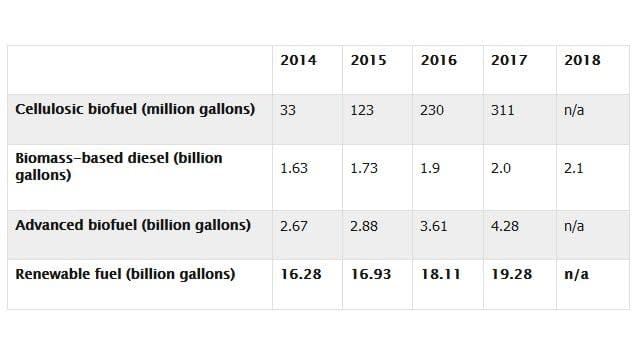
Chart courtesy of EPA.
The U.S. Environmental Protection Agency has approved a 6% increase in the level of biofuels that producers must blend with gasoline and diesel in 2017 that falls significantly short of amount required by the Renewable Fuel Standard by 2022.
Producers must blend 19.28 billion gallons of renewable fuel that includes cellulosic biofuel, biomass-based diesel, and advanced biofuel. Producers must blend 311 million gallons, 2 billion gallons, and 4.28 billion gallons respectively.
The Renewable Fuel Standard passed in 2005 and expanded in 2007 sets a goal of 36 billion gallons by 2022.
The EPA also approved 2.1 billion gallons of biomass-based diesel for 2018.
"Renewable fuel volumes continue to increase across the board compared to 2016 levels," said Janet McCabe, the EPA's acting assistant administrator for the Office of Air and Radiation. "These final standards will boost production, providing for ambitious yet achievable growth of biofuels in the transportation sector. By implementing the program enacted by Congress, we are expanding the nation’s renewable fuels sector while reducing our reliance on imported oil."
Originally posted on Automotive Fleet
More Green Fleet

Fleet Forward Conference Introduces One-Day Passes for 2026
New one-day registration gives fleet professionals the flexibility to attend Tuesday, Wednesday, or Thursday, with passes available for $199 through Sept. 18.
Read More →
CALSTART Rebrands as Catalyst Mobility, Will Combine with Forth in 2027
CALSTART has rebranded as Catalyst Mobility and will combine with Forth at the start of 2027. The new organization said it is poised to become one of the world's largest, strongest, and most impactful clean transportation nonprofits.
Read More →
Electric Truck and Charging Programs to Boost Sustainability at NY & NJ Ports
Together, the Port Authority of New York and New Jersey and CALSTART will electrify drayage and terminal operations serving the East Coast’s busiest container port. A pair of incentive programs totaling $45 million has launched to accelerate adoption of zero-emission drayage trucks and terminal tractors.
Read More →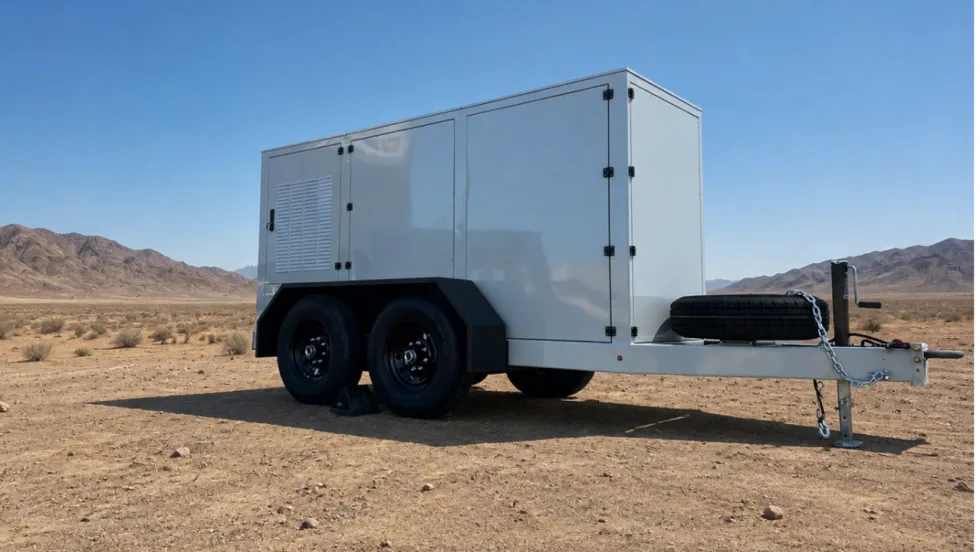
Xos Hub Surpasses One Gigawatt-Hour of Energy Delivered in the Field
A single Xos Hub has surpassed one gigawatt-hour of energy across more than 33,600 charging sessions in the field, demonstrating performance that supports Xos' expansion across new products and markets.
Read More →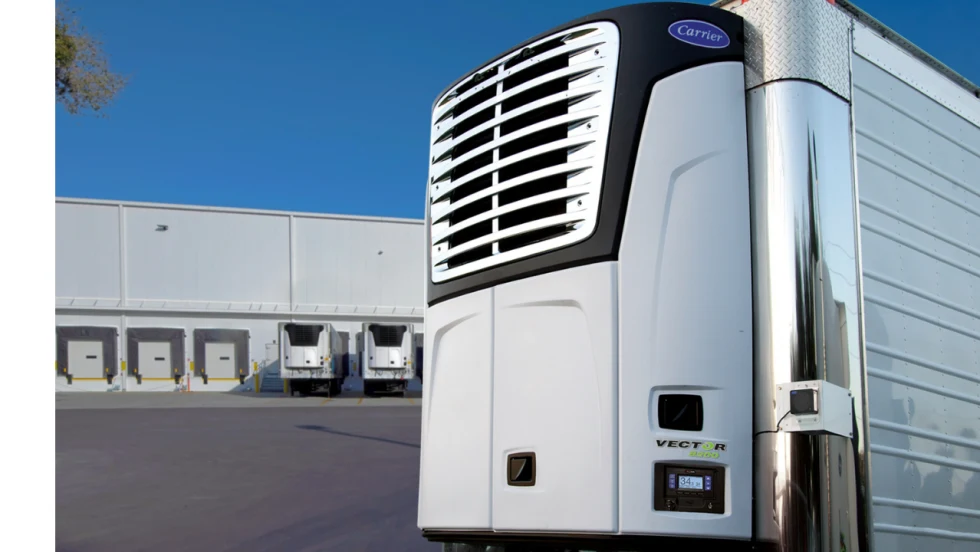
Carrier Transicold Launches All-Electric Vector 8200 TRU for Diesel-Free On-Site Cold Storage
Carrier Transicold’s first engineless multi-temperature TRU helps fresh- and frozen-food fleets add supplemental cold storage capacity during seasonal peaks.
Read More →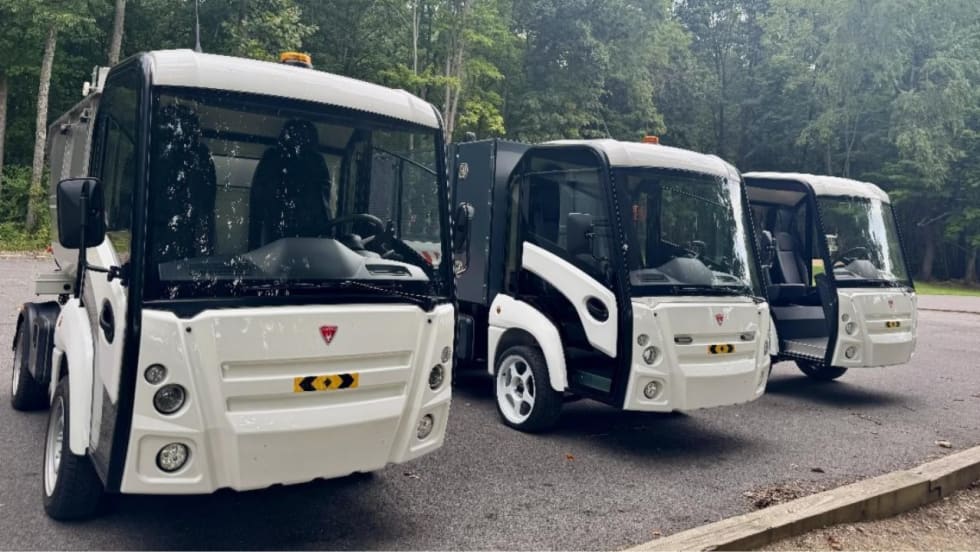
Narro Trucks Introduces Electric Utility Vehicle
Narro Trucks officially launched its operations on Aug. 20 and hosted a ride and drive to showcase its electric truck, which will be produced in Virginia.
Read More →
Samsung SDI Takes Full Control of GM Battery JV as Indiana Plant Pivots to Energy Storage
Samsung SDI is taking full control of its Indiana battery plant with GM, marking a major shift from the EV-focused joint venture Charged Fleet first covered in 2023.
Read More →
NWSA Taps CALSTART to Administer Zero-Emission Drayage Assistance Program
CALSTART will provide free technical assistance services to drayage fleets serving the Ports of Seattle and Tacoma and looking to transition to cleaner technologies and help decarbonize freight hubs.
Read More →
EV Fleet Reality Check: What Operators Wish They Knew Before Electrifying Their Work Vans
Electric work truck upfits bring new compatibility questions. Learn how parts availability, OEM guidance, power demands, and route planning can affect fleet performance.
Read More →
Peterbilt Expands Sourcewell Partnership with Electric Vehicle Lineup
Peterbilt Motors Company’s cooperative purchasing agreement with Sourcewell and its Canadian partner, Canoe Procurement Group, now includes including Peterbilt's battery-electric vehicle lineup.
Read More →