




DTNA Adds eCascadia to Its Detroit Logistics Operation
Daimler Truck North America has added its first electric Freightliner eCascadia in Motor City for its inbound logistics operation. The Freightliner eCascadia will be integrated into DTNA’s operations at the Detroit Logistics Center.

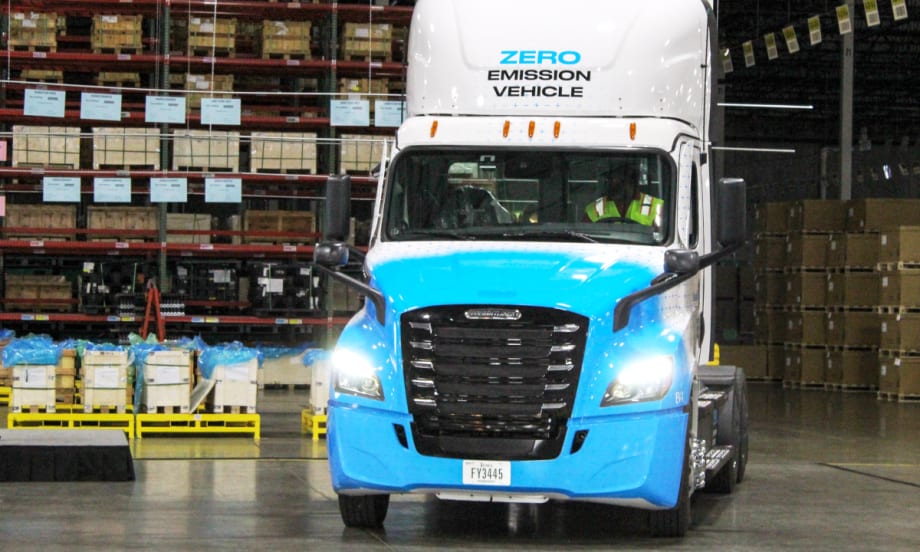
A Freightliner eCascadia has been integrated into DTNA’s operations at the Detroit Logistics Center in Livonia. It will transport critical components between Detroit’s offsite warehouse and the Redford production facility.
Photo: DTNA
Daimler Truck North America (DTNA) has taken another step toward decarbonizing its logistics operations by launching its first battery-electric Freightliner eCascadia at its subsidiary, Detroit Diesel Corporation, located in Redford, Michigan.
The Freightliner eCascadia will be integrated into DTNA’s operations at the Detroit Logistics Center in Livonia. It will transport critical components between Detroit’s offsite warehouse and the Redford production facility.
The electric truck deployed in Detroit’s shuttle program will be operated by Load One LLC, a freight solutions provider for DTNA since 2018. The route and the consistent payload are ideal for electric truck use, DTNA said. As equipped, the eCascadia has a typical range of 220 miles and will be recharged at the Detroit Logistics Center.
“Detroit’s operation is focused on driving efficiency in today’s market while preparing for growth over the coming years,” said Matt Pfaffenbach, Detroit plant manager. “Investment in key partnerships, like our relationship with Load One, is critical to maintaining success as our industry transforms in the years to come.”
Detroit Vital Part of DTNA Manufacturing
As a leader in North American powertrain technology for commercial vehicles, Detroit is a vital component of DTNA's manufacturing ecosystem. It spans 38 acres and encompasses 3.2 million square feet of production space.
The facility employs nearly 2,800 people in manufacturing, research and development and support functions, and runs high-volume production on multiple shifts. This includes the eCascadia’s electric powertrain, the same system powering the Load One vehicle as it begins Detroit’s logistics operations.
“Load One is thrilled to work with our long-term partner Detroit and DTNA as we take the first steps together in ushering in a future generation of Class 8 vehicles. Load One continues to work towards advancement and as a good steward to our planet,” said John K. Elliott II, executive chairman at Load One.
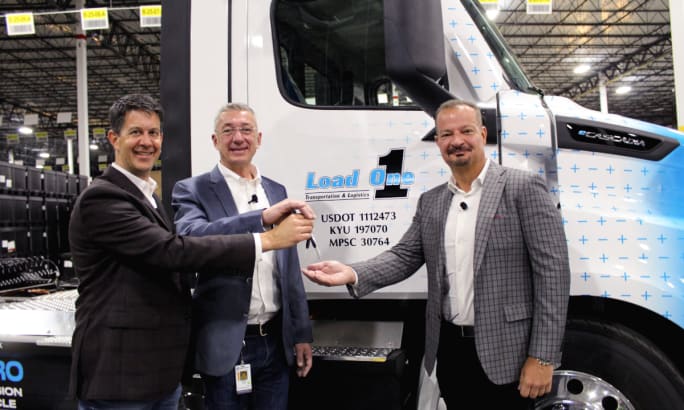
Matt Pfaffenbach, Detroit plant manager, and Admir Kreso, head of Powertrain Engineering DTNA, hand over the eCascadia keys to John K. Elliott II, executive chairman Load One.
Photo: DTNA
DTNA‘s Broader EV Logistics Plan
The initiative aligns with DTNA’s broader strategy to integrate electric vehicles into its logistics network, following successful implementations in the Pacific Northwest, North Carolina, Arizona, and Mexico.
DTNA said integrating electric vehicles into its logistics network is one of many initiatives contributing to the company’s sustainable operations. In 2020, the Portland truck manufacturing plant, where the eCascadia is built, achieved CO₂-neutral production with reduced energy consumption and the offset of on-site emissions.
DTNA is actively developing solutions to optimize the entire lifecycle of batteries used in their electric trucks, including repair, remanufacturing, repurposing, and end-of-life recycling. DTNA remains dedicated to innovation and environmental responsibility, reaffirming its commitment to creating a more sustainable supply chain. DTNA further plans to incorporate CO₂-neutral production at all its remaining truck manufacturing plants by 2026.
More Green Fleet

Fleet Forward Conference Introduces One-Day Passes for 2026
New one-day registration gives fleet professionals the flexibility to attend Tuesday, Wednesday, or Thursday, with passes available for $199 through Sept. 18.
Read More →
CALSTART Rebrands as Catalyst Mobility, Will Combine with Forth in 2027
CALSTART has rebranded as Catalyst Mobility and will combine with Forth at the start of 2027. The new organization said it is poised to become one of the world's largest, strongest, and most impactful clean transportation nonprofits.
Read More →
Electric Truck and Charging Programs to Boost Sustainability at NY & NJ Ports
Together, the Port Authority of New York and New Jersey and CALSTART will electrify drayage and terminal operations serving the East Coast’s busiest container port. A pair of incentive programs totaling $45 million has launched to accelerate adoption of zero-emission drayage trucks and terminal tractors.
Read More →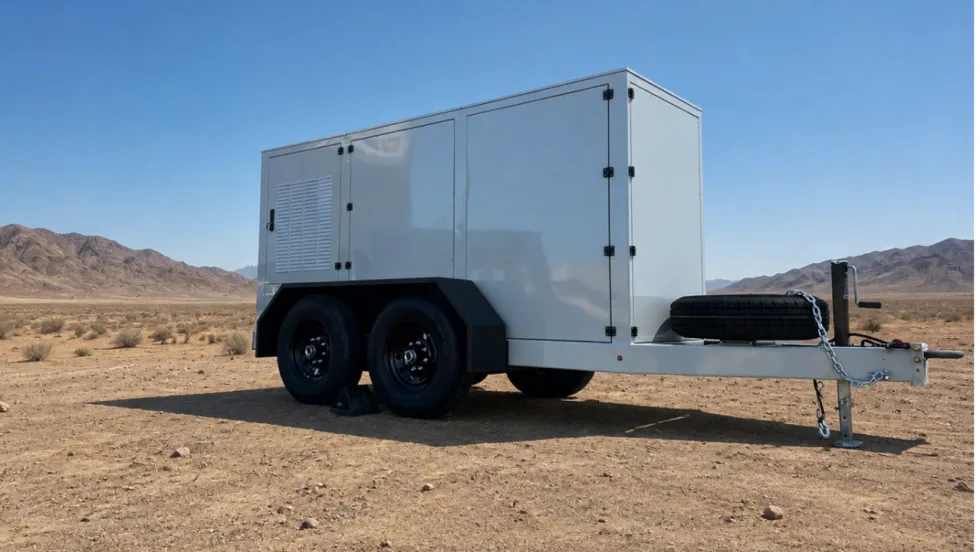
Xos Hub Surpasses One Gigawatt-Hour of Energy Delivered in the Field
A single Xos Hub has surpassed one gigawatt-hour of energy across more than 33,600 charging sessions in the field, demonstrating performance that supports Xos' expansion across new products and markets.
Read More →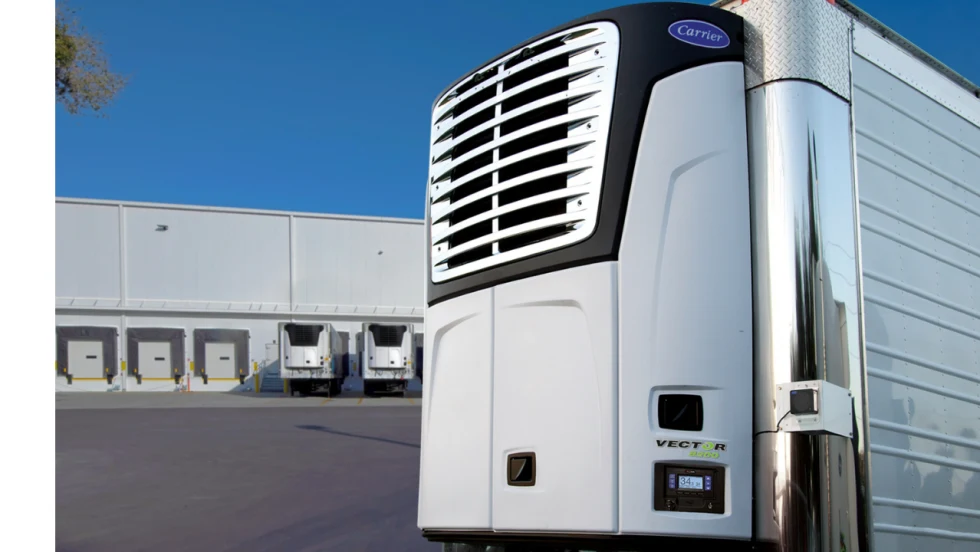
Carrier Transicold Launches All-Electric Vector 8200 TRU for Diesel-Free On-Site Cold Storage
Carrier Transicold’s first engineless multi-temperature TRU helps fresh- and frozen-food fleets add supplemental cold storage capacity during seasonal peaks.
Read More →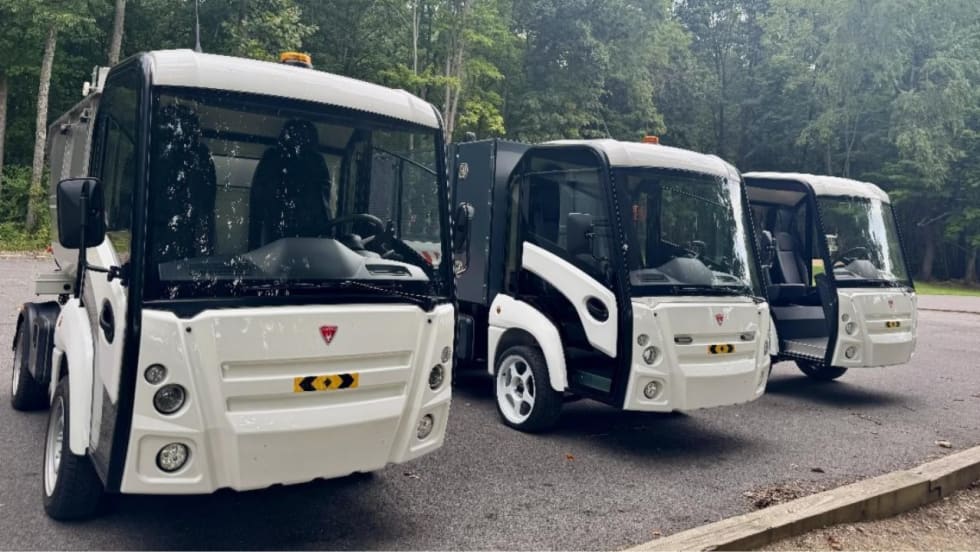
Narro Trucks Introduces Electric Utility Vehicle
Narro Trucks officially launched its operations on Aug. 20 and hosted a ride and drive to showcase its electric truck, which will be produced in Virginia.
Read More →
Samsung SDI Takes Full Control of GM Battery JV as Indiana Plant Pivots to Energy Storage
Samsung SDI is taking full control of its Indiana battery plant with GM, marking a major shift from the EV-focused joint venture Charged Fleet first covered in 2023.
Read More →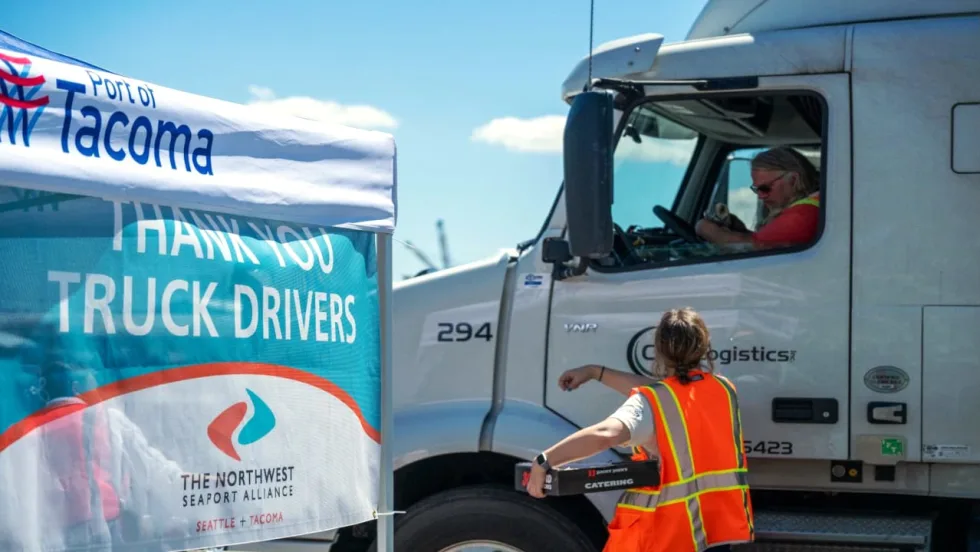
NWSA Taps CALSTART to Administer Zero-Emission Drayage Assistance Program
CALSTART will provide free technical assistance services to drayage fleets serving the Ports of Seattle and Tacoma and looking to transition to cleaner technologies and help decarbonize freight hubs.
Read More →
EV Fleet Reality Check: What Operators Wish They Knew Before Electrifying Their Work Vans
Electric work truck upfits bring new compatibility questions. Learn how parts availability, OEM guidance, power demands, and route planning can affect fleet performance.
Read More →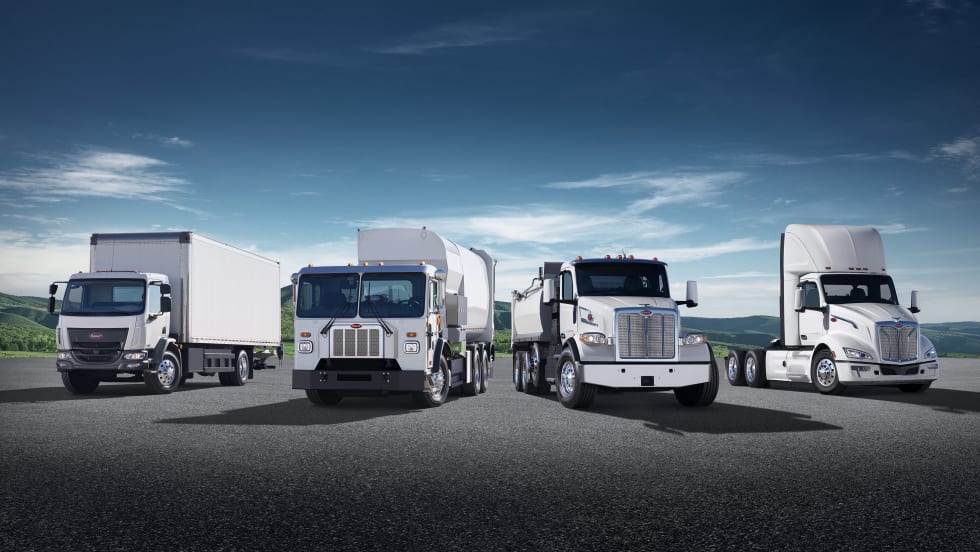
Peterbilt Expands Sourcewell Partnership with Electric Vehicle Lineup
Peterbilt Motors Company’s cooperative purchasing agreement with Sourcewell and its Canadian partner, Canoe Procurement Group, now includes including Peterbilt's battery-electric vehicle lineup.
Read More →