




Advancements in Clean Diesel Technology and Fuel To Continue Major Reductions in Black Carbon Emissions
Advancements in clean diesel technology will continue to deliver major reductions in black carbon (soot) emissions in both the U.S. and worldwide
Advancements in clean diesel technology will continue to deliver major reductions in black carbon (soot) emissions in both the U.S. and worldwide, according to Allen Schaeffer, the Executive Director of the Diesel Technology Forum.
Schaeffer highlighted the advancements in diesel technology and fuel in response to the new study published in The Journal of Geophysical Research-Atmospheres that stated black carbon emissions are the second most important contributor to global warming, behind carbon dioxide. The study evaluated climate forcing of black carbon during the industrial era (i.e. 1750 to 2000).
“While there continues to be ongoing debate about the role of black carbon on the earth’s climate, the diesel industry continues to move forward and produce more fuel efficient diesel engines that have both lower emissions of carbon dioxide (CO2) and near-zero levels of emissions of particulate (soot),” Schaeffer said.
Diesel Truck and Buses Have Reduced NOx Emissions by 99% & Particulate Emissions by 98%
“A complete transformation of diesel technology in the U.S. has taken place in the last decade that has virtually eliminated particulate (soot) emissions from new diesel engines across the board. For example, emissions from heavy-duty diesel trucks and buses have been reduced by 99 percent for nitrogen oxides (NOx) - an ozone precursor - and 98 percent for particulate emissions, which include black carbon. Today, clean diesel technology with near zero emissions is standard equipment in nearly all off‐road diesel vehicles and equipment such as construction equipment, agricultural vehicles, stationary generators, locomotives and marine vehicles.
“Because of the investments in new technology it now takes 60 of today’s technology trucks to emit the same level of PM (soot) emissions as a single truck built in 1988.”
Diesel Responsible For Less Than 6% of Particulate Emissions in U.S.
“Numerous studies and reports from the U.S. Environmental Protection Agency (EPA), researchers and health organizations are highlighting the benefits and importance of clean diesel technology in reducing black carbon emissions in the U.S.,” Schaeffer said. “Thanks to the switch to ultra-low sulfur diesel fuel coupled with advances in diesel engine design and emissions control technology, fine particulate emissions have been virtually eliminated from new diesel vehicles and equipment in the U.S.
“Today diesel engines are responsible for less than six percent of all particulate emissions in the U.S.,” Schaeffer said.
Black Carbon to Decline by 86% by 2030 “Largely Due to Controls on New Mobile Diesel Engines” – U.S. EPA 2012 Black Carbon Report to Congress
Schaeffer said that according to the U.S. Environmental Protection Agency’s 2012 Report on Black Carbon to Congress, the U.S. currently accounts for about eight percent of the global black carbon emissions, with 52 percent of that coming from mobile sources, and 93 percent of the mobile sources attributed to diesel engines. On top of the 32 percent reduction from 1990-2005, EPA projects this percentage will decline by 86 percent by 2030 ‘largely due to controls on new mobile diesel engines.'
“Much of the progress in clean diesel technology in the U.S. can be attributed to the systems based approach that recognized the essential aspect of cleaner, ultra-low sulfur diesel fuel as being the foundation for making large scale changes in engine design and enabled the use of emissions control technology that today result in near zero emissions of particulate matter,” Schaeffer said.
“Today, lower-sulfur diesel fuels are not widely available or utilized in all parts of the world. The World Fuels Charter, established by engine and vehicle manufacturers in the U.S., Japan and Europe, lays out such a blueprint for aligning fuel composition and implementation policies with environmental and other societal objectives.
“Whether or not this new study results in more scientific consensus on the role of black carbon emissions on the earth’s climate remains to be seen. We do know that the most dramatic changes in history to fuels and emissions levels from diesel engines have occurred after the study period o 1750 to 2000. We look forward to understanding how these changes to both the levels of emissions and their composition inform current scientific understanding and future policy choices,” Schaeffer said.
“Over the last decade in particular, the diesel industry has invested billions of dollars in development of cleaner diesel fuels, advanced engines, and emissions control technology. The greatest benefits from these new technologies come as they are introduced into the population. Today we estimate that more than one-third of all the heavy-duty commercial trucks on the road in the U.S. are 2007 or later model year and have the most sophisticated emissions control technology.
“Beyond meeting low particulate and NOx emissions standards, manufacturers of medium and heavy duty trucks and engines for the U.S. are now on course to meet the first-ever greenhouse gas reductions and fuel economy standards ever enacted. These new standards that begin in model year 2014 will reduce CO2 emissions by 10 to 23 percent depending on type of truck,” Schaeffer said.
Diesel Emissions Reduction Act Important In Modernizing Older Diesel Engines
“Beyond the new technology advancements in reducing particulate emission, the opportunities for modernizing and upgrading existing diesel engines and equipment will also be important in reducing black carbon,” Schaeffer said. “We continue to work with national environmental and health organizations to increase funding for the highly-successful voluntary and incentive-based Diesel Emissions Reduction Act, which is helping to modernize and upgrade older diesel engines in school and transit buses, commercial trucks, construction and agricultural equipment, and marine vessels.”
California Air Quality Improvements Aided By Diesel Advancements
The California Air Resources Board (ARB) has identified the top-10 contributors to PM 2.5. Diesel engines and equipment rank as the 8th and 9th highest contributors, Schaeffer said, behind: 1) wildfires, 2) residential fuel combustion, 3) managed burning & disposal, 4) paved road dust, 5) unpaved road dust, 6) fugitive windblown dust, 7) farming operations.
According to the ARB, diesel particulate emissions from on-road heavy-duty trucks have declined from 7.5 percent in 1990 to 3.8 percent in 2008, with future projections in 2020 for the category to account for only 1.6 percent of all emissions.
“According to the ARB, from 2008 to 2020 in California, emissions of all sources of particulate emissions are expected to increase, while emissions from diesel engines and equipment are decreasing,” Schaeffer said. “The projected total PM inventory increase from 2008 to 2020 is a 3.2 percent increase. However the eight categories of diesel-powered equipment noted above are reducing their PM 2.5 by 58 percent during the same timeframe.”
More Fuel

The Smart Way to Build a Mixed-Energy Fleet Isn’t About Picking a Side
Mixed-energy fleets aren’t about picking a winning fuel. Sarah Booth of WEX explains how vehicle data, duty cycles, charging strategy, and real-world costs can help fleets choose the right energy source for each job.
Read More →
Ignoring This Dashboard Warning Could Cost Your Fleet Thousands in Fuel
New research suggests neglected diesel aftertreatment systems could waste up to $30 in fuel per vehicle each day. Here's why vocational fleets should pay attention.
Read More →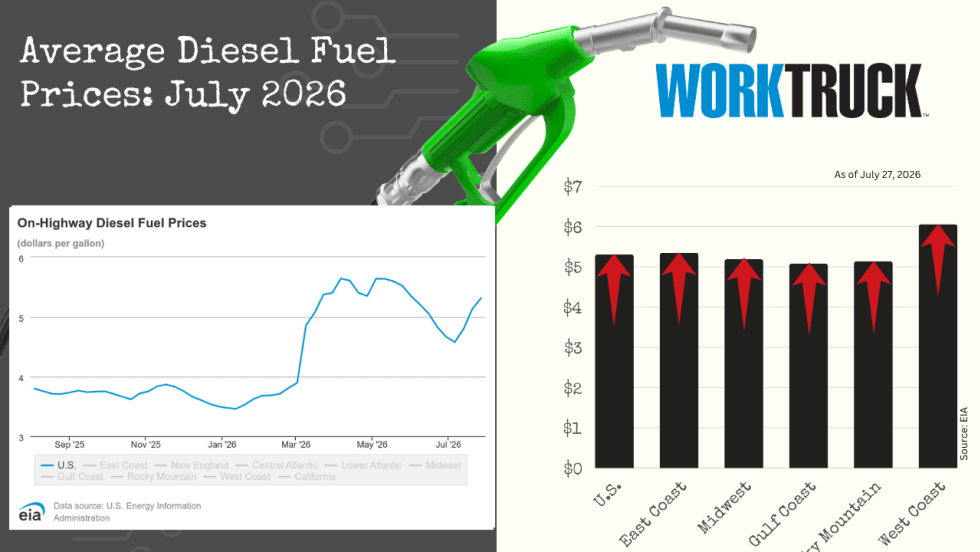
July Diesel Trends Update
The average price of a gallon of diesel increased again this week, and the EIA reported a new national average of $5.31 at the start of the week.
Read More →
WEX Brings Standard Fleet's Connected Vehicle Platform to Fleet Customers
This week’s product launch with Standard Fleet’s connected vehicle platform reflects WEX Venture Capital's strategy of turning startup innovation into customer solutions. Standard Fleet is now available to WEX fleet customers.
Read More →
Teletrac Navman Adds Mixed-Energy Fleet Tools to TN360
The new Energy Hub combines fuel transactions, EV charging data, vehicle range, and energy costs in one dashboard for fleets operating multiple vehicle and energy types.
Read More →
WEX DriverDash adds CITGO, Expands Nationwide Access for Fleets
The DriverDash mobile payment app, by WEX, has been integrated into the CITGO merchant network, which means WEX has expanded its U.S. station footprint with the addition of approximately 4,000 CITGO locations.
Read More →
Mixed Energy Fleet Tips for Balancing EVs, Gas and Diesel Vehicles
Mixed energy fleets are becoming the new normal. Learn how fleet managers are balancing EVs, gas and diesel vehicles while controlling costs and planning for the future.
Read More →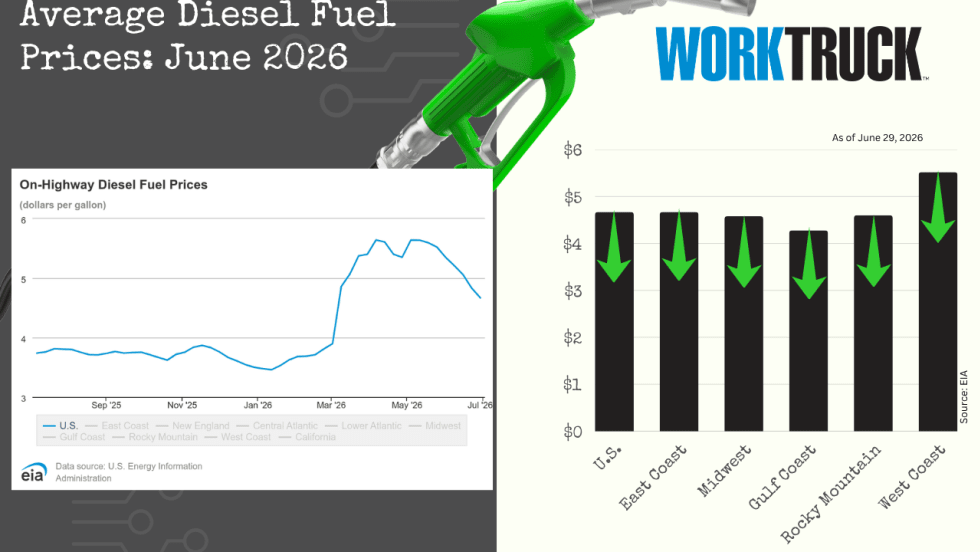
June Diesel Trends Update
The national average price of a gallon of diesel has dropped again, this week by more than 16 cents. All five regions reported lower average prices, ranging from almost 13 cents to more than 28 cents cheaper than a week ago.
Read More →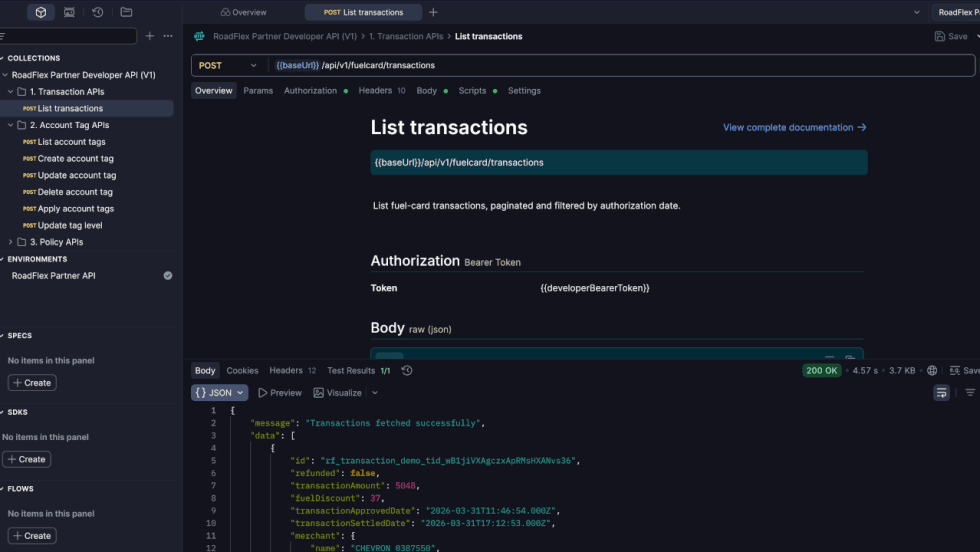
RoadFlex Launches RoadFlex Direct Open API Platform
RoadFlex Direct connects fuel cards, controls, and data to the telematics and fleet management systems fleets already run, from Geotab and Samsara to Fleetio and RTA, with no separate dashboard or double data entry.
Read More →
The Key to Fuel Efficiency Sits in the Cab
Learn how driver behavior, telematics, coaching, and fuel data can help fleets improve fuel efficiency, lower costs, and reduce emissions.
Read More →