What percent of commercial fleets said they would NEVER adopt electric vehicles? Of those that do, what are the reasons to adopt EVs? Check out the updates from Commercial Truck Trader.
A recent study from Commercial Truck Trader included drawbacks and benefits of commercial electric vehicle adoption and use.
Photo: Work Truck/Commercial Truck Trader
2 min to read
Commercial Truck Trader, an online marketplace for commercial vehicles, surveyed hundreds of commercial truck buyers and owners to gauge their plans for electric trucks, specifically adding them to their fleets in the coming years.
Ad Loading...
Will the results surprise you?
Ad Loading...
Did You Know?
An electric truck’s longest distance on a single charge is 683 miles. The record was set on a closed track by an electric delivery truck used by a German delivery company that used two drivers in less-than-ideal weather conditions. The truck traveled at an average speed of 31 miles per hour.
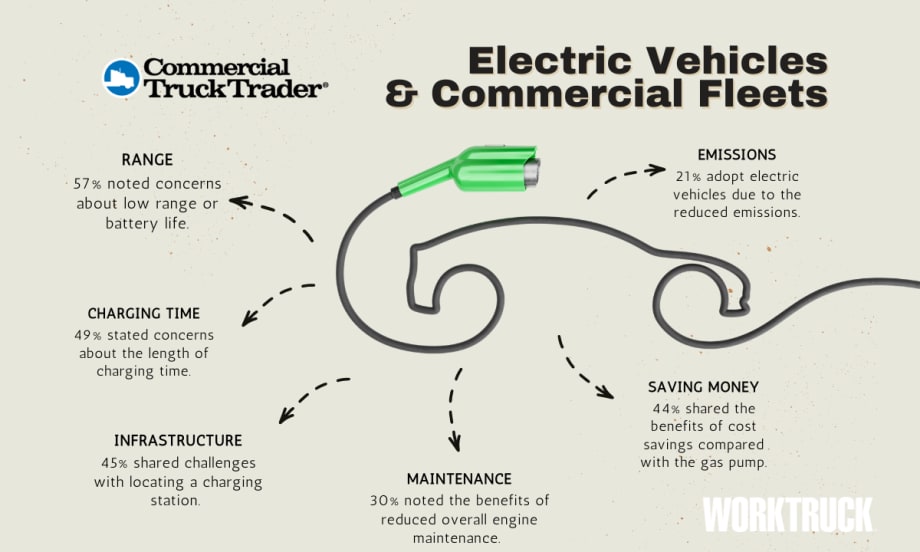
Adoption: 79% Would never add an electric vehicle to their fleet; 5% will right away; 4% within five years; 13% maybe.
Top reasons to adopt: 44% save money at the gas pump, 21% since they produce lower emissions, and 30% because they require less overall engine maintenance.
Top drawbacks: 57% low range or battery life; 49% charging time; 45% finding a charging station; 11% said no drawbacks.
Additionally: 30% of those surveyed would feel differently with testimonials from current EV truck owners, while 22% remarked that seeing other fleets with EV trucks would change their opinion.
According to Commercial Truck Trader, the most common concern is related to the lack of charging infrastructure, specifically charging station availability for local and over-the-road (OTR) applications and construction sites.
The second biggest concern reported was related to battery life and range.
Ad Loading...
“There are several factors that can affect battery life. Some examples include the weight of the payload being hauled, the outside air temperature, the type of elevation a truck will encounter along the journey, the speed the vehicle is driven, and the number of stops made along the way. Because of this, results can vary,” the report noted.
Infrastructure concerns remains a challenge for widespread electric vehicle adoption.
Photo: Work Truck
Today’s Electric Vehicle Takeaways?
Emissions reductions are top-of-mind today for commercial fleets based on factors including environmental regulations, corporate sustainability goals, and more.
Electric vehicles are a viable alternative for many fleets, with reduced environmental impacts and potential cost savings. But infrastructure is still in a growth stage. Although there was a 5.5% increase in public station standard charging ports in the third quarter of 2022, according to the U.S. Department of Energy, many rural areas still need to be represented.
New one-day registration gives fleet professionals the flexibility to attend Tuesday, Wednesday, or Thursday, with passes available for $199 through Sept. 18.
CALSTART has rebranded as Catalyst Mobility and will combine with Forth at the start of 2027. The new organization said it is poised to become one of the world's largest, strongest, and most impactful clean transportation nonprofits.
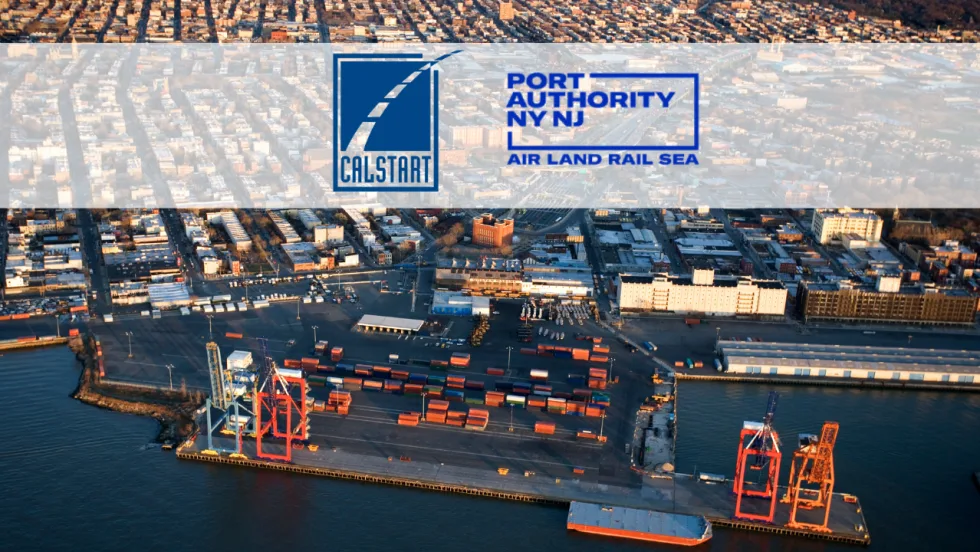
Together, the Port Authority of New York and New Jersey and CALSTART will electrify drayage and terminal operations serving the East Coast’s busiest container port. A pair of incentive programs totaling $45 million has launched to accelerate adoption of zero-emission drayage trucks and terminal tractors.
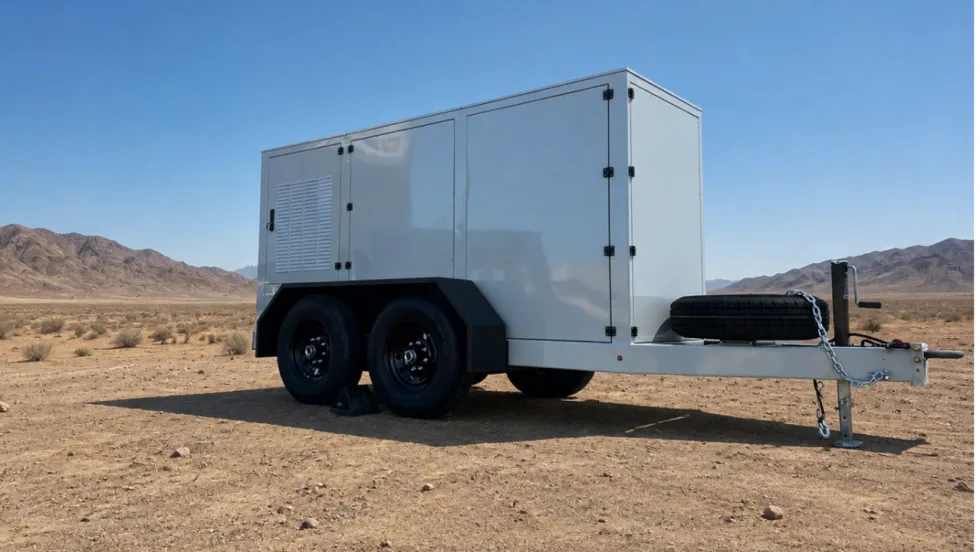
A single Xos Hub has surpassed one gigawatt-hour of energy across more than 33,600 charging sessions in the field, demonstrating performance that supports Xos' expansion across new products and markets.
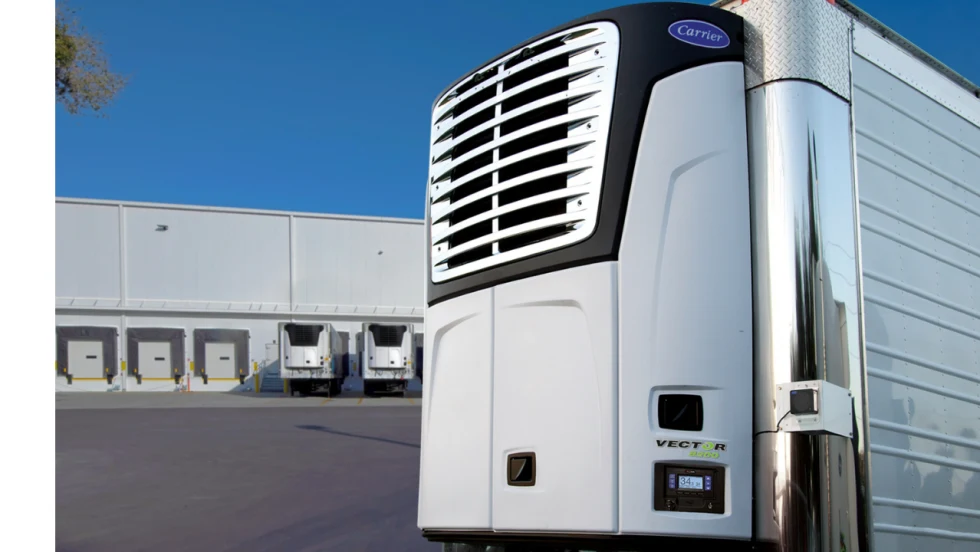
Carrier Transicold’s first engineless multi-temperature TRU helps fresh- and frozen-food fleets add supplemental cold storage capacity during seasonal peaks.
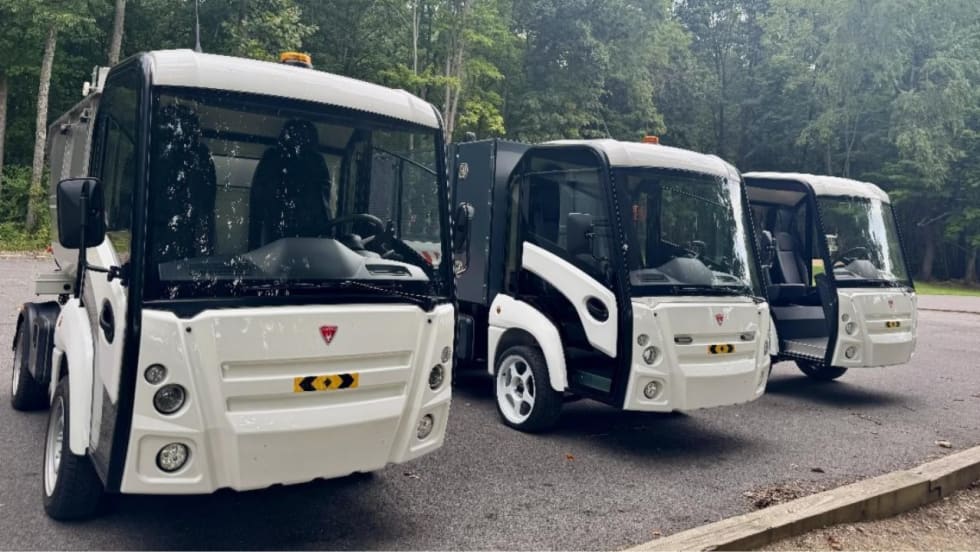
Narro Trucks officially launched its operations on Aug. 20 and hosted a ride and drive to showcase its electric truck, which will be produced in Virginia.
Samsung SDI is taking full control of its Indiana battery plant with GM, marking a major shift from the EV-focused joint venture Charged Fleet first covered in 2023.
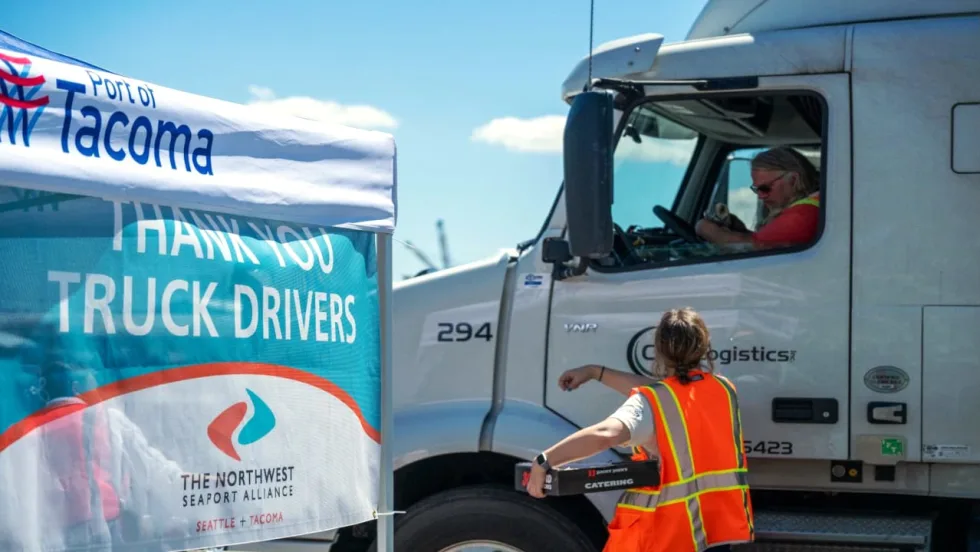
CALSTART will provide free technical assistance services to drayage fleets serving the Ports of Seattle and Tacoma and looking to transition to cleaner technologies and help decarbonize freight hubs.
Electric work truck upfits bring new compatibility questions. Learn how parts availability, OEM guidance, power demands, and route planning can affect fleet performance.
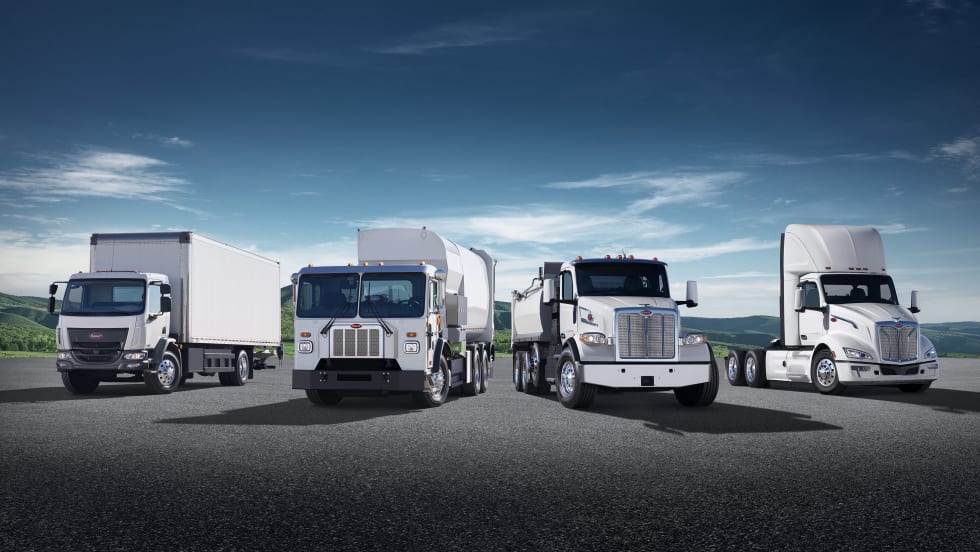
Peterbilt Motors Company’s cooperative purchasing agreement with Sourcewell and its Canadian partner, Canoe Procurement Group, now includes including Peterbilt's battery-electric vehicle lineup.