




Related: VW Golf TDI Sets Record of 81 MPG
Why Fleets Shouldn't Adopt Hypermiling Techniques
Hypermiling techniques can deliver impressive fuel economy and cost savings with lower fuel usage, but the driving techniques used by hypermiling hobbyists often run counter to a fleet's primary goal to increase safe driving and reduce higher-risk driving.

Paul Clinton・Former Senior Web Editor
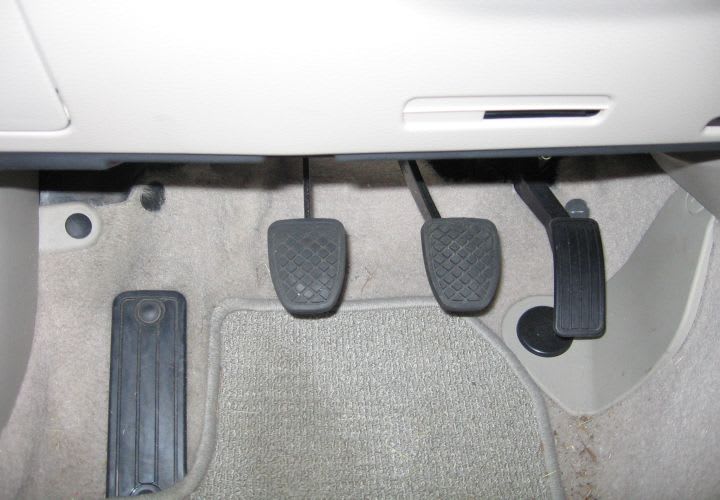
Judicious use of the accelerator can result in significant fuel savings. Photo via Wikipedia.
4 min to read
Judicious use of the accelerator can result in significant fuel savings. Photo via Wikipedia.
On June 22, Wayne Gerdes drove away from Herndon, Va., while behind the wheel of a Volkswagen Golf TDI. Fifteen days later, he returned to Volkswagen headquarters having traveled 8,233.5 miles. He spent $294.98 on 101.43 gallons of Shell Diesel fuel during the trip.
Gerdes, an automotive journalist, annihilated the U.S. Environmental Protection Agency's fuel economy rating for the 2015 Golf, which was set at 45 mpg on the highway when equipped with a manual transmission. Gerdes reached 81.17 mpg.
The secret of Gerdes' success lies in his use of hypermiling techniques to drastically outperform the window-sticker number.
While fleet managers may salivate over the possibility of their drivers reaching this level of fuel economy and the subsequent costs saved by the drastically lower fuel usage, the driving techniques used by hypermiling hobbyists often run counter to a fleet's primary goal to increase safe driving and reduce higher-risk driving.
"Driving safely and responsibly is the most important priority," said Bill Jones, director of product management for Element Fleet Management. "There are steps you can take to increase fuel efficiency safely but practicing safe driving is of utmost importance."

Jones
Several hypermiling techniques are similar to the eco-driving techniques taught to fleet drivers such as no hard braking, moderate acceleration, reducing idling, tire pressure management, and avoiding driving at higher speeds. However, hypermilers use other techniques such as coasting, shifting to neutral while in motion, "pulse and glide," drafting and cornering without braking that can increase risk.
"None of the traditional eco-driving techniques compromise safety," said Art Liggio, president of Driving Dynamics. "Safety should always remain the dominant decision maker for all actions behind the wheel."
Using several of the hypermiling techniques can increase risk factors and undermine fundamental safety principles. A drive can compromise adequate safety zones, reaction time, signaling other drivers of changes in speed and direction, as well as vehicle stability by amplifying rollover dynamics, Liggio said.
Let's take a closer look at some of the hypermiling techniques and why fleet drivers should avoid them.
One hypermiling technique is known as "pulse and glide." The driver gradually accelerates to a set speed and then lets the vehicle glide to a lower speed within a set range. In one example, the driver would accelerate to 39 mph and then let the vehicle coast to 32 mph before re-engaging the accelerator.
"Your best bet is to utilize your vehicle's cruise control function," said Jones in response. "No technique will maintain a steady speed and acceleration better than cruise control. This should only be used on days when it is dry and there is no rain, snow, ice or slippery surfaces."
Another technique involves shifting the vehicle's transmission into neutral at highway speeds and coasting to a stop of lower pre-determined speed. This can present a safety concern because the vehicle is operating in a powerless coast and power brake assist may be lost depending on the model. This technique and others can increase what Liggio calls "action time" when a driver must take action to avoid a crash.
Driving Dynamics teaches a principle known as "one second advantage" that was based on a study that determined if a driver has one more second to react and knows what to do with that second, more than 90 percent of crashes could be avoided, Liggio said.
Jones agreed, and said the technique "presents many safety concerns" for fleet managers, as well as possible maintenance issues.
"If you put a vehicle into neutral while you have cruise control on, your engine will rev, thinking it needs to speed up, and may result in engine damage," Jones said.
In addition to the driving techniques themselves, hypermilers also set up their vehicles in certain ways to increase fuel economy. Tire inflation is a primary focal point. They reduce as much cargo as they can from the vehicle. They use lower-viscosity oil and sometimes install a gauge that provides more detailed fuel economy data to the driver.
For leased vehicles, fleet management companies often set up vehicles for fleets by following manufacturer guidelines. The type of oil used in a fleet vehicle would fall under these guidelines, said Element's Jones.
"We recommend using the oil viscosity grade recommended by the vehicle manufacturer," Jones said. "Using oil that is not approved by the manufacturer could ultimately void the vehicle’s warranty."
Originally posted on Automotive Fleet
Subscribe to Our Newsletter
More Safety
When Work Trucks Under 26,001 Pounds Need IRP Registration
Think trucks under 26,001 pounds are automatically in the clear when it comes to IRP? Not always. Learn where lighter vehicles can still run into trip permit, apportioned registration, and IFTA compliance requirements when crossing state or provincial lines.
Read More →
Volvo Trucks Releases New Safety Recommendations for Traveling with Pets
One of the most important recommendations for professional drivers traveling with pets is to ensure pets are properly restrained while the truck is moving. Other tips are available in the new guide from Volvo Trucks North America and Center for Pet Safety.
Read More →
API Issues Refueling Safety Guidelines
The American Petroleum Institute offers a list of safe vehicle refueling guidelines, including ways to avoid potential problems with static electricity discharges in fall, winter, and early spring.
Read More →
Winter Fleet Prep: Expert Tips to Keep Vehicles Running Smoothly
Cold weather can expose weak batteries, tires, fuel systems, and maintenance gaps fast. Use this winter fleet checklist to prepare trucks and drivers before temperatures drop.
Read More →
When a Work Truck Breaks Down, the Job Can Stop, Too
A work truck breakdown can stop more than the vehicle. Discover how payloads, jobsites, and specialty equipment change the roadside response.
Read More →
What Stronger Long-Term Fleet Service Partnerships Actually Require
Fleet service partnerships rarely fall apart all at once. Learn the three warning signs that trust is eroding and what fleets and providers can do before downtime, frustration, and lost revenue follow.
Read More →
Applause & TRUCE Software Partner to Improve Driver Safety Through AI-Powered Telematics & Employee Performance Management
Applause has integrated TRUCE driving metrics directly into its employee-first performance and safety platform that transforms mobile devices into AI-powered telematics.
Read More →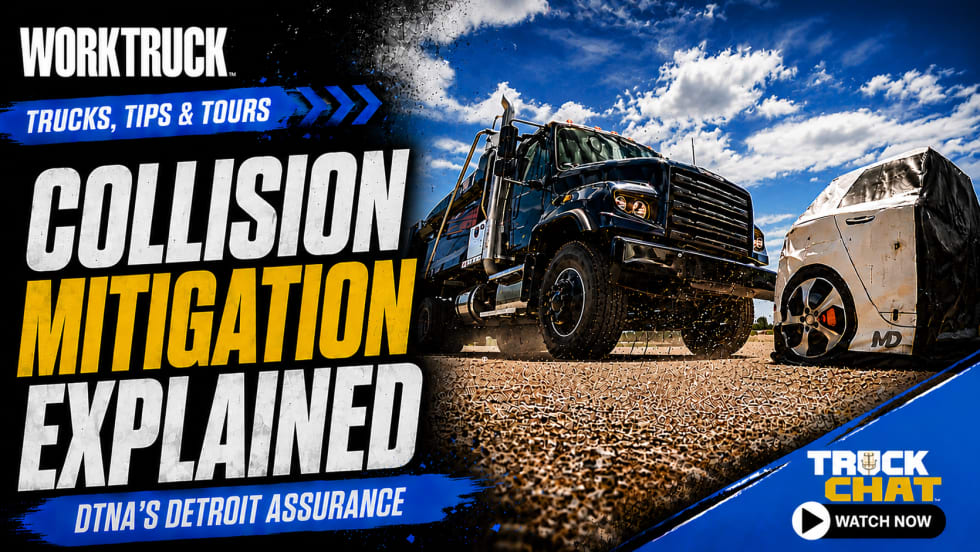
How Detroit Assurance with Active Brake Assist Works
Do you want to see what it is like to experience Detroit Assurance’s Active Brake Assist? In this video, Work Truck will put you in the cab to see how it all works and then hear more details from DTNA’s Mike Young.
Read More →
Get Left of Loss: A 5-Step Workplace Violence Prevention Framework for Fleet Operators
Violence risks do not stop at the driver’s door. Learn five practical steps fleets can take to spot threats early and protect workers before loss occurs.
Read More →
Sponsored•July 17, 2026
How Better Visibility Cut Speeding Violations by 48%
Fleet leaders don't need more data, they need clearer visibility into what the data is saying. This case study explores how one utility replaced speeding-event counts with a single metric — miles driven in violation — to strengthen safety and significantly reduce speeding violations.
Read More →