




When Fixed Delivery Zones Start Working Against Your Fleet
Peak delivery volume can expose weaknesses in even the best route plan. Here’s how fleets can spot when fixed zones stop working and where flexibility can keep deliveries moving.


Fixed delivery zones can help keep daily operations organized, but shifting demand, overlapping routes, and uneven driver workloads can create inefficiencies during peak delivery periods.
Work Truck
- Fleets may encounter challenges with fixed delivery zones when facing peak delivery volumes, revealing potential inefficiencies in route planning.
- Identifying the shortcomings of fixed zones allows fleets to recognize when these zones begin to hinder effective delivery operations.
- Incorporating flexibility into delivery plans can enhance efficiency and ensure smooth delivery processes during high-demand periods.
*Summarized by AI
Last-mile delivery fleets spend a lot of time trying to build the perfect route. But when volume spikes, the bigger question may be whether that route should stay intact at all.
Peak delivery periods expose weaknesses that are easier to overlook during normal operations. One driver gets buried in stops while another finishes early. A van leaves the depot half full. Two trucks travel nearly identical roads because a fixed delivery boundary says they belong in different zones.
Those inefficiencies can add up quickly when fleets are moving thousands, or even millions, of packages. For fleet operators, the lesson isn't necessarily to abandon delivery zones or constantly reroute vehicles. It's knowing when the structure that normally keeps an operation organized has started getting in the way.
When a Delivery Zone Stops Making Sense
Fixed zones have an obvious operational benefit. Drivers can get familiar with their territories, managers have a predictable structure for assigning work, and fleets don't rebuild their delivery network every morning.
The trouble starts when demand stops cooperating with those boundaries.
"Fixed delivery zones fail when some drivers or vehicles are overloaded, while others have too little," said Seth Hochhauser, chief revenue officer at Autofleet. "A fixed zone system can't automatically adapt when demand shifts unexpectedly, leading to delays, high costs, and inefficiencies."
Sometimes the inefficiency is easy to picture. Two packages need to be delivered to neighboring streets, but those streets happen to sit on opposite sides of a zone boundary. Instead of one truck handling both deliveries, two trucks may end up driving essentially the same road.
In another scenario, a van could leave partially loaded because the deliveries available within its assigned zone don't fill the vehicle, even though the network needs capacity elsewhere.
Neither situation looks particularly dramatic on its own. Multiply it across a fleet during a major volume surge, however, and those little inefficiencies start consuming fuel, labor, vehicle capacity, and, perhaps most importantly, time.
That's when fleets need to look beyond whether individual routes are technically working and start asking whether the network is balanced.

When delivery volumes spike, fleets need to look beyond individual routes and evaluate how effectively they're using available vehicles, drivers, and cargo capacity.
Work Truck
Know When the Route Plan Is Falling Behind
The signal to rebalance isn't simply "we're busy." Some disruptions are obvious. Say a driver calls out, a vehicle goes down, or a priority order arrives unexpectedly. Others show up in the data.
Hochhauser pointed to unassigned deliveries and drifting ETAs as two performance indicators that can signal an existing route plan is no longer keeping pace with what's actually happening in the field.
But recognizing the problem doesn't mean blowing up the entire day's plan.
"Rebalancing should be selective," Hochhauser said. "Fleet operators should only adjust affected routes and future deliveries, rather than rerouting the entire delivery after every trigger to maintain efficient operations."
Dynamic routing sounds great until a fleet becomes too dynamic. Drivers who have already started their routes don't need stops constantly moving around because conditions changed somewhere else in the network.
Partially completed routes, committed stops, and other locked portions of the day's work can remain intact while the fleet adjusts what hasn't happened yet. Think of it less as constantly rebuilding the puzzle and more as rearranging the pieces that haven't been placed.
More Trucks Aren't Always the Answer
When package volume climbs, adding vehicles and routes can feel like the safest response. More deliveries must require more trucks, right? Not necessarily.
"The most common mistake is to automatically add more vehicles or routes," Hochhauser said. "Adding more doesn't necessarily mean more packages will be delivered."
Every additional vehicle also adds another driver, another route, additional fuel consumption, and another moving piece that must fit into the operation. If the existing network is poorly balanced, adding capacity may simply make an inefficient system bigger.
Before putting another truck on the road, fleets should assess how effectively they're using the vehicles they already have. Are some leaving with unused capacity? Are routes overlapping unnecessarily? Are drivers in one area overloaded while capacity exists somewhere else?
Peak planning can also become too focused on what happens after a truck leaves the depot. Hochhauser noted that fleets sometimes build plans around ideal departure times without accounting for delays before the first delivery. Building some flexibility into the plan can be more valuable than building a plan that only works when everything goes right.
Some Rules Shouldn't Move
Operational flexibility doesn't mean every constraint should become negotiable. Some boundaries shouldn't be something technology optimizes its way around.
"Safety, legal, and contractual requirements should always remain fixed," Hochhauser said.
That includes driver hours and required breaks, vehicle eligibility, weight and dimension limits, and special-handling requirements. Those aren't variables to trade against efficiency when volume gets tight.
Other parts of the operation have more room to move. Route planning, delivery zones, and allocating underused vehicles are examples of areas where fleets can add flexibility as conditions change.
The key is separating actual constraints from habits, and peak demand is a good stress test for figuring out which is which.
A fleet may have used the same delivery territories for years, but that doesn't necessarily make those boundaries operational requirements. Likewise, assigning a certain number of vehicles to a particular area because "that's how we normally do it" isn't the same thing as a regulatory, safety, or customer requirement.
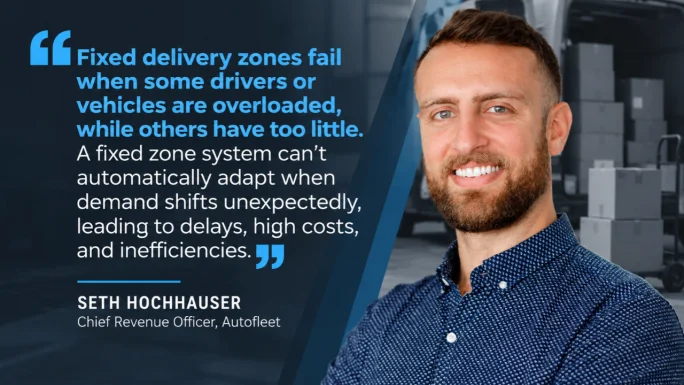
Seth Hochhauser, chief revenue officer at Autofleet recommends recognizing when shifting demand calls for a more flexible approach to delivery planning.
Autofleet | Work Truck
Keep a Human in the Loop
Even the best optimization system is working with the information it has. Fleet managers and dispatchers sometimes know things it doesn't.
Maybe a particular customer has an unusual receiving situation, or a driver knows that a theoretically faster road becomes a mess at a certain time of day. Or perhaps reallocating stops look efficient on a screen but creates a workload issue for the people making the deliveries.
"Human judgment remains critical when decisions may change a customer promise, create safety or regulatory concerns, or materially reallocate work between drivers," Hochhauser said.
There will also be situations where the person running the operation has information that hasn't made its way into the system. And that's where technology works best as a decision-making tool rather than an unquestioned decision-maker.
A system can identify that Route A is overloaded and Route B has capacity. The fleet operator still needs to determine whether moving that work makes sense based on the realities of the operation.
Build for the Day You Actually Have
Peak delivery periods don't necessarily require fleets to throw out their normal operating model. They do, however, require recognition when normal assumptions no longer hold up.
Fixed delivery zones can still provide structure. Planned departure times can still give teams a target. Established routes can still make drivers more efficient. The mistake is treating any of them as untouchable when conditions on the ground have changed.
For last-mile fleets, operational flexibility is less about rerouting every truck every time something happens and more about knowing where there is room to move. Protect the constraints that matter, leave completed and committed work alone and adjust the parts of the operation that can still benefit from change.
Because when delivery volume spikes, the goal isn't to create the perfect route plan. It's to keep a less-than-perfect day moving.
Quick Answers
Peak delivery volumes can strain fixed delivery zones by exposing weaknesses in the route planning, potentially causing inefficiencies and delays.
*Summarized by AI
More Vocational Fleets
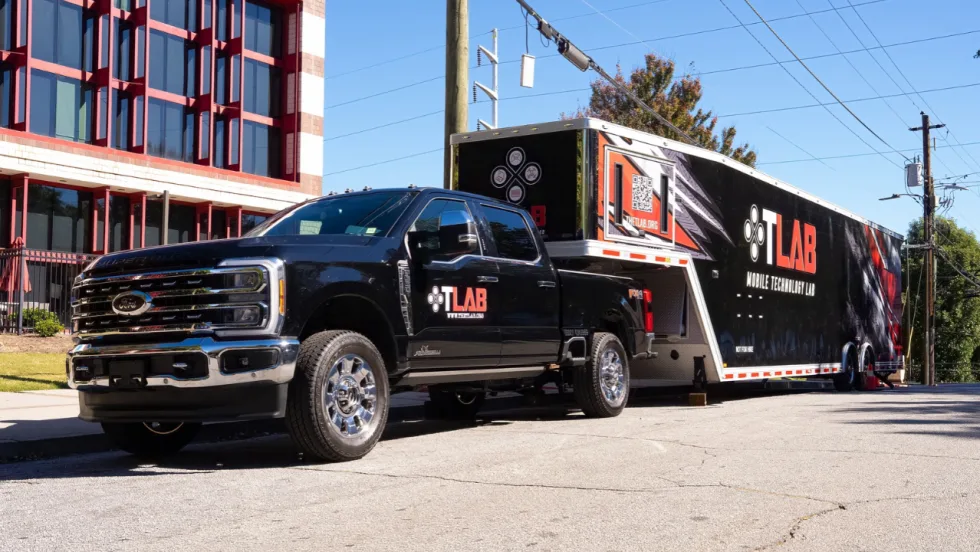
This 40-Foot Classroom Runs on Technology, Teamwork, and a Ford Super Duty
What does it take to put a technology classroom on wheels? For one Atlanta father-son team, the answer involves a custom trailer, a carefully selected truck, and plenty of lessons learned along the way.
Read More →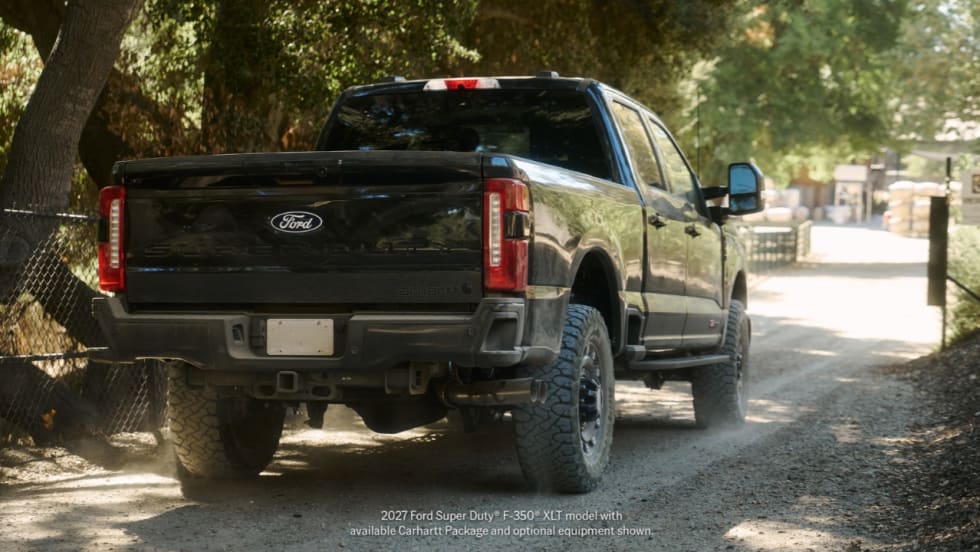
Ford Super Duty Carhartt Package Gets to Work at Family-Owned Vineyard
From hauling harvested fruit to navigating vineyard roads, see how Carhartt Family Wines puts the 2027 Ford Super Duty Carhartt Package to work.
Read More →
Small Fleets, Big Impact: How Independent Drivers Power Wreaths Across America
Check out how small fleets and independent drivers power Wreaths Across America each December and why their impact matters more than ever.
Read More →
Fleet Facilities Face Collapse: Why Small Businesses Can’t Afford Earthquake Inaction
Fleet facilities are critical to America’s supply chain, but many small businesses are unprepared for earthquakes. Retrofitting now could save your livelihood later.
Read More →
How Utility Fleets Power Grid Resilience During Extreme Weather
Utility fleets are the backbone of storm recovery. Learn how they prepare, adapt, and power resilience when extreme weather hits.
Read More →
Leveling the Playing Field for Small Fleets
Learn how small fleet operators are using technology to streamline maintenance, optimize routes, and stay competitive without the big-budget overhead.
Read More →
How Small Fleets Can Cut Costs Without Cutting Corners
Celebrating Small Business Week means celebrating the heart of America — and small business fleets are a huge part of what keeps that heart beating.
Read More →
Ford Pro Mobile Service Meets Fleets Where They Are
With mobile service vehicles fulfilling nearly 1-in-10 repair orders, Ford Pro is redefining fleet maintenance by meeting customers where they are and maximizing uptime.
Read More →
Fleet 101: Types of Utility Trucks and Their Use Cases
What is a utility truck? These can range from cranes to bucket trucks used in various applications. We break it all down for you.
Read More →
Paving the Way: Women Making Strides in the Utility Fleet Industry
The Women in Utility Fleet gathering will be held at the EUFMC conference. It is designed for women to make connections and network in the industry.
Read More →