




Miss This? Weathering Storms, Traffic & More: Keeping Drivers Safe
What UPS Can Teach Fleets About Driver Safety
The delivery company, celebrating its 100-year anniversary this year, has made safety a core value, investing $38 million dollars and 1.3 million hours on safety training in 2007 alone.
by Travis Yates
September 1, 2007
Package car drivers receive 20 hours of classroom and road training, and they complete three safety ride evaluations during their first 22 days as a new driver.
Photo: UPS
5 min to read
Most fleets can learn a few things about driving safety from the United Parcel Service (UPS). The delivery company, headquartered in Atlanta with those famous brown trucks we see everyday has been leading the private industry in driving safety for nearly 100 years. UPS issued its first driving handbook in 1917 and has been modifying and improving its training program ever since.
While long haul trucking, the fourthmost dangerous job in America, saw 808 deaths in 2006, UPS did not experience one driver death. UPS drivers are clearly superior in the field of driving safety, and it is no coincidence that the world’s largest package delivery company averages less than one accident for every million miles driven.
This safety record is based on the company’s commitment to provide employees the best training available. In 2007, UPS will invest $38 million and 1.3 million hours on safety training, and despite a century of emphasis on safety, UPS management continues to push for excellence.
Employees Responsible for Safety of Coworkers
In the past five years alone, the UPS accident rate has dropped by 30%, due in part to encouraging employees to take direct responsibility for the safety of their co-workers.
“Our more experienced drivers will work with our newer employees and mentor them,” says UPS Corporate Fleet Safety Manager Gerry Eaker. “We use someone who has a track record of safety in the workplace.” UPS delivery drivers don’t use a driving facility or controlled environment to train. Instead, UPS uses a defensive driving course called “Space and Visibility,” typically completed on public roads and highways.
Package car drivers receive 20 hours of classroom and road training, and they complete three safety ride evaluations during their first 22 days as a new driver. These safety rides are a mainstay for UPS drivers. They receive as many as one evaluation ride with their supervisor every six months, and in the event of a preventable collision, they are given additional training as well as discipline.

The UPS secret to success in road safety is described as the “Five Seeing Habits.” These five guidelines stress the importance of space and visibility when driving
Photo: UPS
Training immediately follows a preventable collision. UPS Public Relations Manager Dan McMackin says, “When a collision happens, it doesn’t matter what else is going on — the supervisor drops everything and conducts a full-day safety ride check” — meaning the supervisor rides with the employee and evaluates his or her techniques and habits, correcting on the spot any mistake that could jeopardize safety.”
While discipline is a factor in the safety program, UPS does not focus unduly on it. “Discipline is always the last resort,” Eaker says. “It is much better to get what you want through recognition rather than with punishment.”
Safety Program Based on ‘5 Seeing Habits’
The UPS secret to success in road safety is described as the “Five Seeing Habits.” These five guidelines stress the importance of space and visibility when driving:
Aim High in Steering. Look as far down the road as possible to uncover important traffic information to make appropriate decisions.
Get the Big Picture. Maintain the proper following distance to comfortably determine the true hazards around your vehicle. Don’t tailgate.
Keep Your Eyes Moving. Scan — don’t stare. Constantly shift your eyes while driving. Active eyes keep up with changing traffic conditions.
Leave Yourself an Out. Be prepared. Surround your vehicle with space in front and at least on one side to escape conflict.
Make Sure They See You. Communicate in traffic with your horn, lights, and signals to establish eye contact with motorists and pedestrians. Be reasonably sure of people’s intentions.
According to McMackin, UPS’s success in safety is summed up in one word: training. “Training is the cornerstone of everything here at UPS. We are relentless about our training,” he says.
Program Recognizes Safe Driving Excellence
Continuous training isn’t the only successful safety practice that makes UPS stand out. While the company trains and disciplines those involved in collisions, it also positively recognizes those who adhere to the safety techniques.
The safest UPS driver has achieved 45 years and 3 million miles without an accident. Ron Sowder of Ohio has enough accident-free miles for six round trips to the moon. Since 1923, UPS has recognized safe drivers. Ray McCue became the first five-year safe driver in 1928, and in 1955, the “Circle of Honor” was established to formally recognize safe drivers.
Today more than 4,000 active drivers have earned the Circle of Honor distinction, designating at least a 25-year accident-free career. Each year, Circle of Honor drivers are recognized in a full-page ad in USA Today.
UPS spends more than $5 million a year recognizing safe drivers. McMackin says, “It is meant to be an honor, in a public way. Service and safety are two big things here. It is a tremendous honor to be inducted.”
Safety is UPS Corporate Culture Value
Safety is an inherent core value in the UPS corporate culture.
For UPS employees, the training, evaluation ride-alongs, and other safety policies are just normal elements of the job.When you speak to UPS drivers, there is an attitude that follows this training program —not exactly a swagger, but rather a confidence. They are confident in their training, their record, and their abilities. They are proud to discuss their training program and their safety record.
While many companies talk about training as a top priority, UPS has proven it. The company has turned the concept of training into more than a program — it has become a value. While management may change, the values of UPS stay the same.
Subscribe to Our Newsletter
More Safety
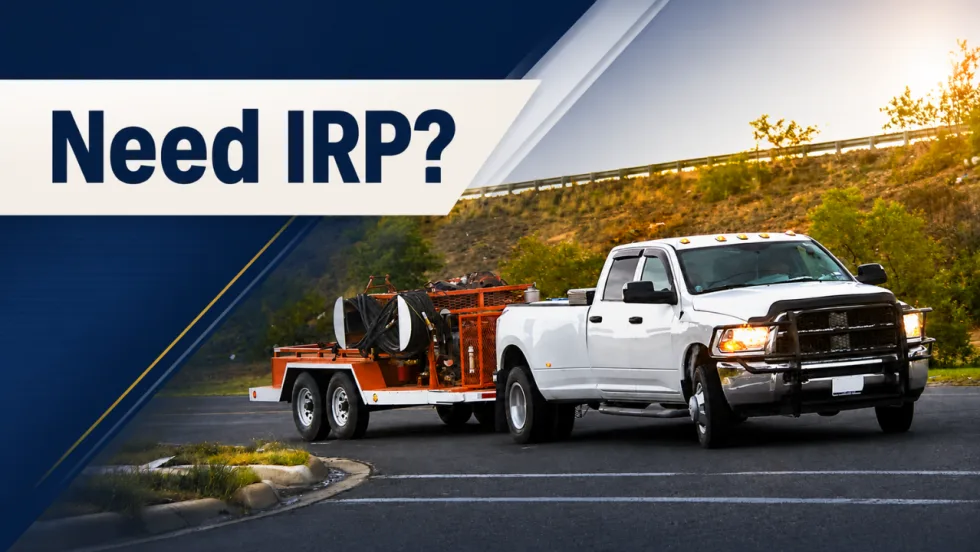
When Work Trucks Under 26,001 Pounds Need IRP Registration
Think trucks under 26,001 pounds are automatically in the clear when it comes to IRP? Not always. Learn where lighter vehicles can still run into trip permit, apportioned registration, and IFTA compliance requirements when crossing state or provincial lines.
Read More →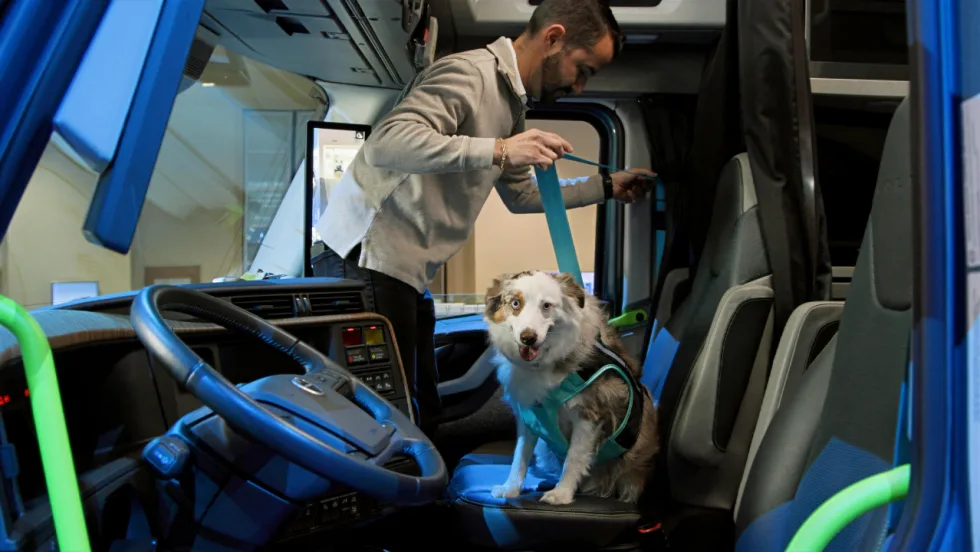
Volvo Trucks Releases New Safety Recommendations for Traveling with Pets
One of the most important recommendations for professional drivers traveling with pets is to ensure pets are properly restrained while the truck is moving. Other tips are available in the new guide from Volvo Trucks North America and Center for Pet Safety.
Read More →
API Issues Refueling Safety Guidelines
The American Petroleum Institute offers a list of safe vehicle refueling guidelines, including ways to avoid potential problems with static electricity discharges in fall, winter, and early spring.
Read More →
Winter Fleet Prep: Expert Tips to Keep Vehicles Running Smoothly
Cold weather can expose weak batteries, tires, fuel systems, and maintenance gaps fast. Use this winter fleet checklist to prepare trucks and drivers before temperatures drop.
Read More →
When a Work Truck Breaks Down, the Job Can Stop, Too
A work truck breakdown can stop more than the vehicle. Discover how payloads, jobsites, and specialty equipment change the roadside response.
Read More →
What Stronger Long-Term Fleet Service Partnerships Actually Require
Fleet service partnerships rarely fall apart all at once. Learn the three warning signs that trust is eroding and what fleets and providers can do before downtime, frustration, and lost revenue follow.
Read More →
Applause & TRUCE Software Partner to Improve Driver Safety Through AI-Powered Telematics & Employee Performance Management
Applause has integrated TRUCE driving metrics directly into its employee-first performance and safety platform that transforms mobile devices into AI-powered telematics.
Read More →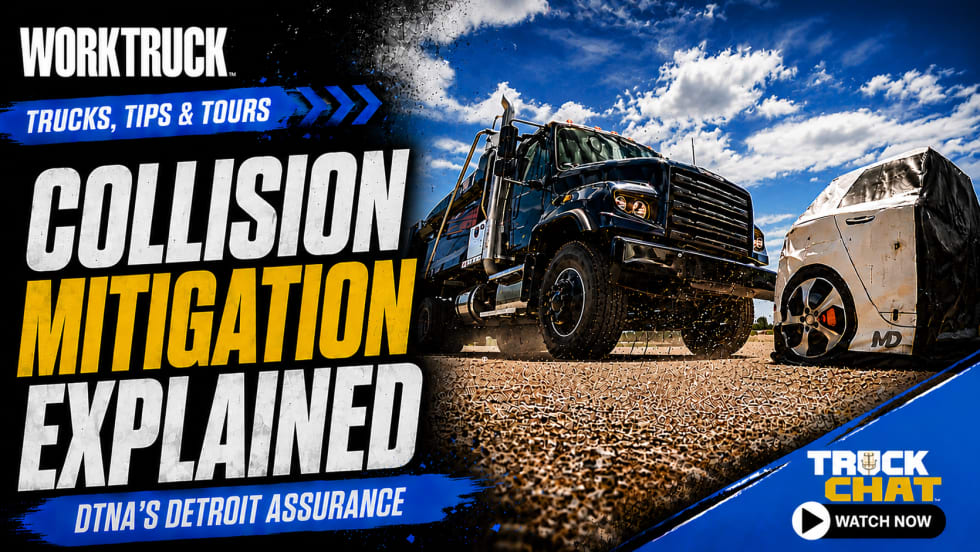
How Detroit Assurance with Active Brake Assist Works
Do you want to see what it is like to experience Detroit Assurance’s Active Brake Assist? In this video, Work Truck will put you in the cab to see how it all works and then hear more details from DTNA’s Mike Young.
Read More →
Get Left of Loss: A 5-Step Workplace Violence Prevention Framework for Fleet Operators
Violence risks do not stop at the driver’s door. Learn five practical steps fleets can take to spot threats early and protect workers before loss occurs.
Read More →
Sponsored•July 17, 2026
How Better Visibility Cut Speeding Violations by 48%
Fleet leaders don't need more data, they need clearer visibility into what the data is saying. This case study explores how one utility replaced speeding-event counts with a single metric — miles driven in violation — to strengthen safety and significantly reduce speeding violations.
Read More →