




Want More? Where to Now for Diesels?
What Fleet Managers Need to Know About Diesel Engine Fluids
Diesel engine fluids, including engine oils, coolants, and fuel additives, are essential components in a consistent preventive maintenance program that sustains equipment uptime, minimizes repair costs, and increases longevity.
by Sean Lyden
March 1, 2007
With medium-duty trucks, as with any class vehicle, implementing a consistent preventive maintenance program will sustain equipment uptime, minimize repair costs, and increase longevity.
Photo: Getty Images
7 min to read
When vehicles break down and crews are unable to do their jobs, each vehicle that sits costs your company thousands of dollars per day in lost revenue, not to mention the repair bills. And senior management is quick to note this mounting loss.
With medium-duty trucks, as with any class vehicle, implementing a consistent preventive maintenance program will sustain equipment uptime, minimize repair costs, and increase longevity. The diesel engine fluids you stock and use — including engine oils, coolants, and fuel additives — are essential components to achieve these objectives.
Here’s a guide on diesel engine fluids, their functions, selection, stocking, suppliers, and new regulations.
Engine Oils
What role does engine oil perform in preventive maintenance programs? Engine oil performs four key functions in medium-duty diesel engines:
Lubrication. The oil creates and maintains a slippery surface between moving parts to reduce friction and must be able to resist extreme temperatures and pressures.
Cooling. Oil is designed to remove heat from the engine bearing and moving parts.
Cleaning. Also known as detergency. As fuel burns in the engine, a variety of waste products form, including water, soot (particulate matter), and acids. Oil is designed to hold contaminants in a state of dispersion so they can be removed as the oil is drained. This function also helps prevent rust and corrosion by contaminants.
Sealing. Oil helps prevent combustion gas leaks by filling gaps between the piston ring and cylinder wall.
How have the 2007 federal diesel emissions regulations impacted engine oil? What has changed is how engine oils perform their lubrication, cooling, cleaning, and sealing functions in 2007-compliant engines operating on ultra-low sulfur diesel (ULSD) fuel.
Here’s why. Diesel engines built on Jan. 1, 2007, and thereafter are required to reduce nitrogen oxide (NOx) emissions by 50% and particulate matter (PM) emissions, also known as soot, by 90 percent, relative to the 2004 standard.
To meet these requirements, diesel engine manufacturers have:
Controlled and reduced NOx emissions by using some form of an enhanced exhaust gas recirculation (EGR) system.
Trapped soot by using diesel particulate filters (DPF).
The challenge, however, is that the EGR, necessary to reduce NOx, makes for less-efficient combustion, increasing soot in the form of unburned particles. Too much soot can lead to premature change cycles for the DPF.
One way to counteract this issue is to focus on removing controllable sources of soot or particulate matter. One specific controllable source is the amount of sulfur in fuel. And this is where ULSD comes into play because its sulfur content is only 15 parts per million (ppm), down from the 500 ppm in the previous low-sulfur fuel.
The ’07 Compliant Standard: CJ-4
To meet 2007 emissions requirements, engine oil manufacturers developed a new standard: CJ-4. The standard for pre-2007 oils is CI-4 Plus, designed to meet the previous 2004 EPA regulations.
What makes CJ-4 more compatible to 2007 engines than the previous CI-4 Plus?
Lower levels of phosphorous, ash, and sulfur. When used in 2007 engines, these additives could prematurely plug up the diesel particulate filter (DPF), increasing maintenance issues.
Higher oxidation stability. The oil has greater resistance to breakdown in high heat situations.
Improved soot-dispersant capabilities. This keeps soot from excessively thickening oil at high temperatures, affecting cold-weather performance. For this reason, dispersants added to the oil keep soot particles in suspension for the required drain interval.
Where can Qualified Oil Suppliers be Found & Researched?
One source is the American Petroleum Institute (API), a national trade association, based in Washington, D.C., that represents all aspects of America’s oil and natural gas industry with more than 400 corporate members.
API’s Certification Mark, found on oil labels, represents a voluntary licensing and certification program so engine oil producers can demonstrate their products meet strict performance requirements. It is a cooperative effort between the oil and additive industries, and vehicle and engine manufacturers.
What Risks Occur Using CI-4 Plus in a 2007 Engine?
“You may find that you have to replace the DPF much earlier,” says Dennis Bachelder, senior associate for engine oil licensing and certification at API, with more than 25 years of experience in the areas of fuels, lubricants, and exhaust emissions. “You then face performance problems as a result of any backpressure from a plugged-up DPF.”
Using CI-4 in 2007 engines might void engine warranty. “It’s a risk, but that’s the call made by the engine manufacturer on a case-by-case basis. But one thing’s for sure. Replacing the DPF is not cheap, and you’ll be dealing with performance problems and cost issues incurred by downtime for the repair,” Bachelder explains.
Can the New CJ-4 be Used in Pre-’07 Equipment?
CJ-4 is backward-compatible, meaning it can be used in pre-’07 engines,” says Bachelder. “But you may have to change the oil more frequently. It’s difficult to determine the frequency, but it could be as much as 50%. But that’s really the worst-case scenario.”
For more information on CJ-4 oil and its compatibility with an existing medium-duty fleet, log on to www.apicj-4.org.
Coolants
Ethylene glycol, propylene glycol, propane diol, 2-ethyl hexanoic acid, sebacic acid, and tolyl triazole. While these terms represent key ingredients in different types of diesel coolants, fleet managers don’t need a Ph.D in chemistry to understand the fundamentals. Here are the basics on coolants:
How do you select the right coolant for medium trucks?
“Look for the most cost-effective product that complies with the recommendations of your vehicle manufacturer(s),” advises Ed Eaton, president of Amalgatech, a prominent research lab based in Phoenix that tests oils and coolants. “Once you choose a coolant program, stick with it. Avoid mixing coolant technologies.”
Mixing coolants can cause premature coolant breakdown, leading to shorter change cycles and compromising the coolant’s ability to protect against corrosion and engine wear.
Confirm the coolant used to top-off or change is compatible with OEM requirements. For example, in the Chevrolet Kodiak / GMC TopKick C-Series trucks, General Motors installs Dex-Cool at the factory. Dex- Cool is an extended-life coolant that GM says will last up to five years or 150,000 miles.
According to the Fluids Information Group Inc., a Lake Tahoe, Nev., fleet maintenance advisory firm, coolants compatible to GM’s branded Dex-Cool include Texaco Havoline, Prestone Extended Life 5/150, Zerex Extreme Life, and Cel-Cool. (See sidebar for a list of coolant suppliers.)
For peace of mind, consult the owner’s manual first to minimize risk of potential warranty issues.
How have 2007 diesel emissions requirements impacted coolants?
“There’s been significant work performed on the subject,” says Eaton, a leading researcher on the topic. “But at last check, it’s the official position of the OEMs that the engine modifications made to comply with 2007 emissions requirements do not significantly affect coolant service lives.”
For additional research on coolants, Eaton suggests consulting these Web resources.
Fuel Additives
Can additives be added to ULSD fuel to overcome the lubricity deficiency of lower sulfur content?
According to the Clean Diesel Fuel Alliance Information Center (www.clean-diesel.org), additives to increase lubricity and inhibit corrosion are added to ULSD prior to its retail sale. With these additives, ULSD is expected to perform as well as the previous low-sulfur diesel fuel. Supplementing with additives for lubricity after fuel purchase is unnecessary.
What effect does additive use have on OEM warranty?
Cummins, in its Service Bulletin #3379001-05 says: “Any fuel additive product should be accompanied with performance and benefit. Engine failures caused by incorrect fuel are NOT covered by warranty. It is not the policy of Cummins to test, approve, or endorse any product not manufactured or sold by Cummins.”
Many of the OEMs offer branded products. When researching aftermarket additives, make sure they are compatible with the engine manufacturer’s requirements. For example, only alcohol-free water demulsifiers should be used in General Motors diesel engines. Both Racor and Stanadyne diesel fuel additives are alcohol-free. While other brands may be available in different areas, verify that they clearly state they are alcohol-free demulsifiers before use.
Where can fuel additive suppliers be found and researched?
A good place to start is the Environment Protection Agency (EPA) Web site. This directory is based on EPA regulation 40 CFR Part 79, which requires each manufacturer or importer of fuel additives to register its product with the EPA prior to market introduction to ensure the product’s safety to public health.
Subscribe to Our Newsletter
More Fuel

The Smart Way to Build a Mixed-Energy Fleet Isn’t About Picking a Side
Mixed-energy fleets aren’t about picking a winning fuel. Sarah Booth of WEX explains how vehicle data, duty cycles, charging strategy, and real-world costs can help fleets choose the right energy source for each job.
Read More →
Ignoring This Dashboard Warning Could Cost Your Fleet Thousands in Fuel
New research suggests neglected diesel aftertreatment systems could waste up to $30 in fuel per vehicle each day. Here's why vocational fleets should pay attention.
Read More →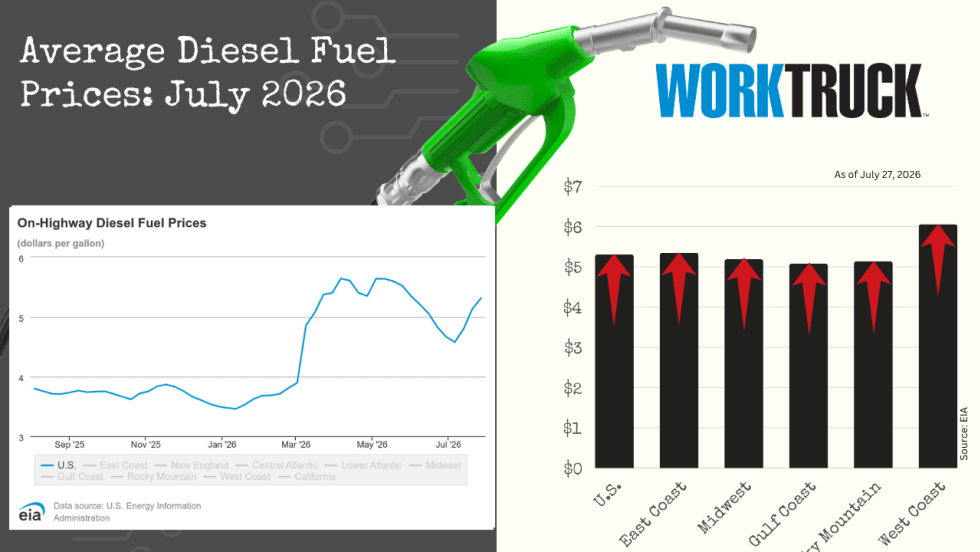
July Diesel Trends Update
The average price of a gallon of diesel increased again this week, and the EIA reported a new national average of $5.31 at the start of the week.
Read More →
WEX Brings Standard Fleet's Connected Vehicle Platform to Fleet Customers
This week’s product launch with Standard Fleet’s connected vehicle platform reflects WEX Venture Capital's strategy of turning startup innovation into customer solutions. Standard Fleet is now available to WEX fleet customers.
Read More →
Teletrac Navman Adds Mixed-Energy Fleet Tools to TN360
The new Energy Hub combines fuel transactions, EV charging data, vehicle range, and energy costs in one dashboard for fleets operating multiple vehicle and energy types.
Read More →
WEX DriverDash adds CITGO, Expands Nationwide Access for Fleets
The DriverDash mobile payment app, by WEX, has been integrated into the CITGO merchant network, which means WEX has expanded its U.S. station footprint with the addition of approximately 4,000 CITGO locations.
Read More →
Mixed Energy Fleet Tips for Balancing EVs, Gas and Diesel Vehicles
Mixed energy fleets are becoming the new normal. Learn how fleet managers are balancing EVs, gas and diesel vehicles while controlling costs and planning for the future.
Read More →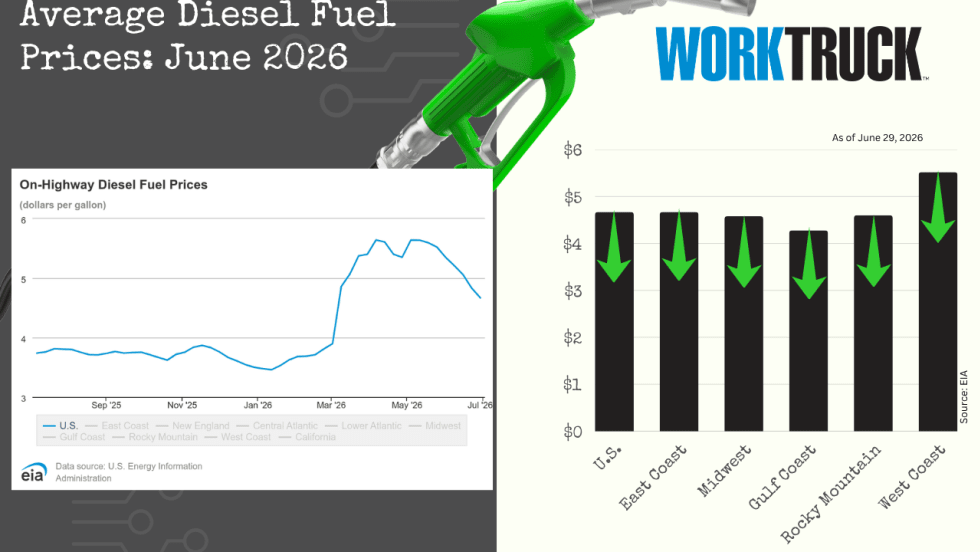
June Diesel Trends Update
The national average price of a gallon of diesel has dropped again, this week by more than 16 cents. All five regions reported lower average prices, ranging from almost 13 cents to more than 28 cents cheaper than a week ago.
Read More →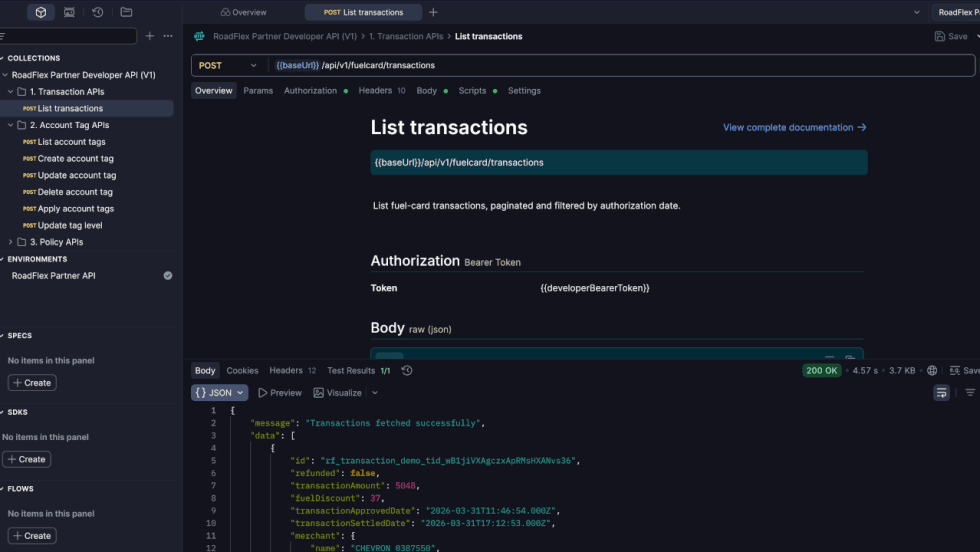
RoadFlex Launches RoadFlex Direct Open API Platform
RoadFlex Direct connects fuel cards, controls, and data to the telematics and fleet management systems fleets already run, from Geotab and Samsara to Fleetio and RTA, with no separate dashboard or double data entry.
Read More →
The Key to Fuel Efficiency Sits in the Cab
Learn how driver behavior, telematics, coaching, and fuel data can help fleets improve fuel efficiency, lower costs, and reduce emissions.
Read More →