




Training for Safety Across Multiple Locations
Keep things consistent and know what training can, and cannot, accomplish. Set clear targets and ensure they line up with fleet and organizational goals.


Ensuring consistency across all locations is essential to an effective driver safety program.
Photo: Gettyimages.com/Fertnig

Focus on your fleet’s safety goals and ensure that organizational goals are also kept top of mind.
Photo: Gettyimages.com/2bluecinema
Ensuring drivers at one location receive consistent and effective safety training can be difficult. Overseeing driver safety training at multiple locations – that could be spread out across several states or more – can feel downright impossible and comes with an added set of challenges.
Ensuring that drivers are all trained the same across each diverse location is a challenge many vocational fleet managers face. And proper training is more than a quick handbook and test.
“The most formidable obstacle for deriving benefits from ‘fleet safety training’ is first having an understanding for what training is – and what it is not,” said Mark Gardner, chief executive officer of Avatar Management Services, Inc. “Too often, people use the word training as a catch-all for employee learning and development.”
Driver safety training is essential to a safer driver population, lowered accident rates, and is the top way to help stabilize rising insurance costs.
As instructional designers, Avatar begins with the end in mind. Gardner shared four learning domains:
Affective. The learner is receptive and willing to learn.
Cognitive. The learner understands the concepts and can recite them back.
Behavioral. The learner behaves in new and different ways and has new skills.
Organizational. The new behaviors impact organizational results, providing an ROI.
According to Gardner, training falls into the third domain: behavioral.
“Our clients expect training to lead to new and different behaviors (also known as skills). And, through more skillful drivers, achieve fewer collisions and better organizational results. These fleets justify their investment in training by showing upfront the impact it will have on financial performance,” he added.
PRO TIP: Understand that training cannot be used to alter an employees’ basic characteristics in such areas as values and personality. When these are not aligned with the needs of the job, training is a waste of time and money.
Multiple Location Challenges
Consistency is a top challenge when training for safety across multiple locations.
“Most vocational training relies heavily on the expertise of individual trainers whom each have their own experiences, capabilities, and biases. Thus, trainees at different locations receive vastly different messages and often achieve very different learning outcomes. As a company investing in training, you want to ensure your results are consistent and high-quality across all locations,” Gardner explained.
An organization that must train at multiple locations needs to have a standardized curriculum that provides a consistent message and delivery methodology and does not rely on the expertise of individual trainers.
“Often, the best way to achieve a consistent delivery methodology is by utilizing self-directed web-based training. These training programs are hosted on a learning management system, which allows you to host, implement, track, and run reports on training all from one place. It also guarantees that the same message is sent in the same way to all of your employees,” Gardner added.
PRO TIP: Be consistent. Ensure you have the same curriculum and methodology across all locations. Understand that you cannot rely on the expertise of individual trainers.
Achieving Top Results
A fleet’s size will also make an impact on safety training across locations.
“If you have a large fleet and unique situational challenges that make the job more complicated than simply defensive driving, you may want to consider a custom curriculum. If so, hire an experienced instructional designer or find a competent third party with a successful history of creating similar curricula,” Gardner recommended.
For fleets with smaller driver populations, there is no justification for creating a custom course. Instead, Gardner recommended building a safety training course using a combination of third-party materials and your internal team of trainers.
“Regardless of the approach you take, you need to focus on creating a training process and program that is simple and replicable. You likely won’t have one person implementing training. Many people across many different locations will have to implement it. Create a simple process, train your locations on how to implement it, and track results. This will help you achieve uniformity throughout your entire company,” he said.
The Bottom Line
No matter what, focus on what’s truly important to your fleet.
“Too many fleet managers invest a lot of time and money teaching drivers’ things that are simply not important. Focus on your desired outcomes. In the end, what do you want them to know and do? What metrics or key performance indicators do you hope to impact?” Gardner said.
Don’t forget to also focus on what your organization wants to achieve: fewer collisions, lower costs, better customer service, etc., and build the course with the end in mind.
“Simultaneously, remember that training is not an event; It is a process. Fleet safety training must be a continuous part of working for you. If you only train your new hires, you won’t have the results you want. You need to re-train your employees. We recommend doing so on a monthly basis by focusing on specific loss-leading indicators,” Gardner concluded.
PRO TIP: Build your course based on your fleets size and overall needs. Smaller fleets likely do not justify custom safety programs. Remember to include overall organizational goals as well.
More Safety
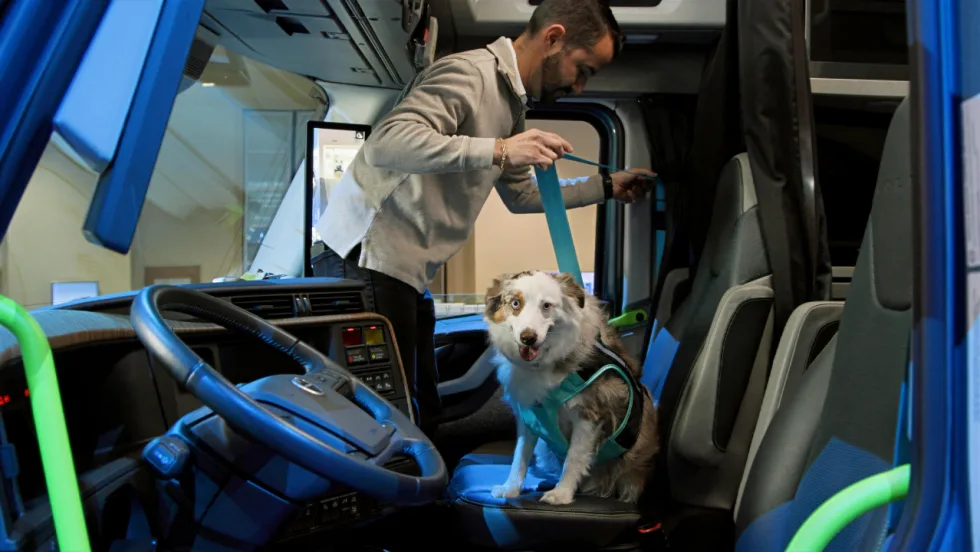
Volvo Trucks Releases New Safety Recommendations for Traveling with Pets
One of the most important recommendations for professional drivers traveling with pets is to ensure pets are properly restrained while the truck is moving. Other tips are available in the new guide from Volvo Trucks North America and Center for Pet Safety.
Read More →
API Issues Refueling Safety Guidelines
The American Petroleum Institute offers a list of safe vehicle refueling guidelines, including ways to avoid potential problems with static electricity discharges in fall, winter, and early spring.
Read More →
Winter Fleet Prep: Expert Tips to Keep Vehicles Running Smoothly
Cold weather can expose weak batteries, tires, fuel systems, and maintenance gaps fast. Use this winter fleet checklist to prepare trucks and drivers before temperatures drop.
Read More →
When a Work Truck Breaks Down, the Job Can Stop, Too
A work truck breakdown can stop more than the vehicle. Discover how payloads, jobsites, and specialty equipment change the roadside response.
Read More →
What Stronger Long-Term Fleet Service Partnerships Actually Require
Fleet service partnerships rarely fall apart all at once. Learn the three warning signs that trust is eroding and what fleets and providers can do before downtime, frustration, and lost revenue follow.
Read More →
Applause & TRUCE Software Partner to Improve Driver Safety Through AI-Powered Telematics & Employee Performance Management
Applause has integrated TRUCE driving metrics directly into its employee-first performance and safety platform that transforms mobile devices into AI-powered telematics.
Read More →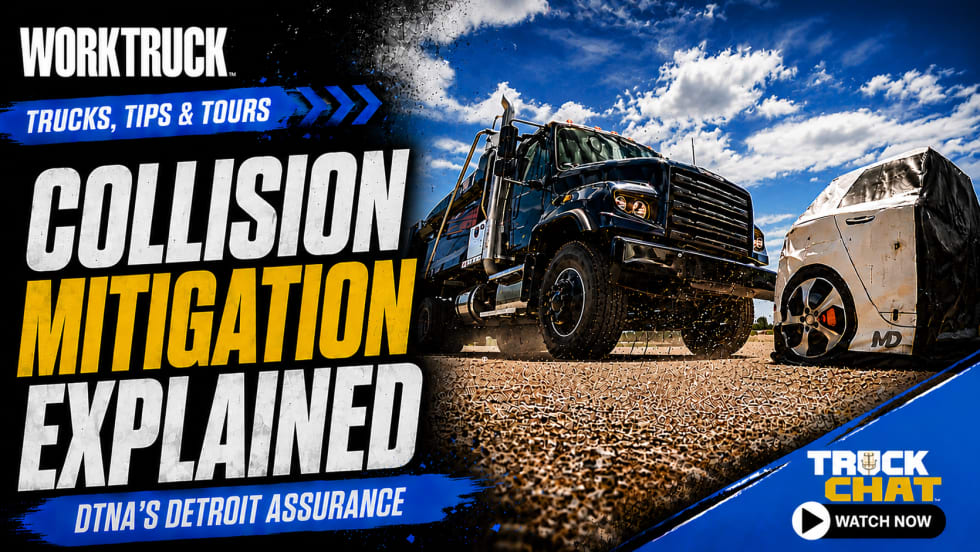
How Detroit Assurance with Active Brake Assist Works
Do you want to see what it is like to experience Detroit Assurance’s Active Brake Assist? In this video, Work Truck will put you in the cab to see how it all works and then hear more details from DTNA’s Mike Young.
Read More →
Get Left of Loss: A 5-Step Workplace Violence Prevention Framework for Fleet Operators
Violence risks do not stop at the driver’s door. Learn five practical steps fleets can take to spot threats early and protect workers before loss occurs.
Read More →
How Better Visibility Cut Speeding Violations by 48%
Fleet leaders don't need more data, they need clearer visibility into what the data is saying. This case study explores how one utility replaced speeding-event counts with a single metric — miles driven in violation — to strengthen safety and significantly reduce speeding violations.
Read More →
13 Safe Driving Tips for Commercial Vehicle Drivers
Make sure you are spending time on the road safely with these important tips.
Read More →