




State of the Commercial Tire Industry in 2024
As transportation needs change, tiremakers must adapt to modernized fleets. What role does the tire industry have in helping fleets attain goals for safety, efficiency, and sustainability?

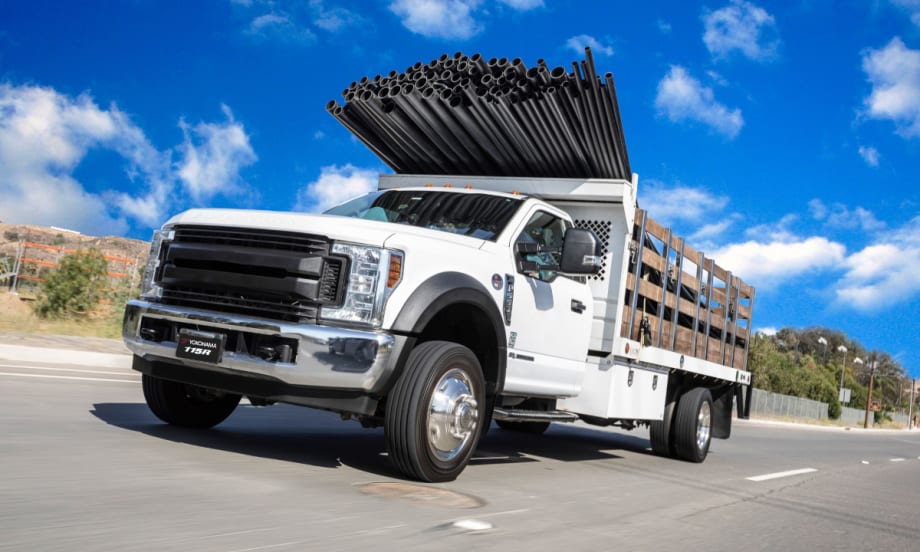
Tiremakers produce a wide array of tires for work trucks, allowing fleets to match tires to different classes of vehicles that serve different roles.
Photo: Yokohama
What role does the tire industry have in helping fleets attain goals set for safety, efficiency, and sustainability? As transportation needs change, tiremakers must adapt to modernized fleets that rely on industry improvements, technology, and data to keep vehicles healthy, drivers safe, and tires on the road as long as possible.
What trends are out there, and how are tiremakers responding to those?
Trends in Light-Duty Truck Tires
Dan Funkhouser, Yokohama Tire's vice president of commercial sales, pointed out that E-commerce and last-mile delivery growth has significantly increased the demand for light-duty truck tires. This has also created a need for tires that can withstand the rigors of an urban environment with frequent stops, starts, and curbing.
He also said these light-duty tires are now being better designed for durability and retreading.
Haesik Lee, TBR marketing director at Hankook Tire, said the trends in the light-duty truck tire segment are often shaped by the everyday driver seeking certain aspects of CUV/SUV tires.
“For example, there has been an increase in consumers choosing all-terrain tires, which is rolling over into what dealers are looking for in their light truck offerings,” Lee explained.
Light-duty truck tires must be capable of various driving conditions, from the rockiest off-road to a smooth-sailing highway. Tiremakers must continuously evaluate light-truck offerings to ensure they meet that wide range of needs.
David Demo, manager of commercial products and business development at Toyo Tires, said the company continues to see growth in the final-mile and tradesman commercial segments.
He explained that these Class 3 vehicles and pickups require improved overall removal mileage. These challenging urban and regional applications demand a product that can handle daily heavy loads and abuse.
Trends in Medium-Duty Truck Tires
Medium-duty truck tires address that sweet spot, Lee said, while offering higher speed ratings and reinforced construction for the higher load capacities that fleets are looking for in their medium truck products.
For medium-duty trucks, tires must be fully capable and versatile.
“There is a growing need for versatile products that can be run in all positions. These need to be fuel efficient without compromising run-out mileage, retread ability, and handling,” Funkhouser said.
Trends in Heavy-Duty/OTR Tires
“Similar to medium-duty tires, these are being designed to meet environmental regulations while maintaining performance. Innovation in tread designs, compounding, and casing design continues to change with the demands of the market,” Funkhouser said.
He added that tires need to have a sturdy undertread to handle the punishment of on- and off-highway applications, and retreadability is important. The focus must be on durability, performance, and environmental compliance.
Technology Trends Impacting Tires
Last-Mile-Delivery: The E-commerce boom continues to drive the exponential growth of last-mile delivery demand, Lee said. The surge in immediate, one-day, two-day, and overnight shipping puts a greater demand on last-mile delivery services and their vehicles – down to the tires.
“This means durability becomes of particular importance,” Lee explained. “Sustainability also becomes a greater consideration. Both elements can, and should, be kept top-of-mind in the development of commercial tires.”
Electric Vehicles: Lee said Hankook Tire sees electric vehicles (EVs) as a promising growth market, including the commercial segment.
“However, as with any technology or segment, the growth speed will vary based on a number of external factors. Right now, automakers and shipping organizations alike are looking to balance the costs and benefits of implementing EVs as part of their commercial fleets and offerings,” Lee said.
He pointed out that it is important to remember that all industries face ebbs and flows, including EVs and the related tires that will be needed. Lee explained that tiremakers must deeply understand each segment and what is shaping it. He added that it is critical for tiremakers to provide quality products and services to dealers and end customers.
Tires for EVs must address specific added considerations.
“The unique attributes of EVs, including added weight and torque, can impact important factors of tire performance, most importantly, treadwear, load capacity, and vehicle range,” said Joe Burke, vice president, North America Commercial – Goodyear. “It is important that tires are designed to be compatible with the functional requirements of EVs and help ensure a safe, efficient driving experience.”
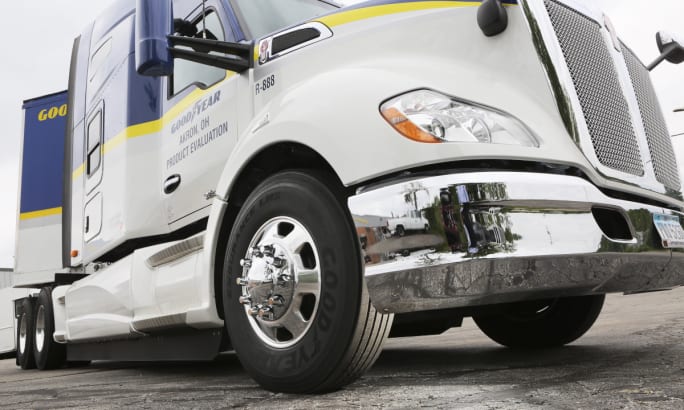
Goodyear produces a tire intended for battery-electric vehicle use, but also capable for any powertrain.
Photo: Goodyear
Burke said Goodyear has introduced “electric vehicle-ready” tires that are also compatible with gas- or diesel-powered regional work vehicles. They are engineered to deliver lower rolling resistance for improved efficiency to fleets regardless of drivetrain.
Supply Chain Lingering Impact: While the transportation industry has largely moved away from the residual impact of pandemic-driven supply chain shortages, Lee pointed out that much of the industry still faces the lasting effects of excess inventory from last year. This continues to impact not just the truck tire segment, but the tire industry more broadly as dealers adjust their promotion and sales techniques accordingly.
Improving Durability, Performance & Safety
Tiremakers are constantly looking for new ways to improve tires.
That is the case at Yokohama, where Funkhouser said the company is constantly researching new compounds and techniques to improve all aspects of its products, whether designing a product for improved efficiency, increased fuel mileage, longer tread mileage, reduced irregular wear, casing durability, high retreadability, or traction.
“One example is our ‘zero-degree’ belt on our ultra-wide-base products,” Funkhouser said. “We use wire-wrapped cables wound under specific pressures and applied to the width of the casing providing extra strength, durability, and protection while providing a foundation for the tread resulting in long even wear and reduced rolling resistance.”
Lee said key advancements in tire materials are being made that could improve all aspects of commercial truck tires. These include everything from advancements in rubber compounds to increasingly advanced tread patterns and designs to innovative tire technology, and more.
“For example, innovation in rubber formulations is creating advanced rubber compounds that are evolving to meet the key performance requirements of TBR (truck, bus, and radial) tires - durability, abrasion resistance, and rolling resistance,” Lee explained. “Advancing rubber compound technology that incorporates materials such as silica or advanced polymers can improve traction and reduce rolling resistance, and, on the sustainability side, even extend the tire’s life.”
Tread patterns are important, considering the versatility of TBR products. Innovations in tread design, such as variable depth patterns and advanced sipes, create enhanced grip that improves performance under various conditions.
“Since commercial tires must be equipped to handle a variety of unexpected conditions, these advancements are critical,” Lee added.
Technology, Telematics & Tire Data
Safety is not just about rubber compounds and tread patterns. Technology likewise plays a role.
“We can consider smart tire technology a critically important element in safety,” Lee explained. “For example, sensor integration and enhanced technology provide more opportunities for real-time insights into tire conditions, performance, and more.”
He pointed to the added significance of how the data collected from the tire sensing technology can provide longer-term insights, such as visibility into the remaining tire tread life and actionable information regarding maintenance intervals, operating efficiency, and driving time.
That data collection, as Funkhouser pointed out, has a broad-reaching financial impact for a fleet.
“Tires are, as we know, one of the top expenses a fleet must contend with. Knowing how to use and analyze the data these programs can provide is an extremely valuable tool to reduce cost, control inventory, and maximize efficiencies in their tire/wheel end maintenance programs,” Funkhouser said.
Burke also points to technology, such as proactive or manual inspection solutions like TPMS or other applications, as a way to stretch tire lifespan and reduce costs.
“Tire purchases and related maintenance and labor costs are among the top expenses for truck and fleet owners. A well-rounded tire management program can reduce cost, prolong vehicle uptime, and maximize the return on a fleet’s tire investment,” Burke said. “These applications can provide a wealth of information that can help fleet managers make more informed decisions to help improve the safety and efficiency of their fleets.”
Tire Longevity, Sustainability & Disposal
Technology plays a role in advancing sustainability helping tiremakers design tires with lower rolling resistance, leading to improved fuel economy and lower greenhouse gas emissions, Funkhouser explained. Longer-lasting original mileage performance and durability increase the overall life of the tire.
Lee likewise said developing longer-lasting tires is a key part of sustainability. One way to extend the life of a commercial tire is to increase the number of times it can be retreaded.
“To support the retread tire market – which is one of the most common sustainability practices in the commercial trucking industry – we are enhancing the reuse rate of tire casings,” Lee said. “They can now be recycled up to three times while still ensuring durability.”
As part of its ongoing commitment to sustainability, Hankook Tire participates in several waste tire management initiatives. Currently, more than 90% of its collected tires are reused and run through material recycling processes.
In addition, Hankook Tire is involved in the Tire Industry Project (TIP), part of the BCSD (Business Council for Sustainable Development). This initiative brings together global tire manufacturers with recycling companies and government officials to explore strategies for enhancing waste tire transparency alongside recycling technologies and policies.
According to TIP, globally, an estimated one billion tires reach the end of their useful lives each year.
In addition to providing long-lasting tires for the commercial segment, Hankook pioneers innovative, eco-friendly technologies across various areas—from materials to structures to designs. The company is guided by its E.Circle strategy throughout each segment it produces. The goal is to preserve the environment through four principles: Recycle, Renewable, Reuse, Reduce.
“Through this strategy, our goal is to not only create eco-friendly and sustainable products but also provide optimal driving experiences to end consumers by establishing a circular economy system throughout the entire product lifecycle, from planning and research, design, procurement, production, and disposal,” explained Lee.
More Maintenance
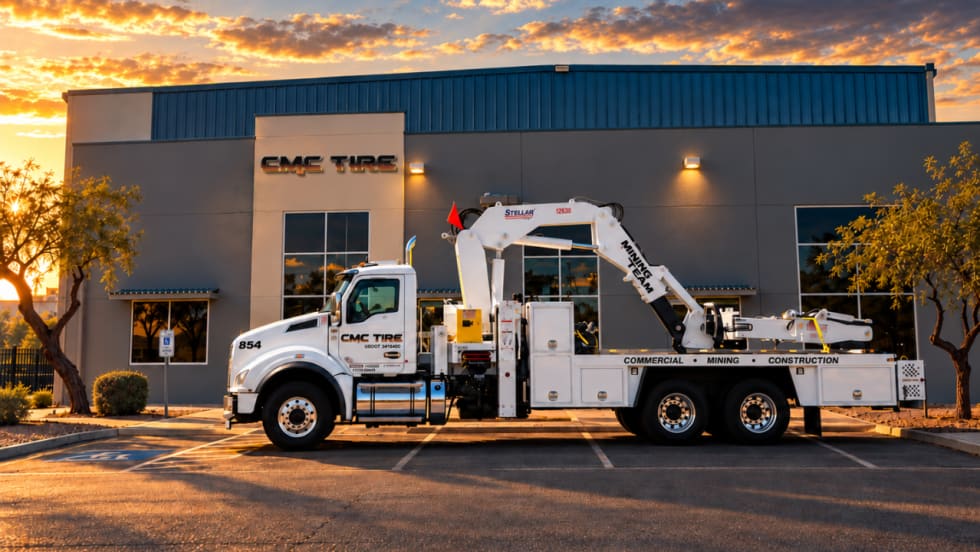
Les Schwab Expands Commercial Tire Footprint Into Arizona
Les Schwab Tires has expanded into Arizona with two commercial tire locations in Phoenix and Tucson, strengthening its fleet service footprint in the Southwest.
Read More →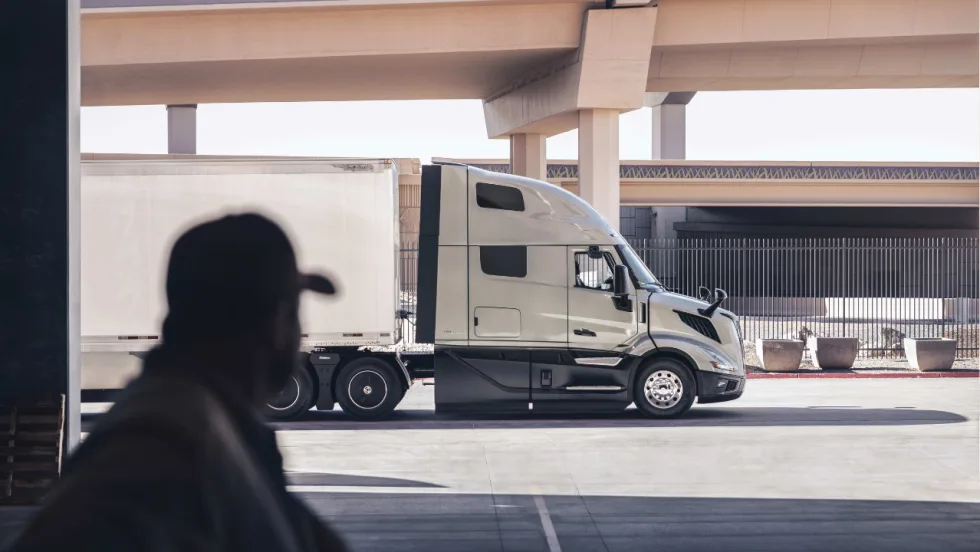
Volvo Trucks’ 'Lock and Leave' Software Updates Go Live Across North America
Unattended over-the-air software updates are now available in Volvo trucks across the U.S. and Canada. The new capability lets trucks stay current with the latest software without interrupting operations or requiring a dealership visit.
Read More →
Why Technician Appreciation Can’t Be a Once-a-Year Thought
For fleets trying to keep skilled technicians, recognition cannot begin and end with Technician Appreciation Week. Learn what year-round appreciation really looks like and why the everyday technician experience matters just as much as pay when fleets are trying to keep good people.
Read More →
How Faster Driver Reporting Can Keep Small Truck Problems Small
When minor damage, warning lights, or equipment issues are reported late, small problems can quickly become bigger maintenance headaches. Conversational AI can help shorten the path from what a driver notices in the field to the person who can act on it.
Read More →
BendPak’s Ranger Wheel Service Equipment Achieves North American Safety Certification
BendPak’s full line of Ranger tire changers and wheel balancers has been ETL certified to UL and CSA standards to improve operator safety.
Read More →
Isuzu & U.S. Department of Labor Celebrate Milestone for Veterans Apprenticeship Program
The Isuzu Veterans Apprenticeship Program (IVAP) signing ceremony highlighted Isuzu’s long-term commitment to veterans, Isuzu dealers, and the skilled workforce supporting its customers and the commercial transportation industry.
Read More →
Polyvance Introduces New Peterbilt 567 Hood Strut Mount Repair Kit
Polyvance has launched a repair solution for Peterbilt 567 hood struts, helping truck owners and repair facilities avoid costly hood replacements.
Read More →
Cox Automotive Celebrates Technical Excellence at 2026 Top Tech Finals
The top technicians from Cox Fleet and Manheim tested their skills in Nashville, Tennessee, at Cox Automotive’s 2026 Top Tech Finals. The overall winners will advance to compete at the American Trucking Association’s TMC SuperTech competition.
Read More →
Grote Industries Appoints Vice President of North American Operations
Grote Industries has appointed Patrick Smith as vice president of North American operations as it celebrates 125 years of innovation and manufacturing excellence. He has more than 20 years of manufacturing leadership experience.
Read More →
Winter Fleet Prep: Expert Tips to Keep Vehicles Running Smoothly
Cold weather can expose weak batteries, tires, fuel systems, and maintenance gaps fast. Use this winter fleet checklist to prepare trucks and drivers before temperatures drop.
Read More →