




Why Work Trucks Fail in the Field and What Fleet Managers Can Actually Do About It
Juan Ibarra shares real-world insights on truck failures, operator misuse, and practical ways fleets can reduce downtime in demanding environments.

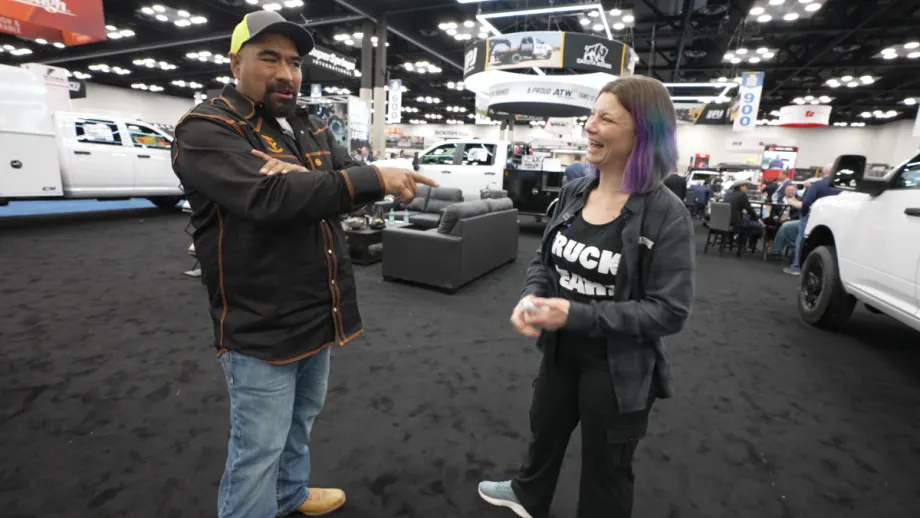
Between stories and insights, Ibarra shares a laugh while reflecting on the realities of pushing equipment to its limits.
Credit: Jonathan Robbins
I caught up with Juan Ibarra of Discovery Channel’s Gold Rush: Mine Rescue at Work Truck Week, and if there’s anyone who understands what happens when trucks meet the absolute limits of their design, it’s him.
If you’ve seen the show, you already know the environments we’re talking about. These aren’t controlled job sites or predictable routes. These are uneven, unforgiving conditions where equipment doesn’t just get used, it gets tested constantly.
That’s what made this conversation so valuable. This wasn’t theory or best practices pulled from a manual. This was lived experience. The kind of insight you only get when equipment is pushed hard, used daily, and expected to perform in places most fleets will never go.
And honestly, a lot of what he shared applies more broadly than you might think.
Clearance Is Critical in Extreme Environments
When trucks start failing in remote or rugged conditions, it’s not always the engine or drivetrain that gives out first. It’s something far more fundamental and, in many cases, overlooked early in the spec’ing process.
“Honestly… most of what I see is clearance issues,” Ibarra said. That answer might sound simple, but it carries weight because clearance isn’t just about getting over obstacles. It’s about whether the truck can even function in the environment it’s sent into.
“You’ve got to have that clearance… not only on the axles, but on the body itself… sometimes you’re really close to the toe of the hill where your body’s going to rub,” Ibarra added.
It’s a good reminder that spec’ing for the “average day” doesn’t always cut it. Fleets have to think about the worst-case scenario, not just the most common one, because that’s where failures tend to show up.
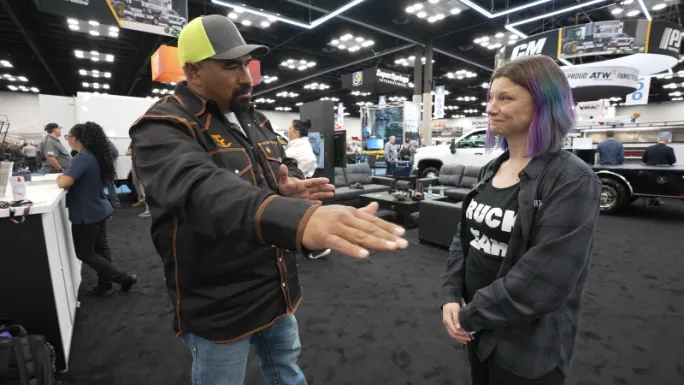
Juan Ibarra breaks down how clearance challenges show up in real-world conditions, where even small miscalculations can take a truck out of operation.
Credit: Jonathan Robbins
Reliability Extends Beyond the Truck
We talk a lot about uptime in this industry, and a lot of that conversation centers on the truck itself. But Ibarra made it clear that reliability doesn’t stop at the chassis.
“Not only on just the trucks, but whether it’s the equipment you have on the trucks… we wanted to make sure that whatever we put on it was going to be as reliable as it could be,” Ibarra said.
That idea of the truck as a complete system, not just a vehicle, is something fleets are increasingly having to think about. Because when one component fails, the entire operation feels it.
He also emphasized something that doesn’t always get talked about enough in fleet decision-making: trust in your partners. “If I’m going to promote something… that’s what I use. That’s what I would use whether I’m on TV or not,” Ibarra said.
There’s a level of authenticity there that translates directly to performance. When equipment is chosen based on real-world experience instead of just specs or price, it tends to hold up better when it matters most.
Real-World Feedback Drives Better Equipment
One of the things I appreciated most in this conversation was how clearly it showed the connection between operators and product development. We talk about innovation all the time, but sometimes the most meaningful improvements are the smallest, most practical ones.
“There’s nothing better than a C-Tech drawer… but one of the issues is a lockout,” Ibarra said. That might sound minor until you picture the reality of the job. “I bet you my truck… 90% of the time… it’s never level,” Ibarra added.
In that environment, something like a drawer sliding shut unexpectedly isn’t just inconvenient. It slows you down, adds frustration, and can even create safety issues.
The important part is what happened next. “They took that to heart, and they changed it,” Ibarra said.
That feedback loop between the field and the manufacturer is where real progress happens. And it’s something fleets can lean into more, whether that’s through partnerships, pilot programs, or simply sharing more detailed feedback with suppliers.
Improper Use Is the Biggest Source of Abuse
There’s always a lot of talk about how hard work trucks are pushed, and rightfully so. These are tools, and they’re meant to be used.
But Ibarra offered a perspective that cuts through a lot of that conversation: “I hate to say it, but… a lot of the issues… is improper use,” Ibarra said.
It’s not always the conditions. Sometimes it’s how the equipment is being handled within those conditions. “It’s only as good as the operator,” Ibarra added.
That’s where fleet strategy really comes into play. You can spec the best truck, invest in the best equipment, and still run into issues if operator training, accountability, and culture aren’t aligned.
It’s not the most exciting part of fleet management, but it might be one of the most impactful.
Reducing Idle Time Can Reduce Downtime
When I asked Ibarra for one thing fleet managers could actually implement, not just think about, he pointed to something very specific and very actionable: Idle time.
“You sit there and idle all day long, you’re going to have issues with your DPF,” Ibarra said.
This is one of those issues that shows up across industries, not just in extreme environments. And it’s often tied directly to how trucks are used to power jobsite equipment.
His solution was to rethink that setup entirely. “I went to an all-in-one welder… generator, welder, air pack, and hydraulic pack… so now when that truck’s on site, I’m not sitting there idling the truck,” Ibarra said.
Instead of relying on the truck’s engine for everything, he’s using a purpose-built system. “Just run that small… motor on your welder, and that’s plenty,” Ibarra added.
It’s a good example of matching the solution to the job. Not every fleet will need this exact setup, but the mindset applies broadly. The more intentional you are about how power is used on-site, the more control you have over wear and tear and downtime.
Yes, The Wrench Is Real
And because it had to be asked…The oversized wrench featured in Mine Rescue isn’t just for show.
“100% real,” Ibarra said. “You get into some of the bigger fittings… that’s what you use… you’ve got that long torque on it."
Also worth noting: filming that intro repeatedly comes at a cost: “By the end of the day, I actually had a bruise on my shoulder,” Ibarra said.
Driving Thoughts
What stood out most from this conversation is how interconnected everything is when it comes to fleet performance.
It’s not just about the truck. It’s about how it’s built, how it’s used, what’s added to it, and how well all of those pieces work together in the real world.
Clearance matters more than people think. Reliability is bigger than the chassis. Operator behavior can make or break performance. And small decisions, like how you power equipment on-site, can have a big impact on downtime.
Get those pieces working together, and the trucks keep moving. Miss one, and the problems tend to show up fast. And haven't checked out Gold Rush: Mine Rescue yet? You are missing out. The latest season dropped in February, check it out!
More Maintenance
Les Schwab Expands Commercial Tire Footprint Into Arizona
Les Schwab Tires has expanded into Arizona with two commercial tire locations in Phoenix and Tucson, strengthening its fleet service footprint in the Southwest.
Read More →
Volvo Trucks’ 'Lock and Leave' Software Updates Go Live Across North America
Unattended over-the-air software updates are now available in Volvo trucks across the U.S. and Canada. The new capability lets trucks stay current with the latest software without interrupting operations or requiring a dealership visit.
Read More →
Why Technician Appreciation Can’t Be a Once-a-Year Thought
For fleets trying to keep skilled technicians, recognition cannot begin and end with Technician Appreciation Week. Learn what year-round appreciation really looks like and why the everyday technician experience matters just as much as pay when fleets are trying to keep good people.
Read More →
How Faster Driver Reporting Can Keep Small Truck Problems Small
When minor damage, warning lights, or equipment issues are reported late, small problems can quickly become bigger maintenance headaches. Conversational AI can help shorten the path from what a driver notices in the field to the person who can act on it.
Read More →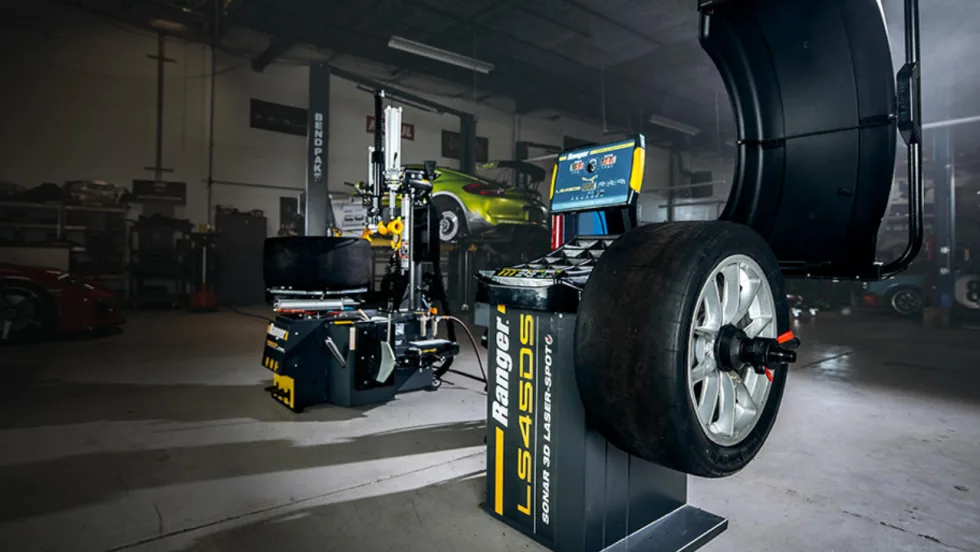
BendPak’s Ranger Wheel Service Equipment Achieves North American Safety Certification
BendPak’s full line of Ranger tire changers and wheel balancers has been ETL certified to UL and CSA standards to improve operator safety.
Read More →
Isuzu & U.S. Department of Labor Celebrate Milestone for Veterans Apprenticeship Program
The Isuzu Veterans Apprenticeship Program (IVAP) signing ceremony highlighted Isuzu’s long-term commitment to veterans, Isuzu dealers, and the skilled workforce supporting its customers and the commercial transportation industry.
Read More →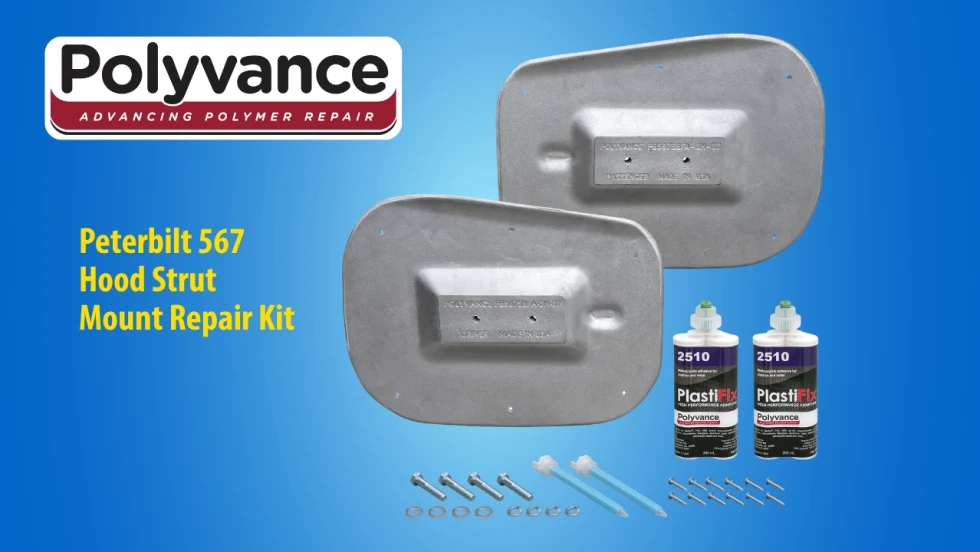
Polyvance Introduces New Peterbilt 567 Hood Strut Mount Repair Kit
Polyvance has launched a repair solution for Peterbilt 567 hood struts, helping truck owners and repair facilities avoid costly hood replacements.
Read More →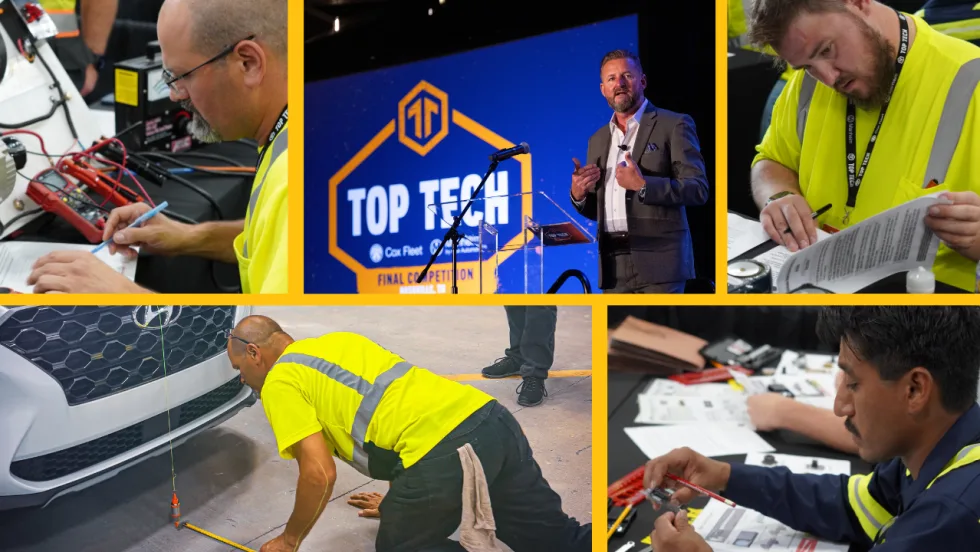
Cox Automotive Celebrates Technical Excellence at 2026 Top Tech Finals
The top technicians from Cox Fleet and Manheim tested their skills in Nashville, Tennessee, at Cox Automotive’s 2026 Top Tech Finals. The overall winners will advance to compete at the American Trucking Association’s TMC SuperTech competition.
Read More →
Grote Industries Appoints Vice President of North American Operations
Grote Industries has appointed Patrick Smith as vice president of North American operations as it celebrates 125 years of innovation and manufacturing excellence. He has more than 20 years of manufacturing leadership experience.
Read More →
Winter Fleet Prep: Expert Tips to Keep Vehicles Running Smoothly
Cold weather can expose weak batteries, tires, fuel systems, and maintenance gaps fast. Use this winter fleet checklist to prepare trucks and drivers before temperatures drop.
Read More →