





Related: Truck Purchasing to Leasing - 10 Questions to Answer
Should You Lease or Buy Work Trucks?
Dynamic, fast-moving financial options can create a real dilemma if you’re looking to update your fleet. Luckily, some tried-and-tested baseline rules can help cut through the clutter and secure the financing options you need to grow your business.
November 15, 2016
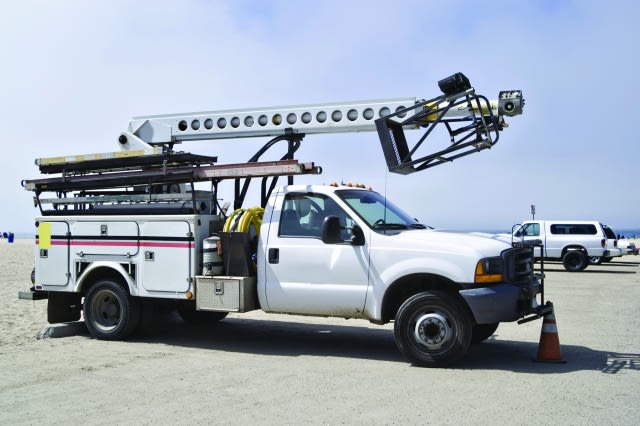
Many larger fleets have moved away from purchasing to leasing trucks.
Photo courtesy of iStockphoto.com
10 min to read
Lease or buy? It is one of the most fundamental questions a fleet manager must answer. And, because nothing in business is carved in stone, it is a question that will have to be answered many times over the course of a career.
Many fleet managers have a preference when it comes to acquiring new vehicles. But, ever-changing financial options and business demands can often mean new opportunities — and new doubts. Because no matter what path you choose to acquire new vehicles, there is always a nagging doubt in the back of your mind, wondering if you made the right choice — or could have cut a better deal.
“How you pay for your vehicles and equipment is critical to the purchase decision,” said Lee Gross, commercial brand director at Ford Credit.
He said that leasing and buying both have distinct advantages depending upon your company’s needs and objectives. And, although the many financing choices that confront a fleet manager in acquisition mode can be daunting, he said they actually work in your favor, since the more options you have up front, the better decision you can make for your company.
Carl Webb, vice president and general manager of International’s Medium Duty product line, said that the decision to lease or buy new trucks is as diverse as the universe of fleets and the jobs they do.
“Really, you have to get to know their business before you can give them the right advice,” he said. “Take a small customer — a landscaper with four or five trucks. He’s got a decent business built up and files his own tax returns and wants that vehicle value depreciation working in his favor. Additionally, he can handle the maintenance aspect of ownership. That guy is probably going to buy his trucks for those reasons and because he wants that asset in hand to trade in when it’s time to refresh his fleet.”
In contrast, Webb said many larger fleets — notably beverage companies — have moved away from purchasing to leasing trucks.
“In some cases, it’s because they don’t want to make the investments in infrastructure and personnel required to maintain those vehicles,” he explained. “But, they still want the peace of mind of a comprehensive maintenance program. For them, a lease package that includes full vehicle maintenance allows them to concentrate on their core business — delivering soft drinks or beer — while offloading an expensive maintenance package to a dealership that excels at keeping those trucks rolling.”
New Truck Lease & Purchase Options
The real value for fleets today is that both purchasing and leasing options have evolved from transactions at banks or financial institutions, with little or no understanding of fleet management, to a variety of industry-centered options from OEMs and other sources that offer a wide range of options that allow fleets to pick and choose how they will manage new vehicles from acquisition to disposal.
“Today, we can really tailor things to fit their specific needs,” Webb said. “The options are almost like a menu. And a fleet manager can just go down the list and pick out the services or features that best meet their needs and give them peace of mind.”
Matthew Wiethoff, general manager, marketing, business development, and specialty vehicle finance for Daimler Truck Financial, said his company’s sole focus is on commercial vehicles, which can help medium-duty fleets navigate through, and choose from, a wide array of highly specialized services ranging from acquisition, to account servicing, and vehicle remarketing.
“We have a ‘Customer One’ strategy that makes it easy to set up lines of credit and we don’t charge fees to set up or establish these lines,” he said. “And, as the captive financial services provider for Daimler Trucks North America, we have the scale and focus to provide excellent customer service, with a dedicated fleet services department that understands the business complexities of operating a fleet of trucks.”
This expertise, Wiethoff said, extends to help with payoffs, titling, amortizations, or due date changes.
“For lease customers,” he added, “we have an experienced remarketing team that handles an array of equipment while working with our dealer network and Daimler Trucks Remarketing to optimize sales channels on a scale and efficiency level that outside lenders simply cannot deliver.”
The decision to buy or lease a vehicle is not as simple as choosing one or the other.
“If our customers are successful, we are successful,” agreed John Schwegman, director, commercial product at General Motors Fleet. “And, a big part of that success is built around choice. That’s why, for many fleets, it’s not a question of whether to buy or lease all of their vehicles, but rather striking the right balance that suits their business structure.”
Schwegman said, from a very high level, there are some pretty basic considerations a fleet manager has to address to determine which acquisition path is the right one for their business.
“When a fleet purchases a vehicle, they must cover the up-front costs associated with a down payment, as well as tax and licensing,” he explained. “This results in decreased cash-on-hand. But, for large fleets with the infrastructure to service their own vehicles and have a company-specific maintenance strategy, owning can result in keeping trucks on the road longer than average with routine maintenance. This can result in outright ownership, eliminating a monthly payment.”
Another strong point Schwegman saw, as Webb noted, is long-term equity can also be achieved through purchasing.
“With each monthly payment, the vehicle gains equity that can then be invested back into the business,” he said. “Also, when a vehicle is purchased, there are no mileage limitations and an owner can make a decision to remove the vehicle from its fleet at any time, turning it into an asset, without worrying about lease term.”
On the other hand, fleets that choose to lease vehicles do not have to commit to the same upfront costs as those that buy, meaning they can keep the cash on-hand to reinvest in their business. Equity is a big consideration for fleets. You have no equity in a vehicle when you lease it. But, leasing comes with its own set of benefits, such as increased flexibility and low commitment.
“When you lease a vehicle, you’re ensuring that your drivers will sit behind the wheel of a vehicle with the most up-to-date technology and safety features available on the market today,” Schwegman said. “Plus, leasing vehicles on a regular basis means your vehicles have less wear-and-tear on them than if your fleet purchased vehicles and tried to keep them on the road for as long as possible.”
Making the decision whether to lease or buy a work truck is dependent on many factors, including vehicle needs and corporate goals.
Photo: Getty Images
Fine-Tuned Financing Flexibility
Fleets interested in leasing vehicles generally have two basic options open to them: fair market value (FMV) leases, or terminal rental adjustment clause (TRAC) leases.
FMV leases are the more traditional of the two, and generally specify that a fleet will lease a vehicle for a predetermined number of months. When the lease term expires, the fleet has a few options open to them, including returning the vehicle and upgrading to a new one, or purchasing the asset at the current fair market value, based on the normal used vehicle purchasing criteria such as mileage and overall condition.
Fleets that choose a TRAC lease get all the normal disposal options found in a FMV lease, except the fleet has the option to purchase the vehicle at a pre-determined price that was negotiated and agreed to at the time the lease began.
Gross, at Ford, said that for many commercial fleet customers, a TRAC lease like the one offered by Ford Credit may be a good fit since it can be tailored to meet the customer’s unique business needs, while combining many of the benefits of ownership and leasing in one simple package.
“Our TRAC lease program can be structured to accommodate high-mileage and heavy-usage vehicles, vehicle modifications and upfits, and alternative-fuel vehicles,” he said.
Gross noted that, generally speaking, there are many benefits to a TRAC lease today that can give fleets:
Lower monthly payments.
Flexible terms.
Combined billing.
No acquisition, upfront administration, or termination fees.
No mileage restrictions or penalties.
No charges for excess wear and use.
Likewise, Daimler’s Wiethoff said that fleets using less-specialized equipment or more straightforward upfits usually look to leasing for one or more of the three reasons.
“First off, there are solid accounting balance sheet benefits including assets and debt management,” he said. “Fleets may find leasing an attractive option if they don’t want to incur additional debt, or if they don’t want to add assets to their balance sheets (to maintain higher return on assets).”
Other fleets may like leasing due to various tax advantages.
“These options largely depend on your tax situation,” he cautioned. “But, there are various lease options, including TRAC and FMV plans, which can allow fleet customers to simply expense monthly lease payments for income tax purposes.”
“The market price of used trucks is very cyclical and often the volatility can present a challenge to a fleet owner looking to sell their used equipment through their own channels,” Wiethoff cautioned. “An FMV lease for fleet customers generally involves non-specialized equipment to ensure there is a robust secondary market for the vehicles. The process for an FMV allows a fleet customer to turn a vehicle in at the end of the term and, provided it meets the terms and conditions specified in the finance contract, the customer has no further obligations and therefore is insulated from large fluctuations in the used vehicle market. Daimler Truck Financial and Daimler Trucks Remarketing provide a seamless process to ensure the vehicle inspection and turn-in process have no impact on fleet operations and our field sales team works to ensure new Daimler Trucks Noth America equipment is in place to properly sequence with the lease maturity.”
The final point Wiethoff points to is the simple ability to ensure that your fleet is constantly equipped with the latest and greatest the industry has to offer.
“With the ever-changing technologies in the trucking sector (government-mandated diesel emissions technologies, improved safety features, more sophisticated telematics), fleets may find that shorter equipment life cycles allow them to keep pace with these changes and ensure that their equipment is as up-to-date as possible. Leasing is an ideal way to do this since shorter terms (three to four years) are common and mitigate the risks (and maintenance costs) associated with owning older trucks.”
International’s Webb said the variety and number of leasing options have exploded over the past few years. And, usually, it’s larger fleets that choose them. “But when you get down to the smaller medium-duty customers, guys who own maybe 10 trucks at most — that’s a totally different market,” he said. “These are the fleets that, by and large, tend to buy their vehicles new and run them for a very long time.”
If you’re an old school fleet guy who still likes the benefits of vehicle ownership, then there’s good news for you as well. The industry has worked hard to make the purchasing process easier and faster so fleets can get new vehicles out and earning as quickly — and painlessly — as possible. Gross, for example, said that Ford Credit now offers fleets a Commercial Line of Credit starting at $250,000 that is good for up to 12 months.
“It’s an option for lease customers, too,” he noted. “And after the initial setup, it makes it easier for the customer to take delivery of new vehicles whether they are leasing or buying because all the financial paperwork is out of the way.”
Schwegman said General Motors offers similar plans, which include traditional finance options with various payment options, such as annual, quarterly, and seasonal payment plans.
“GM Financial also offers a commercial line of credit that allows businesses to conveniently purchase vehicles without the need for continually reviewing financial statements,” he said. “It also provides a specific source of funds solely for acquiring company vehicles. We can also give our commercial customers the ability to consolidate all commercial vehicle accounts on a single invoice with a common due date to make payment easier.”
For fleets seeking more options, there are financing options that go beyond the traditional plan.
“Daimler Truck Financial prides itself on offering tailored solutions for these customers that go beyond a complete line of financial products by providing unique deal structures, such as seasonal payments, balloon payments, and extended terms,” Wiethoff added. “In addition, we work with Freightliner Trucks to regularly offer special finance programs for medium-duty customers seeking to create unique value to their businesses through incentives, such as down payment match, extended warranties, and attractive interest rates.”
The competition to sell trucks today is as intense as it’s ever been. OEMs today simply cannot afford to fall behind when it comes to flexible financing for customers. That is a trend that savvy fleet managers today can leverage to keep their vehicles — and their businesses — running smoothly and on time.
Subscribe to Our Newsletter
More Leasing
Wheels Names Matthew Cole President to Advance Fleet Technology and Growth
Matthew Cole brings more than 30 years of automotive and technology leadership to Wheels, including experience with connected and software-defined vehicle technologies.
Read More →
Why Fleets Need More Flexibility in Financing and Asset Strategy
Vehicle costs, resale values, and demand keep shifting. See how fleets can balance leasing, financing, ownership, and rentals without adding unnecessary complexity.
Read More →
What Mike Albert Fleet Solutions’ New CEO Says Will Change for Fleets
Martin Kuhn explains why investments in technology and people are coming, but access to personal customer service must remain the same for fleets of every size.
Read More →
Inside AP Fleet Management’s Move From Financing to Fleet Services
AP Fleet Management President Alex Coveney explains how the company grew from equipment financing into fleet services and what shaped its customer-first approach.
Read More →
Mike Albert CEO Marty Kuhn Sees Technology and Upfitting Driving Fleet Success
New CEO Marty Kuhn highlights work-ready upfitting, fleet technology, and AI-powered insights as key parts of Mike Albert's strategy.
Read More →
Union Leasing Announces New Identity as Moventum Fleet Management
Union Leasing becomes Moventum Fleet Management, reflecting its expanded focus on full-service fleet management and growth.
Read More →
Merchants Fleet Evolves FleetShare
Merchants Fleet’s upgraded FleetShare platform boosts efficiency with keyless access, real-time data, telematics integration, and tools for smarter, scalable fleet management.
Read More →
Element and Motus Team Up to Offer Smarter Mobility Options for Fleets
The goal? Help companies optimize costs, simplify compliance, and support drivers, no matter what they’re driving.
Read More →
Fleet Managers: It's Time to Evaluate Your FMC!
Help shape fleet services! Share your insights in the 2025 Fleet Management Company Research survey. Quick, anonymous, and impactful for fleets of all sizes.
Read More →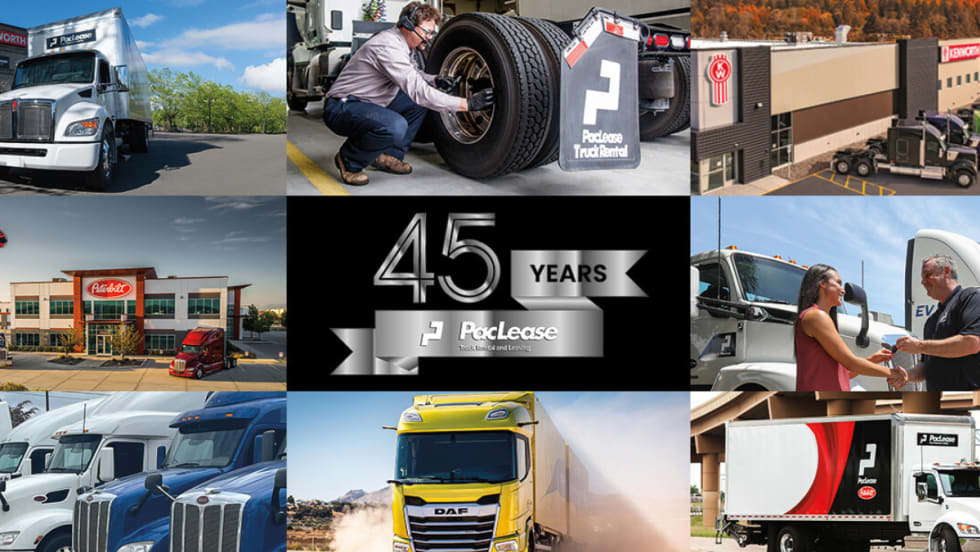
PacLease News: PacLease Celebrates 45th Anniversary
Paccar Leasing’s PacLease marks 45 years of full-service leasing operations, growing from 17 franchises to a global network supporting nearly 41,000 vehicles across five countries.
Read More →