




Service Fleet Improves MPG by 18%
Using a regenerative braking and assist system, this service fleet has seen an approximate 18% mpg improvement on its vans — as well as an increase in productivity with its drivers spending less time at the pump.

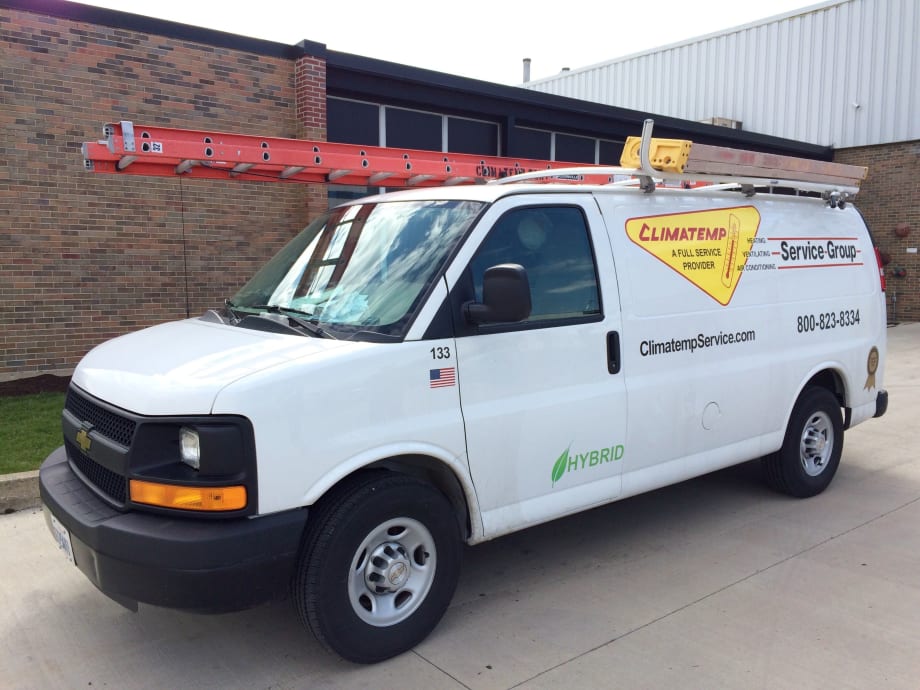
Climatemp Service Group has converted four of its Chevrolet Express service vans to the XL3 Hybrid Electric Drive System.
Climatemp
When looking to reduce his fleet’s carbon footprint and cut fuel costs, Paul Szymczak heard about XL Hybrids through his fleet management company.
“We did some research and were impressed with the product,” says Szymczak, general manager of Climatemp Service Group. “We had never used any type of alternative fuel or never had any hybrid vehicles in the fleet.”
Covering the metropolitan Chicago area, Climatemp performs HVAC maintenance services for commercial and industrial companies. According to Szymczak, his 20-vehicle fleet (18 Chevrolet Express vans, one box truck, and one pickup) services over 450 facilities in a service area that spans a diameter of about 150 miles. Each service van travels around 20,000 miles per year.
As a test program, Climatemp has converted four of its Chevrolet Express service vans to the XL3 Hybrid Electric Drive System. “Thanks to XL Hybrids, we’re now able to deliver on our promise in a greener, cleaner way,” says Szymczak.
The system uses regenerative braking and assist. Every time the vehicle brakes, the system’s electric motor generator helps to slow the vehicle down — while charging the battery pack.
“When the driver presses the accelerator, the system is using that stored electrical energy to help propel the vehicle via the electrical motor,” says Clay Siegert, co-founder and chief operating officer at XL Hybrids.
Benefits for Metropolitan Driving
With his fleet’s metropolitan driving, Szymczak has already seen an improvement in fuel economy and better mpg with the electric drive systems. A mix of urban, suburban, and congested highway driving fits the system well — the long starts and stops get better use of the regenerative braking and assist, according to Siegert.
“At this early stage since the vehicle conversions, we are seeing an approximate 18% mpg improvement from XL Hybrids’ technology,” says Szymczak. “We’re pleased with the results because we are saving on fuel, and our drivers are more efficient since they are spending less time at the pump.”
Depending on the amount of urban driving, a fleet could see up to a 25% improvement for mpg, according to Siegert. Some fleets — with a heavy urban drive cycle — have even seen close to a 28% improvement in their average miles per gallon.
Improving mpg and creating greener vehicles aren’t the only benefits that XL Hybrids’ electric drive systems can provide to fleets.
The regenerative braking process can extend a vehicle’s OEM-rated brake life because the brakes aren’t being used as hard or as much as normally, according to Siegert.
“Because brakes aren’t used as much during the regenerative braking process, it pushes out service intervals for that vehicle,” says Siegert. “This can translate into brake savings.”
The electric drive systems can also help improve driver productivity. With greater fuel economy, fleet drivers will spend less time at the pump fueling up. That translates into a dollar value that can be spent on generating more revenue: a fleet driver is spending more time on the road doing his or her job, according to Siegert.
Each of Climatemp’s vans is equipped with XL Link, XL Hybrids’ cloud-based fleet vehicle connectivity and analytics system. The system can measure a fleet’s MPG performance, fuel savings, and carbon dioxide reduction.
“We will work with Climatemp to share data with them and be proactive in measuring performance and customer service in the field,” says Siegert.
No Special Training
For Szymczak, it was convenient that each of his vans could be converted in less than a day. That way, he didn’t have to cut back on business by losing a vehicle for several workdays.
Climatemp’s installations took about six to eight hours per van, according to Siegert. It’s a less complicated installation since XL Hybrids leaves the automaker’s complete powertrain intact (engine, fuel system, exhaust system, and transmission). The electric drive system runs about $10,000 for Ford and GM vans.
There is no special training once the system is installed. As soon as the van was delivered, Szymczak’s employees could start driving the van as normal. Szymczak plans to convert another batch of his Express vans in the next few months.
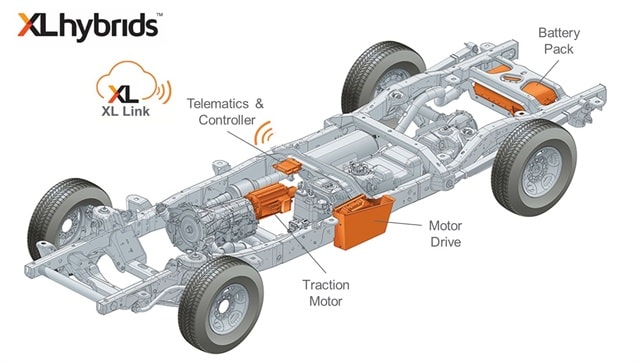
XL Hybrids' XL3 Hybrid Electric Drive System powertrain. Photo courtesy of XL Hybrids.
More Vocational Fleets

Small Fleets, Big Impact: How Independent Drivers Power Wreaths Across America
Check out how small fleets and independent drivers power Wreaths Across America each December and why their impact matters more than ever.
Read More →
Fleet Facilities Face Collapse: Why Small Businesses Can’t Afford Earthquake Inaction
Fleet facilities are critical to America’s supply chain, but many small businesses are unprepared for earthquakes. Retrofitting now could save your livelihood later.
Read More →
How Utility Fleets Power Grid Resilience During Extreme Weather
Utility fleets are the backbone of storm recovery. Learn how they prepare, adapt, and power resilience when extreme weather hits.
Read More →
Leveling the Playing Field for Small Fleets
Learn how small fleet operators are using technology to streamline maintenance, optimize routes, and stay competitive without the big-budget overhead.
Read More →
How Small Fleets Can Cut Costs Without Cutting Corners
Celebrating Small Business Week means celebrating the heart of America — and small business fleets are a huge part of what keeps that heart beating.
Read More →
Ford Pro Mobile Service Meets Fleets Where They Are
With mobile service vehicles fulfilling nearly 1-in-10 repair orders, Ford Pro is redefining fleet maintenance by meeting customers where they are and maximizing uptime.
Read More →
Fleet 101: Types of Utility Trucks and Their Use Cases
What is a utility truck? These can range from cranes to bucket trucks used in various applications. We break it all down for you.
Read More →
Paving the Way: Women Making Strides in the Utility Fleet Industry
The Women in Utility Fleet gathering will be held at the EUFMC conference. It is designed for women to make connections and network in the industry.
Read More →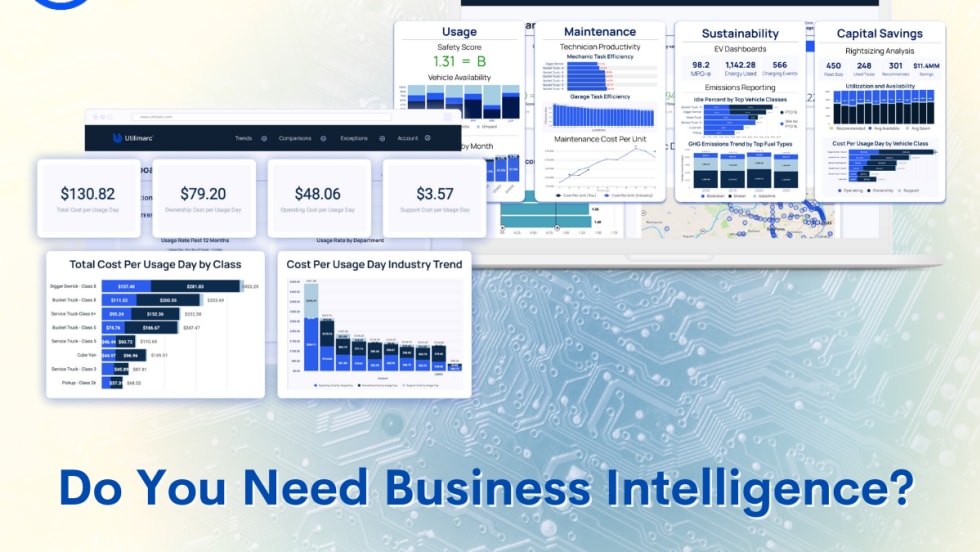
Does Your Utility Fleet Need Business Intelligence?
Every fleet manager’s goal is to maximize productivity and minimize costs. With a business intelligence platform, fleet managers can have all of a fleet’s data in one place in an easy-to-navigate dashboard.
Read More →
Construction Fleets Overcome Supply & Demand Challenges During Pandemic
Three construction fleet managers and two industry vendors weigh in on overcoming operational challenges during a global pandemic.
Read More →