




Mark Petersen on Experience, Pushback, and Being the Captain of the Fleet
Fleet may change, but leadership, preparation, and curiosity never go out of style.

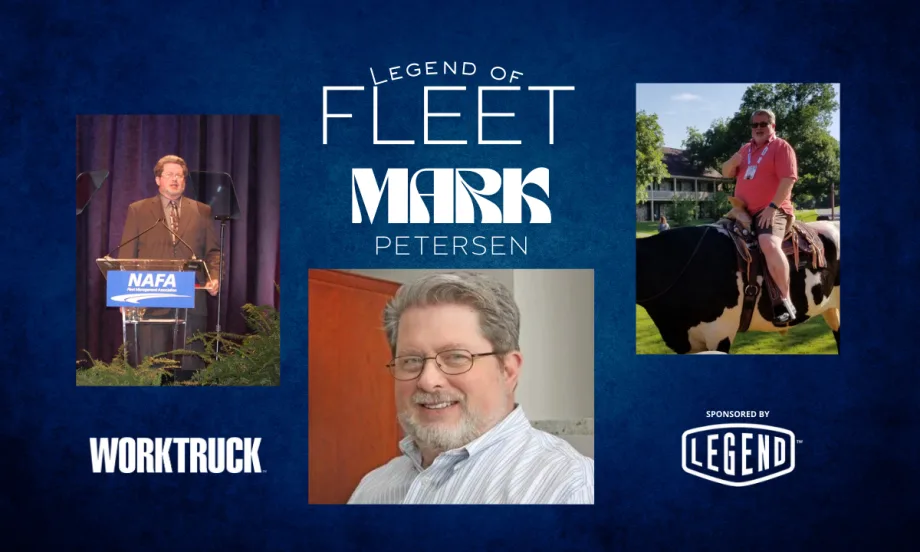
Legend of Fleet honoree Mark Petersen reflects a four-decade career that proves fleet success is built on people, leadership, and relationships, not just vehicles.
Credit: Mark Petersen | Work Truck
Fleet may revolve around vehicles, but careers like Mark Petersen’s are proof that it’s the people behind the wheel and behind the desk who shape the industry.
With more than four decades in fleet, Petersen has done just about everything. He’s managed fleets ranging from a few hundred to several thousand vehicles. He’s worked in consumer products, pharma, security, and commercial operations. He’s been a solo fleet manager, part of a team, an outsourced fleet leader, and even spent nearly two decades on the sales side of the industry.
And somehow, after all of that, he still says fleet is exactly where he was meant to land.
A Deliberate Start in Fleet
Petersen officially entered fleet management in 1984, but his path started earlier and very intentionally. While managing office services for multiple locations in New York and New Jersey, he became close with his company’s fleet manager and quickly realized the role intrigued him.
Instead of waiting for opportunity to knock, Petersen made his move early. He told leadership he wanted the fleet job well before it was available and waited two years until the timing was right.
When the role finally opened, he stepped in and never looked back.
But it wasn't until 2014 that he jokingly admitted, “I finally figured out what I wanted to be when I grow up,” Petersen said, reflecting on his decision to return to fleet management later in his career.
That clarity became a recurring theme in his journey.
Seeing Fleet From Every Angle
After 11 years as a fleet manager, Petersen experienced a career shift that many fleet pros never make. Following layoffs, he transitioned into fleet sales, relocated from New Jersey to Colorado, and later even purchased and operated a vehicle transport franchise with his wife.
At the time, fleet managers moving into sales roles were rare. Many didn’t last long. Petersen did. And the experience changed how he viewed fleet entirely.
When he returned to fleet management years later, the transition was smoother than expected. Technology had advanced, but the fundamentals had not.
“The basics of Fleet 101 didn’t change,” he said. “The sales side actually helped me more than anything.”
It also reinforced something he still believes strongly today. Understanding the business from multiple perspectives makes you a better fleet leader.
The Changes That Matter Most
When Petersen looks back at how fleet has evolved since the 1980s, technology stands out, but not in the way many expect.
Yes, digital systems replaced file cabinets. Yes, ordering and reporting became faster. But the biggest shifts were driven by regulation and compliance, especially around emissions, taxation, and personal-use reporting.
Early in his career, much of that work was manual and time-consuming. There were no automated systems or dashboards. Getting basic information from drivers alone was a challenge.
Today’s fleet managers may feel overwhelmed by compliance demands, but Petersen offers some perspective.
“You’ve got it easy compared to what we had,” he said with a laugh.
Be the Expert and Be Ready to Push Back
One lesson Petersen returns to repeatedly is the importance of owning your role as the subject matter expert.
Fleet managers must know when to stand their ground, even when the pressure comes from senior leadership, procurement, or service providers.
That mindset once paid off in a major way. When his organization mandated a 100% diesel fleet, Petersen questioned the decision and quietly prepared a backup plan. When the diesel landscape shifted overnight, he already had an alternative selector ready.
Preparation made the difference.
“You’re the captain of the fleet,” he said. “That means pushing back internally and externally when it matters.”
Why Networking Is Not Optional
Ask Petersen what fueled his career longevity and success, and networking rises quickly to the top.
In more than 40 years, not a single job came from a blind application. Every opportunity came from relationships.
And for Petersen, networking goes far beyond peers. OEM reps, service providers, and vendors he never even did business with all played a role in shaping his understanding of fleet.
“If someone wanted a few minutes of my time, I gave it to them,” he said. “You’re missing a huge resource if you don’t.”
Fleet Is Still a People Business
Despite all the technology and data now available, Petersen believes communication remains the foundation of effective fleet management.
That includes leadership, service partners, and especially drivers.
Drivers may push for more than they are entitled to, but Petersen sees that as a sign of engagement, not a problem.
“They’re out there doing the job,” he said. “I’ll still tell them no, but I respect the push.”
Some of his favorite moments in fleet came from driver training sessions and face-to-face interactions. At one company sales meeting, his fleet booth drew a line that lasted most of the day.
Fleet, he believes, is about service. And people notice when you show up.
Leading Teams and Building What’s Next
As a leader, Petersen leans heavily on humor, clarity, and trust. He believes in setting expectations, then getting out of the way.
Mistakes happen. That’s how people learn.
He’s also a strong advocate for developing future leaders, encouraging team members to build their own networks and seek out opportunities to learn. One of his favorite ongoing examples is an informal peer group that grew out of virtual meetings during COVID and continues to meet regularly today.
If someone on his team wanted his job someday, Petersen saw that as a win.
“That’s exactly how it should be,” he said.
Advice for the Next Generation
For those entering the fleet industry today, Petersen’s advice is simple and direct:
Be open. Ask questions. Read everything. Learn from unexpected places and unexpected people.
And when someone says something cannot be done, ask why.
“Management thinks you can do everything if you’re good at what you do,” he said. “You have to be educated enough to explain why some things can’t happen the way they want.”
After four decades, that mindset still defines his approach.
Fleet may change, but leadership, preparation, and curiosity never go out of style.
More Operations
Family Ties Inside the Fleet Families Building Careers Across Generations
Three fleet families share what it really takes to work together, learn across generations, and keep business from following them home.
Read More →
Shades of Fleet Call for Voices: Fleet's Hidden Heroes
Fleet’s hidden heroes are often the ones keeping everything moving behind the scenes. September’s Shades of Fleet is looking for dispatchers, coordinators, parts specialists, and other support pros to share their stories.
Read More →
Truck Centers, Inc. Celebrates National Truck Driver Appreciation Week with $1,000 Fuel Card Giveaways
During National Truck Driver Appreciation Week, Truck Centers, Inc. is offering customers a chance to fuel up for free. Customers at all Truck Centers locations can enter to win one of four $1,000 fuel cards from Sept. 14 - 18.
Read More →
Fleet Guides, AI Time-Savers, Truck Tariffs & Fuel Strategy Lead the News
This week’s Truck Chat Cheat Sheet covers new fleet vehicle guides, practical AI use cases, U.S.-Canada truck production, mixed-energy strategy, and more.
Read More →
What Fleet Employers Are Missing When Hiring Veterans
What if some of the strongest candidates for fleet are already out there, but their experience is written in a language our industry does not always recognize?
Read More →
Automotive Fleet Opens 2026 Personal Use Survey for Commercial Fleet Managers
Less than two weeks left! Commercial and corporate fleet managers are invited to share how their organizations handle company vehicle personal-use policies, charges, and driver eligibility.
Read More →
What Resilient Fleets Do Differently When Conditions Change
Fleet resilience is about more than reacting to disruption. Lauren Fletcher talks with AP Fleet’s Alex Coveney about flexibility, planning, scaling, and what helps fleets adapt when business conditions shift.
Read More →
If We Want the Next Generation in Automotive, We Have to Give Them a Reason to Care
The automotive industry talks constantly about its workforce shortage. But before we can recruit the next generation, we may need to do a better job giving kids a reason to care about automotive in the first place.
Read More →
Ram ProMaster City Under $40K, Truck Tariffs, and AI Maintenance Lead the News
A sub-$40K commercial van, tariff questions, AI-powered maintenance, and a new EV production strategy headline this week’s Truck Chat Cheat Sheet.
Read More →
Bob Adamsky Shares the Fleet Lessons You Usually Learn the Hard Way
After more than 30 years in fleet, Arrow International’s Bob Adamsky has learned that the job is about far more than vehicles. He shares the lessons he wishes every fleet manager could learn a little earlier.
Read More →