Looking Beyond Tailpipe Emissions – How Clean is Your Fuel?
A recent study is making fleet owners think twice about the common perception that electric vehicles (EVs) offer the lowest emissions for work trucks.
by Steve Whaley, PERC
March 12, 2021
when renewable propane is considered, propane-powered MD-HD vehicles currently provide a lower carbon footprint solution in every U.S. state except Vermont where electricity is generated by, and imported from, Canadian hydroelectric power plants.
Photo: PERC
4 min to read
Across the nation, discussions are underway about government regulations to decrease vehicle emissions in the next 10 to 20 years. In the near future, fleet owners will need to make decisions about how to comply with these new goals. While there are multiple energy sources that can reach these emissions reduction targets, many benchmarks, and the conversations that surround them, have started to veer toward an electric-only future.
Ad Loading...
While electric vehicles (EVs) may be a good selection for light-duty consumer vehicle applications, other energy sources, like propane autogas, are better suited for medium- and heavy-duty work truck applications where payload, performance, range, and operational costs matter greatly.
Ad Loading...
The good news is a low-emissions future doesn’t have to be only based on one fuel source.
A new study is debunking the common perception that EVs are “zero-emission” vehicles and offer the lowest emissions in medium- and heavy-duty fleet vehicles. In most of the United States, propane autogas produces fewer emissions than comparable electric vehicles. As the study shows, there is no such thing as a “zero emission” vehicle.
More than the Tailpipe Emissions
This shows the well-to-wheels carbon intensity of propane (a) and grid electricity (b) by state.
Image: PERC
When fleet owners consider the emissions their vehicles produce, many think solely about the tailpipe emissions, since that’s what they are directly responsible for. But to truly understand how their fleet impacts the environment, they have to factor in all of the emissions that go into creating the energy source that is powering the vehicle.
In a comparative analysis conducted by the Propane Education & Research Council (PERC), researchers found propane-powered medium- and heavy-duty vehicles provide a lower carbon footprint solution in 38 U.S. states and Washington, D.C. when compared to medium- and heavy-duty EVs that are charged using those state’s electric grid.
This is due to the amount of carbon that is produced from each state’s unique energy mix for electricity generation using coal, petroleum, or other energy sources. In addition, battery production is significantly energy and carbon intensive.
Ad Loading...
While electric vehicles may have zero tailpipe emissions, emissions are generated prior to the wheels turning on the road through the electric grid and the powertrain (chiefly battery manufacturing) production.
When comparing the difference in lifecycle equivalent carbon dioxide (CO2eq) emissions of a single medium-duty vehicle, propane autogas on a national average emits 125 tons of CO2eq less than an electric medium-duty vehicle, according to PERC data.
Looking to the Future
There’s no doubt the electric grid is going to keep getting cleaner as new technology and innovation becomes available. However, it’s important to point out that propane autogas is also getting cleaner by leaps and bounds through new engine developments and renewable propane.
Renewable propane is a byproduct of the renewable diesel and sustainable aviation fuel production process, which converts plant and vegetable oils, waste greases, and animal fat into fuel. It has the same chemical structure and physical properties as conventional propane and can be used in any existing propane autogas engine. Because it’s produced from renewable raw materials, renewable propane has an even lower carbon intensity than conventional propane and is far cleaner than other energy sources.
This shows the total difference in life-cycle CO2eq emissions (U.S. tons) between a single medium-duty conventional propane vehicle and a single medium-duty EV.
Image: PERC
As such, the study found when renewable propane is considered, propane-powered medium- and heavy-duty vehicles currently provide a lower carbon footprint solution in every U.S. state except Vermont where electricity is generated by, and imported from, Canadian hydroelectric power plants.
Ad Loading...
This shows the total difference in life-cycle CO2eq emissions (U.S. tons) between a single medium-duty renewable propane vehicle and a single medium-duty EV.
Image: PERC
The Business Case for Propane
These emission regulations will no doubt also start driving operational cost and efficiency conversations within work truck fleets. At the end of the day, it’s no secret that companies have to avoid bankrupting their budgets in the process. Propane autogas provides more than just an environmental benefit. When you factor in the cost of a new vehicle, regardless of fuel type and the costs for fuel, fluids, maintenance, and repairs, propane autogas has the lowest cost of any fuel for the lifetime of the vehicle.
The incremental capital cost for a medium-duty propane autogas vehicle, relative to its gasoline or diesel counterpart, is on average 15%. Comparatively, a similar medium-duty EV is over 250%. Not to mention, the cost to purchase and install refueling equipment for a fleet of medium- or heavy-duty propane autogas vehicles is lower than the cost to purchase fast charger equipment for charging a comparable electric vehicle fleet in a comparable time frame.
As transportation moves toward a cleaner energy future, I encourage fleet owners to discover the truth about propane autogas and its lifecycle emissions reduction capabilities.
About the Author: Steve Whaley is the director of autogas business development for the Propane Education & Research Council. He can be reached at stephen.whaley@propane.com. This article was authored and edited according to WT editorial standards and style to provide useful information to our readers. Opinions expressed may not reflect that of WT.
Mixed-energy fleets aren’t about picking a winning fuel. Sarah Booth of WEX explains how vehicle data, duty cycles, charging strategy, and real-world costs can help fleets choose the right energy source for each job.
New research suggests neglected diesel aftertreatment systems could waste up to $30 in fuel per vehicle each day. Here's why vocational fleets should pay attention.
This week’s product launch with Standard Fleet’s connected vehicle platform reflects WEX Venture Capital's strategy of turning startup innovation into customer solutions. Standard Fleet is now available to WEX fleet customers.
The new Energy Hub combines fuel transactions, EV charging data, vehicle range, and energy costs in one dashboard for fleets operating multiple vehicle and energy types.
The DriverDash mobile payment app, by WEX, has been integrated into the CITGO merchant network, which means WEX has expanded its U.S. station footprint with the addition of approximately 4,000 CITGO locations.
Mixed energy fleets are becoming the new normal. Learn how fleet managers are balancing EVs, gas and diesel vehicles while controlling costs and planning for the future.
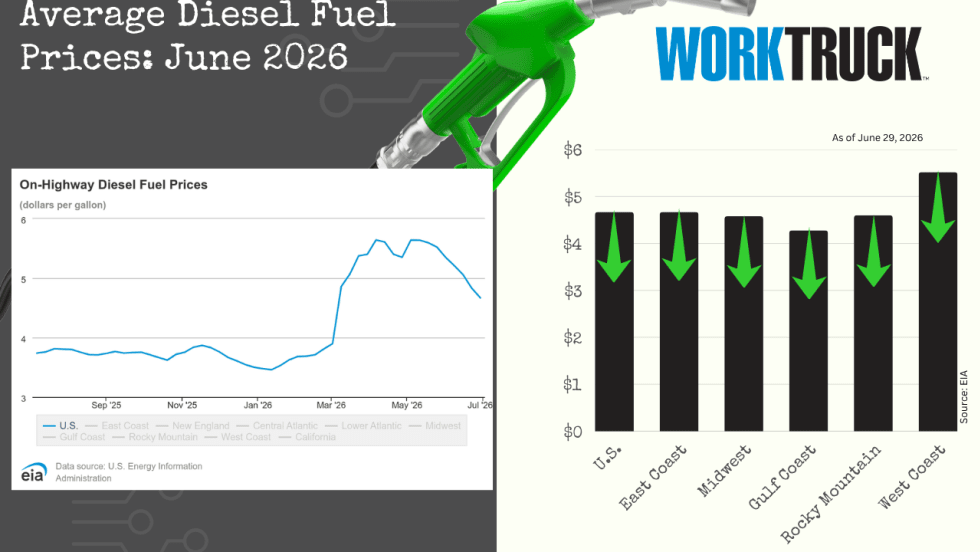
The national average price of a gallon of diesel has dropped again, this week by more than 16 cents. All five regions reported lower average prices, ranging from almost 13 cents to more than 28 cents cheaper than a week ago.
RoadFlex Direct connects fuel cards, controls, and data to the telematics and fleet management systems fleets already run, from Geotab and Samsara to Fleetio and RTA, with no separate dashboard or double data entry.