




RELATED: Study Shows Lighting Key to Maintenance Shop Safety
LED Hazard/Warning Strobe Lights: The Future is Now
LED technology reduces power consumption while increasing the brightness of hazard and warning lights used in construction vehicles, utility vehicles, snowplows, and tow trucks
by Jeff Elliott
August 9, 2018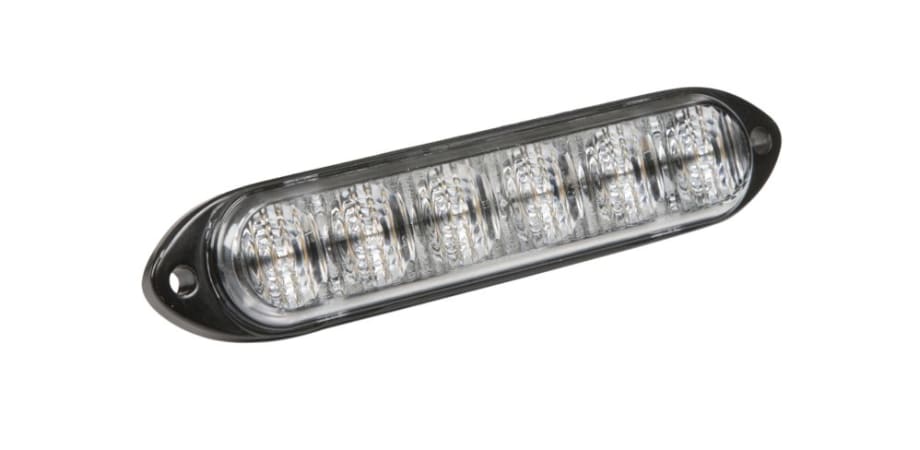
Available in several colors – amber, white, and blue – and a variety of pulsating strobe effects, these lights come in several SAE classes and mounting styles depending on how quickly the vehicle will be moving.
Photo courtesy of Grote Industries
4 min to read
To ensure the visibility and safety of everyone on the road, the Society of Automotive Engineers (SAE) mandates that vehicles such as construction, utility, tow, and snowplow trucks are equipped with hazard and warning lights. Whether roof-mounted beacons or directional surface mounted to the vehicle’s body or grill, these flashing strobe lights to capture the attention of motorists and pedestrians and warn of a potentially hazardous activity or situation.
Available in several colors – amber, white, and blue – and a variety of pulsating strobe effects, these lights come in several SAE classes and mounting styles depending on how quickly the vehicle will be moving.
A Transition to LED Lighting
Now, however, as the lighting world continues to transition to LED lighting, these hazard and warning lights are now available in low electrical consumption, long life models that far exceed traditional halogen or gas-discharge options.
Making this move even more attractive for fleet managers are the plummeting prices of LED technology, which have decreased to the point that many vehicles that require Class 2 lights are instead being outfitted with brighter, Class 1 options given the minimal price differential.
“Today, the entire hazard and warning light industry is undergoing a significant sea change – namely, the industry’s shift to LED technology,” said Chris Cammack, global market manager for Grote Industries, a U.S.-based manufacturer of vehicle lighting and safety systems for that has offered warning strobe lights for more than 20 years, including an array of LED models.
“The reason for this migration comes down to three factors: energy efficiency, longer service life, and brightness,” Cammack added. “LEDs consume less power than any other lighting technology on the market and are powered by low voltage, allowing for minimal draw of electrical current from the vehicle’s battery.”
By contrast, halogen lights draw an excessive amount of current, which can eventually lead to draining the vehicle’s battery. In addition, they are known for poor energy efficiency, with halogen lights losing as much as 95% of their energy to heat.
Gas-discharge strobe lights are equally inefficient. However, unlike halogen lights it is not due to excessive current draw, but instead the intense and concentrated heat generated by the strobe, which can significantly shorten the service life of the flash tube.
LEDs, on the other hand, consume only 25-35% of the power of gas-discharge strobe and halogen lights. As a result, LED strobe lights have a service life that is 10 times longer, often lasting 70,000 hours or more.
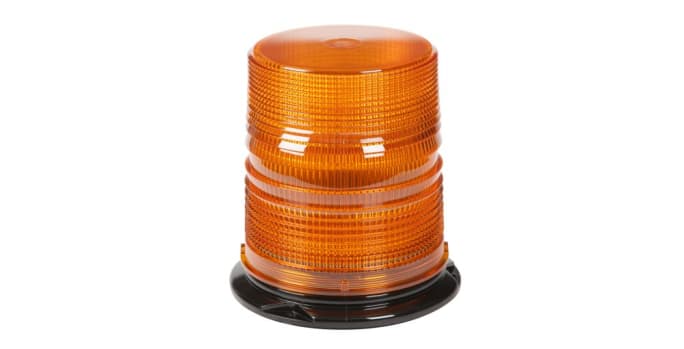
In the early days of LEDs, they were not bright enough to meet SAE requirements for luminous intensity of hazard and warning lights, measured in candelas. Technology has advanced and LEDs are now as bright – if not brighter – than the average strobe or halogen light.
Photo courtesy of Grote Industries
Improved LED Quality Contributing to Adoption
With most of the world transitioning to LEDs, the quality has also continued to improve as well. In the early days of LEDs, they were not bright enough to meet SAE requirements for luminous intensity of hazard and warning lights, measured in candelas. However, technology has advanced and LEDs are now as bright – if not brighter – than the average strobe or halogen light.
“LEDs today are much brighter,” Cammack explained. “Today, they are more than bright enough to meet the SAE standard for candela over 100 feet.”
Another barrier to early adoption was the initial price point, another aspect that has dramatically changed in the past decade, noted Cammack.
“The cost to upgrade to LED strobe lights was prohibitive, at least initially,” he said. “Fortunately, the prices have come down significantly in the past 10 years, and now they are about the same.”
In fact, Cammack believes LED models will soon become less expensive as fewer manufacturers make models with outdated technology. Companies such as Grote have phased out other technologies in favor of LED only.
“Fewer companies are manufacturing gas-discharged strobe warning lights, so the price of those units is actually going up,” Cammack said. “In a couple of years, it will actually cost more for a gas-discharge or halogen strobe.”
Numerous LED Lighting Ooptions
For manufacturers such as Grote, the options are virtually unlimited. The company offers Class 1 through Class 3 permanent, vacuum and magnetically mounted beacon lights in both regular and high profiles and myriad strobe patterns. Most of the company’s LED offerings only draw 0.4-0.35 amps at 12 VDC.
The company also offers LED directional surface-mount strobes in 3, 6, and 12 diode options that feature 12 different selectable flash patterns in either of two phases, including “steady-on.” These too, require only about 0.1 amps per diode.
Another option are 20, 30, and 40-inch LED “traffic directors” with 34 warning flash patterns and 5 phase options are also available, which are ideal for mounting on front push bumpers, pickup trucks, headache rack and running board lights.
Cammack adds that it is important when upgrading to LED strobe lights to be cautious when purchasing inexpensive, imported products. Although they may be cheaper initially, some overseas suppliers utilize lower quality LED components. Moreover, it can become an issue of warranty claims arise.
About the Author
Jeff Elliott is a Torrance, Calif.-based technical writer. He has researched and written about industrial technologies and issues for the past 20 years.
Subscribe to Our Newsletter
More Safety
When Work Trucks Under 26,001 Pounds Need IRP Registration
Think trucks under 26,001 pounds are automatically in the clear when it comes to IRP? Not always. Learn where lighter vehicles can still run into trip permit, apportioned registration, and IFTA compliance requirements when crossing state or provincial lines.
Read More →
Volvo Trucks Releases New Safety Recommendations for Traveling with Pets
One of the most important recommendations for professional drivers traveling with pets is to ensure pets are properly restrained while the truck is moving. Other tips are available in the new guide from Volvo Trucks North America and Center for Pet Safety.
Read More →
API Issues Refueling Safety Guidelines
The American Petroleum Institute offers a list of safe vehicle refueling guidelines, including ways to avoid potential problems with static electricity discharges in fall, winter, and early spring.
Read More →
Winter Fleet Prep: Expert Tips to Keep Vehicles Running Smoothly
Cold weather can expose weak batteries, tires, fuel systems, and maintenance gaps fast. Use this winter fleet checklist to prepare trucks and drivers before temperatures drop.
Read More →
When a Work Truck Breaks Down, the Job Can Stop, Too
A work truck breakdown can stop more than the vehicle. Discover how payloads, jobsites, and specialty equipment change the roadside response.
Read More →
What Stronger Long-Term Fleet Service Partnerships Actually Require
Fleet service partnerships rarely fall apart all at once. Learn the three warning signs that trust is eroding and what fleets and providers can do before downtime, frustration, and lost revenue follow.
Read More →
Applause & TRUCE Software Partner to Improve Driver Safety Through AI-Powered Telematics & Employee Performance Management
Applause has integrated TRUCE driving metrics directly into its employee-first performance and safety platform that transforms mobile devices into AI-powered telematics.
Read More →
How Detroit Assurance with Active Brake Assist Works
Do you want to see what it is like to experience Detroit Assurance’s Active Brake Assist? In this video, Work Truck will put you in the cab to see how it all works and then hear more details from DTNA’s Mike Young.
Read More →
Get Left of Loss: A 5-Step Workplace Violence Prevention Framework for Fleet Operators
Violence risks do not stop at the driver’s door. Learn five practical steps fleets can take to spot threats early and protect workers before loss occurs.
Read More →
Sponsored•July 17, 2026
How Better Visibility Cut Speeding Violations by 48%
Fleet leaders don't need more data, they need clearer visibility into what the data is saying. This case study explores how one utility replaced speeding-event counts with a single metric — miles driven in violation — to strengthen safety and significantly reduce speeding violations.
Read More →