




Isuzu Introduces 2011 NPR ECO-MAX Truck
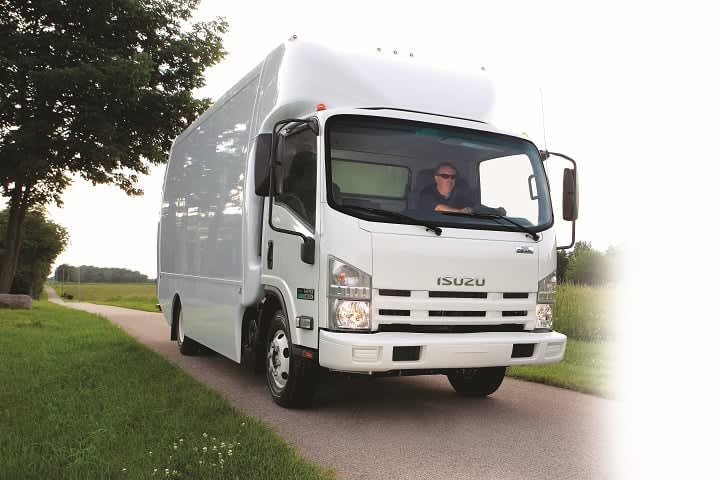
The 12,000-lb. GVWR truck offers a 20% improvement in fuel economy compared to previous NPR models. The truck is lighter, which increases payload capacity and allows use of a smaller displacement diesel engine.

For 2011, the 4HK engine features increased power output (from 205 hp to 210 hp with an automatic transmission, and from 175 hp to 190 hp with manual transmission) and up to 8% better fuel economy.
Photo: Isuzu Commercial Truck of America
Isuzu Commercial Truck of America introduced its new 12,000-lb. GVWR medium-duty NPR ECO-MAX low cab forward truck, offering up to 20% improved fuel economy and increased payload capacity compared to previous NPR models.
The new 2011 model-year truck is powered by Isuzu's next-generation 4JJ1-TC diesel engine, which has operated globally in Isuzu's N-Series models for the last five years. The 4J engine family dates back to 1984 and is the highest volume engine produced by Isuzu. This is the first time the engine will be utilized in the U.S. market.
The turbocharged, four-cylinder, 3.0L engine delivers 150 horsepower and 282 ft.-lbs. torque. The 4J engine is 2010 EPA and CARB OBD compliant. It offers a B10 engine life rating of 310,000 miles, meaning 90% of the engines should reach this mileage before an overhaul is necessary.
The 4JJ1-TC engine is built with an electronic high-pressure common rail fuel injector system to maximize fuel economy. It also features an intercooled, variable geometry turbocharger. The 4JJ1-TC engine is mated to an Aisin heavy-duty, six-speed automatic transmission with double overdrive.
Power take-off (PTO) capability is standard on every 2011 N-Series truck. New for 2011, the lock-up torque converter operates in PTO mode. Under specifically determined engine conditions, when PTO mode is selected, the torque converter will lock up automatically to eliminate slip, deliver more power, and improve PTO applications' speed control.
"We have been able to maintain the same performance as we had before while achieving 20% better fuel economy - and this from a truck that was always considered to be very fuel-efficient," said Rob Cadle, manager, product planning for Isuzu Commercial Truck of America. "In the next several years, we believe fuel prices will increase to where they were two years ago. The ECO-MAX is perfect for a high fuel-cost environment."
Another way fuel economy was increased for the NPR ECO-MAX was by reducing the truck's curb weight using a thinner gauge steel frame.
"Even though the steel frame is 1-millimeter thinner gauge, it is the same steel alloy as before and has the same tensile strength," said Cadle. "This frame has been used in South America, Europe, Japan, and Thailand for many years. It is a very strong and durable frame for this class of vehicles. It allowed us to take weight out of the truck, but we didn't give up anything in terms of vehicle durability; we just made it more fuel-efficient."
The NPR ECO-MAX is a product of Isuzu's SEE design philosophy, which stands for Safety, Economy, and Environment. According to Isuzu, these three core areas are the basis of all its product development initiatives. Isuzu said its corporate goal is to build advanced technologies in each of these core areas to design products that combine safety and economy with a reduced environmental footprint.
"This model has been specifically created to reduce the cost of ownership while meeting the world's most stringent emissions requirements. We accomplished this without sacrificing performance, durability, or operating costs," said Shaun Skinner, executive vice president and general manager of Isuzu Commercial Truck of America. "Due to its broad torque curve, power density, and 6-speed transmission, the NPR ECO-MAX has shown better hill climbing ability than the model it replaces. It's also up to 170 lbs. lighter, so it offers increased payload capacity. We expect this unit to deliver enhanced productivity, minimum downtime, and the lowest operating cost in the Class 3 truck segment."
In the past, the N-Series product line (12,000-lbs.-19,500-lbs. GVWR) used the same engine, transmission, and frame. "The only differences between trucks from 12,000-lbs.-19,500-lbs. GVWR were the brakes, tires, final drive ratio, and suspension," said Cadle. "We managed the additional payload requirements with bigger tires and brakes, and changed the final drive ratio."
For the 2011 model-year, the 12,000-lb. GVWR truck is broken out as its own model, marketed under the NPR ECO-MAX sub-name.
"We use the NPR ECO-MAX name to emphasize it is a different model," said Brian Tabel, manager, retail marketing for Isuzu Commercial Truck of America. "It has a different frame, which is specific to the 12,000-lb. GVWR truck, and a narrower rear axle for a narrower frame. Before, our 12,000-lb. truck had a 19,000-lb. capable frame with bigger axle, which meant we were carrying a lot of extra weight. We also had an engine generating 440 ft.-lbs. of torque, which was way more motor than needed in a 12,000-lb. GVWR truck."
Isuzu said it is responding to a global trend among fleets to migrate to smaller displacement engines to decrease fuel consumption. "Long-term, engine downsizing is a global trend, and the U.S. is a little behind the curve. In other markets, Isuzu uses smaller engines than typically used in the U.S.," said Cadle. "Isuzu sells trucks in 170 countries and the U.S. is the only one where we use large-displacement truck engines. Isuzu has tremendous expertise in how to build smaller-displacement diesel engines."
A 2010 EPA-Compliant Engine
Isuzu's 2011 N-Series product line uses selective catalytic reduction (SCR) to meet 2010 EPA diesel emissions standards. SCR is an after-treatment technology that injects diesel exhaust fluid (DEF) into the hot exhaust stream of an engine. DEF works with a catalyst in the exhaust after-treatment system to break down nitrogen oxides (NOx) into harmless nitrogen and water vapor.
According to Isuzu, DEF consumption rates will run at 1% of fuel consumption. "Many people in the industry talk about the increased cost of DEF, but with our ECO-MAX we gave our customers a 20% improvement in fuel consumption, which reduces DEF consumption since it is 1% of the fuel usage," said Cadle.
The DEF tank capacity on the NPR ECO-MAX is 7.4 gallons. However, the usable capacity is approximately 6.5 gallons. Below this amount, the low DEF warning system is activated. "A fleet operator should be able to go 20-25 fuel tank refills for every one tank of DEF," said Cadle. "We believe most of our customers will need to refill DEF tanks only three to four times a year."
N-Series Product Lineup
In addition to the NPR ECO-MAX, Isuzu also introduced the 2011 model-year NPR-HD (14,500-lbs. GVWR), NQR (17,950-lbs. GVWR), and NRR (19,500-lbs. GVWR) models. These higher GVWR N-Series models are powered by a heavily revised version of the 5.2L 4HK1-TC diesel engine first introduced in the 2005 model-year.
For 2011, the 4HK engine features increased power output (from 205 hp to 210 hp with an automatic transmission, and from 175 hp to 190 hp with manual transmission) and up to 8% better fuel economy.
In addition to the Aisin 6-speed automatic, the Isuzu MZZ fully synchronized 6-speed manual transmission with overdrive is optional in NPR-HD, NQR, and NRR Standard Cab models.
As with the 4JJ1-TC engine, the revised 4HK1 engine is both EPA 2010 and CARB HD-OBD emissions compliant.
Chassis Improvements for 2011
N-Series trucks are more maneuverable in 2011 than before. "Prior to 2011, they had best-in-class turning circle and maneuverability, but now it is even better," said Tabel.
For the 2011 model-year, the power steering system was modified for N-Series trucks, which allowed for increased wheel-cut angles up to 49.5 degrees. As a result, NQR and NRR models have an average 1.2-foot tighter turning diameter, while the turning diameter for NPR models improved 2.8 feet.
N-Series trucks with 16-inch tires had cut angles increased from 42.5 degrees to 49.5 degrees, which took almost three feet off the cutting circle, depending on the wheelbase. On vehicles with 19.5-inch tires (the NQR and NRR), wheel angle increased from 42.5 to 46.5 degrees, totaling about a foot-and-a-half reduction in turning circle radius.
Standard Vehicle Health Reports
Isuzu's onboard Data Recording Module (DRM) can provide a Vehicle Health Report showing the condition of the engine, transmission, emission system, and brakes, plus fuel economy and driver operating habits.
In addition, all N-Series diesel trucks incorporate the DRM as standard equipment. The DRM monitors a truck's performance and enables the maintenance technician to produce an Isuzu Vehicle Health Report that shows the status and condition of a truck, which includes:
Engine, transmission, and brake system.
Emissions system.
Brake usage history.
Fuel economy.
Driver operating habits (including deceleration and acceleration frequency, speed history, etc.).
The report identifies component failure and wear history, maximizes vehicle uptime, and provides information to reduce fuel usage.
A Multi-Information Display (MID) on the dashboard shows the driver real-time engine and truck operational performance data at a glance.
More Vehicle Research
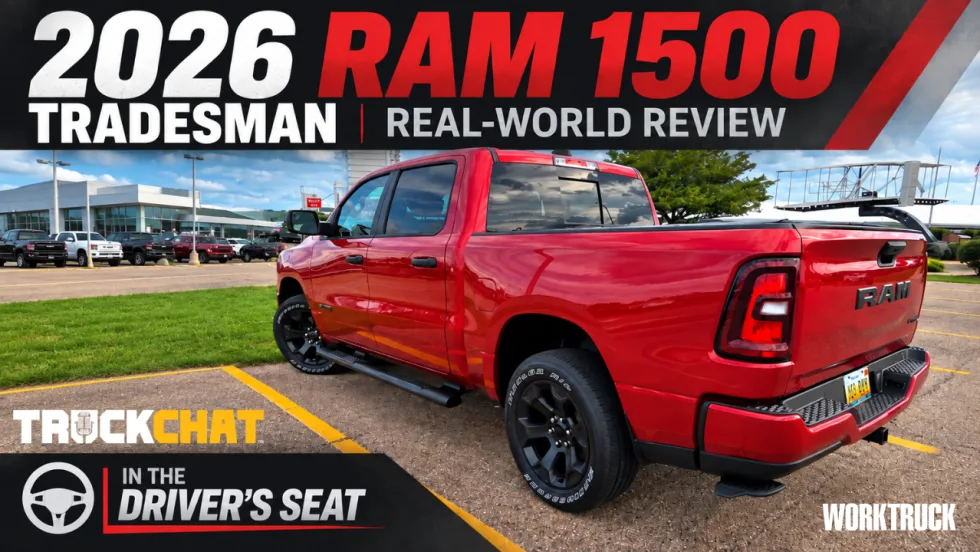
2026 Ram 1500 Tradesman Put to a Real-World Fleet Test
A few days behind the wheel of a 2026 Ram 1500 Tradesman turned into a test of visibility, parking, work-ready features, and even severe-weather driving.
Read More →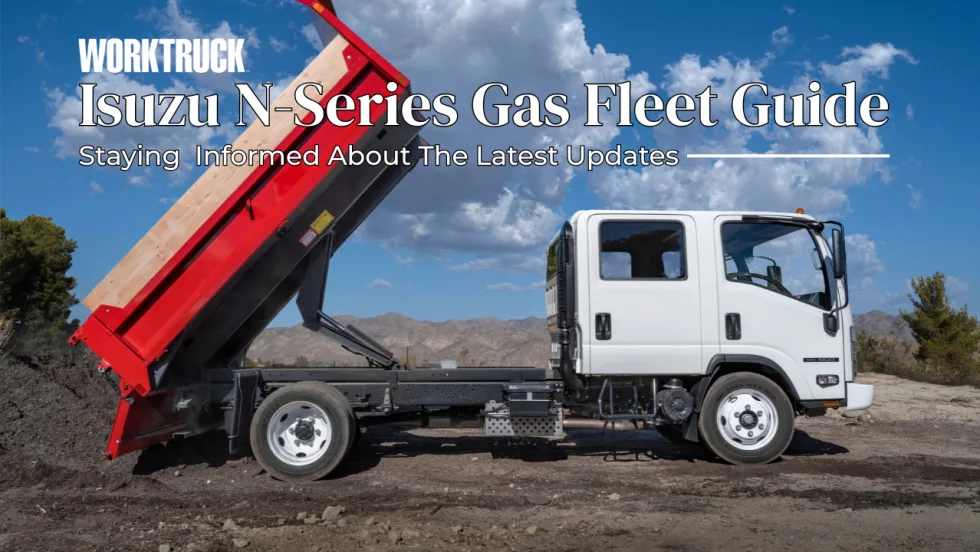
Isuzu N-Series Gas Fleet Guide: Specs, Capability and 2027 Model-Year Updates
Explore Isuzu Truck North America’s N-Series Gas fleet specs, engine performance, GVWR and payload capability, configurations, chassis dimensions, work-focused features, and 2027 model-year information.
Read More →
Chevrolet Silverado 1500 Fleet Guide Specs Capability and 2027 Model-Year Updates
The next-generation 2027 Chevrolet Silverado 1500 brings new V-8 engines, updated technology, expanded safety features, and a fleet-focused Work Truck. Here’s what commercial fleets need to know so far.
Read More →
Ram ProMaster City Fleet Guide Specs Cargo Capacity and 2027 Updates
Work Truck’s Ram ProMaster City Fleet Guide tracks the latest specifications, cargo capability, configurations, fleet technology, pricing, and model-year updates for Ram’s mid-size commercial van.
Read More →
Ford F-150 Fleet Guide Specs Capability and 2026 Model-Year Updates
Explore 2026 Ford F-150 fleet specs, engines, towing and payload capability, configurations, work features, technology, and model-year updates.
Read More →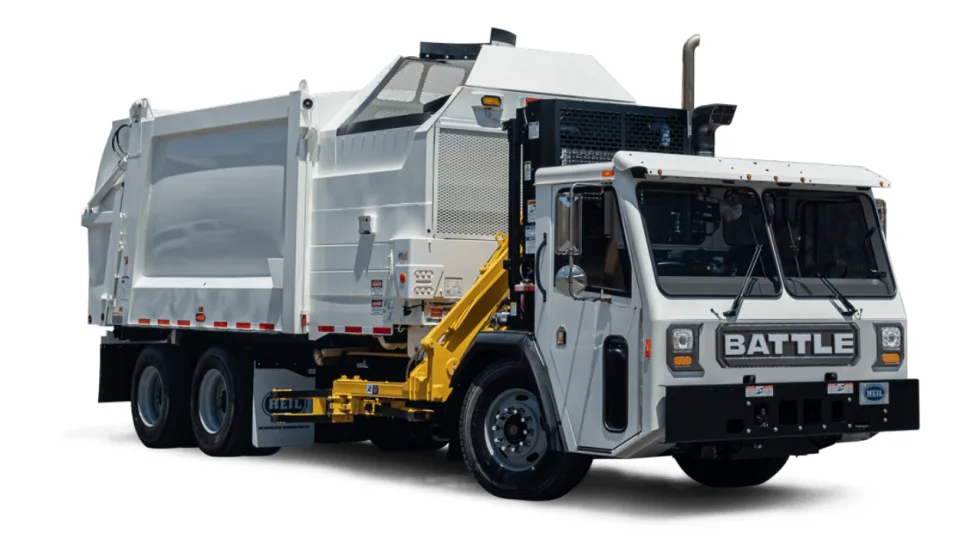
TCI Now Sells & Supports Battle Motors’ Vocational Trucks
Midwest truck dealer Truck Centers, Inc. (TCI) has expanded its transportation solutions with sales and service support for Battle Motors’ heavy-duty vocational trucks at locations in locations in Indiana, Illinois, and Missouri
Read More →
Ram 1500 Fleet Guide Specs, Capability and 2027 Model-Year Updates
Explore always up-to-date Ram 1500 fleet specs, engines, towing and payload capability, configurations, technology, pricing updates, and model-year changes.
Read More →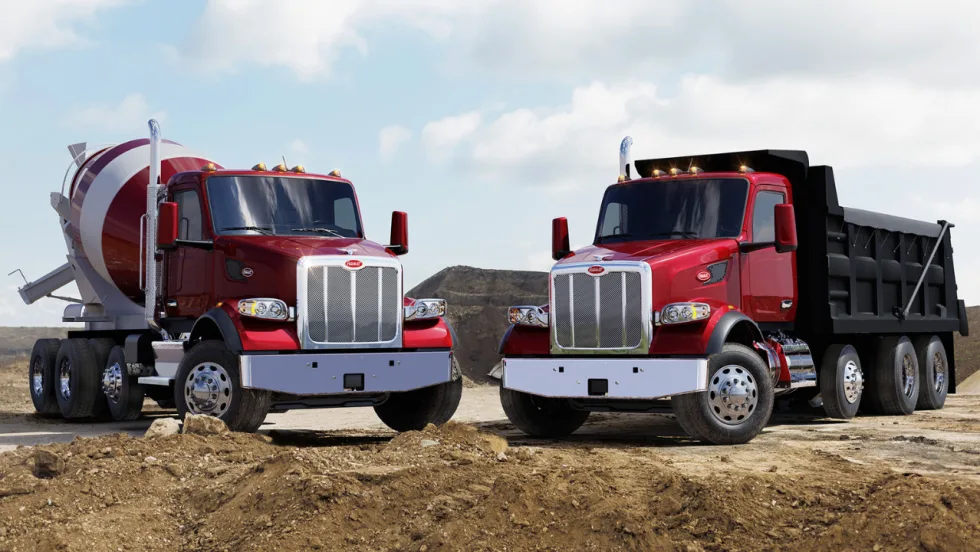
Peterbilt Trucks Equipped with Paccar TX-18 Pro Boost Efficiency for Maryland Fleet
Patuxent Companies is replacing aging trucks with the Peterbilt Model 567 and Model 589, specified with the Paccar TX-18 Pro 18-speed automated transmissions, and is reporting an 8% to 10% improvement in fuel economy.
Read More →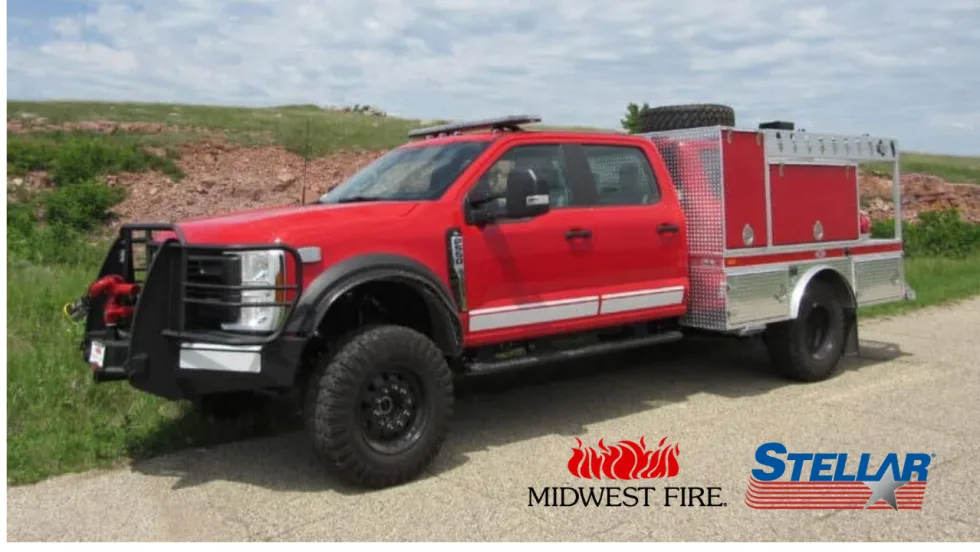
Stellar Expands into Fire Apparatus Market with Acquisition of Midwest Fire
Stellar Industries has acquired Midwest Fire, a custom fire apparatus manufacturer headquartered in Luverne, Minnesota, with nearly four decades of specialized apparatus experience.
Read More →
Recalls You Need to Know About in August 2026
If you have Altec, Chrysler, Ford, Heil, General Motors, International, Mack Trucks, Paccar, Rivian, Royal Truck, Toyota, US Truck Body, or Volvo Trucks vehicles in your fleet, you should check these important recalls issued by the National Highway Safety Administration.
Read More →