




Missed the "Educating Drivers on Electric Vehicle Safety" Seminar? Register to Watch!
How to Educate Drivers on Electric Vehicle Safety
It’s crucial for fleet managers to educate drivers on the unique driving characteristics of EVs. Solutions include information sessions with manufacturers, gamification, and developing training modules.
by Chad Simon
October 4, 2021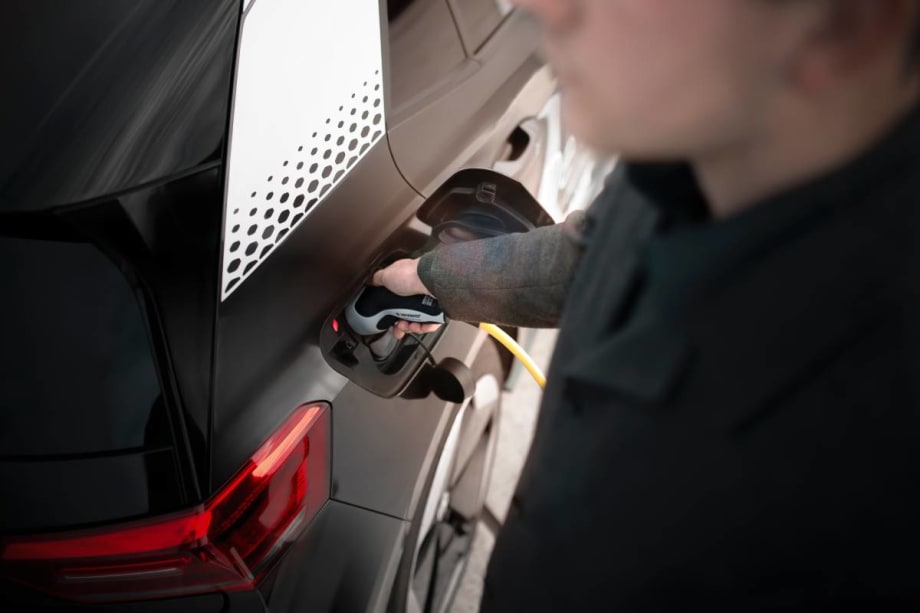
EVs are held to the same safety standards as ICE vehicles, and drivers must understand the differences in engine noise, acceleration, and braking.
Photo: Maxim Hopman on Unsplash.
5 min to read
The electric vehicle wave is upon us, and the technology inside these vehicles is progressively evolving — and, in turn, competing with the road for your driver’s attention. With distraction at an all-time high, providing continuous education to drivers on how and when to use the complex technologies found in EVs is critical to maintaining a safe fleet.
This was a small sampling of the discussion during a seminar on EV safety at the 2021 Fleet Safety Experience presented on Sept. 22. Sara Sweeney, senior product manager, Wheels Inc., moderated a panel that included Tony Vinciguerra, chief operating officer, Driving Dynamics, and Katie Keeton, fleet manager, Siemens.
Driver Education
As EV sales grow year-over-year and become established in fleets, organizations must address the unique characteristics of EV operation and educate drivers accordingly.
Although Siemens has offered EVs on its selector for a few years, drivers were slow to adopt them. “The reason for that is because people are generally not aware of what it means to drive an electric vehicle,” said Katie Keeton, fleet manager, Siemens.
Siemens held information sessions for drivers on EVs and brought in manufacturers to discuss the specifics of EV operation.
“It was an opportunity for us to look at how we educate our drivers,” Keeton said. “Most EVs are just as safe, if not safer, than any other vehicle on the road. We had to demystify what is means to operate an EV, while at the same time help our drivers understand we have a carbon-neutral goal, so we need them to be a part of this journey with us. This is uncharted territory in fleet, so the best thing we can do is continuously educate.”
EVs must pass all the same safety standards as vehicles with internal-combustion engines (ICE). According to Tony Vinciguerra, chief operating officer, Driving Dynamics, 94% of all crashes are due to human error, and that’s not going to change when a driver goes from ICE to electric. However, there are a few notable differences: the acceleration is quicker in an electric vehicle and regenerative braking is more responsive.
“Make sure your employees understand the nuances of an EV, and that you can turn off certain features, like cruise control or regenerative braking, so that you have more control over the vehicle when you’re traveling in ice or snow,” Vinciguerra said. “In a gas-powered vehicle, if you take your foot off the gas, you coast, but with an EV, if you take your foot off the pedal, you can feel it; it’s almost as if you have your emergency brake on. It’s that aggressive.”
Another difference between ICE vehicles and EVs is that EVs have noiseless engines. “According to the National Highway Traffic Safety Administration (NHTSA), there’s a 19% greater chance of hitting a pedestrian in a plug-in or hybrid vehicle because the vehicles are so quiet,” Vinciguerra said.
Organizations should keep this in mind when training drivers. For instance, drivers should create eye contact or give a quick beep on the horn to pedestrians or cyclists so they know that the driver is there, he said.
Engage Drivers
Sweeney cited alarming statistics on the rise of roadway fatalities in the last two years. “Safety doesn’t jump into people’s minds when they’re thinking about electrification,” Sweeney said, “but based on what we’re seeing on the roadways, we can’t leave safety on the wayside as we move into this new frontier of electric vehicles.”
It’s crucial for fleet managers to communicate with employees so they understand the organization’s goals for electrification.
“Fleet managers are taking on the monumental task of getting in front of their drivers and educating them,” Sweeney said. “They (drivers) can be so amped to drive their EVs that they may not have their full attention on the road.”
Additional tools Sweeney utilizes are telematics, gamification, and a “train-the-trainers” module, where the company’s leaders are taught EV operations and safety techniques, and they go back and demonstrate what they’ve learned to their employees.
“If you can get your drivers excited and engaged in thinking about the company’s sustainability efforts and safety, it’s a great way to get them educated,” she said.
Understanding Complex Technology
Autonomous driver-assistance systems and EVs are increasingly entwined, which makes it all the more important to train employees on how to use the technology.
“There’s a whole change going on in the automotive industry, and that’s what’s causing these challenges we’re facing,” Vinciguerra said. “There are way too many distractions and toys inside the vehicle, and electric vehicles are just another layer on top of that. Unless fleet managers start educating their drivers and making them more comfortable behind the wheel, we will continue to see increased fatalities and injuries on the road.”
Drivers are becoming too reliant on safety equipment, according to Keeton. Vehicles are becoming safer, but if vehicle operators aren’t doing their job, then all the safety systems in the world are not going to help them.
“Fundamentally, people need to realize that the most dangerous thing they are going to do during the course of a day is get behind the wheel,” Vinciguerra said. “They get into bad habits and need to be reminded frequently about what they should be doing.”
When it comes to electrification, fleet managers should never compromise on any part of their safety policy.
“If your policy says a vehicle has to have certain features or a minimum crash rating, don’t compromise just because it’s an EV and you need to get an EV initiative,” Sweeney said. “Continuing to promote your safety culture and enhancing it as you move to an electric fleet is going to be important so that you don’t lose all the hard work you’ve done to build it up over the course of many years.”
Originally posted on Automotive Fleet
Subscribe to Our Newsletter
More Green Fleet

Fleet Forward Conference Introduces One-Day Passes for 2026
New one-day registration gives fleet professionals the flexibility to attend Tuesday, Wednesday, or Thursday, with passes available for $199 through Sept. 18.
Read More →
CALSTART Rebrands as Catalyst Mobility, Will Combine with Forth in 2027
CALSTART has rebranded as Catalyst Mobility and will combine with Forth at the start of 2027. The new organization said it is poised to become one of the world's largest, strongest, and most impactful clean transportation nonprofits.
Read More →
Electric Truck and Charging Programs to Boost Sustainability at NY & NJ Ports
Together, the Port Authority of New York and New Jersey and CALSTART will electrify drayage and terminal operations serving the East Coast’s busiest container port. A pair of incentive programs totaling $45 million has launched to accelerate adoption of zero-emission drayage trucks and terminal tractors.
Read More →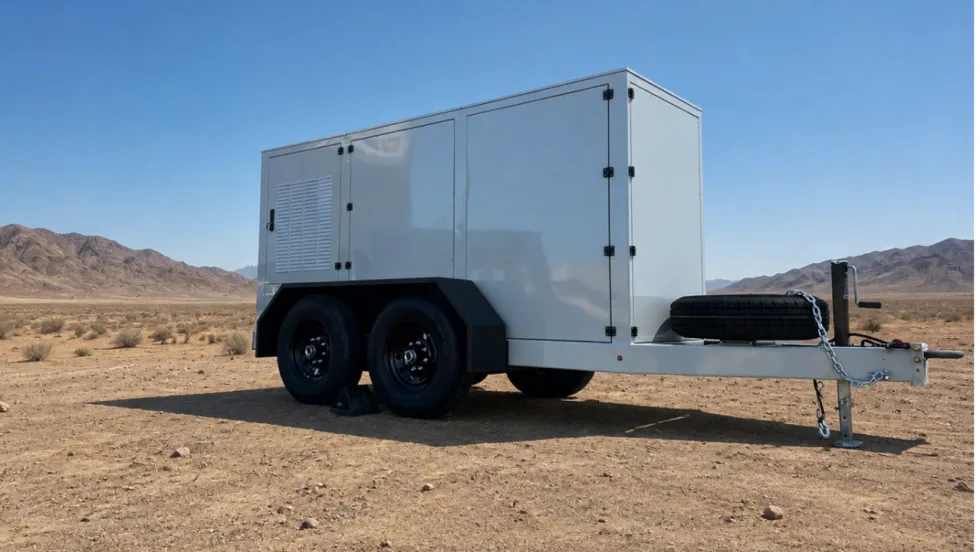
Xos Hub Surpasses One Gigawatt-Hour of Energy Delivered in the Field
A single Xos Hub has surpassed one gigawatt-hour of energy across more than 33,600 charging sessions in the field, demonstrating performance that supports Xos' expansion across new products and markets.
Read More →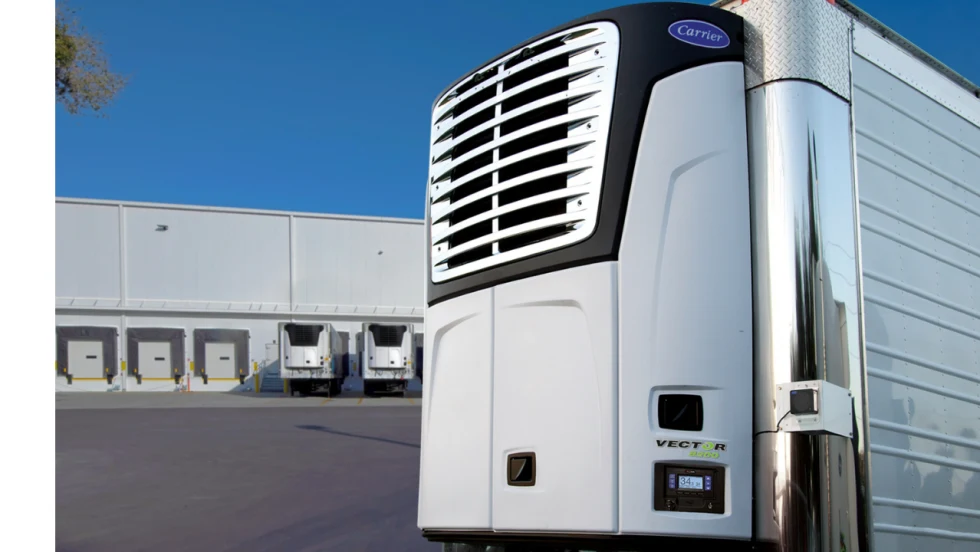
Carrier Transicold Launches All-Electric Vector 8200 TRU for Diesel-Free On-Site Cold Storage
Carrier Transicold’s first engineless multi-temperature TRU helps fresh- and frozen-food fleets add supplemental cold storage capacity during seasonal peaks.
Read More →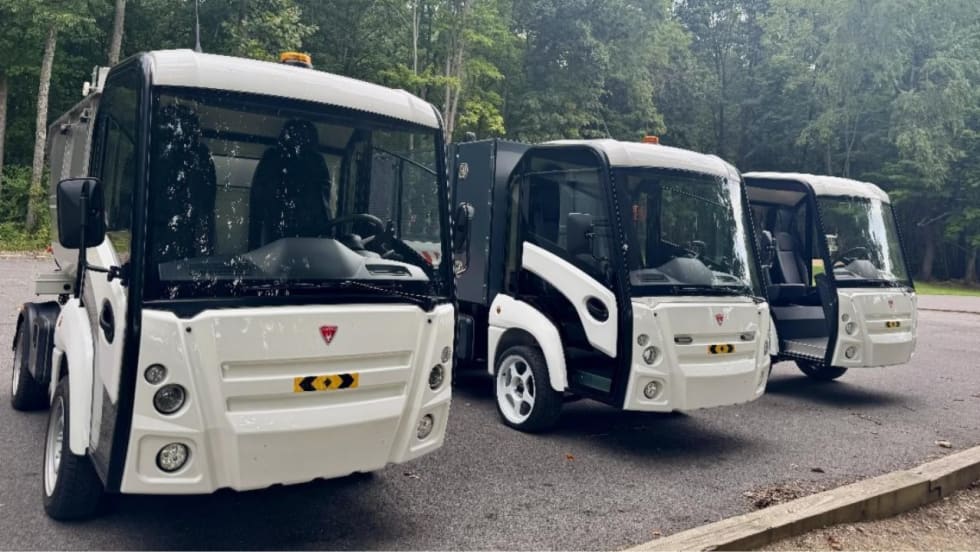
Narro Trucks Introduces Electric Utility Vehicle
Narro Trucks officially launched its operations on Aug. 20 and hosted a ride and drive to showcase its electric truck, which will be produced in Virginia.
Read More →
Samsung SDI Takes Full Control of GM Battery JV as Indiana Plant Pivots to Energy Storage
Samsung SDI is taking full control of its Indiana battery plant with GM, marking a major shift from the EV-focused joint venture Charged Fleet first covered in 2023.
Read More →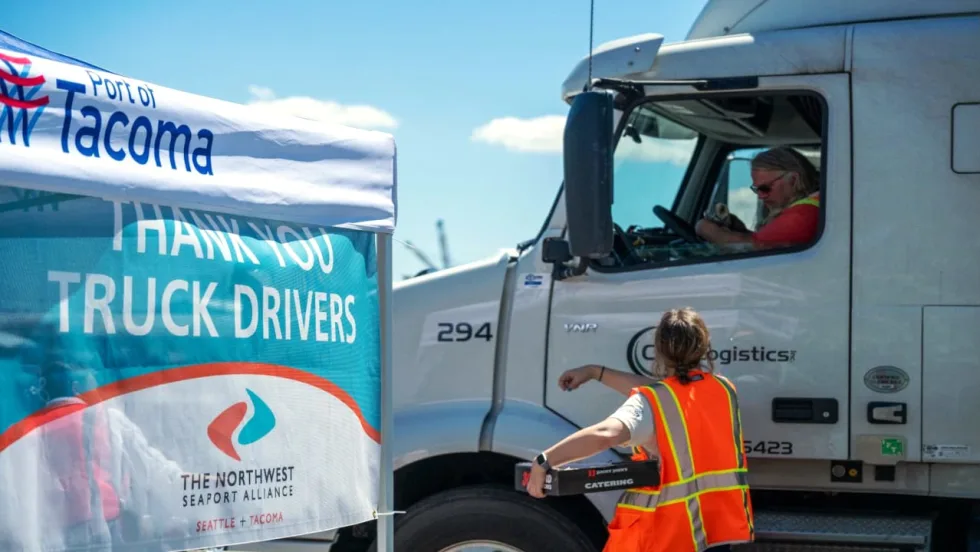
NWSA Taps CALSTART to Administer Zero-Emission Drayage Assistance Program
CALSTART will provide free technical assistance services to drayage fleets serving the Ports of Seattle and Tacoma and looking to transition to cleaner technologies and help decarbonize freight hubs.
Read More →
EV Fleet Reality Check: What Operators Wish They Knew Before Electrifying Their Work Vans
Electric work truck upfits bring new compatibility questions. Learn how parts availability, OEM guidance, power demands, and route planning can affect fleet performance.
Read More →
Peterbilt Expands Sourcewell Partnership with Electric Vehicle Lineup
Peterbilt Motors Company’s cooperative purchasing agreement with Sourcewell and its Canadian partner, Canoe Procurement Group, now includes including Peterbilt's battery-electric vehicle lineup.
Read More →