




How Efficient Upfit Planning Amplifies the ROI of Your Commercial Vehicle Upfit
Streamline your fleet's upfit process to cut hidden costs, boost ROI, and get vehicles on the road faster. Efficiency is the true value driver.

Equipping commercial vehicles efficiently is essential—streamlined upfit processes reduce downtime, cut costs, and accelerate ROI.
Photo: Work Truck Solutions | CT Truck & Van
Deciding how to equip your fleet is critical for business owners/fleet managers. In the article “Looking Beyond the Price Tag,” Lauren Fletcher points out that simply opting for the lowest-priced upfit often overlooks crucial factors that impact long-term value and operational efficiency.
Evaluating various upfit options based on functionality, durability, and suitability for the job is paramount. Building upon this understanding, this article delves into another vital aspect of maximizing your return on investment (ROI): the efficiency of your upfit purchasing process.
How you plan and purchase your commercial vehicle upfit significantly impacts the ultimate financial benefits your business realizes.
The Hidden Costs of Inefficient Upfit Purchasing
When it comes to equipping your commercial vehicles, there are basically three choices: working with a dealer to engage a professional upfitter for a custom package, attempting a do-it-yourself (DIY) upfit, or purchasing a vehicle already pre-configured with the necessary features.
Each option has pros and cons, but inefficient processes within any of these choices can lead to significant hidden costs.
Consider the following hidden costs associated with inefficient upfit purchasing:
Time is Money: Lengthy research into available options, soliciting and comparing quotes from multiple vendors, and coordinating the actual upfit process all contribute to lost time. Every day you don’t have a needed vehicle is a day of lost productivity and uncaptured revenue.
Increased Administrative Burden: Managing multiple vendor relationships, tracking numerous invoices and paperwork, and resolving discrepancies that inevitably arise from a fragmented process consume valuable administrative resources. This diverts time and energy from core business activities.
The Possibility of Sub-Par Results with a DIY Option: While the allure of saving money with a DIY upfit may be strong, the outcome often falls short of professional standards. This can impact the vehicle's functionality, durability, and even safety, to say nothing of the resale value. When all is said and done, the overall project cost, considering wasted materials, time spent, and potential for mistakes, is often higher than a professional job, and the overall quality is demonstrably lower.
Although custom upfits can yield a perfect fit for their intended purpose, the lead time can be significant. DIY attempts, while seemingly cost-effective initially, often yield subpar results and can ultimately exceed the cost of professional work, not to mention the challenge of stocking repair parts to keep the upfits in serviceable condition. Purchasing pre-upfitted vehicles may alleviate both drawbacks but can be inefficient and frustrating if the research process to find the right configuration is cumbersome and time-consuming.
If you want to skip over these issues and get immediately to an upfitted solution, an efficient research tool like Comvoy.com or a dealer website that offers multiple specific filters and search functionality becomes essential in navigating these complexities, getting your new, appropriately upfitted vehicle out into the field, and generating revenue as quickly as possible.
Hypothetical Upfit Case Study
Let's consider two hypothetical companies, Alpha Logistics and Beta Transport, both needing to add an upfit van to their delivery fleet:
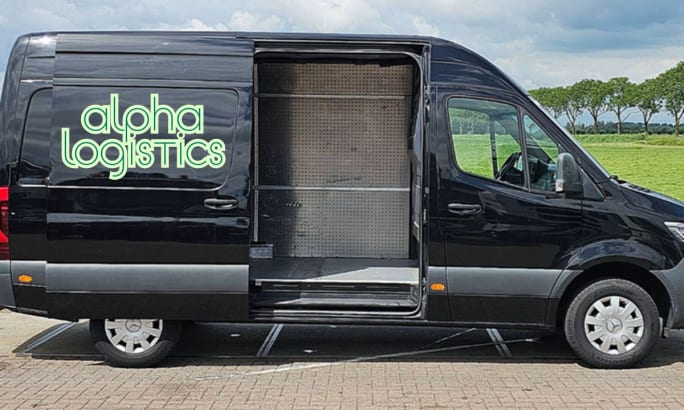
Alpha Logistics' traditional upfit route resulted in extended lead times and higher coordination costs, delaying fleet deployment by over 90 days.
Photo: Work Truck Solutions | Work Truck
Alpha Logistics searches the local auto listings, purchases an empty cargo van, and then engages a local upfitter to customize it with shelving, a ladder rack, and a cab divider. The process involves initial vehicle procurement, followed by separate research and coordination with the upfitter.
The total cost is $70,000, and the total time from research to initial vehicle purchase to having a fully operational, upfitted van is 90+ business days.
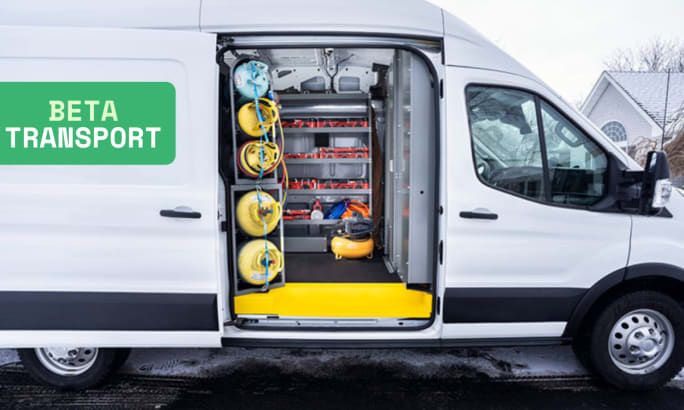
Beta Transport used a digital marketplace to find a ready-upfit van, slashing lead time to just 15 days and maximizing operational uptime.
Photo: Work Truck Solutions | Work Truck
Beta Transport utilizes an efficient online platform like Comvoy.com. They quickly identify multiple pre-configured vehicles that meet their initial criteria, easily research the detailed specifications of the upfit, get a quote to have the vehicle delivered from the next state away, and begin a financing inquiry… all within 90 minutes.
The platform allows them to easily compare specifications, pricing, and lead times. The total cost is $70,000, and the total time from research to initial vehicle purchase to having a fully operational, upfitted van is 15 business days.
Leveraging Leading Marketplace Technology
Leveraging technology is paramount in achieving efficiency in the upfitted work truck/van purchasing process. The sites you utilize when conducting your vehicle fleet search should display all the relevant details about pre-configured vehicles in detail. The lack of highly detailed upfit information adds more time to your search and introduces misunderstanding opportunities.
The right technology can revolutionize this process and offer key advantages such as:
Centralized Marketplace: Access to a wide network of pre-configured vehicles on one platform.
Simplified Quoting Process: Your research tools should provide streamlined avenues for transportation and financing.
Key Strategies and Best Practices for Implementing Efficient Upfit Purchasing
To implement efficient upfit purchasing practices, consider the following strategies:
Define Your Needs Clearly: Before beginning your search, define the exact upfit features you’re considering. Critically assess which features are essential "needs" versus desirable "wants." Identify any absolute "deal-breakers" to narrow your options effectively. Sometimes, just knowing what options are available creates momentum toward finding a solution. This is when using a tool like the national commercial vehicle marketplace, Comvoy, helps you quickly identify vehicle and upfit possibilities, making your assessment much more efficient.
Develop a Clear Procurement Strategy: Outline your upfit procurement process, considering factors such as the level of complexity of the required upfit, your acceptable time-to-completion metric, and an honest assessment of any potential DIY skills and capacity.
Embrace Technology Solutions: Actively seek out and implement technology solutions, such as online marketplaces like Comvoy.com, to automate and streamline tasks, improve communication, and gain better visibility into available options and pricing.
Conclusion: Investing in Efficiency for Long-Term Value
In conclusion, while the initial price tag of a commercial vehicle upfit is a consideration, focusing solely on cost overlooks the significant impact of the purchasing process on your overall ROI and business’ day-to-day focus. Efficient upfit planning and execution are not just about saving time; they represent a strategic investment that directly boosts the financial returns of your commercial vehicle fleet.
By prioritizing process optimization and actively exploring and adopting technology solutions, business owners and fleet managers can significantly reduce hidden costs, minimize downtime, and ultimately maximize the long-term value derived from their commercial vehicle investments.
Embracing smart procurement is no longer a luxury but a necessity for effective and profitable fleet management in today's competitive landscape.
More Upfitting
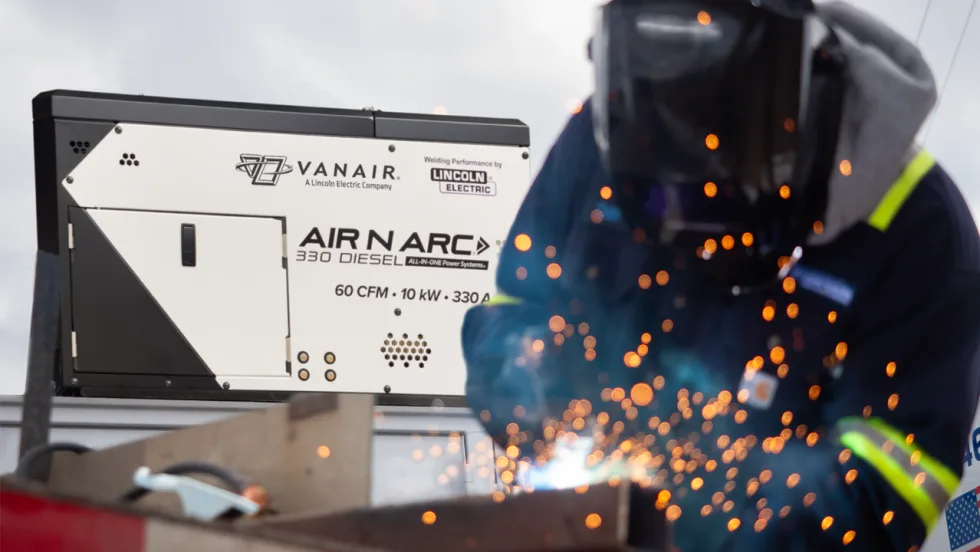
Multitasking: Vanair’s Air N Arc 330 Diesel 60 CFM All-In-One Power System
The Air N Arc 330 Diesel 60 CFM from Vanair consolidates a welder, generator, rotary screw air compressor, battery booster, battery charger, and EV charger into a single 750-pound enclosure driven by one 24.8-horsepower Kubota diesel engine.
Read More →
Buyers Products Awarded Sourcewell Cooperative Purchasing Contract for Snow & Ice Equipment
Buyers Products has been awarded a Sourcewell contract for a wide range of winter maintenance equipment and accessories, including snowplows, municipal plow systems, wing plows, spreaders, and more.
Read More →
Hilltip Introduces the SnowStriker SFT Flex Expandable Box Plow
Hilltip’s new SnowStriker SFT Flex expandable box plow features hydraulically extendable sections that allow operators to adapt the clearing width to changing conditions and applications on the go.
Read More →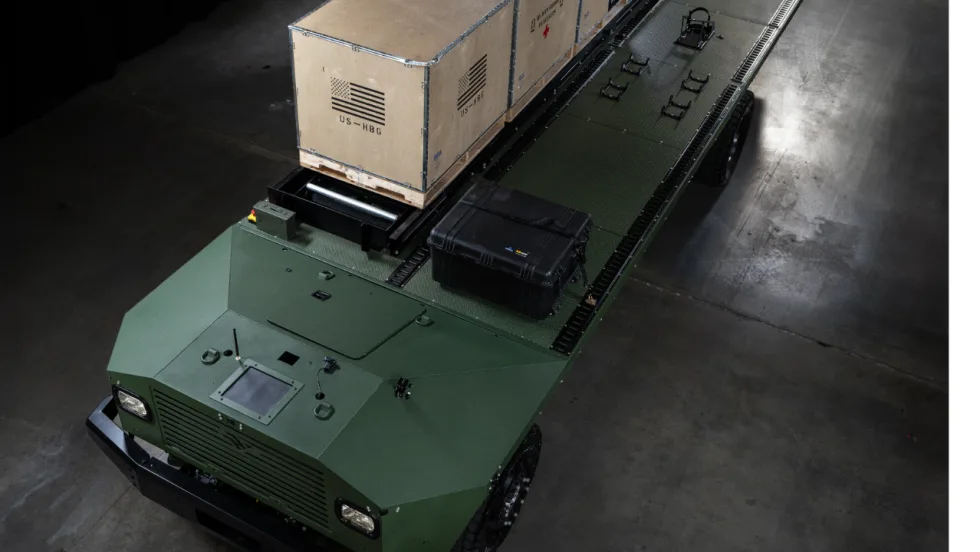
Harbinger Part of Effort to Deliver Autonomous Logistics Capabilities for U.S. Army
American Rheinmetall received an 18-month U.S. Army contract to deliver autonomous, hybrid-powered uncrewed ground vehicles. Harbinger is providing the truck platform for those vehicles.
Read More →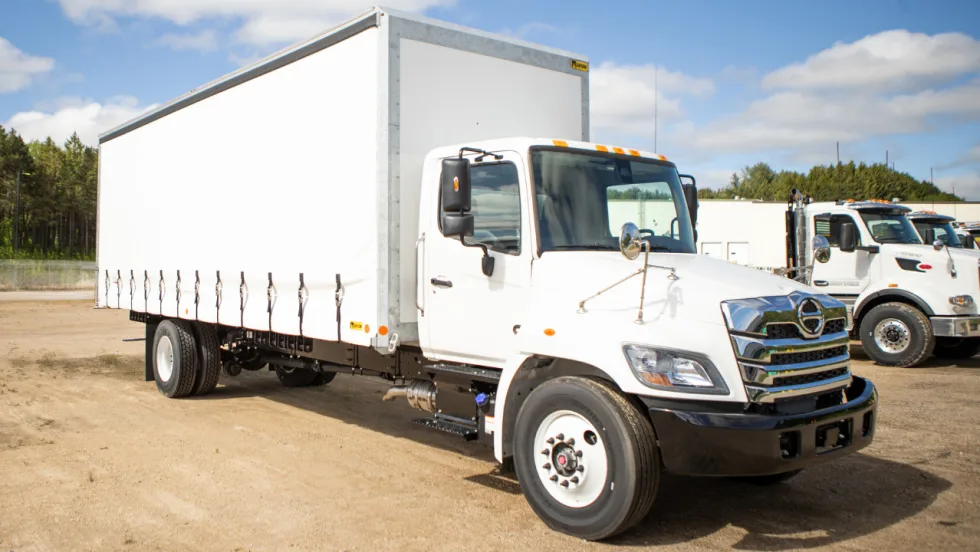
Thinking Outside of the Box: Choosing the Right Truck Body for Your Fleet
Choosing the right truck body can have a major impact on loading efficiency, cargo protection, downtime, and long-term operating costs. Here’s how dry vans, platforms, and curtainsiders compare, plus what fleets should consider before spec’ing their next truck.
Read More →
Fourth Annual Upfit Package of the Year Awards Open for 2027 Entries: One Month Left!
Think your upfit deserves industry recognition? Enter the 2027 Work Truck Upfit Package of the Year Awards before the Sept. 30 deadline. There is less than a month left to get your submissions in!
Read More →
Reading Truck Equipment & Masterack Unite as One of North America's Largest Commercial Vehicle Upfit Networks
Reading Truck Equipment and Masterack have integrated operations to create one of North America's largest and most comprehensive commercial vehicle upfit organizations.
Read More →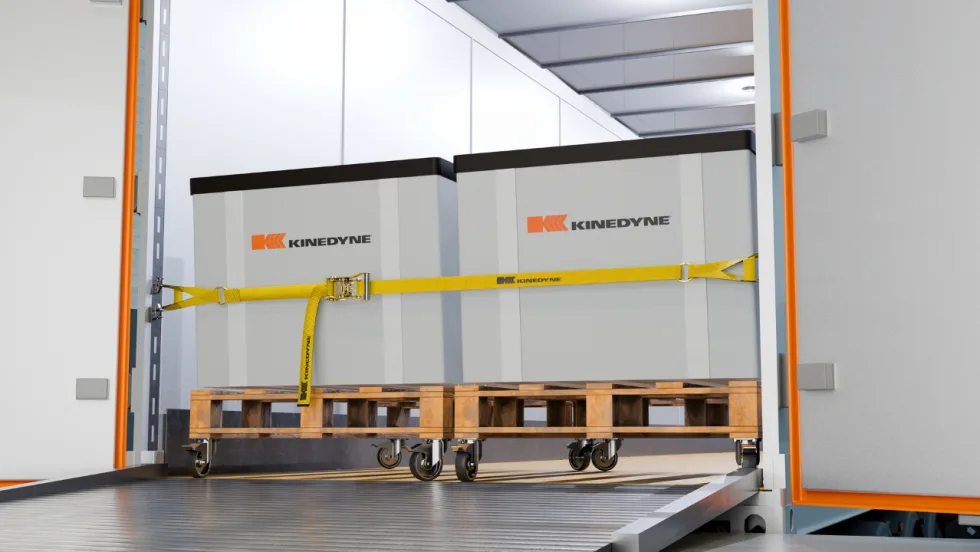
Kinedyne Launches Heavy Duty Logistic Shoring Strap
Kinedyne’s new Heavy Duty Logistic Shoring Strap features a patent-pending four-point design to deliver greater cargo stability, increased strength, and easier handling for rolling and shifting freight.
Read More →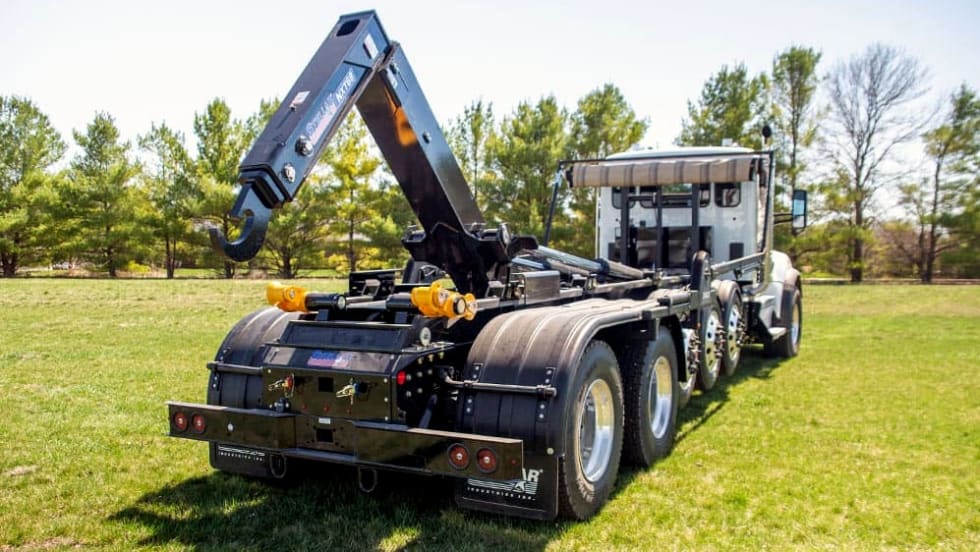
Hooklift Bumper Design from Stellar Showcases Strength & Versatility
Stellar Industries’ new bumper for the NZT Series Hooklifts come in two capacity options: the 20K, designed for Class 3 – 6 chassis with a 20,000-pound pull capacity, and the 90K, built for Class 7 and 8 chassis with a 90,000-pound pull capacity.
Read More →
Maxon Lift Awarded the Wabash Platinum Award for Supply Chain Performance
Maxon Lift, a liftgate manufacturer since 1957, received the Wabash Platinum Award for supply chain performance in 2025. Each year, Wabash presents awards to top suppliers for excellence in supply chain performance.
Read More →