




Guidelines for Biodiesel Use in Fleets
Use of biodiesel is set to dramatically expand as production and availability rise. However, fleets are advised to stay within manufacturer recommendations when fueling new-model vehicles with the alternative fuel.


Photo: Biodiesel.org
Driven by energy and environmental concerns, fleet use of biodiesel fuel for diesel engines continues to expand. At the same time, manufacturers are beginning to allow higher blends of biodiesel in their new vehicles. However, staying within their recommendations is more important than ever.
As an “alternative” non-petroleum-based fuel, biodiesel offers many benefits. It can be produced from renewable feedstocks, such as soybeans, is blendable to any level with petroleum diesel, and can be used in compression-ignition (diesel) engines without major modifications. It is also biodegradable, non-toxic, and sulfur-free.
As an “alternative” non-petroleum based fuel, biodiesel offers many benefits. It can be produced from renewable feedstocks, such as soybeans, is blendable to any level with petroleum diesel, and can be used in compression-ignition (diesel) engines without major modifications. It is also biodegradable, non-toxic, and sulfur-free.
Besides an IRS tax credit and state incentives, state mandates are also pushing the fuel’s use. Minnesota, for example, requires a minimum B-2 (2-percent) biodiesel in all its diesel fuel; and the state of Washington started doing so in 2007, according to Amber Thurlo-Pearson, spokesperson for the NBB.
Higher Blend Targeted
Currently, for vehicles more than 8,600 lbs. GVW, the Engine Manufacturers Assoc., (EMA) in Chicago only recommends blends of up to B-5 (5-percent) biodiesel in 2006 or older models.
However, its new biodiesel test specification is helping manufacturers evaluate the effects of blended fuels with up to 20-percent (B-20) biodiesel on engine performance, durability, and emissions in today’s cleaner-burning engines. Most of this testing is performed on 2007-model engines, required to meet more stringent emissions standards. To help meet the standards, the engines use the new ultra-low sulfur fuel and require after-treatment devices, such as diesel particulate filters.
DaimlerChrysler already endorses the higher B-20 blend for its 2007 Ram 2500- and 3500-series pickups, equipped with the Cummins 5.9L turbodiesel V-8. Competitive pressure and market demand are likely to lead other manufacturers to follow suit on some models in the near future.
Ford’s new 6.4L PowerStroke V-8 turbo-diesel, being introduced in 2008 Super Duty models now in production, supports use of B-5 biodiesel.
Blends Can Be Switched
“Vehicle operators can use any of the lower-percentage blends, i.e., B-2 and B-5, as well as the new B-20 (where recommended) and switch back and forth between them without worrying about maintenance or performance,” says Loren Beard, senior manager of environmental and energy planning for DaimlerChrysler.
Other manufacturers, such as Duramax Diesel Engine, a Moraine, Ohio-based supplier of General Motors’6.6L V-8 turbo-diesel, and Navistar International, supplier of Ford’s turbodiesel, also say there’s no problem with switching between their recommended blends (up to B-5).
“It’s analogous to different refineries using different crude oils from all over the world. You have to meet certain specifications, and then you’re fine,” says Donn Frincke, assistant chief engineer, Duramax Diesel.
B-20 May Require Water Separator
Some fleets using B-20 may need to use a water separator to keep water out of the fuel distribution system, says DaimlerChrysler’s Beard. The water separator, which the auto manufacturer is making available through dealers as an aftermarket kit, is recommended, but not required.
“If a fleet operator is careful to keep water out of the fuel, he’ll be OK,” says Beard. “But typically, there’s water at the bottom of a diesel fuel storage tank, and B-20 has a tendency to pick up water from the distribution system (storage tank, fuel) and carry it along,” he adds.
The new Ram turbodiesels are designed so that operators shouldn’t notice “any difference (in their performance). It should work like regular diesel fuel,” Beard said.
DaimlerChrysler recommends the use of up to B-5 in other models, such as the Jeep Liberty 2.8L common rail diesel and the Mercedes E-320 3.2L diesel.
Warranty Issues May Arise
Fuel-system or engine damage resulting from exceeding a manufacturer’s recommended level of biodiesel (B-5, for example) may not be covered under the vehicle warranty. The same is true of damage resulting from improperly processed or blended biodiesel, for example, “unmodified bio-oils.”
Some manufacturers are more explicit about this issue than others. GM’s owner’s manual, for instance, specifically says such damage “would not be covered by your warranty.” Ford uses the word “may” in talking about voiding the warranty with the use of improper fuels.
Still, some fleets have successfully used higher-than-recommended biodiesel concentrations.
Ellen Shapiro, director of automotive fuels for the Washington, D.C.- based Alliance of Automobile Manufacturers (AAM), points out, such fleets “may have separate agreements specifically adapted for B-20, for example, or the manufacturer may allow it after deciding the fleet operator is comfortably in control. There are many issues that fleet owners and vehicle sellers can work out” apart from general recommendations, she added. The AAM deals with light-duty vehicles less than 8,600 lbs. GVW.
Quality Fuel is All Important
Fleet operators’ use of proper fuels is of paramount importance. Biodiesel can’t be created by simply mixing unmodified, or raw soybean oil with diesel. The oil has to be chemically reacted and properly processed to create the final product.
ASTM International (formerly the American Society of Testing and Materials), the official fuel specification setting organization for the U.S., doesn’t have specifications for specific concentrations, such as B-2, B-5, and B-20. However, the group has an ASTM D 6751 specification for B-100 (pure biodiesel) and another, ASTM D 975, for diesel. Reputable suppliers blend these to create their fuels. Manufacturers sometimes state in the owner’s manual a requirement for biodiesel blends using these two specifications. By verifying their use, fleets have an important criterion for judging fuel quality.
Meanwhile, the NBB has also developed a Biodiesel Accreditation Program, BQ-9000, for biodiesel producers and marketers. It combines ASTM 6751 with a quality systems program for storing, sampling, testing, blending, shipping, distribution, and fuel management practices. The NBB provides a list of its certified marketers and accredited producers, along with other details, online at www.bq-9000.org. Biodiesel is also available at 850-1,000 retail pumps in the U.S., according to the NBB. The pumps offer blends ranging from B-2 up to B-20 and higher.
Biodiesel blends, like regular petrodiesel, have a limited shelf life. Therefore, industry experts recommend stored biodiesel be used within six months of purchase to ensure quality. Fuel producers and distributors generally do not store the fuel for long periods of time. They operate with established levels and rates to meet demand (similar to “just-in-time” inventory levels). On the distribution side, storage time isn’t really an issue.
Filters Need Frequent Cleaning
Because biodiesel has excellent solvent properties, it can dissolve the deposits left by petro-diesel (especially #2) in the bottom of fuel lines, tanks, and delivery systems. Therefore, fleets may need to change filters more frequently when first using biodiesel until the whole system has been cleaned of petro-diesel deposits.
Ford advises biodiesel users operating its 2006 and 2007 Super Duty diesel to change engine oil and filters more frequently on a continual basis as part of scheduled maintenance because it is normal for a small amount of unburned fuel to enter the crankcase and mix with the engine oil.
B-20 also raises the cold weather properties 2 to 10-degrees F which, in extremely low temperatures, could result in cold filter plugging. There’s little likelihood of such a winter problem affecting B-20 use, considering some fleets reported using 20-percent biodiesel blends without issues in upper Wisconsin and Iowa in minus- 25-degree F weather.
Nonetheless, if a winter operating problem occurs, it can be remedied in the same manner as with regular #2 petro-diesel, by blending with #1 diesel or using engine block or fuel filter heaters on the engine.
More Fuel

The Smart Way to Build a Mixed-Energy Fleet Isn’t About Picking a Side
Mixed-energy fleets aren’t about picking a winning fuel. Sarah Booth of WEX explains how vehicle data, duty cycles, charging strategy, and real-world costs can help fleets choose the right energy source for each job.
Read More →
Ignoring This Dashboard Warning Could Cost Your Fleet Thousands in Fuel
New research suggests neglected diesel aftertreatment systems could waste up to $30 in fuel per vehicle each day. Here's why vocational fleets should pay attention.
Read More →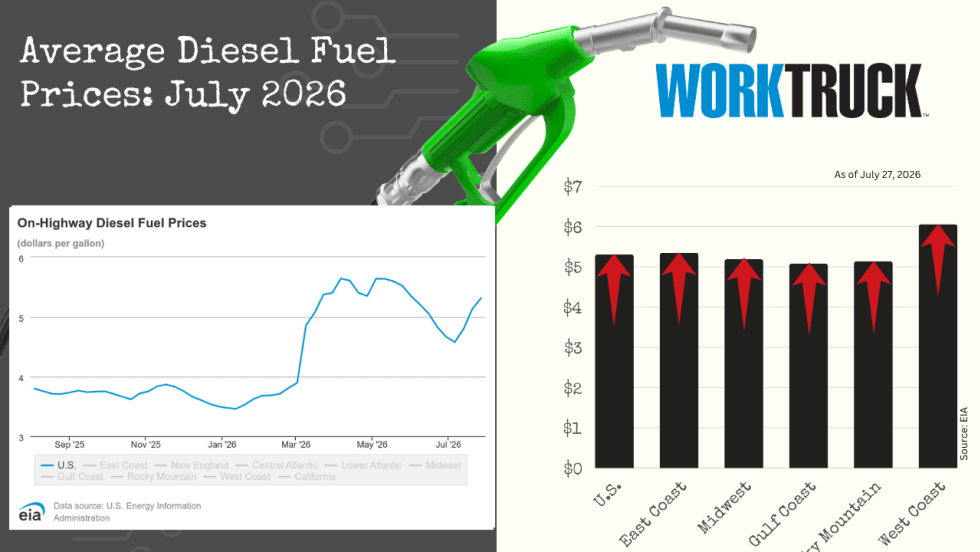
July Diesel Trends Update
The average price of a gallon of diesel increased again this week, and the EIA reported a new national average of $5.31 at the start of the week.
Read More →
WEX Brings Standard Fleet's Connected Vehicle Platform to Fleet Customers
This week’s product launch with Standard Fleet’s connected vehicle platform reflects WEX Venture Capital's strategy of turning startup innovation into customer solutions. Standard Fleet is now available to WEX fleet customers.
Read More →
Teletrac Navman Adds Mixed-Energy Fleet Tools to TN360
The new Energy Hub combines fuel transactions, EV charging data, vehicle range, and energy costs in one dashboard for fleets operating multiple vehicle and energy types.
Read More →
WEX DriverDash adds CITGO, Expands Nationwide Access for Fleets
The DriverDash mobile payment app, by WEX, has been integrated into the CITGO merchant network, which means WEX has expanded its U.S. station footprint with the addition of approximately 4,000 CITGO locations.
Read More →
Mixed Energy Fleet Tips for Balancing EVs, Gas and Diesel Vehicles
Mixed energy fleets are becoming the new normal. Learn how fleet managers are balancing EVs, gas and diesel vehicles while controlling costs and planning for the future.
Read More →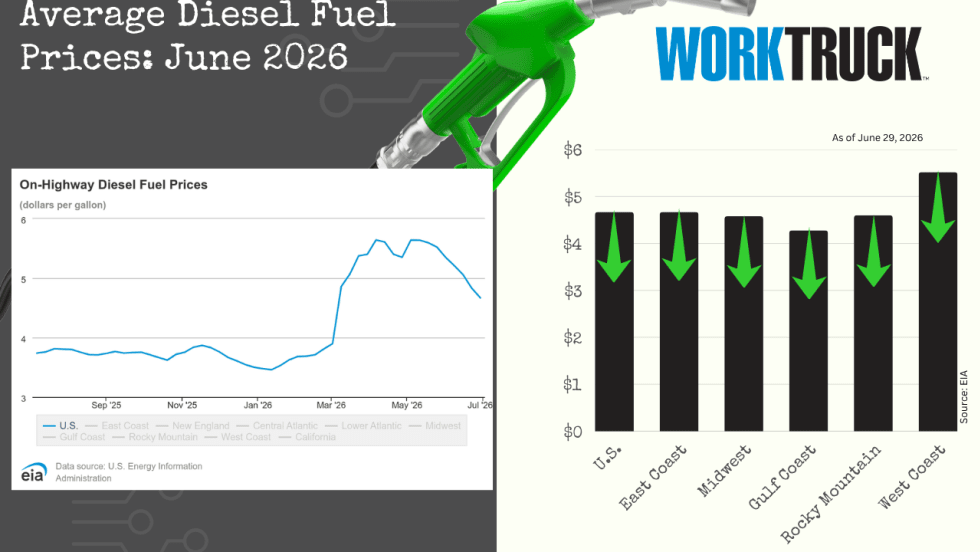
June Diesel Trends Update
The national average price of a gallon of diesel has dropped again, this week by more than 16 cents. All five regions reported lower average prices, ranging from almost 13 cents to more than 28 cents cheaper than a week ago.
Read More →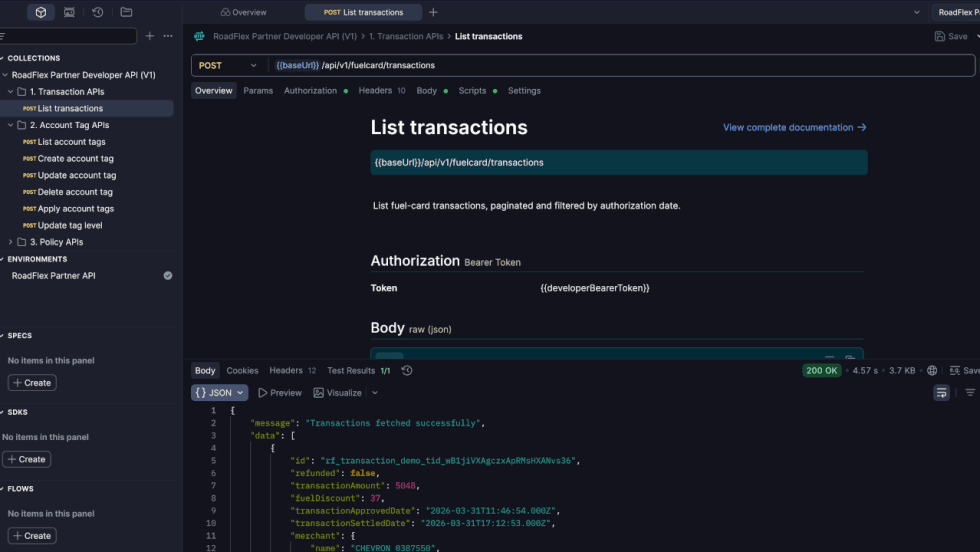
RoadFlex Launches RoadFlex Direct Open API Platform
RoadFlex Direct connects fuel cards, controls, and data to the telematics and fleet management systems fleets already run, from Geotab and Samsara to Fleetio and RTA, with no separate dashboard or double data entry.
Read More →
The Key to Fuel Efficiency Sits in the Cab
Learn how driver behavior, telematics, coaching, and fuel data can help fleets improve fuel efficiency, lower costs, and reduce emissions.
Read More →