




Gearing Up for Upcoming Medium- & Heavy-Duty Truck Regulations
Several experts offer insight to help fleets prepare for the regulations impacting medium- and heavy-duty trucks beginning in 2014.


With the government’s first-ever greenhouse gas (GHG) emissions and fuel-efficiency standards applied to medium- and heavy-duty trucks, beginning with model-year 2014, should fleets brace themselves for another wave of “sticker shock”?
Photo: Pexels
The U.S. Environmental Protection Agency (EPA) diesel emissions regulations for 2007 and 2010 resulted in the development of sophisticated aftertreatment technologies that drove higher truck prices (as much as $10,000 or more per unit from the previous model-year) and overall maintenance costs.
So, with the government’s first-ever greenhouse gas (GHG) emissions and fuel-efficiency standards applied to medium- and heavy-duty trucks, beginning with model-year 2014, should fleets brace themselves for another wave of “sticker shock”? How will the new regulations impact vehicle pricing and fleet operations? What should fleet managers expect?
Work Truck magazine spoke with experts at fleet management companies, PHH Arval and LeasePlan USA, to get their outlook to help fleet managers prepare for the changes ahead.
Overview: HD National Program
Adopted Aug. 9, 2011, the Heavy-Duty (HD) National Program is a joint ruling by the EPA and National Highway Traffic Safety Administration (NHTSA) that requires on-road vehicles above 8,500-lbs. GVWR to achieve certain GHG emissions and fuel consumption reductions, covering model-years 2014-2018.
The program applies to three vehicle segments, each with its own set of standards to meet:
Combination tractors(semi trucks that typically pull trailers): Up to 20-percent reduction in GHG emissions and fuel consumption by MY-2017 over the 2010 baselines.
Heavy-duty pickup trucks (e.g. Ford F-250 and F-350) and vans (e.g. Chevrolet 3500 Express): Up to a 10-percent reduction in GHG-emissions and fuel consumption for gasoline vehicles and 15-percent reduction for diesel vehicles by MY-2018.
Vocational vehicles (e.g. delivery, utility, tow trucks): Up to 10-percent reduction in fuel consumption and GHG emissions by MY-2017.
Vehicles excluded from the HD National Program are light-duty cars, trucks, and vans (below 8,500-lbs. GVWR) and medium-duty passenger vehicles above 8,500-lbs. GVWR that are already covered by the GHG and Corporate Average Fuel Economy (CAFE) standards for MY-2012 to MY-2016.
The EPA and NHTSA anticipate that the joint standards will reduce GHG emissions by nearly 250 million metric tons and save approximately 500 million barrels of oil over the life of vehicles sold from 2014 to 2018.
And, although the agencies estimate that the HD National Program will cost the transportation industry $7.7 billion to equip trucks with technologies necessary to achieve compliance, they expect $41 billion in net benefits for fleets, driven by lower fuel costs.
New Technologies to Expect
The EPA 2007 and 2010 emissions regulations resulted in the development of expensive aftertreatment devices, such as diesel particulate filters (DPF) and selective catalytic reduction (SCR). So, what new technologies should fleet managers expect to see on trucks to meet the new 2014 standards?
“I don’t see radical changes to engines so much as refinements to existing technology, with incremental improvements from multiple components,” said Wayne Reynolds, manager, upfit design and consultation for LeasePlan USA. “[Technologies] such as vehicle speed limiters, automatic engine shutdown to limit idle time, and low-rolling resistance tires could collectively help meet the regulations. Electrification of belt- or gear-driven components is another method to reduce fuel consumption. Alternative fuels, such as propane autogas or compressed natural gas, will have a role in instances where they fit the application need, as will hybrid technology — particularly in vocational trucks.”
Michael Quimby, VP of sales at PHH FirstFleet, the truck and equipment division of PHH Arval, said fleets can expect to see improvements in these four areas:
1. Engines. Enhanced engine electronics, more efficient driveline components to reduce overall friction, more electric engine components to reduce engine load, and idle reduction technologies.
2. Aerodynamics. For tractors: roof and fuel tank fairings, mirrors, front bumpers and cab design, lower side skirt. For trailers: lower side skirts and front and rear treatments.
3. Trucks and trailers. Low-rolling resistance tires, super single tires, minimizing the air gap between the tractor and trailer, and overall weight reduction for increased fuel economy and lower emissions.
4. Green technology. Natural gas engine power, electric and hybrid vehicles.
According to NHTSA’s “Regulatory Impact Analysis” on the HD National Program, there’s no “silver bullet” technology to meet the standards, but “significant GHG and fuel consumption reductions can be achieved through a combination of engine, vehicle system, and operational technologies.”
Here’s a sampling of specific technologies NHTSA said that truck OEMs are developing to comply with the new ruling:
Cylinder deactivation. This improves engine efficiency by disabling or deactivating (usually) half of the cylinders when the load is less than half of the engine’s total torque capability.
Engine friction reduction. Approximately 10-percent of the energy consumed by a vehicle is lost to friction, with over half caused by frictional losses within the engine. Truck OEMs can achieve substantial reductions in engine friction through enhancements in low-tension piston rings, piston skirt design, roller cam followers, improved crankshaft design and bearings, material coatings, material substitution, more optimal thermal management, and piston and cylinder surface treatments.
Aggressive shift logic for automatic transmissions. This optimizes fuel efficiency by modifying the shift schedule to up-shift earlier and inhibit downshifts under certain conditions, which reduces engine pumping losses and engine friction.
Mass reduction. Truck manufacturers are reducing overall vehicle weight through increased use of light-weight materials and technologies, such as aluminum, advanced high-strength steel (AHSS) and fiber composites. The materials are being woven into the designs of truck bodies, engines, frames, suspensions, and other components.
Idle control technologies. These are most applicable to Class 8 tractors with sleeper cabs that need to power auxiliary equipment, such as heat and air conditioning, over extended periods of time, without having to run the engine.
For details from NHTSA on the full-range of technologies being developed by OEMs to meet the new standards, visit www.nhtsa.gov/fuel-economy, click the link to “Final Regulatory Impact Analysis,” and see Chapter 2 “Technologies, Cost and Effectiveness.”
Economic Impact on Fleets
How will the HD National Program affect truck acquisition cost?
“NHTSA estimated the five-year annual research & development cost for 2012 through 2016 alone at about $170 million. How much this translates to increased acquisition cost is hard to say,” said Reynolds of LeasePlan USA. “It will most likely be substantially higher for combination tractors than heavy-duty pick-up trucks and vocational vehicles. I have seen one estimate in the $5,500- $6,000 range for the tractors. This can be somewhat offset by increased fuel efficiency.”
Said Quimby of PHH FirstFleet: “While the amount of technology applied to vehicles determines the price impact, some OEMs will incorporate price increases ranging from $2,000-$5,000, and non-aerodynamic vehicle truck prices are likely to increase substantially. What’s key is that most customers look for an 18- to 24-month payback for technology improvements, which will guide [vehicle] selection.”
What about maintenance costs? Will the new technologies require more maintenance, similar to what EPA 2007 and 2010 standards did with the addition of DPF and SCR technologies?
“It’s difficult to give any definitive answer because any changes in maintenance costs will have to be determined when the new vehicles are placed in service and real operational data evaluated,” Quimby said.
Reynolds anticipated little, if any, impact on maintenance expenses directly related to compliance with the HD National Program.
“There may be some increased maintenance cost associated with things like low friction lubricants and single-wide or low-resistance tires, but I don’t foresee a large increase overall,” he said.
Pre-Buy or Not to Pre-Buy
Will fleets “pre-buy” and put off purchasing 2014-compliant trucks, as many did prior to EPA 2007 and 2010? Or, will fleet managers see the new standards as a positive initiative — as a means to achieve greater fuel efficiency and lower total cost of ownership with newer vehicles?
“Because engine technology improvements are unlikely to be as dramatic as past years [2007 and 2010], we do not anticipate a ‘pre-buy,’ ” Quimby said. “In fact, some OEMs already include product offerings that will comply with 2014 regulations. However, the price impact of new technologies versus the anticipated increase in fuel economy could be a factor in replacing older trucks. If the [price] increase is not as substantial as the 2007 and 2010 emission surcharges, there should not be as much resistance to purchase 2014 compliant trucks.”
Reynolds agreed. “I don’t believe we will see a large pre-buy. The increased acquisition cost will be phased in and somewhat offset by increased fuel efficiency,” he said. “The new regulations may have the effect of limiting manufacturer options, too, which may help stabilize future prices by having many more vehicles with a common spec, thereby reducing production costs.”
More Green Fleet

Fleet Forward Conference Introduces One-Day Passes for 2026
New one-day registration gives fleet professionals the flexibility to attend Tuesday, Wednesday, or Thursday, with passes available for $199 through Sept. 18.
Read More →
CALSTART Rebrands as Catalyst Mobility, Will Combine with Forth in 2027
CALSTART has rebranded as Catalyst Mobility and will combine with Forth at the start of 2027. The new organization said it is poised to become one of the world's largest, strongest, and most impactful clean transportation nonprofits.
Read More →
Electric Truck and Charging Programs to Boost Sustainability at NY & NJ Ports
Together, the Port Authority of New York and New Jersey and CALSTART will electrify drayage and terminal operations serving the East Coast’s busiest container port. A pair of incentive programs totaling $45 million has launched to accelerate adoption of zero-emission drayage trucks and terminal tractors.
Read More →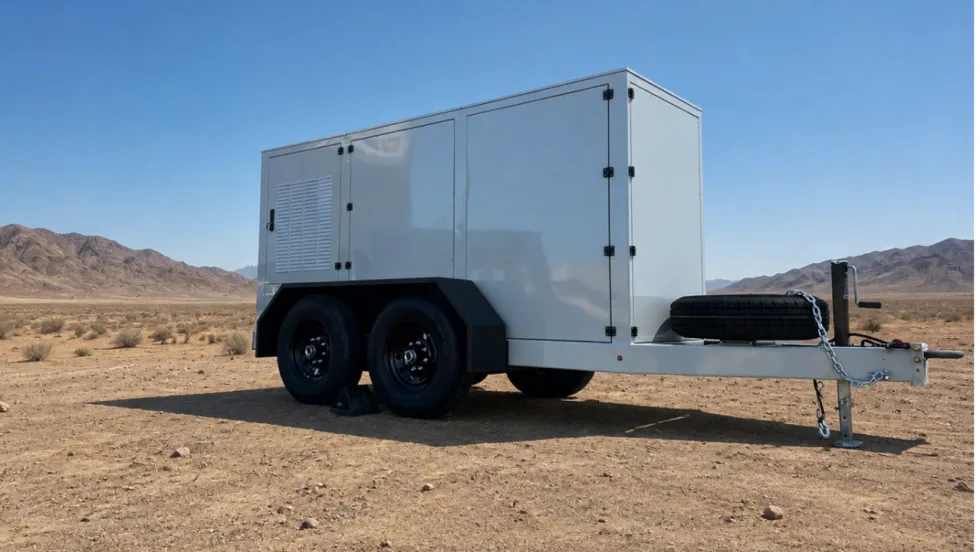
Xos Hub Surpasses One Gigawatt-Hour of Energy Delivered in the Field
A single Xos Hub has surpassed one gigawatt-hour of energy across more than 33,600 charging sessions in the field, demonstrating performance that supports Xos' expansion across new products and markets.
Read More →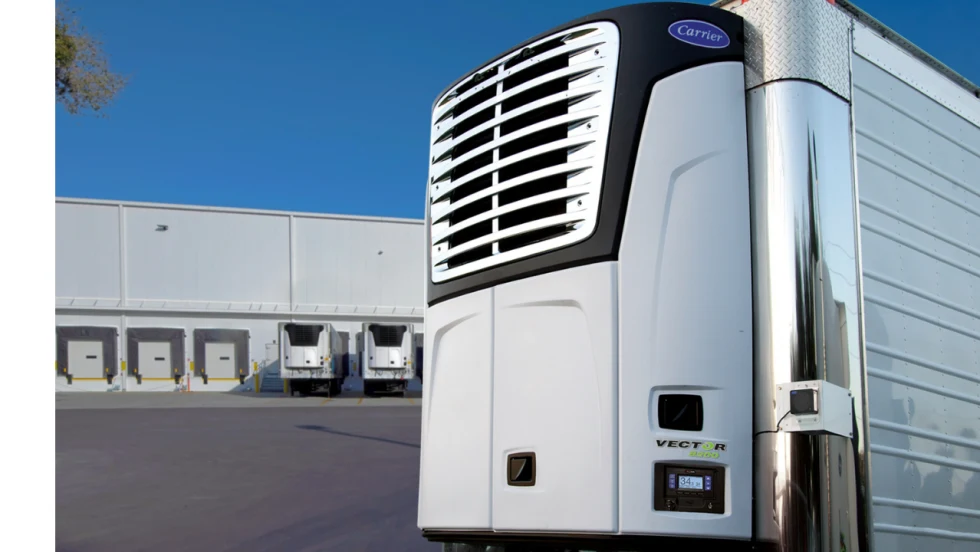
Carrier Transicold Launches All-Electric Vector 8200 TRU for Diesel-Free On-Site Cold Storage
Carrier Transicold’s first engineless multi-temperature TRU helps fresh- and frozen-food fleets add supplemental cold storage capacity during seasonal peaks.
Read More →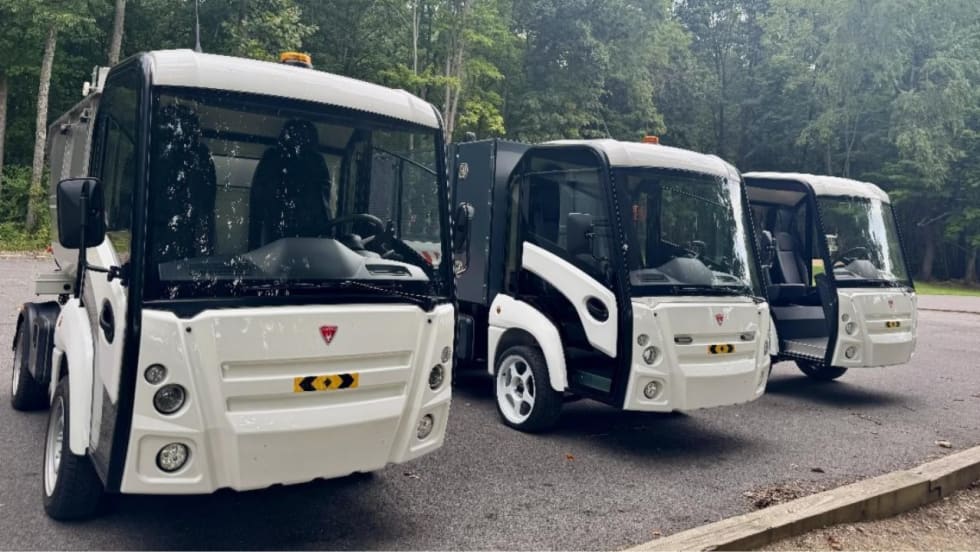
Narro Trucks Introduces Electric Utility Vehicle
Narro Trucks officially launched its operations on Aug. 20 and hosted a ride and drive to showcase its electric truck, which will be produced in Virginia.
Read More →
Samsung SDI Takes Full Control of GM Battery JV as Indiana Plant Pivots to Energy Storage
Samsung SDI is taking full control of its Indiana battery plant with GM, marking a major shift from the EV-focused joint venture Charged Fleet first covered in 2023.
Read More →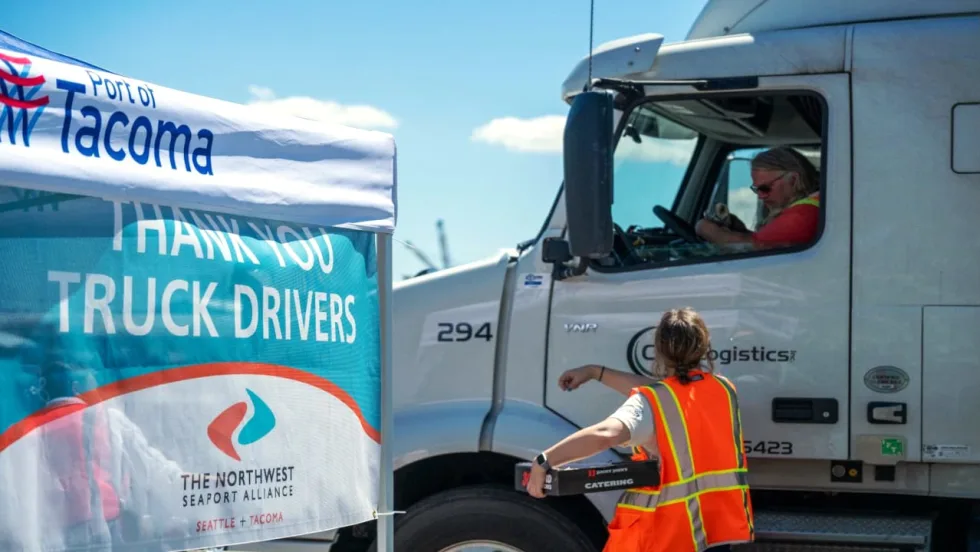
NWSA Taps CALSTART to Administer Zero-Emission Drayage Assistance Program
CALSTART will provide free technical assistance services to drayage fleets serving the Ports of Seattle and Tacoma and looking to transition to cleaner technologies and help decarbonize freight hubs.
Read More →
EV Fleet Reality Check: What Operators Wish They Knew Before Electrifying Their Work Vans
Electric work truck upfits bring new compatibility questions. Learn how parts availability, OEM guidance, power demands, and route planning can affect fleet performance.
Read More →
Peterbilt Expands Sourcewell Partnership with Electric Vehicle Lineup
Peterbilt Motors Company’s cooperative purchasing agreement with Sourcewell and its Canadian partner, Canoe Procurement Group, now includes including Peterbilt's battery-electric vehicle lineup.
Read More →