




Freightliner M2e Hybrid Gets Down to Business
With improved fuel economy, lower emissions, extended brake wear, and reduced idle time, Freightliner’s Business Class M2e Hybrid offers fleets a “clean” way to get the job done.

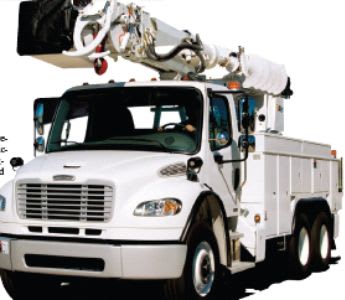
Particularly suitable to utility applications, the M2e’s engine shuts off and the electric motor powers tools and hydraulic lifts.
Photo: Freightliner
With the Freightliner Business Class M2e Hybrid, Freightliner Trucks, a Daimler Trucks North America division, has taken a step toward Daimler’s goal of producing a zero-emissions vehicle. With fuel savings up to 1,500 gallons per vehicle, longer brake life, quiet electric power takeoff (ePTO), and idle time reduced by as much as 87%, the M2e Hybrid skips the nonsense so fleets can get down to business.
Built for stop-and-go operations, the Freightliner Business Class M2e Hybrid features the Eaton Parallel Electric Hybrid drivetrain system, tested over four years and 2 million miles. The parallel electric hybrid system allows fleets to operate with just the diesel engine or in combination with the hybrid electric motor. The diesel powertrain remains fully functional in the unlikely event the hybrid drive unit goes offline.
The hybrid motor provides additional power to launch the vehicle and improves fuel economy in high stop-and-go operations, ideal for utility, towing, pickup and delivery, and beverage applications.
Regenerative braking captures about 70% of the kinetic energy produced, recharging the hybrid’s battery. Energy normally lost during braking is stored in the batteries. Regenerative braking saves fuel, extends brake use, and allows for continual battery recharge in stop-and-go driving.
The truck’s hybrid drive power not only enhances fuel efficiency but also provides an added boost for hills or rapid acceleration, helpful for vehicles that make frequent stops.
Stored energy also powers electric-only operation for ePTO and auxiliary power generation. Particularly suitable for utility applications, the M2e’s engine shuts off, and the electric motor powers tools and hydraulic lifts. Fleets can save fuel, while quietly reducing emissions and idling. Electric-only ePTO operation provides a significant reduction in emissions and idle time and also offers operating flexibility.
Attractive Features All Around
The M2e is equipped with a number of money-saving qualities.
Extended wear. The Freightliner Business Class M2e Hybrid’s engine and brakes now last longer. Brake life is more than doubled in urban delivery services, according to the company.
Reduced idling. In ePTO mode, idle time can be reduced by as much as 87 percent. Less idling means less fuel, exhaust, heat, noise, and vibration. In utility applications, 4-5 hours of idle time per day can be eliminated.
Fuel economy. With the city delivery vehicle, fuel economy is improved from 25 to 40 percent. Fuel economy in utility applications has seen a 40- to 60-percent improvement.
Overall annual savings. Considering fuel economy, extended brake life, and federal tax credits, city delivery and utility fleets can achieve an annual savings of $3,500-$6,000. Both state and local governments offer a number of incentives to offset the cost of the new technology.
Other standard features on the M2e include:
Increased visibility with a broad windshield and sloped hood.
Enhanced maneuverability with up to a 55-degree wheel cut.
A roomy interior, featuring an automotive-style dash.
Large doors, easy ingress and egress, with low step-in height.
Adaptable cab configurations with standard multiplex wiring, clear frame rails back of cab, and a variety of horizontally and vertically mounted exhausts.
Lightweight aluminum cab and easy maintenance.
More Green Fleet

Fleet Forward Conference Introduces One-Day Passes for 2026
New one-day registration gives fleet professionals the flexibility to attend Tuesday, Wednesday, or Thursday, with passes available for $199 through Sept. 18.
Read More →
CALSTART Rebrands as Catalyst Mobility, Will Combine with Forth in 2027
CALSTART has rebranded as Catalyst Mobility and will combine with Forth at the start of 2027. The new organization said it is poised to become one of the world's largest, strongest, and most impactful clean transportation nonprofits.
Read More →
Electric Truck and Charging Programs to Boost Sustainability at NY & NJ Ports
Together, the Port Authority of New York and New Jersey and CALSTART will electrify drayage and terminal operations serving the East Coast’s busiest container port. A pair of incentive programs totaling $45 million has launched to accelerate adoption of zero-emission drayage trucks and terminal tractors.
Read More →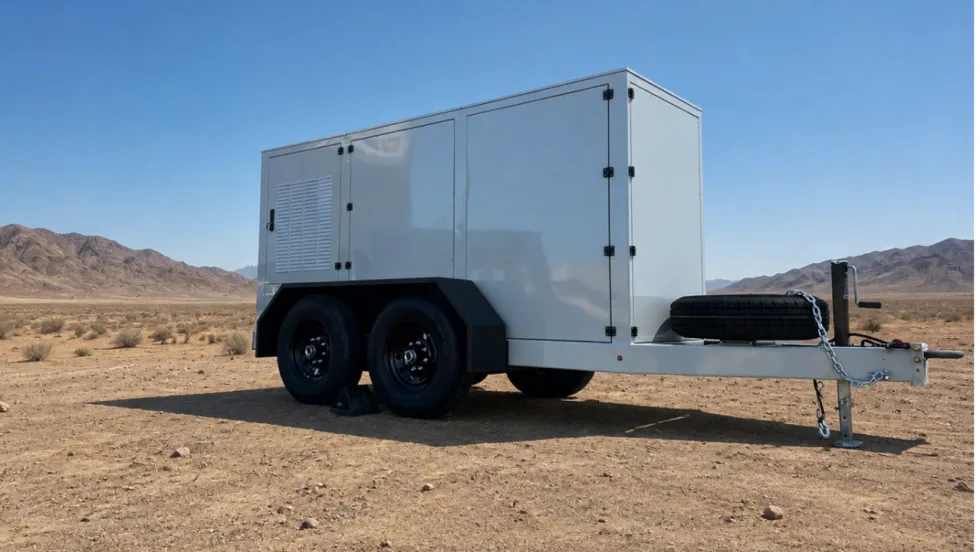
Xos Hub Surpasses One Gigawatt-Hour of Energy Delivered in the Field
A single Xos Hub has surpassed one gigawatt-hour of energy across more than 33,600 charging sessions in the field, demonstrating performance that supports Xos' expansion across new products and markets.
Read More →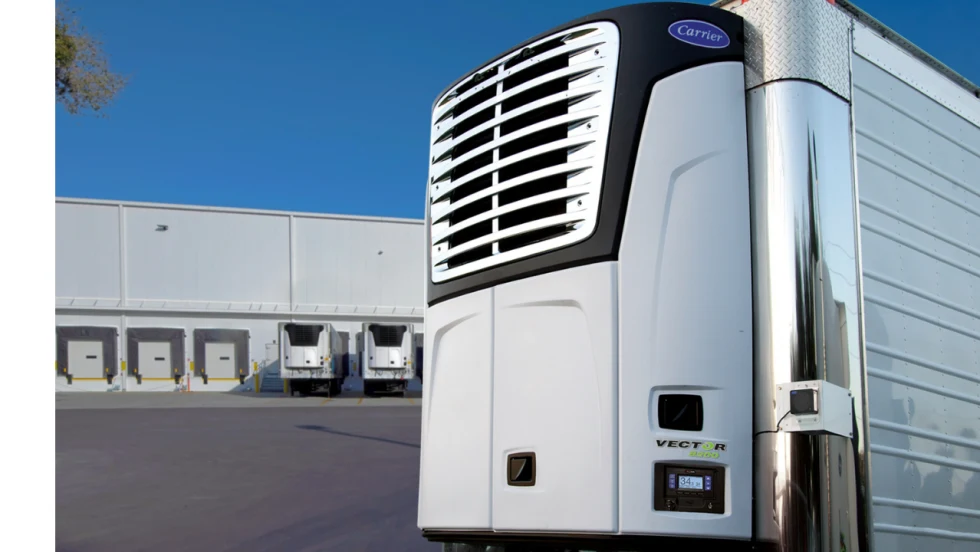
Carrier Transicold Launches All-Electric Vector 8200 TRU for Diesel-Free On-Site Cold Storage
Carrier Transicold’s first engineless multi-temperature TRU helps fresh- and frozen-food fleets add supplemental cold storage capacity during seasonal peaks.
Read More →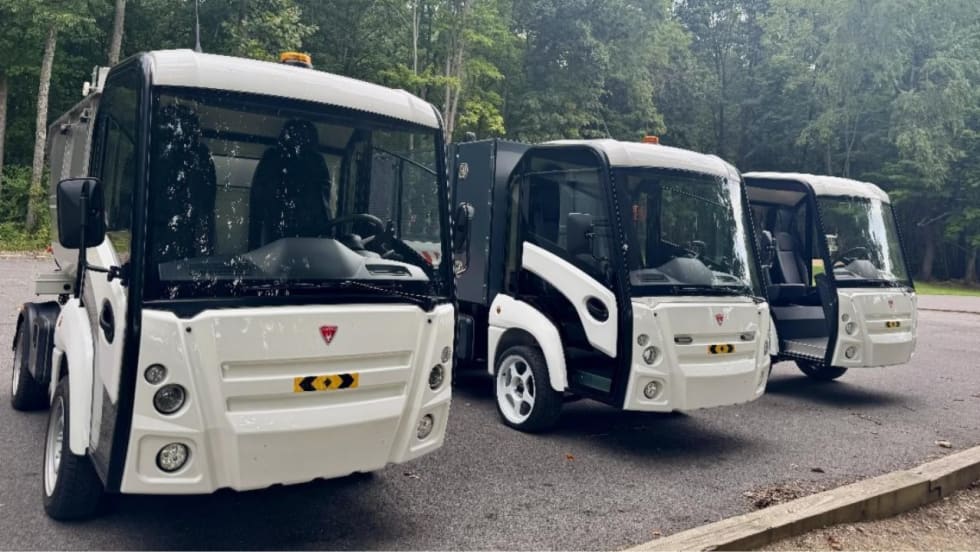
Narro Trucks Introduces Electric Utility Vehicle
Narro Trucks officially launched its operations on Aug. 20 and hosted a ride and drive to showcase its electric truck, which will be produced in Virginia.
Read More →
Samsung SDI Takes Full Control of GM Battery JV as Indiana Plant Pivots to Energy Storage
Samsung SDI is taking full control of its Indiana battery plant with GM, marking a major shift from the EV-focused joint venture Charged Fleet first covered in 2023.
Read More →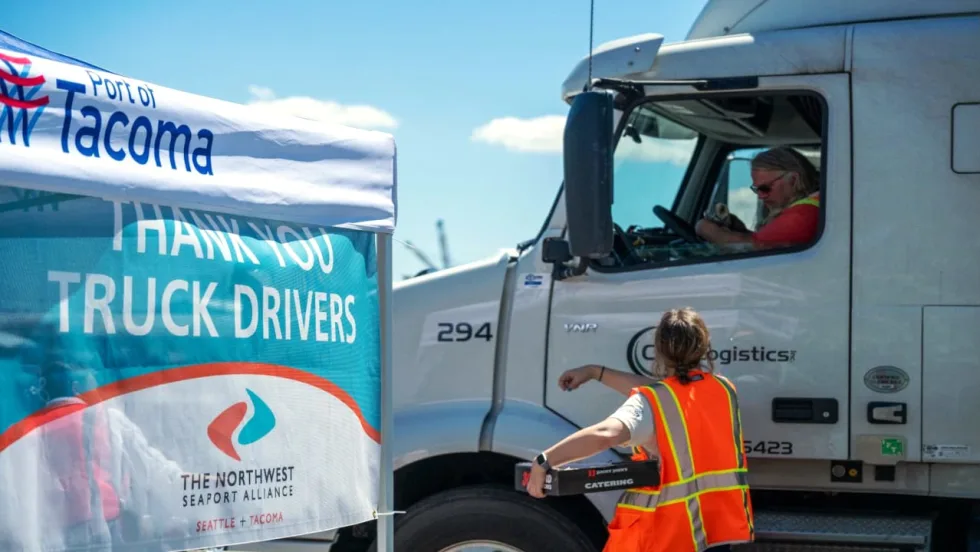
NWSA Taps CALSTART to Administer Zero-Emission Drayage Assistance Program
CALSTART will provide free technical assistance services to drayage fleets serving the Ports of Seattle and Tacoma and looking to transition to cleaner technologies and help decarbonize freight hubs.
Read More →
EV Fleet Reality Check: What Operators Wish They Knew Before Electrifying Their Work Vans
Electric work truck upfits bring new compatibility questions. Learn how parts availability, OEM guidance, power demands, and route planning can affect fleet performance.
Read More →
Peterbilt Expands Sourcewell Partnership with Electric Vehicle Lineup
Peterbilt Motors Company’s cooperative purchasing agreement with Sourcewell and its Canadian partner, Canoe Procurement Group, now includes including Peterbilt's battery-electric vehicle lineup.
Read More →