




Ford’s Strategy to Increase Commercial Vehicle Sales with End-to-End Services
A new commercial vehicle (CV) strategy is being implemented by Ford to make commercial vehicles a larger part of its business. Executing this new strategy is Ted Cannis, general manager, Commercial Vehicles for the U.S. and Canada.

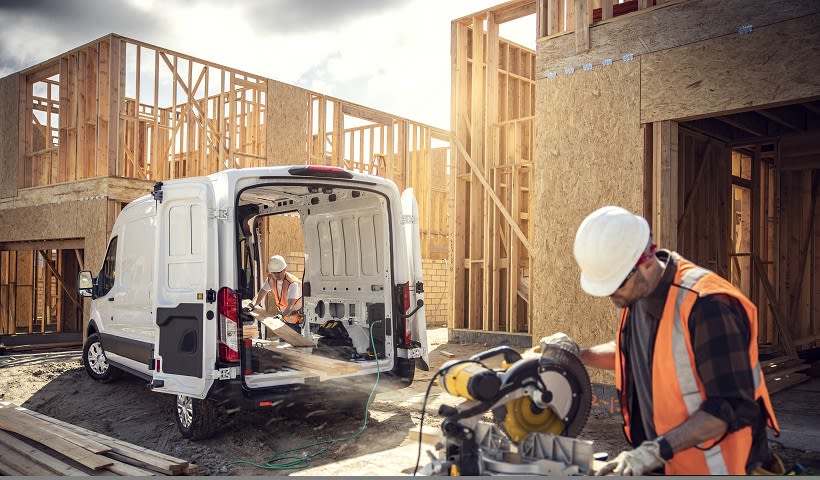
Available on the E-Transit will be the Pro Power Onboard, which turns the van into a mobile generator with up to 2.4 kilowatts of available power to help customers use and recharge job site tools ranging from belt sanders to miter saws.
Photo: Ford
On April 16, 2020, Ted Cannis was appointed general manager, Commercial Vehicles, for the U.S. and Canada for Ford Motor Co., reporting to Kumar Galhotra, president, Americas & International Markets Group.
In this newly created position, Cannis is tasked to bring together dedicated resources needed to drive the Commercial Vehicles business forward. According to Ford, this new business aligns functional areas to deliver holistic customer solutions and optimizes operations to improve alignment with potential partners. AF recently interviewed Cannis to learn more about his plans to lead Ford’s Commercial Vehicles business unit. Below are excerpts from a longer interview.
AF: What is Ford’s vision to grow its Commercial Vehicles business and why is it being implemented?
Cannis: This is occurring because of external and internal changes. Externally, a big change is happening with a massive shift to electrification and you can see this shift in states like California and Colorado. That’s a big change and Ford wants to lead. We want to lead by having the first electric pickup and electric van targeted to commercial customers.

Ted Cannis
This is part of the change, the other part is the move to digital connectivity, which is occurring across the industry. Many small- and medium-sized fleets are not yet moving in that direction, so we are not anywhere near full adoption yet. The other change is over-the-air updates to keep improving commercial vehicles throughout their service life for our customers. These are some of the external changes.
Then internally there are big changes occurring. If you look at the core truck and van business, Ford has about a 45% share. Ford owns work in America. We have a huge base to build upon, we have strong commercial vehicle centers, more than 90% of them are EV-certified today and counting, and a great combined engineering and commercial team that knows our customers.
While this is something we’ve already built, how do we build it bigger? Our CEO Jim Farley always talks about leaning into our strengths. We want to build beyond our strong base of vehicles and move into the entire ecosystem of services. We would like to provide businesses with end-to-end services.
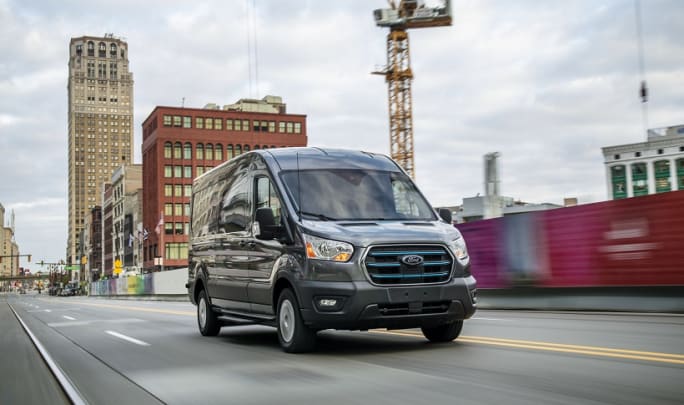
“As the capabilities of the batteries and tool sets have improved, and without having the battery size compromising package/cargo space or engine-bay space, we can give the space that the customer wanted, in both the passenger and commercial vehicles, without subtracting from the job to get done,” said Ted Cannis, general manager, Commercial Vehicles for the U.S. and Canada for Ford Motor Co.
Photo: Ford
Now that our vehicles are connected, we want to provide the connectivity and data services that every business needs to help them thrive. We want to provide them with end-to-end solutions, including charging solutions for the new world of electrification. We want to provide end-to-end updates so the software gets better and functions improve. Over time, we will improve that capability with better prognostics and data-enhanced solutions.
We also see more opportunities in the financing and parts businesses. We’ve been growing this side of the business, but with dedicated resources that we’re adding, and with the new approaches in the financing side, as well from end-to-end, we think there’s a lot more to expand beyond our fantastic base of trusted vehicles.
AF: On the electrification side, can you give us an idea on product rollouts? What vehicle lines or segments are you looking to electrify?
Cannis: At the end of 2020 we will launch our F-150 hybrid model. We wanted to make it better. How do you make the product better? We don’t want to do the kind of things a hybrid is known for in the past. We want to make a better truck.
Next, in the 2022 model-year, we will launch the full battery-electric E-Transit and then in mid-2022 calendar-year, we’ll come out with the full battery-electric F-150. There’s a huge demand for these vehicles because it’s just good business in terms of total cost of ownership with lower fuel cost, reduced maintenance costs because there are fewer parts to fix, and more uptime. There’s a strong business case for these vehicles in terms of sustainability, plus the customers of these businesses are demanding it as well.
We just completed a survey in which millennials said they were willing to pay more for a parcel delivery if it was delivered in a sustainable manner. We’re seeing a lot of demand for these vehicles from our customers at small, medium, and large businesses.
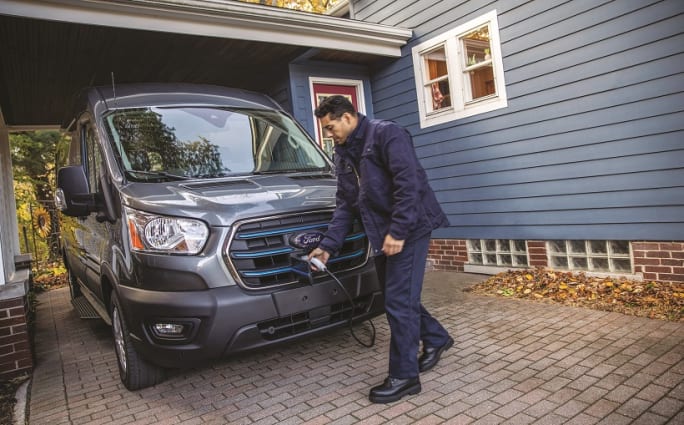
E-Transit features both AC and DC fast charging, coming standard with a Ford Mobile Charger that can plug into a normal 120-volt outlet for slow and steady charging or into a 240-volt outlet for faster charging. Those seeking the fastest home charging solution can purchase the Ford Connected Charge Station, which can fully charge E-Transit in eight hours.
Photo: Ford
It’s a new cost-of-ownership model, involving new residual values, determining battery life, and calculating fuel savings. Fuel rates are not the same around the country, neither is the cost of kilowatts. It’s a localized solution. Government incentives tend to vary by city, state, and local levels, which you have to match up with your fleet incentives. Then you have to have infrastructure solutions.
At the end of a workday, many employees take these vans and pickups to their homes. You need to sort out the pros and cons of home charging versus depot charging, along with on-the-road charging. It’s a lot of work to get into this space and Ford will provide the help.
AF: How active a role is Ford going to be playing in providing end-to-end solution and the charging solutions? Are you going to be partnering with other companies? What is your strategy?
Cannis: Our goal is a more end-to-end solution for the entire business. When Ford created the new Commercial Business organization, it included our existing North American Fleet team, the Service team, and the Connection Solutions Services team. The goal was to have an end-to-end approach to the business under one leader and across the company, and then invest in additional resources.
We feel we can really produce end-to-end lifecycle solutions for the customers and believe the digital world is allowing that to happen.
AF: What percentage of Transit’s production do you anticipate will be full battery-electric?
Cannis: We see a lot of demand, and that’s why we started planning on these products in my prior role with Ford when I was running electrification. The demand is there. We’re seeing it from the rolling toolbox segment to the final-mile delivery segment.
As the capabilities of the batteries and tool sets have improved, and without having the battery size compromising package/cargo space or engine-bay space, we can give the space that the customer wanted, in both the passenger and commercial vehicles, without subtracting from the job to get done.

“When Ford created the new Commercial Business organization, it included our existing North American Fleet team, the Service team, and the Connection Solutions Services team. The goal was to have an end-to-end approach to the business under one leader and across the company, and then invest in additional resources,” said Ted Cannis, general manager, Commercial Vehicles for the U.S. and Canada for Ford Motor Co.
Photo: Ford
We’re seeing demand across businesses and that’s why we thought about the Transit. When we thought about different variations, we decided we’re going to do a lot. We’re going to cover high, medium, and low roofs. We’re going to do the three body lengths. We’re going to do chassis cab cutaways, the whole deal, because we’re seeing demand from all those different applications.
AF:What is your vision of the future of digital connectivity in fleet? How do you see it evolving?
Cannis: Our customers in the commercial business are running businesses, whether it’s an individual owner-operator plumber or someone running 1,000 vehicles. They run these businesses on numbers. They have a monthly operating cost.
This is also true on the battery-electric side, because why would you buy a vehicle with a 300-mile range if your route is 100 miles? It doesn’t make sense. You don’t buy a 10-times-bigger engine or a bigger payload than you need to run. That just means more fuel consumption. So, matching it up for the commercial customer is a lot better.
Where we see the opportunity is with the small and medium businesses. They’ve been slower to update and we tell them let Ford bring you the tools. That’s where we have the opportunity.
And to be honest, we have the special sauce on the vehicle codes. If you own 45% of the business, such as Ford, in multiple locations, you know the prognostic side. You can see the trends in the data. You know where to fix the solutions, and you have the inside sauce. That’s what we’ve done in the Connected Services space with our telematics solutions and our recently launched fuel card. We see a huge opportunity.
AF:Will your digital connectivity offering provide you the ability to get involved with field-force-productivity management? I think that’s going to be a huge play in our industry in the coming years.
Cannis: We are 100% aligned. Our Enterprise Connectivity team is developing these fleet commercial solutions. It’s some of the basics today that apply to all fleets, but there is a lot of specific vocational opportunities to do the job better. You can extend it far beyond by letting the customer get data that helps them run their business.
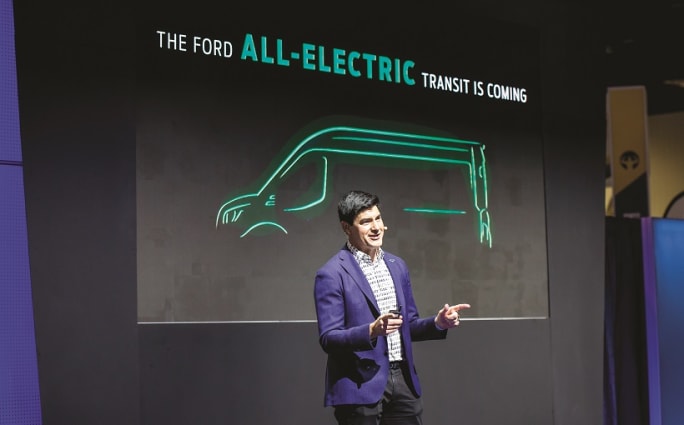
Ford will store vehicle data on its Transportation Mobility Cloud, which was developed to allow it to integrate with other clouds. “Connectivity is key because it enables integrations with customers and their businesses,” said Ted Cannis, general manager, Commercial Vehicles for the U.S. and Canada for Ford Motor Co.
Photo: Ford
We would make that data available to them. Obviously, our commitment to data privacy is absolute at Ford. The chairman’s name is on the building, so the integrity is never compromised here. But we will make that data available to the commercial customers so they can run a better business.
AF: Another aspect of this discussion is the over-the-air updates. Can you elaborate on this service?
Cannis: Absolutely. The new F-150 that has new end-to-end over-the-air updates that allows our customers to decide when they want to do updates to improve the capabilities of their vehicles.
We can send improvements and solutions faster once we detect them, because we can leverage that anonymized data. And we can also send out updated features to improve the vehicle operations, either paid or free. That’s a huge opportunity offered by connected vehicles now that all our vehicles have modems in them.
AF:Where will you house all the data being generated by your vehicles?
Cannis: Ford has its Transportation Mobility Cloud that we developed to allow us to integrate with other clouds. As city solutions are more and more connected, you will be able to link between cities, different services, third parties, and the cloud with safety and security across that network with a firewall straight into the vehicle.
That connectivity is key because it enables those integrations with customers and their businesses. We monetize it when there’s consent. Others can monetize services through a third-party at the customer’s selection. If they have something that they want to get data through a third-party and it’s an authorized third-party from us, then we make that data available to that third-party at the customer’s choice.
AF: One of the topics you brought up that’s intriguing is how you see this as offering more opportunity for the parts business. How do you see it stimulating your part business?
Cannis: The focus is both internal combustion and battery-electric, there will be the same team for those two pillars. In the electrification world, the internal combustion part is going to be there a long time, especially with 12 years being the average age of a vehicle on the road these days.
With internal combustion you have things like the over-the-air updates or prognostics. Sending out the same service maintenance schedule to everybody doesn’t make sense if you’re driving five times the number of miles than the other guy.
We can optimize those schedules for particular use cases. If you’re working in the oil fields of Alberta, that’s something different than on-road use doing local plumbing in the neighborhood.
There’s a lot of those cases where we can see opportunities to optimize the business for the customer, and link up that support with a real focus on uptime.
We are going to be super-focused on uptime, putting the resources behind it, and if we’ve got the parts and service capacity linked up to you so you don’t have that dreaded downtime, especially unscheduled downtime, then we can really get more business. If we can offer a simple footprint with those connected digital capabilities to make your life easier, we will get more business.
AF: What’s your long-term vision? Where do you see the fleet business being in 2030?
Cannis: If a business goes to Ford with an end-to-end approach, they’re going to have an asset that allows their business to run better. Ford will be a strategic asset for their companies. Businesses never thought about their vehicles as providing a way to learn about their overall business. But today’s vehicles are sensors on wheels that can provide insight into customers’ operations that they never had before.
In 10 years, companies will be operating much cleaner fleets. We’re investing in it. We believe the climate science, absolutely, and we’re going to make it work for our customers. We want to be the leader. This is why some of us who are currently in the internal combustion business have signed on with California, to make that happen. We’re all in.
The same is true with digital connectivity. When you look at the cameras and driver-assisted technologies, how do we improve integrations? You currently have the modems and cameras, but how do you make the unit work as one? You’re going to see a lot more of that. It will improve employee safety and the safety of everybody around the vehicle, which, of course, ultimately helps increase uptime.
Originally posted on Automotive Fleet
More Vehicle Insights
Mack Defense Achieves Cybersecurity Maturity Model Certification Level 2
After an assessment conducted by an authorized Certified Third-Party Assessment Organization (C3PAO), Mack Defense has achieved Cybersecurity Maturity Model Certification (CMMC) Level 2.
Read More →
GM Unveils New Sixth-Generation Small Block Engines for 2027 Light-Duty Pickups
General Motors unveiled two new small-block engines, backed by extensive real-world validation and more than 70 years of small-block V8 manufacturing experience, as part of the engine portfolio for the 2027 Chevrolet Silverado 1500 and GMC Sierra 1500.
Read More →
Chevrolet Silverado 1500 Fleet Guide Specs Capability and 2027 Model-Year Updates
The next-generation 2027 Chevrolet Silverado 1500 brings new V-8 engines, updated technology, expanded safety features, and a fleet-focused Work Truck. Here’s what commercial fleets need to know so far.
Read More →
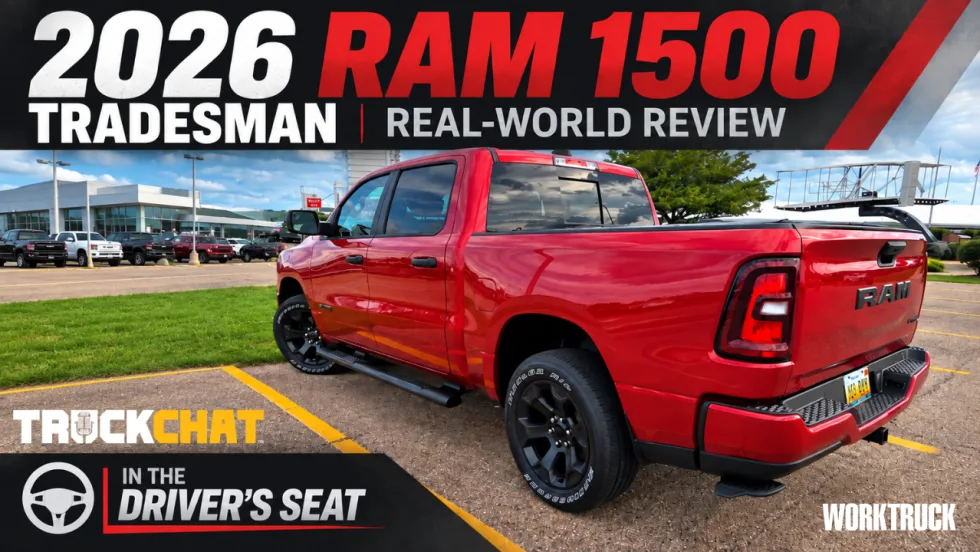
2026 Ram 1500 Tradesman Put to a Real-World Fleet Test
A few days behind the wheel of a 2026 Ram 1500 Tradesman turned into a test of visibility, parking, work-ready features, and even severe-weather driving.
Read More →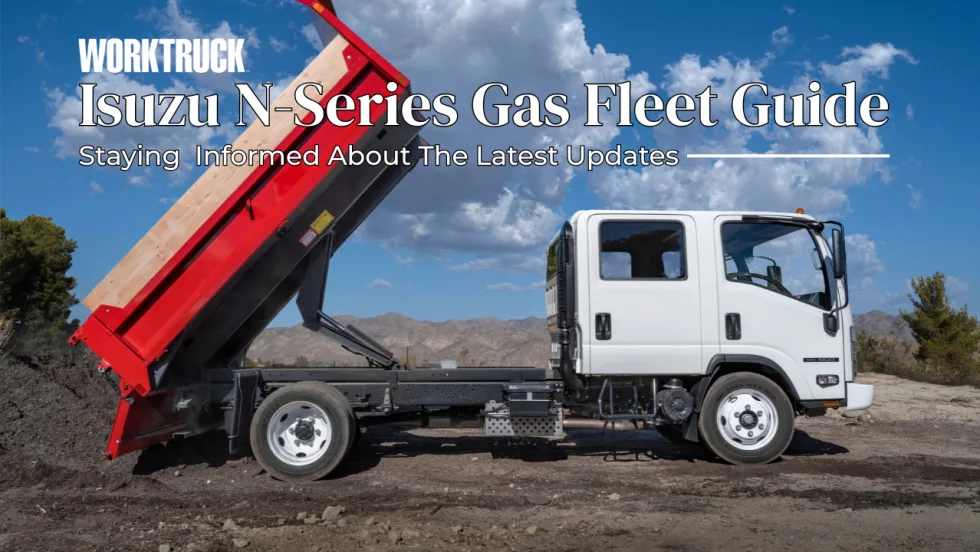
Isuzu N-Series Gas Fleet Guide: Specs, Capability and 2027 Model-Year Updates
Explore Isuzu Truck North America’s N-Series Gas fleet specs, engine performance, GVWR and payload capability, configurations, chassis dimensions, work-focused features, and 2027 model-year information.
Read More →
Ram ProMaster City Fleet Guide Specs Cargo Capacity and 2027 Updates
Work Truck’s Ram ProMaster City Fleet Guide tracks the latest specifications, cargo capability, configurations, fleet technology, pricing, and model-year updates for Ram’s mid-size commercial van.
Read More →
Ford F-150 Fleet Guide Specs Capability and 2026 Model-Year Updates
Explore 2026 Ford F-150 fleet specs, engines, towing and payload capability, configurations, work features, technology, and model-year updates.
Read More →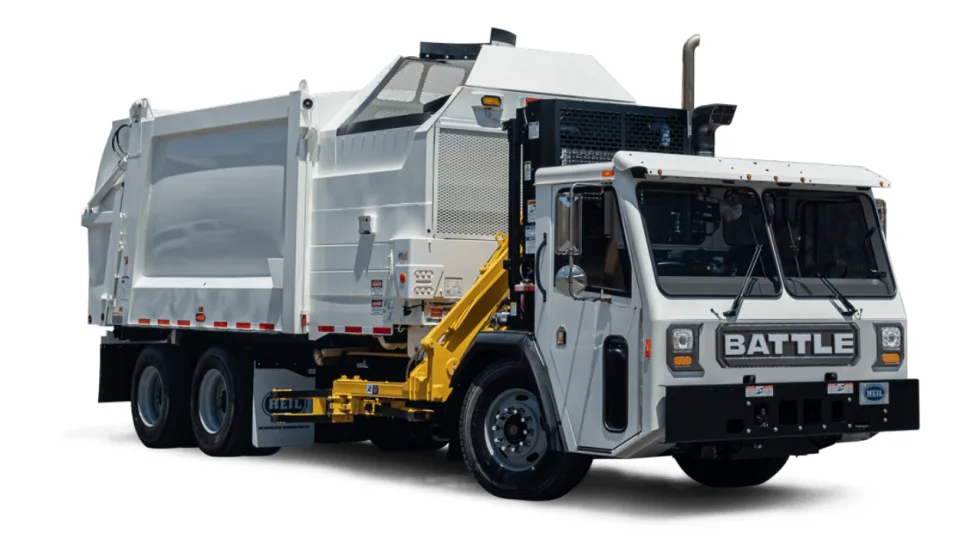
TCI Now Sells & Supports Battle Motors’ Vocational Trucks
Midwest truck dealer Truck Centers, Inc. (TCI) has expanded its transportation solutions with sales and service support for Battle Motors’ heavy-duty vocational trucks at locations in locations in Indiana, Illinois, and Missouri
Read More →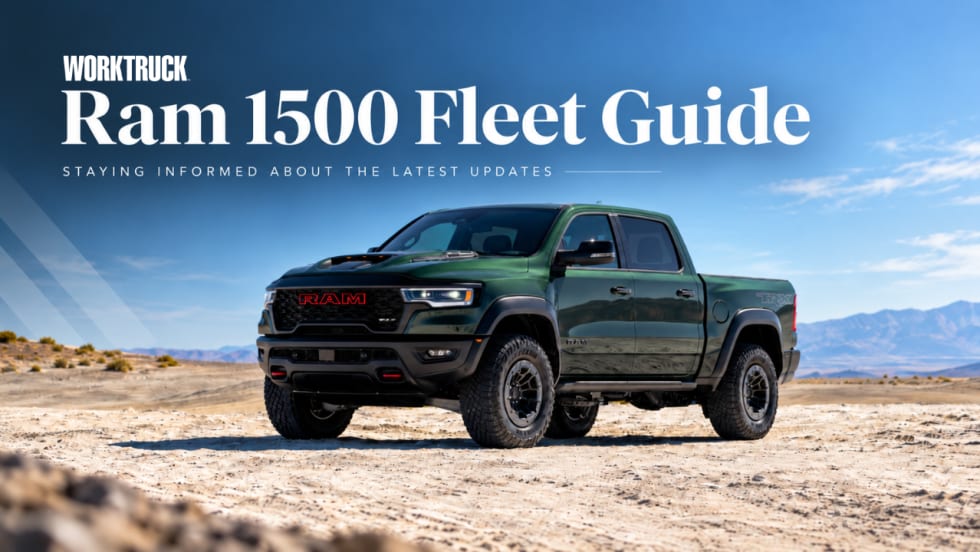
Ram 1500 Fleet Guide Specs, Capability and 2027 Model-Year Updates
Explore always up-to-date Ram 1500 fleet specs, engines, towing and payload capability, configurations, technology, pricing updates, and model-year changes.
Read More →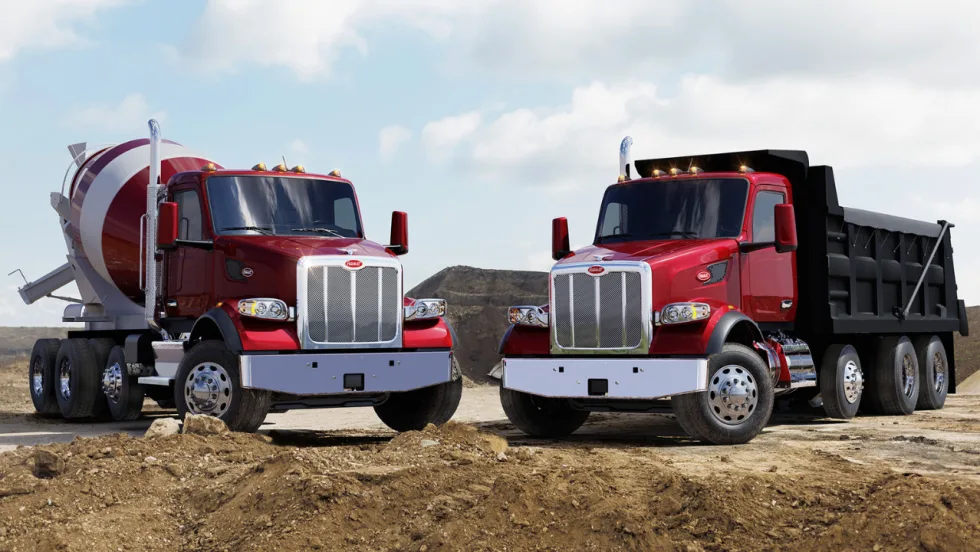
Peterbilt Trucks Equipped with Paccar TX-18 Pro Boost Efficiency for Maryland Fleet
Patuxent Companies is replacing aging trucks with the Peterbilt Model 567 and Model 589, specified with the Paccar TX-18 Pro 18-speed automated transmissions, and is reporting an 8% to 10% improvement in fuel economy.
Read More →