




Fleet Tips: How To Prepare Electric Vehicles for Winter Months
Fleet 101: The History of Vehicle Battery Tech
How did the modern truck battery come to be? Why can't a truck battery power an electric vehicle? Check out the history of the battery that powers your truck and what makes it different from electric needs.
by Jackie Horsfall
February 28, 2023
Before the growth of electric vehicles, batteries options were fewer. Today, a lot more goes into truck and electric batteries than ever before.
Photo: Work Truck/Canva
7 min to read
Drivers, start your engines! But first, you need a battery for that. The evolution of vehicle technology comprises many parts, but the implementation of the car battery forever set in motion the vehicles we know today.
What does the future look like with the consistent adoption of electric batteries in trucking?
Traditional Batteries – What Are They and What Do They Do?
Different vehicle batteries serve multiple functions; some vehicles may need one or multiple batteries.
As a refresher, the most common battery used for traditional vehicles (meaning gas-powered vehicles that use an internal combustion engine) is a lead-acid battery, according to Napa Auto Parts.
The battery is made up of lead plates submerged in a solution of sulfuric acid and water, causing a chemical reaction allowing the battery to produce electricity. Some of these batteries require maintenance (needing to add distilled water to the battery), while others are sealed and don’t require further maintenance.
Batteries for traditional cars are used for starting your vehicle, thus activating the engine. After that, while the engine is running, the alternator takes over a lot of the heavy lifting. The alternator generates power for the vehicle to power multiple accessories, such as the radio, while also recharging the battery.
Digging Deeper: Truck vs. Car Batteries
To understand how batteries evolved to meet the needs of trucks, let’s discuss what trucks need in the first place (vs. what a car needs from a battery).
In simple terms, bigger things need more power. Class 1-8 trucks are designed to endure more extremes than a car because everything from trucks to semis are built to do tough jobs.
According to Tesla Power USA, the main difference between a car battery and a truck battery is how they are designed and how fast they deliver current. That also encompasses:
Battery ratings.
Battery life.
Cranking power.
Performance.
Recharge time.
Endurance in extreme weather.
Durability to combat rough terrains and high vibrations.
For battery ratings, cars are rated for cold cranking power, and trucks are rated for amp hours. As far as their design, the supply current plates are thicker on a truck battery for durability and increased electrical demands, which are needed for the truck to operate the many additional add-ons such as lift gates or travel essentials like onboard crock pots.
All this extra power allows drivers to feel safe and secure that their vehicle can work in diverse conditions with proven reliability.
The Evolution and History of the Traditional Vehicle Battery
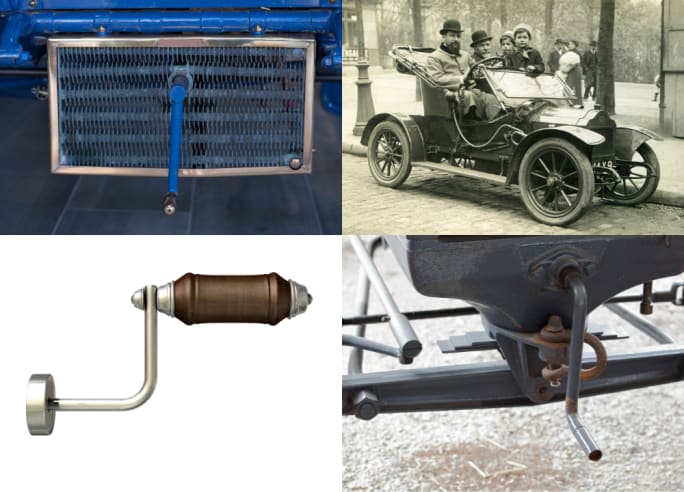
In the early days of the automobile, batteries were not utilized to start your car, instead a hand crank was provided.
Photo: Work Truck/Canva
In the early 1900s, batteries weren’t needed for vehicles. Instead, you had to use a manual mechanical hand crank system to start your car. There were also no electric demands of an automobile, such as radios or headlights.
But the manual hand crank was a pain. It took a lot of strength to start, and injuries came with it (such as broken wrists). According to Clore Automotive, we can thank Henry M. Leland and Charles Kettering at Cadillac for taking charge of the effort to create an electric starter. By 1920, cars regularly came with electric starters powered by a lead-acid battery.
From the 1920s into the 1950s, vehicles required less voltage to operate and used a 6-volt battery. As vehicles became bigger and needed more energy, 12-volt became the standard, according to AAA.
The next significant advancement for batteries came in 1971 with the invention of the maintenance-free lead acid battery. Continental Battery notes that a big advantage to this is eliminating the need to add water with the invention of sealed lead-acid batteries.
Getting into the 1990s and 2000s, the electrical needs for cars kept increasing. The introduction of AGM (Absorbed Glass Mat) batteries into the automotive industry helped to address some of those concerns.
The benefits of the Valve Regulated Lead Acid (VRLA) batteries included not heating up as easily during the charging and discharging cycle; they offered a deeper discharge and more vibration resistance, per Clore Automotive.
What About Electric Batteries? A Quick History
According to the BBC, electric vehicles (EVs) were invented alongside traditional cars, with the first being invented more than 100 years ago; early electric car batteries were made of nickel-iron. In the early 1900s, EVs were extremely popular: they were easy to drive and well-suited for short trips.
The Department of Energy reported that by 1900, electric cars accounted for around a third of all vehicles on the road.
So, what happened? The Idaho National Laboratory attributed the decline of EVs to several factors, from roads to tech and more:
Better road systems led to the need for longer-range vehicles.
The invention of the electric starter made traditional cars easier to drive.
The mass production of engine vehicles resulted in increased affordability and availability.
A discovery of crude oil in Texas that made gasoline more affordable.
Several years went by, with a sprinkle of inventors here and there working on improvements to make the adoption of EVs more accessible. A significant change then came in the 1990s.
With the passing of the Clean Air Act and the 1992 Energy Policy Act came a renewed interest in electric vehicles, according to the Department of Energy. Since then, the electric car has surged in adoption, availability, and technology (including lithium-ion batteries).
Modern Day EVs
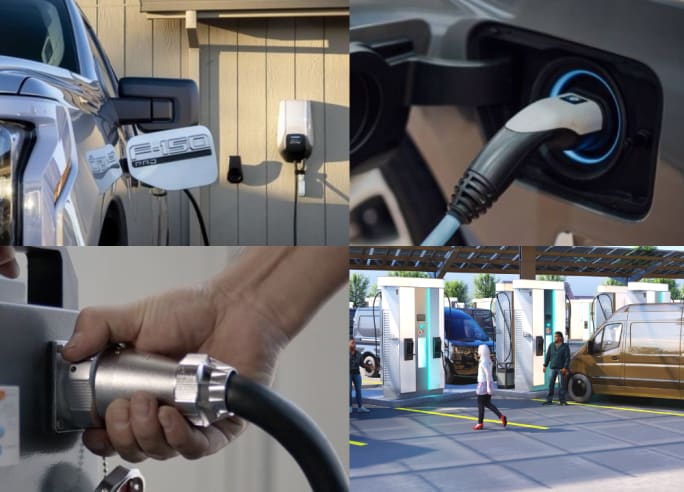
While electric vehicles (EVs) are far from new, their recent surge in popularity has brought a lot of growth and change to the batteries that power them.
Photo: Work Truck/Ford/Voltera/Xos
Today there are three types of EVs, meaning they use batteries differently. The most common type of battery used in EVs is the lithium-ion battery, according to EnergySage. However, some hybrid cars can use the traditional lead acid battery as an auxiliary power source or switch seamlessly between two energy sources.
Here’s a quick overview of the three main EV types, what it powers, and how they get their energy per the Department of Energy and EVgo.
Battery-Electric Vehicles (BEVs): also known as all-electric vehicles, are powered solely by an electric battery pack. This type of electric vehicle does not have a traditional internal combustion engine and instead uses an electric motor to power the wheels. The batteries are charged by plugging the vehicle into an electrical outlet or power source.
Plug-in Hybrid Electric Vehicles (PHEVs): use batteries to power an electric motor, as well as another fuel, such as gasoline or diesel, to power an internal combustion engine or other propulsion sources. PHEVs can charge their batteries through charging equipment and regenerative braking.
Hybrid-Electric Vehicles (HEVs): combines a traditional internal combustion engine with an electric motor and battery pack. The vehicle uses regenerative braking and the internal combustion engine to charge. Regular hybrids cannot plug into the grid to recharge.
Traditional vs. Electric: What Trucks Need
We’ve discussed the energy needs between a car vs. a truck, but what are the benefits of a traditional lead acid battery vs. an electric one?
Let’s turn to our sister publication, Heavy Duty Trucking. HDT has written multiple articles involving electric truck batteries and fleet adoption, so we will break down some of the pros and cons we made before:
Life: Lithium-ion batteries last up to five times longer.
Weight/Efficiency: When it comes to BEVs, they can be 3,000 to 5,000 pounds heavier than diesel to operate. But many fleets have included smaller classes of trucks to be used for shorter ranges and have seen increased efficiency. In fact, Georgia Tech notes that electric urban delivery trucks use about 30% less total energy and emit about 40% less greenhouse gases.
Extreme Weather: Electric batteries tend to decrease in charging speed when temperatures get too low, and if the weather is very severe, there is the possibility of storms affecting power grids and leaving vehicles unable to be charged.
Safety: Although rare, lithium-ion batteries can burst into flames hours or days after damage.
Maintenance: EVs are significantly lower maintenance because you remove the conditions of needing fluid changes, fewer things to grease, and 30%-40% fewer moving parts.
Noise Pollution: EVs have a quieter operation (which benefits neighborhoods with noise ordinances).
Emissions: electric batteries have zero emissions, which helps to reduce air pollution and improve air quality.
The Future of Electric in Truck Fleets
When it comes to specific concerns with electric batteries, something for consideration is the need to train drivers and technicians on how to maintain BEVs properly, address parts shortages, the higher upfront costs, and strict route planning for knowing when and how to charge vehicles.
But, the future looks bright for the electric trucking industry.
With the new adoption of the Inflation Reduction Act in the United States, the trucking industry now has more opportunities for tax credits for adopting, converting, and using electric vehicles in fleets. In addition, many states have also adopted specific programs to encourage businesses to reduce their carbon footprint.
Work Truck: Fleet 101
Fleet is a complex industry with constant change and advancement. From new fleet managers to seasoned veterans, there is always more to learn. Fleet 101 topics are aimed to educate everyone on truck-specific fleet management key topics.
Whether you aren't sure if you need a DOT number, how to choose the right PTO for your truck, want to better understand how to determine truck tire load ratings, or how to calculate commercial vehicle weight and distribution, Work Truck has you covered.
Be sure to bookmark our Fleet 101 page and sign up for our eNewsletter so you never miss an update!
Subscribe to Our Newsletter
More Vehicle Research
2026 Ram 1500 Tradesman Put to a Real-World Fleet Test
A few days behind the wheel of a 2026 Ram 1500 Tradesman turned into a test of visibility, parking, work-ready features, and even severe-weather driving.
Read More →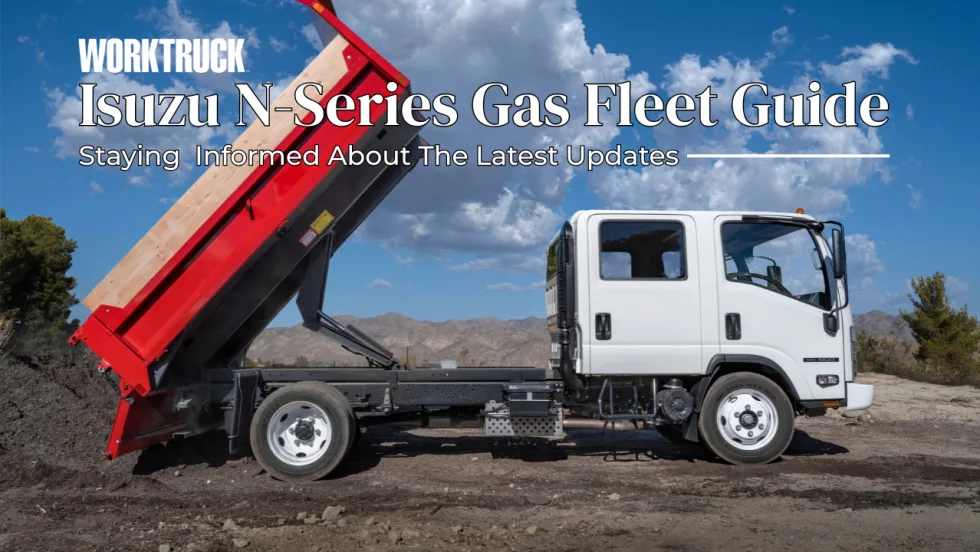
Isuzu N-Series Gas Fleet Guide: Specs, Capability and 2027 Model-Year Updates
Explore Isuzu Truck North America’s N-Series Gas fleet specs, engine performance, GVWR and payload capability, configurations, chassis dimensions, work-focused features, and 2027 model-year information.
Read More →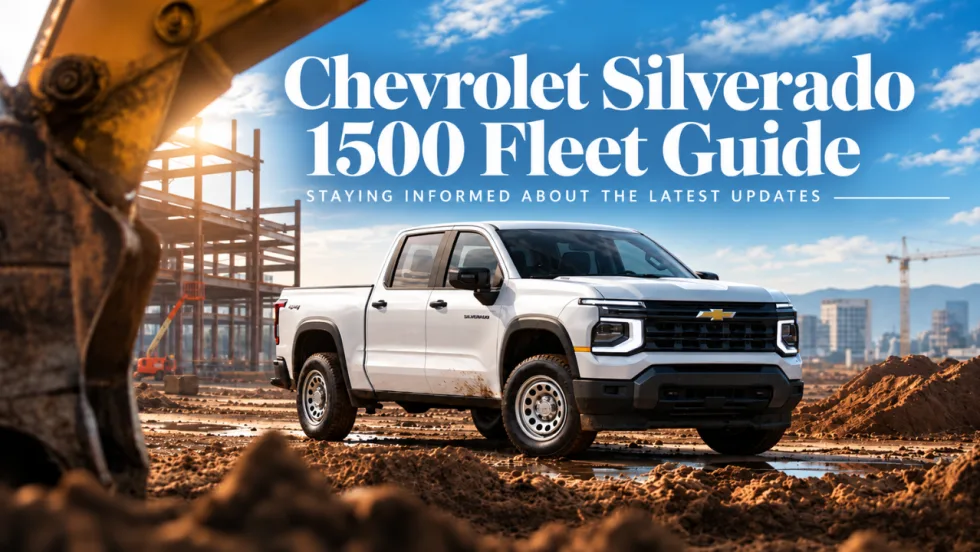
Chevrolet Silverado 1500 Fleet Guide Specs Capability and 2027 Model-Year Updates
The next-generation 2027 Chevrolet Silverado 1500 brings new V-8 engines, updated technology, expanded safety features, and a fleet-focused Work Truck. Here’s what commercial fleets need to know so far.
Read More →
Ram ProMaster City Fleet Guide Specs Cargo Capacity and 2027 Updates
Work Truck’s Ram ProMaster City Fleet Guide tracks the latest specifications, cargo capability, configurations, fleet technology, pricing, and model-year updates for Ram’s mid-size commercial van.
Read More →
Ford F-150 Fleet Guide Specs Capability and 2026 Model-Year Updates
Explore 2026 Ford F-150 fleet specs, engines, towing and payload capability, configurations, work features, technology, and model-year updates.
Read More →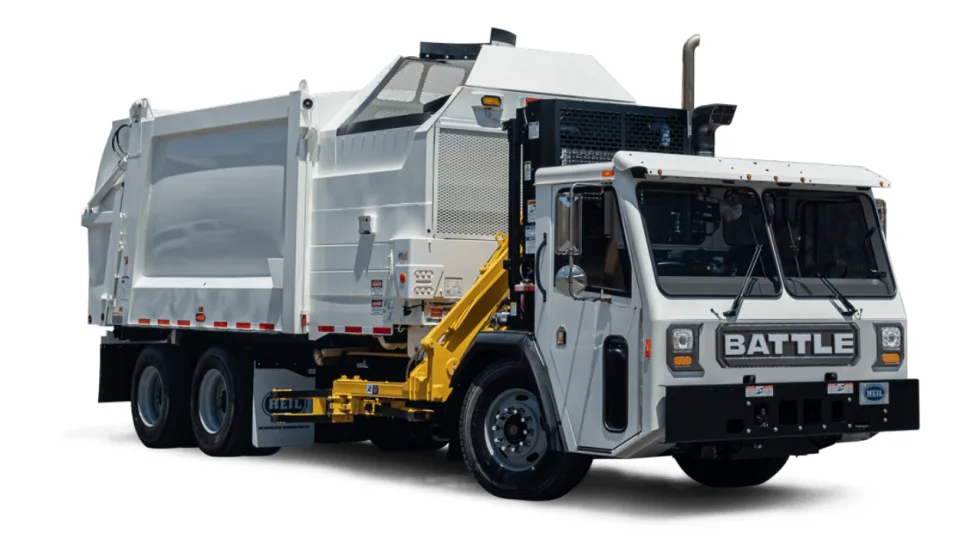
TCI Now Sells & Supports Battle Motors’ Vocational Trucks
Midwest truck dealer Truck Centers, Inc. (TCI) has expanded its transportation solutions with sales and service support for Battle Motors’ heavy-duty vocational trucks at locations in locations in Indiana, Illinois, and Missouri
Read More →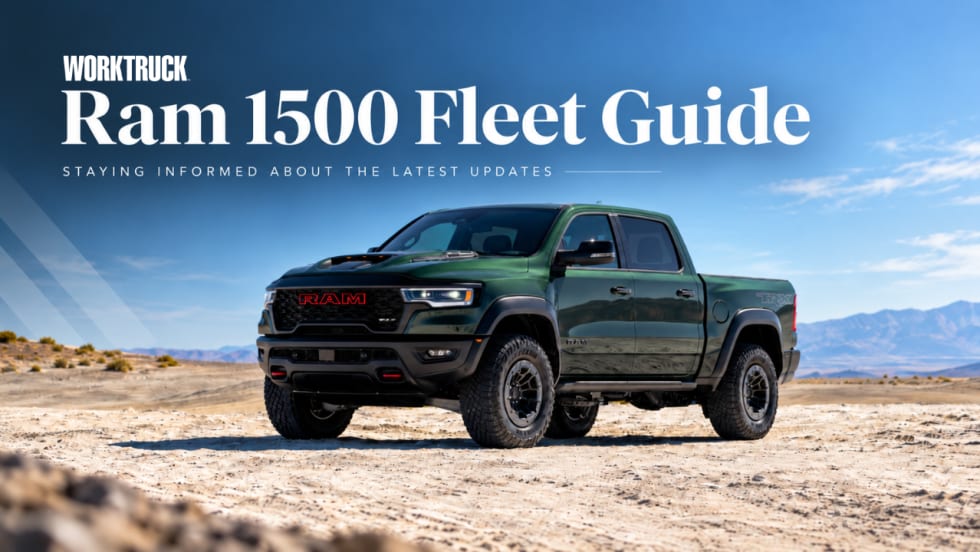
Ram 1500 Fleet Guide Specs, Capability and 2027 Model-Year Updates
Explore always up-to-date Ram 1500 fleet specs, engines, towing and payload capability, configurations, technology, pricing updates, and model-year changes.
Read More →
Peterbilt Trucks Equipped with Paccar TX-18 Pro Boost Efficiency for Maryland Fleet
Patuxent Companies is replacing aging trucks with the Peterbilt Model 567 and Model 589, specified with the Paccar TX-18 Pro 18-speed automated transmissions, and is reporting an 8% to 10% improvement in fuel economy.
Read More →
Stellar Expands into Fire Apparatus Market with Acquisition of Midwest Fire
Stellar Industries has acquired Midwest Fire, a custom fire apparatus manufacturer headquartered in Luverne, Minnesota, with nearly four decades of specialized apparatus experience.
Read More →
Recalls You Need to Know About in August 2026
If you have Altec, Chrysler, Ford, Heil, General Motors, International, Mack Trucks, Paccar, Rivian, Royal Truck, Toyota, US Truck Body, or Volvo Trucks vehicles in your fleet, you should check these important recalls issued by the National Highway Safety Administration.
Read More →