




First Timer's Guide to the Medium-Duty Truck
Forget initial cost. Working with your dealer to optimize a truck for its intended application will provide the lowest overall cost of ownership over its lifetime

Medium-duty trucks are purpose built for an application and an industry.
Photo: Work Truck
Are your loaded vans and 1-ton pickups sitting down on their springs? Do you go through brakes at an alarming rate? Are you making too many trips to pick up supplies? Are you the guy with the trailer that holds up traffic on the hill? Yes? It’s time to look at medium-duty vehicles for your fleet.
With stronger frames and transaxles, bigger, stronger engines, a wider stance and larger brakes, the medium-duty truck has the muscle and axle capacity to hump highway hills and shoulder heavy loads without working up a sweat.
Medium-duty trucks are purpose built for an application and an industry. While most light-duties are manufactured as one unit, medium duties start with a cab and chassis and have a specialized body added on by a separate bodybuilding company.
Cab designs are divided into conventional cab and cab-over-engine (a.k.a. low-cab forward). Most manufacturers offer both designs in regular cab, super (extended) cab and crew cab.
Numerous body types sit on top of chassis. Traditional van, platform and dump bodies are segmented into specialized vocational bodies such as landscape, catering, wrecker, utility, crane and bucket, dry freight, snowplow, armored, refrigerated and more.
Your medium-duty dealer will scientifically specify a truck by defining these variables through a detailed set of questions on how you run your business vehicles.
Spec’ing the Medium-Duty Truck
Your primary considerations are type and size of load, operating environment and annual mileage/years in service. Driver skill-sets come into play as well. Be prepared to give detailed answers, as they will dictate the cab style, body type, engine, transmission and fuel type.
“A good salesman will get a great understanding of the customer’s application, not just sell him something on the lot,” says Larry Savage, a marketing manager for Ford Commercial Trucks.
Medium-duty trucks start at $60,000 (and go up quickly from there) for a new cab, chassis and body. The good news is you’ll make that up in lifecycle cost. Medium duties start old age at 500,000 miles; most last a lot longer.
Paying for Payload
The first question the dealer will ask is “What are you hauling, and how much?”
The type of load determines body type. The weight of the load helps clarify horsepower needs and the type of cab and chassis. Payload weight is determined by GVWR, or the weight of the base vehicle plus occupants, cargo, additional equipment, and tongue weight (if trailering). Payload capacity equals GVWR minus curb weight (the weight of the unloaded truck).
Payload capacity and towing numbers assume no options such as a liftgate, snowplow, or hitch. The maximum available payload weight decreases by the weight of these items. Choosing a four-wheel-drive option will also reduce your available payload.
Really large loads — over 20,000 lbs — require a tandem axle, found on high-end medium-duty vehicles and Class 8 tractor-trailers.
Don’t let your head spin with calculations. Through vehicle specification software, the dealer will help you estimate payload weights right down to the cubic foot on anything from dry gravel to sorghum syrup to live sheep.
The truck frame is another consideration. The frame is the backbone of the truck because it carries the load. Frames are measured by resisting bending moment (rbm), meaning the ability of the frame to twist to a point before it bends and stays that way. A frame’s tensile strength is rated in pounds per square inch (psi). Medium-duty frames start at 50,000 psi; 80,000 and 120,000 psi are common intervals.
Towing Safely Means Stopping Safely
Ever see a trailer being towed in an unsafe manner? It often looks like the “tail is wagging the dog.” Truck and trailer experts recommend stepping up to a medium-duty if you’re towing a fifth-wheel trailer greater than 28 to 30 feet or more than 27,000 lbs.
In cowboy parlance, your old one-ton pickup might give you the “giddyup” but not the “whoa.” Stopping ability is just as—if not more—important than payload capacity. The smaller caliper brakes of the one-ton will not stop the truck and trailer as efficiently as a medium-duty truck. “It’s the coming down the hill where medium duties matter,” says Doug Acker of Mark Christopher Chevrolet in Ontario, Calif.
Air brakes are generally not needed for trucks under 26,000 GVWR, though they are an option. An exhaust brake option is highly recommended with a diesel engine, especially when trailering. Exhaust brakes help decelerate the truck without wearing out the brake pads.
Savage says Ford recommends that trailers over 1,000 lbs have their own braking system. Some states require them for trailers over a set weight, while others use the type of trailer and/or the number of axles as guidelines.
Gear ratios are a factor in towing. Medium duties benefit from more gear package choices than light duties, helping them achieve equal or better fuel economy when towing. The lower the gear ratio, the more torque for hauling, but the slower the wheels turn. Dealers will configure the best gear ratio for your payload and application to hopefully keep your highway rpm out of the gas-sucking range.
Know Your Operating Environment
Are you operating in the city, suburbs, or country? Will you be making a lot of stops in tight environments or taking the load a longer distance? Is the terrain flat or hilly?
If you’re using the truck in the city, giving up a foot or two in body length will get you better maneuverability. For trucks doing a lot of highway miles with few stops, consider extending the wheelbase to carry additional product. A longer wheelbase means more comfort and less bouncing, but at the expense of turning radius.
Cab-overs, with their visibility, maneuverability, and operating ease, are good for residential neighborhoods and narrow city streets. Though some models can carry up to 13,000 lbs., they may not have the torque required to haul loads over hilly terrain. And, as the name suggests, you need to tilt the cab forward to get to the engine. Unsecured items in the cab will spill.
Gas or Diesel?
Trip distance, annual mileage, and time in service affect the choice between a gas and a diesel engine.
Diesel engines cost at least $4,000 more than gas engines, though they hold their value better than any other option — sometimes more than 100 percent of the purchase price. And a diesel engine can last twice as long.
But when it comes to fuel economy, the old math on diesel has recently been thrown off. Diesels still enjoy 20 percent to 40 percent better mileage than a comparable gas engine. But with diesel costing $0.30 more per gallon, the savings don’t add up as quickly.
Buyers must also beware of the 2007 diesel emissions regulations, which will add even more to the initial cost.
Choose diesel for its towing capacity and brute pulling force. The torque advantage of a diesel is suited to pulling heavy loads up steep grades. Choose gas for lighter loads and shorter trips. Go for diesel if you’re running a lot of miles annually and plan to keep the truck for a long time.
Acker asks buyers to consider the driver “bonehead factor” when it comes to purchasing diesel engines. Any inexperienced driver stupid enough to put gas in a diesel tank, or simply misuse or abuse a vehicle in general, will incur a much higher repair bill for a diesel engine than for a gas engine.
Who’s Driving the Truck?
The problems of hiring and retaining drivers these days are not lost on the truck makers. Driver turnover is high, and “the number of companies that have drivers with a commercial driver’s license is almost nil,” says Acker.
Most trucks fall under 26,000 lbs. GVWR to avoid the CDL requirement, and most medium-duty vehicles are built these days for the inexperienced driver. Automatic transmissions are standard to prevent clutch burnout. They also improve resale value.
Options such as a tilt wheel, cruise control, and air-ride suspension make driving easier. Larger wheels are better for ground clearance and comfort. Heavier springs are good for heavy loads but deliver a rougher ride.
When making the jump from a 1-ton dually to a medium-duty, Acker says inexperienced drivers appreciate the familiarity of a conventional cab. Cab-forwards offer a tight turning radius. Some conventional cabs, such as the GMC Topkick/Chevy Kodiak 4500, have turning radii even tighter than those of a standard-wheelbase truck, and a sightline from the cab to the ground that rivals that of a compact pickup.
Ford Super Duty users who are ready to step up into the Medium-Duty F-Series benefit from the commonality in styling, cab design and features found in both sets of trucks.
If you’re teetering on the CDL weight range, spend the extra money to have your driver's CDL certified, recommends Howard Lange of Bill Heard Chevrolet of Antioch, Tenn. It’s not only a safety protection: “It’s a liability issue,” Lange says. “You’ve got trouble if something bad happened to that truck and an attorney finds out that you specifically bought something below [26,000 lbs] to avoid having to pay a CDL-certified driver.”
Ordering-Last Minute Won’t Work
The small-fleet purchasing mantra “I need it yesterday” does not apply to medium-duty. Though large volume dealers will stock some common cab/body configurations such as dump bodies, tow beds, and flatbeds, most medium-duty vehicles will have to be ordered.
Dealers may stock a standard cab and chassis that can be upfitted with your body preference in two to three weeks. If they don’t stock the chassis but can find it in a manufacturer’s or bodybuilder’s pool, a dealer can upfit the truck with a body and have it delivered within four to eight weeks. Acker says Mark Christopher can get a stakebed or van body delivered in two weeks, and a dump truck in four to six weeks.
A cab and chassis that needs to be factory-built and then shipped to a bodybuilder is a different story. Factories need time to build. Savage says Ford’s order-to-delivery time for a medium-duty cab and chassis is six weeks as of December. Acker has had some custom $30,000 bodies built in three to four months, though a six-month turnaround for a custom job is not unheard of.
The Dealer Relationship
If you don’t have much experience at dealerships, this may come as a shock: the people in the commercial truck department really like their jobs. They’ll tell you they like not having to deal with the whimsy of retail customers. They like the business-to-business transaction, one based on need and relationships, not color and price.
“The medium-duty truck market is about as pure a business as there is,” says Acker. “[Medium-duty customers] simply want to accomplish a task. They expect you to be as good at your business as they are at theirs.” It behooves them to treat you well, as your repeat business is their bread and butter. With that in mind, be as prepared as possible with answers to the questions posited here. Any “oh yeah’s” after the truck has been spec’d can throw everything off.
Don’t fight the dealer by overloading and under spec’ing the truck to achieve a lower initial cost. Optimizing a truck for its intended application will provide the lowest overall cost of ownership over its lifetime.
More Vehicle Insights
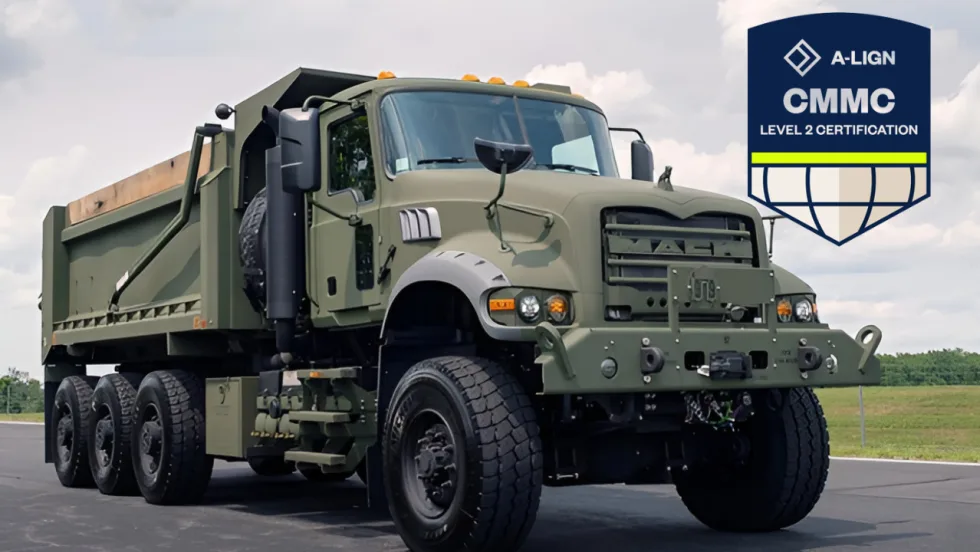
Mack Defense Achieves Cybersecurity Maturity Model Certification Level 2
After an assessment conducted by an authorized Certified Third-Party Assessment Organization (C3PAO), Mack Defense has achieved Cybersecurity Maturity Model Certification (CMMC) Level 2.
Read More →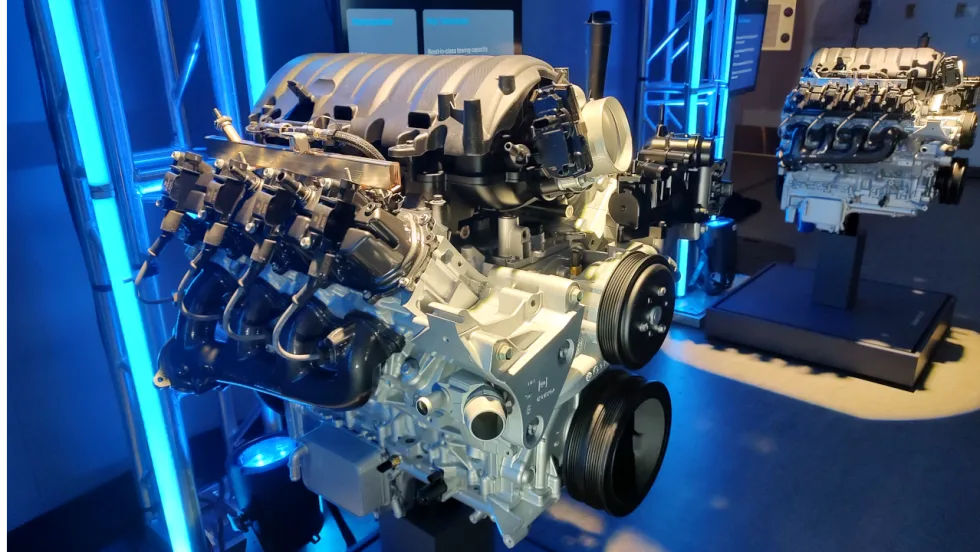
GM Unveils New Sixth-Generation Small Block Engines for 2027 Light-Duty Pickups
General Motors unveiled two new small-block engines, backed by extensive real-world validation and more than 70 years of small-block V8 manufacturing experience, as part of the engine portfolio for the 2027 Chevrolet Silverado 1500 and GMC Sierra 1500.
Read More →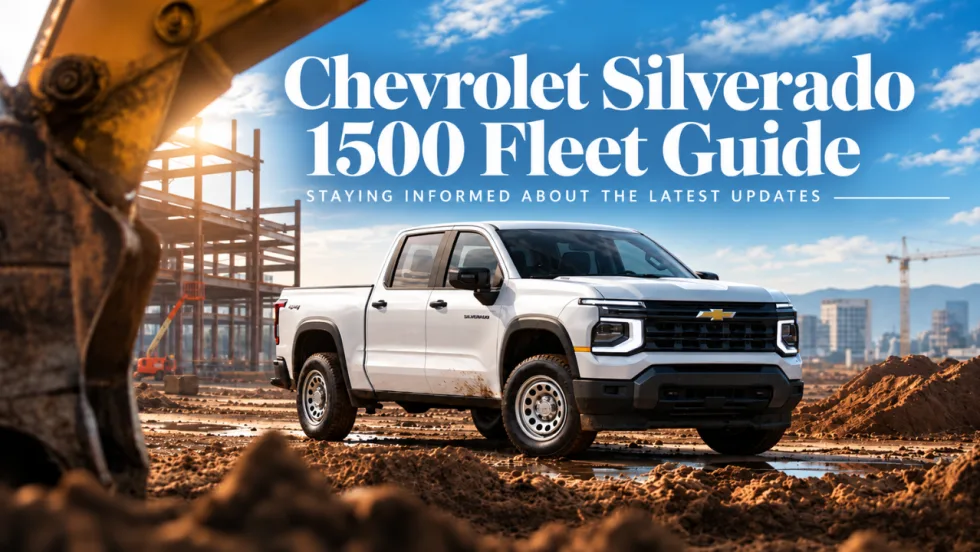
Chevrolet Silverado 1500 Fleet Guide Specs Capability and 2027 Model-Year Updates
The next-generation 2027 Chevrolet Silverado 1500 brings new V-8 engines, updated technology, expanded safety features, and a fleet-focused Work Truck. Here’s what commercial fleets need to know so far.
Read More →
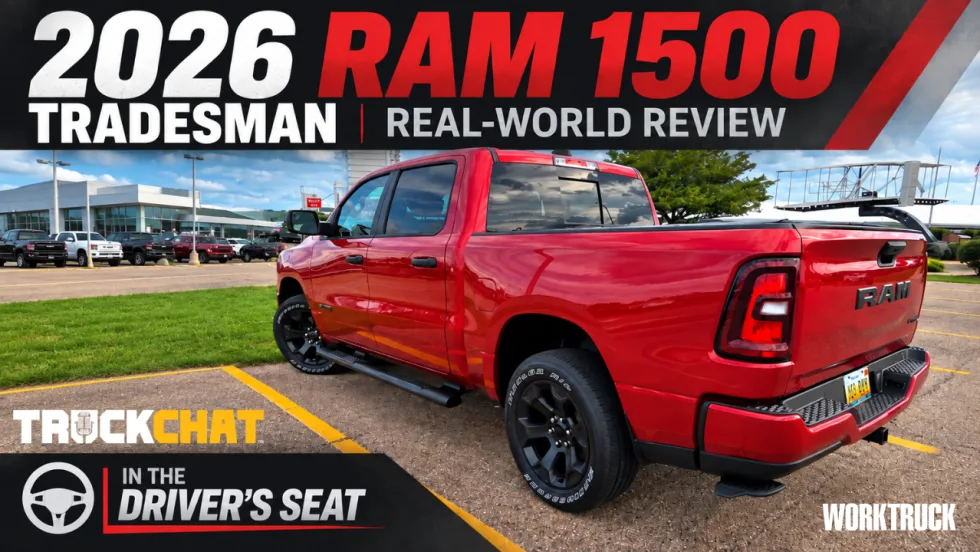
2026 Ram 1500 Tradesman Put to a Real-World Fleet Test
A few days behind the wheel of a 2026 Ram 1500 Tradesman turned into a test of visibility, parking, work-ready features, and even severe-weather driving.
Read More →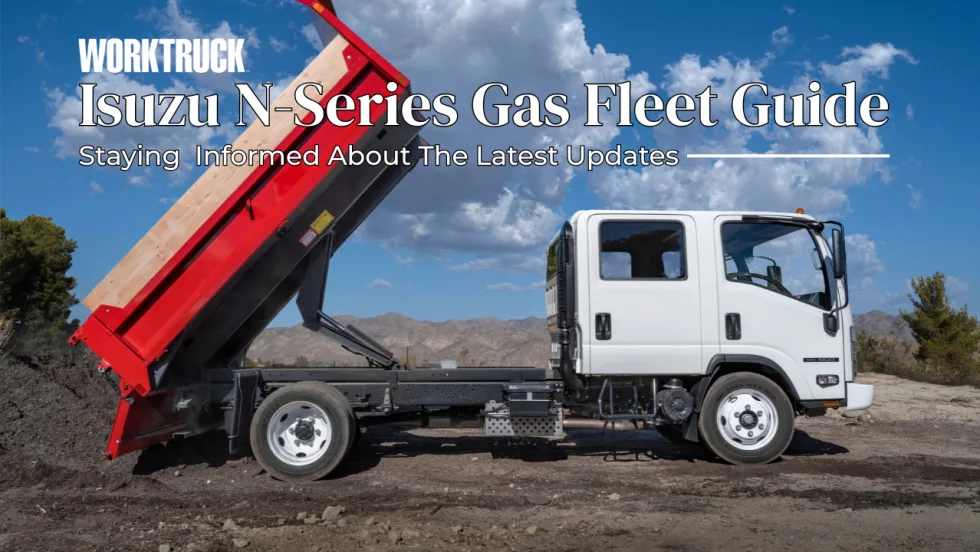
Isuzu N-Series Gas Fleet Guide: Specs, Capability and 2027 Model-Year Updates
Explore Isuzu Truck North America’s N-Series Gas fleet specs, engine performance, GVWR and payload capability, configurations, chassis dimensions, work-focused features, and 2027 model-year information.
Read More →
Ram ProMaster City Fleet Guide Specs Cargo Capacity and 2027 Updates
Work Truck’s Ram ProMaster City Fleet Guide tracks the latest specifications, cargo capability, configurations, fleet technology, pricing, and model-year updates for Ram’s mid-size commercial van.
Read More →
Ford F-150 Fleet Guide Specs Capability and 2026 Model-Year Updates
Explore 2026 Ford F-150 fleet specs, engines, towing and payload capability, configurations, work features, technology, and model-year updates.
Read More →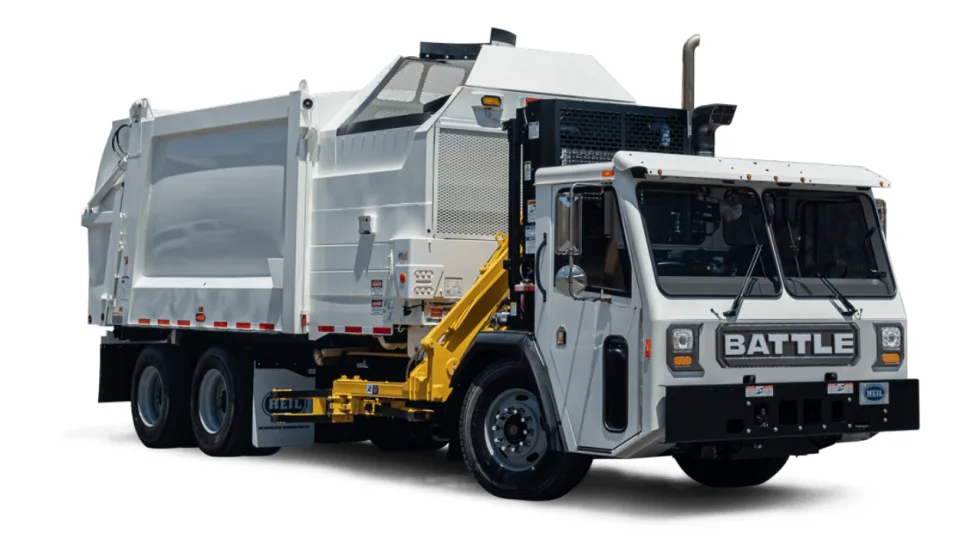
TCI Now Sells & Supports Battle Motors’ Vocational Trucks
Midwest truck dealer Truck Centers, Inc. (TCI) has expanded its transportation solutions with sales and service support for Battle Motors’ heavy-duty vocational trucks at locations in locations in Indiana, Illinois, and Missouri
Read More →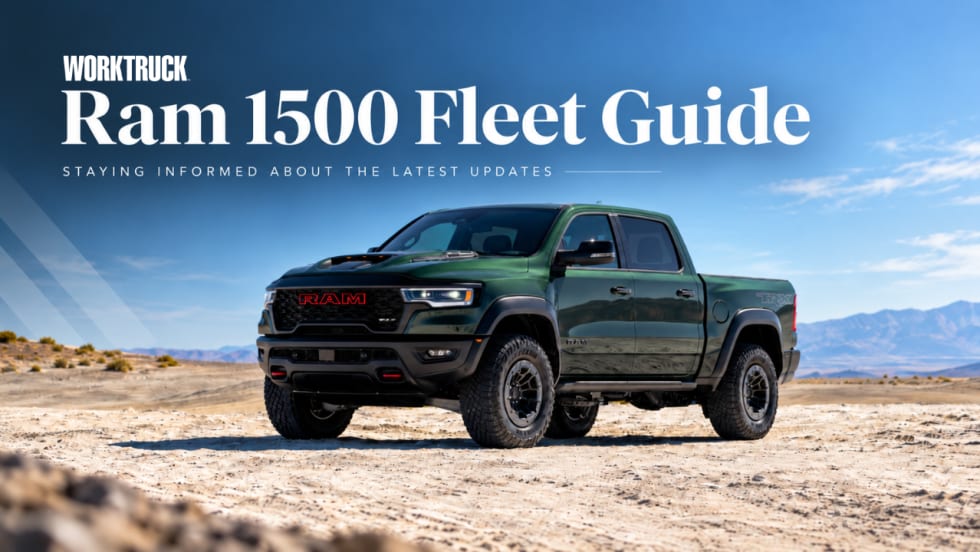
Ram 1500 Fleet Guide Specs, Capability and 2027 Model-Year Updates
Explore always up-to-date Ram 1500 fleet specs, engines, towing and payload capability, configurations, technology, pricing updates, and model-year changes.
Read More →
Peterbilt Trucks Equipped with Paccar TX-18 Pro Boost Efficiency for Maryland Fleet
Patuxent Companies is replacing aging trucks with the Peterbilt Model 567 and Model 589, specified with the Paccar TX-18 Pro 18-speed automated transmissions, and is reporting an 8% to 10% improvement in fuel economy.
Read More →