




Essential Fleet Tire FAQs: Load Ratings, Pressure, Sizes & DOT Standards
Work Truck readers have some excellent questions. We answer truck tire questions about load carrying capacity, DOT ratings, and whether it's okay to change truck tire sizes.
April 11, 2019

Can you mix load ratings on truck tires? Experts weigh in on safe practices for front and rear tires.
Photo: Work Truck
10 min to read
Work Truck readers asked some essential questions about tire safety and performance, and we’ve gathered insights from industry experts to provide the answers you need.
Below we discuss using fleet and truck tires with different load ratings, impact of average traveling speed on tire load carrying capacity, tire pressure and inflation's impact on load carrying capacity, how to tell a tire is DOT rated, and how much truck tire sizes can be changed, if at all.
Q: Is it ever okay to use tires with different load ratings in the front and back of a truck?
A: Overall, most agree it is okay to use tires with different load ratings in the front and back of commercial vehicles, and that it is a frequent occurrence, but did offer some caveats:
“Operators can use Load Range H tires in the steer position while utilizing Load Range G tires in both drive and trailer positions,” said Helmut Keller, Continental’s head of brand and product management for commercial vehicle tires in the Americas region. “Another example is Construction applications. Fleets often utilize 425/65R22.5 tires in the steer position, which are Load Range L tires, while in the Drive position they will utilize Load Range H products in different sizes (11R24.5, 11R22.5, 315/80R22.5, etc.).”
Paul Tatarchuk, special services coordinator for Michelin North America, Inc., agreed that it is possible “as long as the load on the axle does not exceed the maximum tire load carrying capability. Many truck steer tires must carry a heavier load than the trailer.”
And, because of the design of a truck, Walt Weller, senior vice president of Double Coin Tires noted that trucks “may need a 14-ply tire on the steer axle and 16-ply tires on the drive axle.”
In some cases, passenger-type tires come from the vehicle manufacturer on light trucks or vans.
“When time to replace the tire, including passenger-type tires, tires should be replaced with the same size and type of tire as specified on the vehicle placard, as the vehicle manufacturer has taken into consideration ‘in service’ conditions when selecting tires,” said Bob Toth, director, industry relations for Goodyear.
In commercial vehicles, it is acceptable to run tires with different load ratings on the different vehicle positions (steer, drive, trailer).
“Each axle of the vehicle will support a different amount of load. The tire size, load range, and target inflation pressure should be specified such that all tires carry the maximum load that the fleet/truck may carry,” said Phillip Mosier, manager of Commercial Tire Development for Cooper Tire & Rubber Company.
Q: Does average traveling speed impact tire load carrying capacity?
A: Overall, a truck’s average traveling speed impacts a tire’s load carrying capabilities.
“Truck tires have speeds associated with their ability to carry various weights, which is why ‘Speed Symbols’ are used by tire professionals when recommending tires,” said Walt Weller, senior vice president of Double Coin Tires.
By reducing traveling speed, fleets can increase the load-carrying capacity of a tire.
“In some cases, this also requires increasing the tire air pressure. However, for speeds above 20 mph, the increased tire air pressure should not exceed 20 psi above the inflation specified for the maximum load of the tire. Never exceed the maximum load and inflation capacity of the rim,” said Helmut Keller, Continental’s head of brand and product management for commercial vehicle tires in the Americas region.
Keller shared this example: “On a 11R22.5 tire, which is a common tire size, reducing the maximum speed to 50 mph instead of 65 mph can increase the load-carrying capacity by 9%. In this scenario, with two 11R22.5 Load Range G tires in a single configuration on the steer axle, the total load-carrying capacity would be increased from 12,350 pounds on that axle to 13,461 pounds,” she explained.
Especially when on a highway surface, speeds are a factor in “heat buildup” in tires.
“Generally, the higher the speed you are traveling, the higher the operating temperatures the tires are being subjected. If a tire is underinflated, it will run much hotter because of the additional flexing in the tire sidewall. Over time, this will damage the tire and can potentially lead to tire failure. Regularly checking tire pressures is imperative,” said Todd Bergeson, senior manager, Product Planning & Technical Services for Toyo Tire U.S.A. Corp.
And, while vehicle speed can impact tire load capacity, it generally isn’t a factor under normal operating conditions.
“If a commercial truck is operating at less than 50 mph, there can be special allowances made to run with higher loads. In these cases, contact the tire manufacturer should for spec’ing out the acceptable operating conditions (load, inflation, speed),” said Phillip Mosier, manager of Commercial Tire Development for Cooper Tire & Rubber Company.
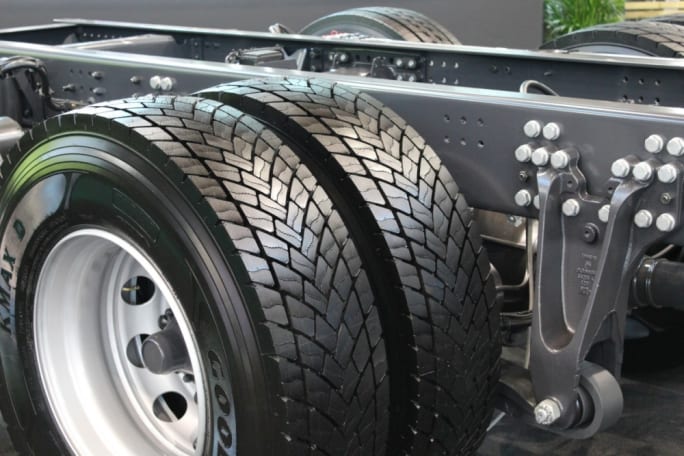
Photo courtesy of Getty Images
Q: How does tire pressure/inflation impact a tire's load capacity?
A: A tire’s load capacity, simply put, “is based on the air volume and pressure it is capable of safely containing,” noted Todd Bergeson, senior manager, Product Planning & Technical Services for Toyo Tire U.S.A. Corp.
“Tires are the vessels used to hold the air. The air inside the tire is what carries the load. A tire’s inflation pressure has a great impact on the load carrying capacity. The amount of inflation pressure inside the tire can either lower or raise the load carrying capacity,” said Phillip Mosier, manager of Commercial Tire Development for Cooper Tire & Rubber Company.
Essentially, tire pressure creates load-carrying capacity.
“This happens because it’s the air inside the tire that carries the weight, not the tire itself,” said Helmut Keller, Continental’s head of brand and product management for commercial vehicle tires in the Americas region.
Walter Weller, senior vice president for Double Coin Tires, agreed. “A tires inflation pressure is everything when it comes to carrying capacity of the tire. The carcass, casing, or tire body merely holds the air that carries the load,” he said.
Proper tire pressure is extremely important.
“Underinflated tires are prone to uneven wear, accelerated wear (especially in the shoulder area), impact damage, sub-optimized handling and stopping power, and even poor fuel economy,” said Bob Toth, director, industry relations for Goodyear. “Overinflated tires are prone to degraded ride comfort, less ability to absorb road irregularities, greater susceptibility to tire/suspension damage due to harder impacts with potholes and road hazards, a smaller contact area with the road, and fast centerline wear due to reduced deflection in the contact patch area.”
According to the Technology & Maintenance Council, a tire 10% underinflated will shorten tread life by 9-16% and decrease fuel economy by 1%. A constant 20% underinflation will shorten tread life by 25%. Improper inflation increases total tire-related costs by approximately $600 to $800 annually per tractor-trailer combination, according to a 2003 study by the Federal Motor Carrier Safety Administration (FMCSA).
“In addition to frequent monitoring of tire air pressure, monitoring at the correct temperature is vital. Warm air takes up more room than cold air. That’s why all reference tables refer to ‘cold air pressure,’ a tire’s air pressure should always be measured after the tire has cooled to ambient temperature. Otherwise, it might read with a higher inflation pressure than what it truly has,” Keller said.
Mosier also recommended operators and fleets pay close attention that their target inflation pressure meets their requirements for the load carrying capacity for each axle position.
One example is a 11R22.5 tire. The maximum load-carrying capacity of a Load Range G tire in a single configuration is 6,175 pounds.
“If this tire is a steer tire, we would assume two single tires on the front axle, for a total load-carrying capacity of 12,350 pounds on that axle. This maximum load-carrying capacity is only achievable by inflating the tire to 105 psi. Tires underinflated vs. this 105-psi requirement have a reduced load-carrying capacity. If both steer tires are inflated to only 100 psi, they could each carry only 5,950 pounds for a total of 11,900 pounds on the steer axle; a 4% decrease,” Keller added.
And remember, recommended tire pressure can change depending on the load carried.
“A common mistake is to use the ‘maximum’ pressure shown on the sidewall when carrying a lighter load and then the tire is overinflated and has a smaller contact patch,” said Paul Tatarchuk, special services coordinator for Michelin North America, Inc.
It’s critical to operate a vehicle at the recommended pressure and not exceed the maximum load.
“The information on tires is always referred to as maximum pressure and load. Vehicles should always run at the recommended pressure and not the maximum unless recommended by the vehicle manufacturer. Vehicle owners can find the recommended pressure in the driver’s front door panel,” said Fardad Niknam, senior director of consumer product planning and product marketing for Yokohama Tire.
Q: How can someone tell if a tire is DOT-rated?
A: Every tire sold in the U.S. must have a DOT number on its side.
“This DOT number signifies the tire was manufactured to the U.S. Department of Transportation (DOT) standard,” explained Walt Weller, senior vice president of Double Coin Tires.
DOT-rated tires must have a DOT serial number molded into the lower sidewall on each side of the tire.
Q: How much can truck tire size be changed on a truck to increase carrying capacity before it is unsafe (if at all)?
A: While some very limited adjustments can be made, the subject-matter experts unanimously agreed that first and foremost, fleet managers should reference Tire & Rim Association and OEM recommendations.
“Fleets should reference the Tire & Rim Association (TRA) standards to select the correct tire and size to safely carry the loads they are hauling,” said Helmut Keller, Continental’s head of brand and product management for commercial vehicle tires in the Americas region. But, the topic can become complicated when it pertains to drive tires.
“If this is a consideration, discuss with your truck tire dealer for the best solution,” said Paul Tatarchuk, special services coordinator for Michelin North America, Inc.
Remember, tires are not the only limiting factor for carrying capacity.
“Tires must be fitted to the vehicles GVW as well as the axle ratings of the vehicle. The wheels also must be considered as most standard wheel have a maximum psi of 130 pounds. Also, bigger tires may not fit in the wheel well or may cause the tire to rub against the body of the truck. Changing truck tire size to increase a vehicle’s carrying capacity needs to be done very carefully, considering specific factors, so that the vehicle remains safe and should involve a tire professional,” said Walt Weller, senior vice president of Double Coin Tires.
One of the most noticeable size changes would be going from duals (two tires) to a super single tire on drive positions.
“Duals and super singles have similar weight capacity but traditionally weigh less. If changing sizes always ensure the size change can accommodate equal to or greater than the current capacity. Any reduction in weight capacity will be deemed unsafe. As well changing the overall diameter of a tire can change the speedometer reading which could also result in unsafe driving habits,” said Rob Williams, senior director of TBR sales for Hankook Tire.
Regardless of on or off-road use, Todd Bergeson, senior manager, Product Planning & Technical Services for Toyo Tire U.S.A. Corp. noted that “it is imperative that replacement tires for any vehicle must be of a size, load range, and load capacity (by inflation) that is capable of supporting the same load as the vehicle’s originally installed (OE) tires.”
Bottom line: follow the vehicle manufacturer’s tire size and load range recommendations. “In case of a truck being raised, consult the shop doing the lift for proper tire size, speed, and load index,” said Fardad Niknam, senior director of consumer product planning and product marketing for Yokohama Tire.
“The serial number is preceded by the letters ‘DOT.’ The DOT symbol constitutes a certification by the tire manufacturer that the tire conforms to applicable Federal Motor Vehicle Safety Standards (FMVSS),” said Bob Toth, director, industry relations for Goodyear.
Next to the ‘DOT’ marking, is the tire identification number (TIN).
“The TIN is also known as the tire ‘serial’ number. All tires sold for use on public roads must have a DOT code on them,” said Paul Tatarchuk, special services coordinator for Michelin North America, Inc.
The DOT code provides information such as the manufacturing plant or factory, tire size code, and date of production.
“The production date code is the last four digits of the full DOT code and represents the week/year of production. For example, if the last four digits are 2017, this means the tire was produced during the 20th week of 2017,” said Phillip Mosier, manager of Commercial Tire Development for Cooper Tire & Rubber Company. “If a tire is without a DOT code, or if the DOT code has been manually removed or cut from the sidewall, the tire is no longer within DOT safety limits and should not be used. Tires with no DOT code must be scrapped and destroyed.”
Subscribe to Our Newsletter
More Maintenance & Uptime
GM Launches ‘30 Under 30’ Program to Elevate Automotive Service Technicians and Inspire the Next Generation
The GM Automotive Service Technicians 30 Under 30 program honors GM service technicians under the age of 30 who demonstrate continuous technical training, exemplary customer service, mentorship, and leadership.
Read More →
Kooner Fleet Management Solutions Named Exclusive On-Site Fleet Maintenance Provider for Safe Truck Parking
A strategic partnership between Kooner Fleet Management Solutions and Safe Truck Parking brings mobile maintenance and 24/7 repair services directly to Safe Truck Parking locations, beginning in San Diego, California, with nationwide expansion planned.
Read More →
Building a Better Vehicle Replacement Model
Meter readings still matter, but engine hours, idle time, maintenance trends, and utilization can help fleets spot costly vehicles before the odometer does.
Read More →From Our Partners
How JASPER Keeps Fleets Moving and Profitable
Sponsored by Jasper Engines & Transmissions

Basic Tracking vs Next Generation Fleet Technology
Sponsored by AT&T Business

5 Facts Every Fleet Manager Should Know About Embedded Telematics
Sponsored by Stellantis/Mobilisights
How AI Video Telematics Boosts Driver Safety and Helps to Avoid Unnecessary Costs
Sponsored by Verizon Connect

Charting the 8 Bottom-Line Benefits of Workforce Optimization
Sponsored by Verizon Connect

Sponsored•September 21, 2026
How JASPER Keeps Fleets Moving and Profitable
Every business decision within fleet management ultimately comes down to financial performance. Investing in dependable replacement powertrain components and responsive support can measurably impact the bottom line.
Read More →
Ryder Honors 2026 Top Technician at 25th Anniversary Skills Competition
Hosted in Nashville, Ryder’s 25th annual Top Technician Skills Competition honored the best technicians across the U.S. and Canada. Top Tech celebrates technician expertise while promoting growth, recognition, and camaraderie. Here are the winners.
Read More →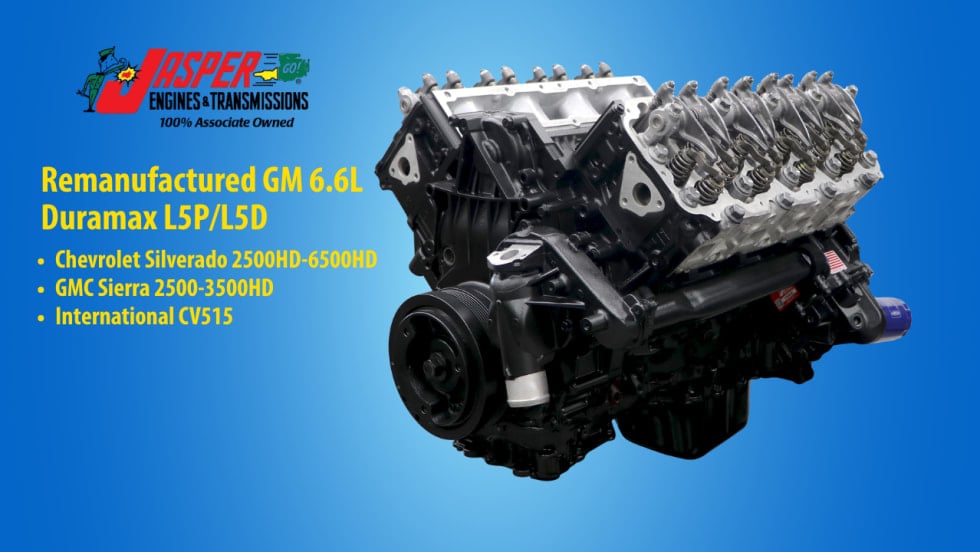
Jasper Offers GM 6.6L Duramax L5P/L5D Complete Format Diesel Engines
Jasper Engines & Transmissions now offers the remanufactured GM Duramax 6.6L L5P/L5D as a complete format engine for several General Motors and International 2017-2023 HD pickup trucks.
Read More →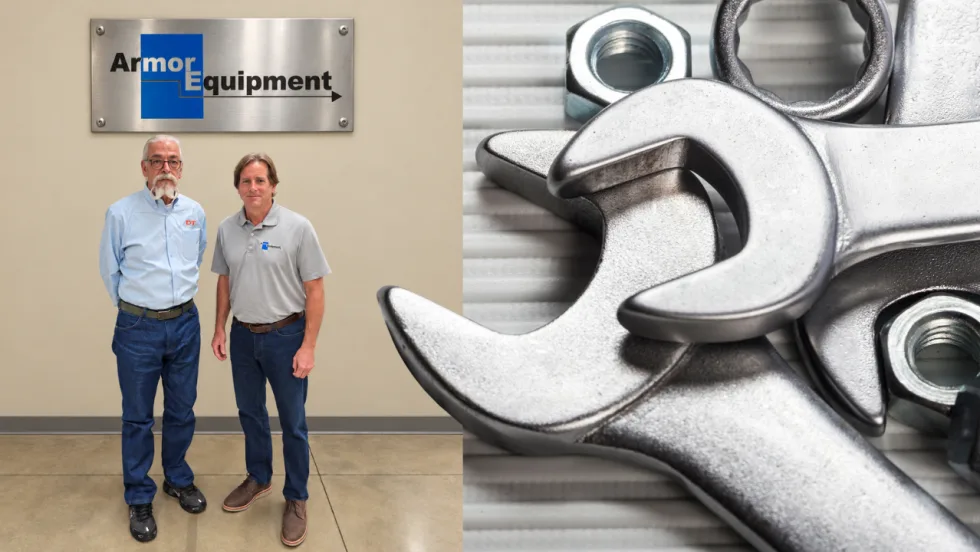
Armor Equipment Strengthens Minnesota Service Capabilities with Acquisition of Dakota Truck
Armor Equipment has acquired Dakota Truck, a medium- and heavy-duty truck and trailer repair business based in Lakeville, Minnesota. The acquisition adds truck and trailer repair expertise, building on Armor’s expansion into the Upper Midwest.
Read More →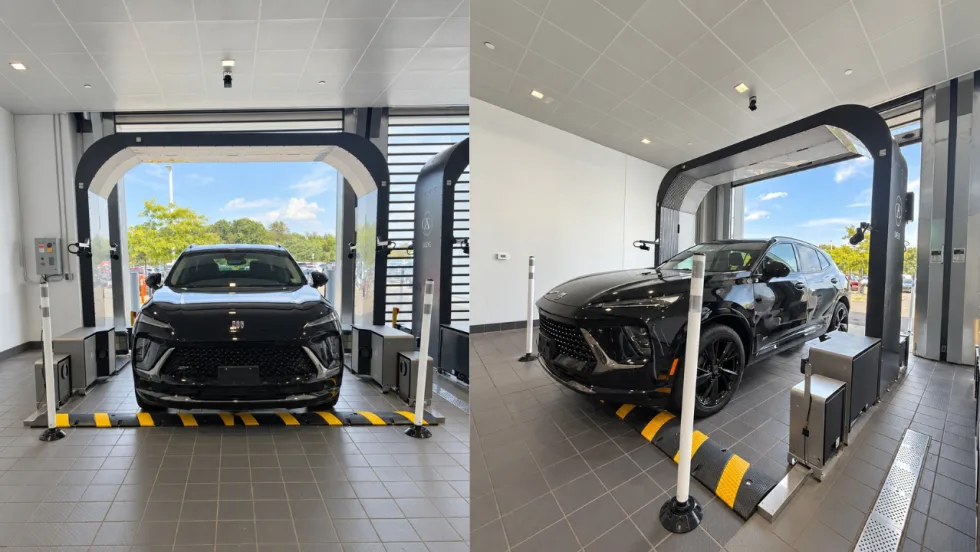
LaFontaine Partners With UVeye to Expand AI Vehicle Inspections in Michigan
LaFontaine is expanding UVeye AI vehicle inspections across Michigan, while UVeye tells Work Truck how the technology can support fleet maintenance and heavy-duty vehicle inspections.
Read More →
Les Schwab Expands Commercial Tire Footprint Into Arizona
Les Schwab Tires has expanded into Arizona with two commercial tire locations in Phoenix and Tucson, strengthening its fleet service footprint in the Southwest.
Read More →
Volvo Trucks’ 'Lock and Leave' Software Updates Go Live Across North America
Unattended over-the-air software updates are now available in Volvo trucks across the U.S. and Canada. The new capability lets trucks stay current with the latest software without interrupting operations or requiring a dealership visit.
Read More →