





Do you manage a mixed fuel fleet? Check out these fuel management tips!
Comparing Alt-Fuel Costs for Vocational Fleets
A deep dive into the costs associated with the alternative fuels commercial fleets use most.
December 16, 2021

To learn more about the available incentives for biodiesel, electricity, ethanol, hydrogen, natural gas, propane autogas, incentives by state, and other information about alt fuels, visit the Alternative Fuels Data Center and select the fuel of interest.
Photo: Gettyimages.com/twity1; Darren415
9 min to read
When a fleet is considering alternative-fuel trucks, the environmental benefits might be top of mind, but likely costs are, too.
When thinking through the options, the current cost of the fuel itself is essential, but it’s also just one piece of the puzzle. Consider the bigger total cost of ownership picture: purchase price, maintenance costs, tax incentives, and infrastructure should also be factored into costs.
The following alt-fuel cost comparison can help that bigger picture become more apparent.
How Do Alt-Fuel Costs Compare?
Starting with the basics, how do the costs of the alt-fuels used most often by commercial fleets compare?
According to the Clean Cities Alternative Fuel Price Report for July 2021, a quarterly report on the prices of alternative fuels in the U.S., the national average price between July 1 and July 15, 2021, alt-fuels rank as follows:
Renewable diesel (California only): $4.05/gallon
B-20 Biodiesel: $3.05/gallon
Propane: $2.98/gallon
CNG: $2.22/GGE
Electricity: $0.14/kWh
These alternative-fuel prices represent retail, at-the-pump sale prices for each fuel, including Federal and state motor fuel taxes. Except for renewable diesel, which only includes the average of prices in California, all of these have a lower price per gallon than gasoline ($3.09 per gallon) and petroleum diesel ($3.26 per gallon).
However, liquid fuels have different energy contents per gallon, so the price paid per unit of energy can differ from the price paid per gallon.
Prices for alternative fuels on an energy-equivalent basis, i.e., gas gallon equivalent (GGE) or diesel gallon equivalent (DGE), are generally higher than the prices per gallon.
This difference can be due to their lower energy content, so looking at the gasoline and diesel equivalencies may be more accurate.
The July 2021 Alternative Fuels Report records these as follows:
Propane:
$4.08 GGE
$4.58 DGE
B-20 Biodiesel:
$2.74 GGE
$3.11 DGE
CNG:
$2.22 GGE
$2.51 DGE
While current alternative-fuel pricing is a valuable snapshot, looking at pricing trends is also an informative piece of information for fleets considering alternative-fuel trucks.
Between April 2021 and July 2021, nationwide average prices per gallon have increased across the board:
Renewable diesel increased 35 cents from $3.70 to $4.05 (California only).
Gasoline increased 27 cents from $2.82 to $3.09.
Biodiesel (B-20) increased 23 cents from $2.82 to $3.05.
Diesel increased 15 cents from $3.11 to $3.26.
Propane increased 5 cents from $2.93 to $2.98
CNG increased 3 cents from $2.19 to 2.22
These prices reflect the national retail averages, but fleets may be able to negotiate lower costs.
“Alternative fuel fleets can obtain significantly lower fuel prices than those reported by entering into contracts directly with local fuel suppliers,” said Scott Fenwick, Technical Director, National Biodiesel Board.
A Closer Look at the Cost of Each Alternative-Fuel Option
Fleets considering — or even currently using — alt fuels may want to take a closer look at pricing data for each fuel type.
Propane Autogas for Truck Fleets
As with any commodity, the price of propane autogas can fluctuate by region.
According to the Alliance Autogas propane price tracker for the week of November 3, 2021, prices by region were as follows:
Gulf Coast: $2.16
West Coast: $2.19
Rocky Mountain: $2.22
New England: $2.23
Lower Atlantic: $2.23
Midwest: $2.27
Central Atlantic: $2.28
Alliance Autogas also tracks historic propane autogas prices. Looking at data from May 2018 to May 2020, the average national cost differential between gasoline ($2.66) and propane ($1.15) was $1.55.
Stephen Whaley, director of Autogas Business Development for the Propane Education & Research Council (PERC), pointed out that fuel contracts can be one advantage of propane autogas.
“It’s important to consider that fleet managers can secure lower prices by locking in a fuel contract that’s beneficial to both parties,” he said.
The Alternative Fuels Data Center reports that while propane vehicles themselves can cost slightly more than comparable gasoline models, the lower cost of the fuel itself can result in a quick return on investment. Concerning diesel, because propane autogas vehicles do not contain any expensive diesel aftertreatment systems, including particulate matter filters or diesel exhaust fluid (DEF), the total cost of ownership of a propane vehicle is less than diesel.
Beyond the purchase price, Whaley said propane autogas has other cost advantages.
“Propane autogas provides fleets with the shortest return on investment of any energy source,” he said.
Biodiesel & Renewable Diesel Fuel Options
Just as propane averages a lower price per gallon than gasoline, so does biodiesel compared to petroleum diesel.
The Alternative Fuels Data Center reports that the national average price of B-20 biodiesel blends in July 2021 was $3.05 per gallon compared to $3.26 per gallon for diesel fuel.
“The price of biodiesel blends up to B-20 typically run on par with, or less than, diesel fuel prices in most markets,” said Scott Fenwick, technical director for the National Biodiesel Board. “The availability of a $1 per gallon federal Biodiesel Tax Incentive, along with several favorable state tax incentives for biodiesel, help to keep the price of biodiesel blends very competitive nationwide.”
Renewable diesel is a different story. Fenwick said renewable diesel fuel typically costs about $1 more er gallon than diesel. In April 2021, renewable diesel cost $0.69 more per gallon than diesel, and in July 2021, it cost $0.79 more than diesel. It’s important to note that while diesel costs reflect national averages, renewable diesel costs only reflect the average price in California, where it is most widely distributed.
Fenwick said there are ways to make up for the higher price of renewable diesel.
“California’s Low Carbon Fuel Standard offers credits for renewable diesel that help offset the cost, making renewable diesel more affordable in California,” Fenwick said. “However, renewable diesel is not widely distributed in any other state currently due to that cost differential.”
Compressed Natural Gas (CNG) as an Option
According to the Alternative Fuel Price Report, compressed natural gas (CNG) tends to cost less than both gasoline and diesel on an energy-equivalent basis.
In April 2021, gas and diesel cost $2.82 and $3.11, respectively, whereas CNG cost $2.19 per gas gallon equivalent. In July 2021, the average gallon of gas cost $3.09, and a gallon of diesel cost $3.26 compared to CNG’s $2.22 per gallon.
Prices for CNG also tend to be more stable. Between April and July 2021, gas prices increased by 27 cents, diesel 15 cents, and CNG just 3 cents.
“CNG fuel costs don’t tend to have rapid ups and downs as diesel fuel does. It tends to be steadier, which helps fleet managers plan fuel costs without speculating about the long-term futures of diesel,” said Tim Thornton, vice president & general manager refuse for Autocar Truck. “Of course, fuel costs can and do change, but CNG has long been a more economical option.”
According to a case study on CNG-powered refuse fleets published by the U.S. Department of Energy, fleets in the study cut fuel costs by about 50%, saving about 90 cents per mile.
“That’s an annual savings of $13,000 per truck,” Thornton said. “That is without factoring in tax credits, weight exemptions, grants, rebates, or vouchers.”
Because of these savings, the case study estimates that the incremental cost of the CNG vehicles and fueling infrastructure can be recouped in three to eight years.
Electric & Hybrid Vehicles Increasing in Availabilty
Energy costs for electrified vehicles are typically lower than similar conventional models. Still, purchase prices can be significantly higher depending on the size of the batteries used in the system, offsetting the fuel savings.
“All-electric vehicles require the most significant battery footprint and can be multiple times more expensive than gas-powered vehicles. Hybrids and plug-in hybrids have smaller batteries that require less upfront cost,” said Eric Foellmer, director of marketing for XL Fleet. “This price gap for electrification versus gas power is likely to continue to close as EV technology becomes more widely adopted.”
To help understand the comparison, the Alternative Fuels Data Center’s Vehicle Cost Calculator allows users to calculate the total cost of ownership and emissions for makes and models of vehicles, including some trucks and vans.
Looking at a gasoline-powered 2021 Ford F-150 4WD pickup that drives 24,500 miles a year, 75% of which are in the city, the calculator puts annual fuel use at 1,287 gallons, totaling $2,986 in annual fuel costs. The calculator estimates the annual operating cost for this model at $5,920 and the cost per mile at $0.24.
Using that same data, annual fuel use is 1,021 gallons for the hybrid model, totaling $2,368 in annual fuel costs. Annual operating costs are also lower for the hybrid, at $5,302, and the cost per mile at $0.22. In this comparison, choosing the hybrid model would cut fuel costs by $618 per truck.
Other Factors That Affect Cost
Beyond fuel costs, infrastructure, maintenance, and incentives can also impact the total cost of leveraging alt fuels.
Infrastructure Concerns
Some alternative fuels require a more significant investment in fueling infrastructure than others. For instance, because of limited public fueling sites, electric, hybrid, and CNG fleets will likely need to establish their fueling or charging stations.
Conversely, because biodiesel and renewable diesel are interchangeable with petroleum diesel, fleets may be able to use existing fueling equipment and have the option to refuel at select truck stops.
“Biodiesel blends can be used in fleets’ existing and new diesel vehicles without modification, and without the need to purchase costly new alternative fuel trucks or fueling/charging infrastructure,” Fenwick said. “With proper maintenance, existing trucks, fuel tanks, dispenser pumps, and blending facilities can be used for B-20 and lower biodiesel blends.”
Fleets leveraging propane autogas have the flexibility of on-site infrastructure, temporary fueling infrastructure, or using mobile fueling when needed.
“In most cases, propane suppliers will provide the infrastructure equipment to a fleet at no cost in exchange for a mutually beneficial fuel contract,” Whaley said. “In these agreements, fleets will be responsible for minimal site preparation for this equipment.”
Reduced Maintenance Costs
Several alt-fuel options burn cleaner than gasoline or petroleum diesel, in turn lowering truck fleet maintenance costs.
“Propane autogas provides fleets with reduced fuel and maintenance costs. Because propane autogas is a clean fuel, its emissions systems are much less complex and don’t require additional equipment to ensure emissions standards are met, like diesel vehicles,” Whaley explained.
Biodiesel also offers maintenance benefits.
“U.S. biodiesel on average provides a 74% reduction in lifecycle carbon emissions compared to petroleum diesel, offering the lowest carbon intensity of any commercially available liquid fuel,” Fenwick explained. “From a maintenance perspective, the natural lubricity in biodiesel eliminates the need for additional lubricity additives to help keep engines running smoothly over their full useful life. Additionally, the reduced amount of particulate matter created by biodiesel burns off faster and at a lower temperature in a particulate trap, thus requiring fewer PM trap regenerations and lower long-term maintenance costs, as well as contributing to improved fuel economy.”
Need for Incentives and Grants
Depending on which alt-fuel they use and where they operate, fleets may utilize federal and state tax incentives, utility incentives, and grants to reduce their costs.
“The $1 per gallon federal biodiesel tax incentive has been in place off and on since 2005 and is currently locked in through 2022,” Fenwick said. “Several federal and state biodiesel tax incentives help keep the cost of biodiesel competitive, and fleets using B-20 or higher blends are also eligible to receive compliance credits under the Energy Policy Act (EPACT).”
Another example is the federal Qualified Plug-In Electric-Drive Motor Vehicle Tax Credit, which is available for PHEV and EV purchases from manufacturers that haven’t met certain thresholds of vehicle sales. Depending on the vehicle size and battery capacity, new-vehicle buyers can get a tax credit of $2,500 to $7,500.
To learn more about the available incentives for biodiesel, electricity, ethanol, hydrogen, natural gas, propane autogas, incentives by state, and other information about alt fuels, visit the Alternative Fuels Data Center and select the fuel of interest.
Subscribe to Our Newsletter
More Green Fleet

Fleet Forward Conference Introduces One-Day Passes for 2026
New one-day registration gives fleet professionals the flexibility to attend Tuesday, Wednesday, or Thursday, with passes available for $199 through Sept. 18.
Read More →
CALSTART Rebrands as Catalyst Mobility, Will Combine with Forth in 2027
CALSTART has rebranded as Catalyst Mobility and will combine with Forth at the start of 2027. The new organization said it is poised to become one of the world's largest, strongest, and most impactful clean transportation nonprofits.
Read More →
Electric Truck and Charging Programs to Boost Sustainability at NY & NJ Ports
Together, the Port Authority of New York and New Jersey and CALSTART will electrify drayage and terminal operations serving the East Coast’s busiest container port. A pair of incentive programs totaling $45 million has launched to accelerate adoption of zero-emission drayage trucks and terminal tractors.
Read More →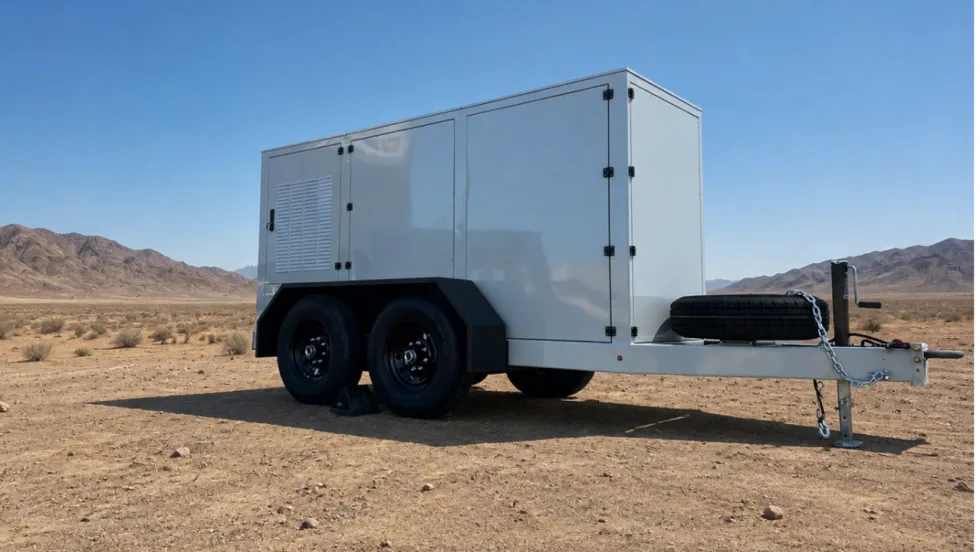
Xos Hub Surpasses One Gigawatt-Hour of Energy Delivered in the Field
A single Xos Hub has surpassed one gigawatt-hour of energy across more than 33,600 charging sessions in the field, demonstrating performance that supports Xos' expansion across new products and markets.
Read More →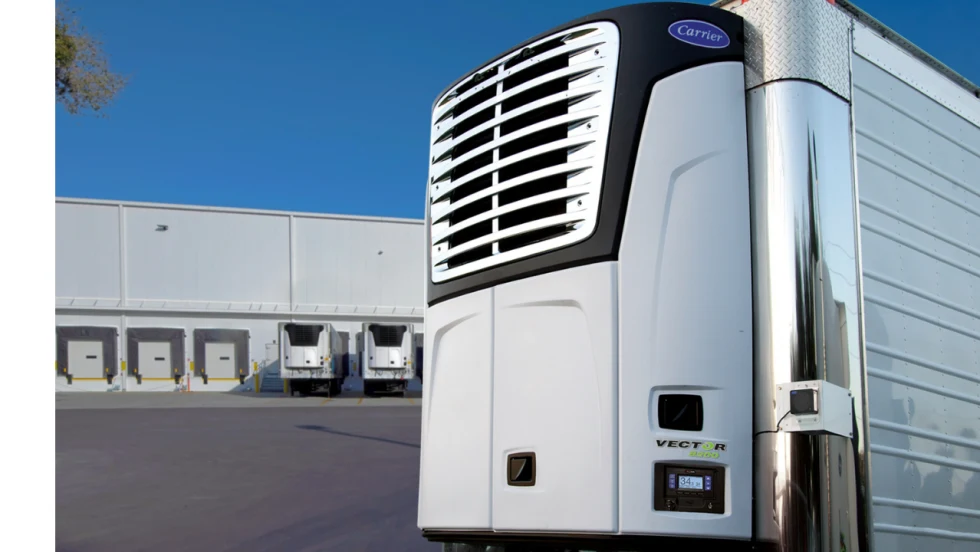
Carrier Transicold Launches All-Electric Vector 8200 TRU for Diesel-Free On-Site Cold Storage
Carrier Transicold’s first engineless multi-temperature TRU helps fresh- and frozen-food fleets add supplemental cold storage capacity during seasonal peaks.
Read More →
Narro Trucks Introduces Electric Utility Vehicle
Narro Trucks officially launched its operations on Aug. 20 and hosted a ride and drive to showcase its electric truck, which will be produced in Virginia.
Read More →
Samsung SDI Takes Full Control of GM Battery JV as Indiana Plant Pivots to Energy Storage
Samsung SDI is taking full control of its Indiana battery plant with GM, marking a major shift from the EV-focused joint venture Charged Fleet first covered in 2023.
Read More →
NWSA Taps CALSTART to Administer Zero-Emission Drayage Assistance Program
CALSTART will provide free technical assistance services to drayage fleets serving the Ports of Seattle and Tacoma and looking to transition to cleaner technologies and help decarbonize freight hubs.
Read More →
EV Fleet Reality Check: What Operators Wish They Knew Before Electrifying Their Work Vans
Electric work truck upfits bring new compatibility questions. Learn how parts availability, OEM guidance, power demands, and route planning can affect fleet performance.
Read More →
Peterbilt Expands Sourcewell Partnership with Electric Vehicle Lineup
Peterbilt Motors Company’s cooperative purchasing agreement with Sourcewell and its Canadian partner, Canoe Procurement Group, now includes including Peterbilt's battery-electric vehicle lineup.
Read More →