


At a Glance
While fleet managers decide whether vans or trucks best fit their fleet's needs, they should take other factors into consideration:
Total cost of ownership.
Vehicle upfitting options.
Vehicle function.
 MENU
MENU SEARCH
Money considerations drive much of the decision making when choosing vans or pickups, but function also plays a crucial role.
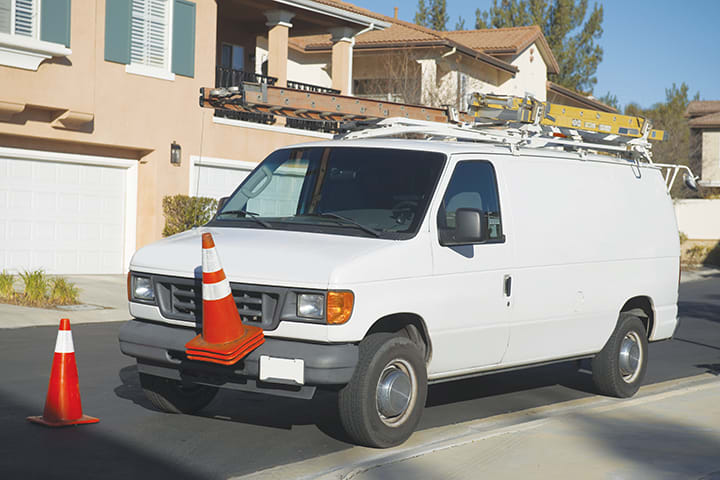
Weighing the everyday use of the van or truck is another important factor fleet managers must take into account.
Photo: iStockphoto.com
Fleets carry out a multitude of tasks to fulfill the mission of the companies and customers they serve. Many of these tasks are accomplished using either a van or pickup.
With a thorough analysis of vehicle cost and vehicle use, the choice becomes a little clearer.
Fleet managers need to gauge which vehicle type would best suit their operational needs, and this requires a concrete understanding of the fleet’s vocational focus.
“Think of the vehicle’s role or job application as the starting point,” advised Wayne Reynolds, manager, upfit design and consultation for LeasePlan USA. “Whatever vehicle you consider must first be able to do the job. That can make it easier to narrow down your options.”
For Service Corporation International (SCI), a provider of funeral and cemetery services, the use of vans in addition to long hearse style vehicles modernized their fleet. Today, the fleet uses vans to transport decedents.
The decision makes sense economically, but Demond Hammond, corporate fleet manager for SCI, said it has more to do with the overall situation.
“You don’t treat a decedent like cargo,” he said. “We use the Dodge Grand Caravan, because it’s functional, but it also blends in with the landscape as it relates to personal vehicles. It doesn’t stick out like a big, bulky van.”
Functionality of “stow-and-go seating” is another reason SCI chose to use vans. The seats fold flat into the floor, so SCI employees can easily put a stretcher in the back. If the vehicle is not being used in that capacity, seats can be flipped up and passengers can ride in the van.
Hammond manages a fleet of 6,500 vehicles throughout the U.S., Canada, and Puerto Rico.
The choice between a van and a truck is often simply a question of the total cost of ownership (TCO).
For SCI, van selection goes back to the basics of TCO.
“If it requires a lot of maintenance, has poor fuel economy, and does not have good resale, it’s not a good vehicle,” explained Hammond. “We may use our vans to transport decedents, but, when the vans go to be remarketed, they are remarketed as passenger vans, which typically have a higher resale value than if we had ordered just a plain cargo van.”
Potential medical expenses due to accidents factor into every TCO equation, but fortunately modifications can be made if stock vehicles are lacking.
Since safety is a front-of-mind priority for fleet managers, back-up cameras can be installed to make backing maneuvers safer for drivers, other vehicles, and pedestrians.
For trucks that may be higher off the ground, adding a convenient step can save money and eliminate one variable in the truck-van debate.
“Trucks have higher profiles today,” explained Hammond. “They are on bigger wheels and tires so the truck is a lot higher, and not all drivers are the same height or built the same. It’s easy to save a $1,000 medical bill that may arise when a driver slips off of a truck. It’s just a couple hundred dollars for the steps. Adding these features can save you money, and help in the van or truck decision.”
Vehicle upfits — the benefits and costs associated with them — allow the fleet manager to see what vehicle is worth adding into their fleet.
Joe Brightwell, quality and operational excellence manager of service vehicles for Wheels Inc., has seen a trend in high roof-profile vans (Ram ProMasters, Ford Transits, and Mercedes-Benz Sprinters) that allow personnel to stand-up while working inside the van.
“This is drawing pickup truck business over to the van side,” he said. “There is a recent trend we’re seeing, to put actual work benches in new vans. The new vans are more attractive than previous versions due to improved fuel economy, which piques the interest of some pickup truck buyers.”
Brightwell reminds clients that the ability to use the van as a workstation can come in handy, particularly during bouts of inclement weather.
“On the other side, if four-wheel drive is a requirement, pickup trucks are the only real choice,” he said.
While the ability to stand up in a van is a benefit, there are downsides to these taller vans, according to Brightwell.
“The height of the new vans is often unable to meet urban clearance requirements — parking garages and car washes, for example,” he said.
For fleets operating in more inclement conditions, pickups may be favorable for other reasons.
“In winter driving conditions, drivers prefer four-wheel drive, which dictates pickup trucks as the choice,” Brightwell said. “Also, tail-loading the new vans can cause a shift in the center-of gravity, which takes pressure off the front-wheel drive of the Ram ProMasters; in the wintertime, this can be a concern, as can the steering of the Ford Transits, even though they are rear-wheel drive. This can dictate the use of pickup trucks.”
Mike DeCesare, regional truck manager for ARI, believes the major challenge in the van market is the lack of all-wheel drive or 4X4 capability, along with towing concerns.
“We typically do not recommend towing in the van segment,” he said. “With the ability to put a large volume and weight in a van, max towing capability declines quickly.”
Adding to DeCesare’s observation is Rob Jackson, regional truck manager at ARI.
“The pickup comes out on top when towing is involved,” said Jackson. “Comparing the Ford Transit 250 versus the Ford F-250, the F-250 has double the towing capacity of the Transit. Another challenge when fleets switch from pickups to vans is the driver’s field of vision. Work vans typically don’t have cargo door glass, so getting used to the reduced visibility could be a concern.”
The “limitless number of configurations” with today’s van offerings still allows for the most flexibility in a light-duty fleet that requires enclosed cargo space.
“Upfitters have adjusted quickly to customer demands for customized interiors that will reduce driver injuries and increase productivity,” DeCesare said. “With increased availability of the drop down ladder rack, van heightis no longer an issue for trades requiring ladders. For those where height needs to be minimized, interior ladder racks are available as well.”

Photo: iStockphoto.com
Trends in the van and truck segments have vastly influenced fleet managers’ decisions between the two.
According to DeCesare, prior to the “Euro van” (Ram ProMaster and Ford Transit), there was a shift to pickups, and away from vans.”
Major reasons for this shift were: 1) a need for 4X4 capability; 2) the growing popularity of fiberglass slide-in units; 3) the ability to transport more than two crew members; and 4) increasing miles per gallon on pickups because of towing.
“In today’s environment, we are seeing a decline in the fiberglass slide-in units, mainly due to cost and complicated coordination of transferring these units to a new chassis,” DeCesare said. “With multiple OEMs offering varying van roof heights and lengths, it has proven to be more economical from a TCO perspective to choose a van.”
Practicality is a deciding factor, according to Reynolds of LeasePlan USA.
“While the job application remains a main factor in vehicle selection, overall, more fleets are choosing vans where they are a practical alternative,” he said.
Putting this into practice is Tom Armstrong, fleet director, ThyssenKrupp Elevator; he favors vans for their practicality and cost. “If I’ve got service guys out there, I prefer them in a van from an ergonomic standpoint, and for product layout and accessibility,” said Armstrong, who runs 3,400 vehicles throughout the U.S.
For Armstrong, TCO is a key part of the equation, particularly when considering fuel efficiency.
“From a sustainability factor, we are all in on getting to that small van for our service fleet versus the pickup,” he said. “And we only go full-size van when needed, based on geography or route. If our employees are away from the branch more often, they need more parts and tools, so they are going to be in a full-size van. However, a small van can accommodate 75% of our guys, so we are saving millions of dollars on fuel.”
There are other practical considerations that have turned some fleets from pickups to vans, according to Dan Hannan, executive director, strategic consulting for Merchants Fleet Management.
“Shortages in compact picks up and fuel efficiency forced many truck fleet to look for alternatives over the past few years,” he said. “Additionally as the manufacturers are focused on meeting targets for CAFE standards, we are seeing lighter materials used in the construction of the vehicles. The ability to meet expected lifecycles given a fleets payload and application are being tightly monitored to understand if the vehicles will weather the desired field usage. The cost to manage accident costs is rising with the lighter materials.”
Apart from TCO, another defining factor for fleet managers in the debate between choosing vans or pickups is function.
“The most important consideration for picking a vehicle is job function,” said Dean Dunton, North America fleet manager, Ingersoll Rand.
What about ease of upfitting and order to delivery (OTD) times?
For example, if Dunton could get a Ford F-150 faster than a Transit Connect, and they basically cost the same, would that influence the van/pickup decision?
“Order to delivery — production including upfit — is critical to our business,” said Dunton. “At times, it will be the determining factor on what type of unit we procure. Singular events should not, however, influence the overall ordering strategy. Matching business needs, while controlling costs at a fleet level are the overarching goal.”
TCO is a key consideration in all of Dunton’s vehicle choices, and assuming job function is well matched, TCO tilts the balance 90% of the time.
“If a company is vigilant in reviewing their selector regularly, they will always be ‘piloting’ alternative vehicles to test their practical application in the business,” he said. “This will allow for easier transitions if service delivery models change and different tools are needed. Companies do have other influences also; these could include company culture, regional preference, and possibly employee retention initiatives.”
There’s another tradeoff to consider, according to Dunton.
“At a very basic level, initial cost is typically lower in the van space,” said Dunton. “Remarketing dollars tend to be a little better in the truck space.”
Hannan of Merchants noted that the key characteristics driving the choice of a pickup over a van or vice versa is rightsizing, cargo considerations, and employee safety, particularly ergonomic considerations.
“How often does the employee need to remove product and does the employee need to climb into the cargo area,” he said.
In general, the choice is a balancing act, according to Reynolds of LeasePlan USA.
“For the most part, the challenges are the same — balancing all the components involved in operating a vehicle fleet. A move to a van from a pickup can sometimes be met with driver resistance,” he said. “It’s important to include employee morale and satisfaction in the equation.”
Weighing the everyday use of the van or truck is another important factor fleet managers must take into account.
Abe Stephenson, fleet and administration manager at DISH, almost always defers to a van over any type of pickup — whether it is a 4x4, light-duty truck, or medium-duty truck.
“Based on space and ease of working out of the vehicle, a van will typically trump a pickup in any scenario,” said Stephenson.
After experimenting with light-duty pickup trucks for manager use, primarily to take advantage of lower fuel and lifecycle costs, the pickups did not offer enough flexibility to carry the amount of product needed in technician vans. Geographic needs (snow and mud) for a 4x4 will trump TCO in limited circumstances, but Stephenson reports that “our 4x4 trucks have higher TCO compared to our vans, so we use vans as our default choice. We do use 4x4 pickups in areas that need them for driving on unpaved roads and/or harsher winter driving conditions due to snow.”
The utility of the vehicle for the job is more important than fuel type, and Stephenson routinely looks for the lowest TCO regardless of fuel type.
Decision criteria can also include the reliability of the manufacturer, whether OEM or aftermarket.
“Many alternative-fuel vehicles have aftermarket components, and choosing companies with reliable and proven technology is important,” said Stephenson. “Some aftermarket manufacturers may only have solutions or relationships with certain OEMs or vehicle types, so that can come into play regarding vehicle choice.”
Stephenson noted that DISH has realized other benefits from primarily using vans.
“When the technician is working out of the vehicle versus in the vehicle, this helps with both productivity and comfort,” he said.
The van space continues to be more of working “inside the vehicle” and pickup truck solutions continue to have new and evolving options to work “outside of the vehicle” with side compartments, sliders, and other upfitting. “However, vans continue to be optimal for space and TCO,” Stephenson said. “And, although the industry continues to develop its pickup truck offerings for upfitting, the van is still the leader as a best tool for the job.”
Rob Jackson from ARI agreed that while customers have many choices these days, vans are indeed leading the way.
“You have the compact van segment that’s great for inner-city, to the high roof van models that compete with the enclosed service bodies offered by many upfitters,” he said. “Overall, I see many customers looking strongly at the van segment because it seems to be a fit for most applications.”
The practical benefits of vans have given them the edge for many fleets, according to Reynolds of LeasePlan USA.
“The introduction and evolution of Euro-style vans in the United States have given fleets options that allow drivers much easier access to tools and products — so safety, productivity and driver satisfaction are definitely considerations,” he said.
Rich Zambroski, manager, truck excellence at Element, said vans are now typical for various trades such as plumbers, electricians, and HVAC repair technicians.
Meanwhile, pickups are common for construction and/or off-road job functions (e.g., construction, oil field, road maintenance) or where medium to heavy towing is involved.
“The choice is usually driven by job function, type or weight of payload, or terrain. Both vans and pickups can provide security and ease of access for tools and equipment, although pickups must have accessory bodies or toolboxes installed to provide this,” Zambroski said. “Vans are enclosed, and there are many storage systems available for interior upfit. Finally, safety can affect choice, such as when hauling hazardous or noxious materials. In that situation, a pickup may be the choice over an enclosed van that shares space for cargo and occupants.”
Originally posted on Automotive Fleet
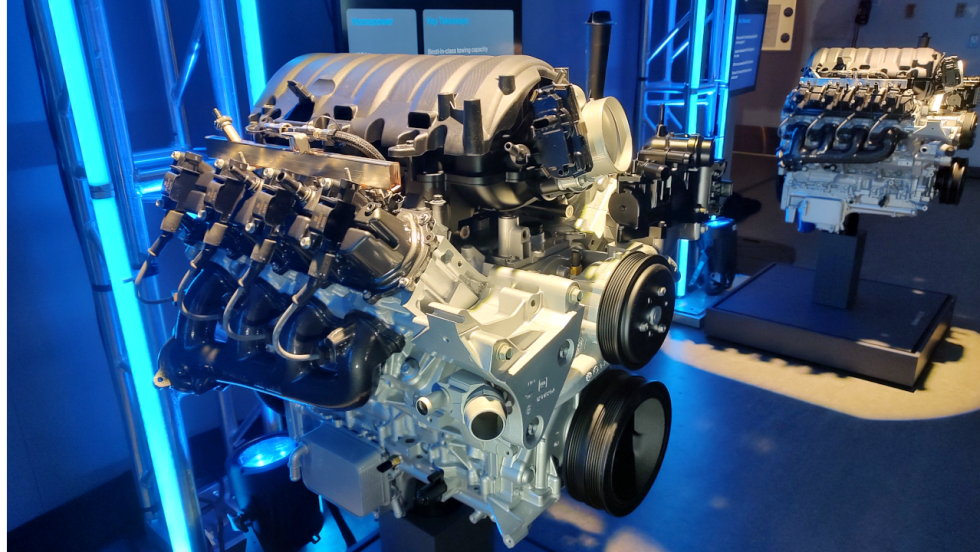
General Motors unveiled two new small-block engines, backed by extensive real-world validation and more than 70 years of small-block V8 manufacturing experience, as part of the engine portfolio for the 2027 Chevrolet Silverado 1500 and GMC Sierra 1500.
Read More →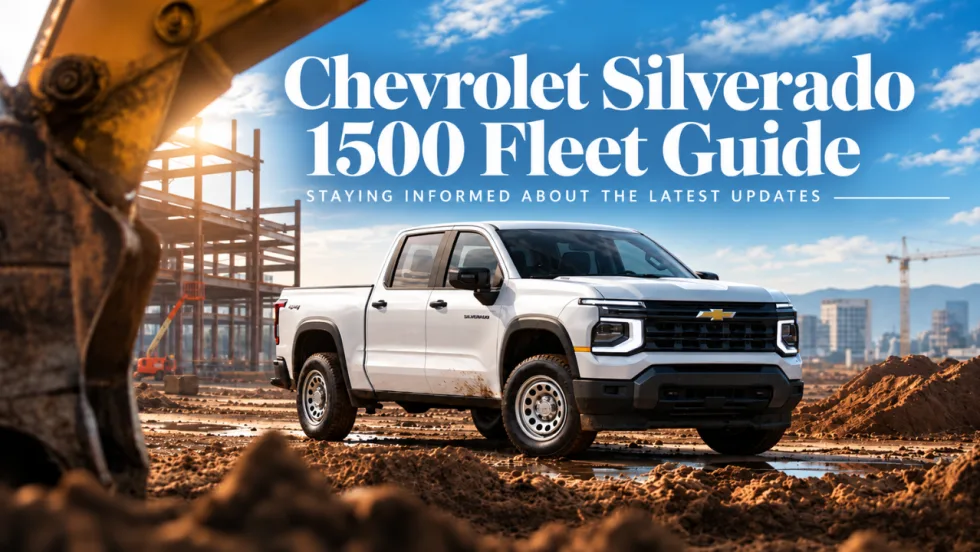
The next-generation 2027 Chevrolet Silverado 1500 brings new V-8 engines, updated technology, expanded safety features, and a fleet-focused Work Truck. Here’s what commercial fleets need to know so far.
Read More →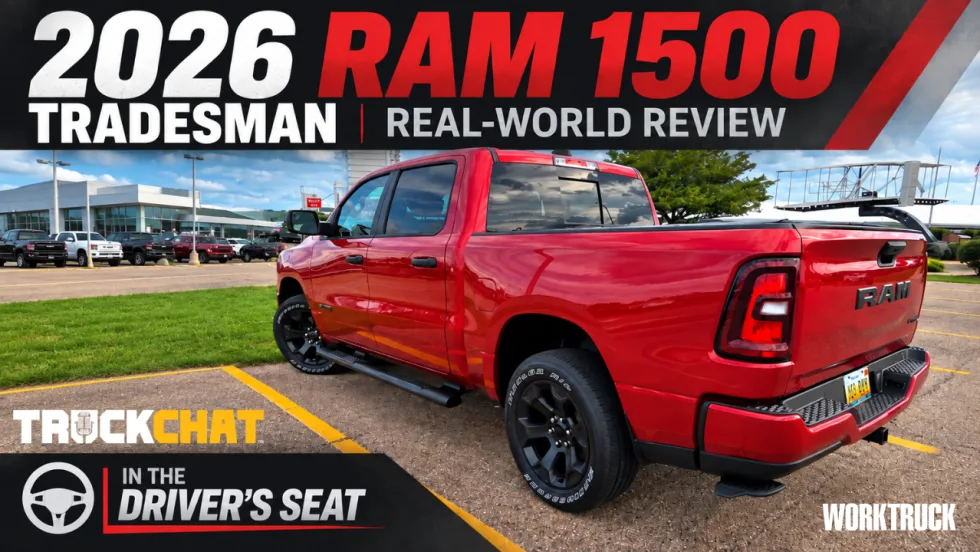
A few days behind the wheel of a 2026 Ram 1500 Tradesman turned into a test of visibility, parking, work-ready features, and even severe-weather driving.
Read More →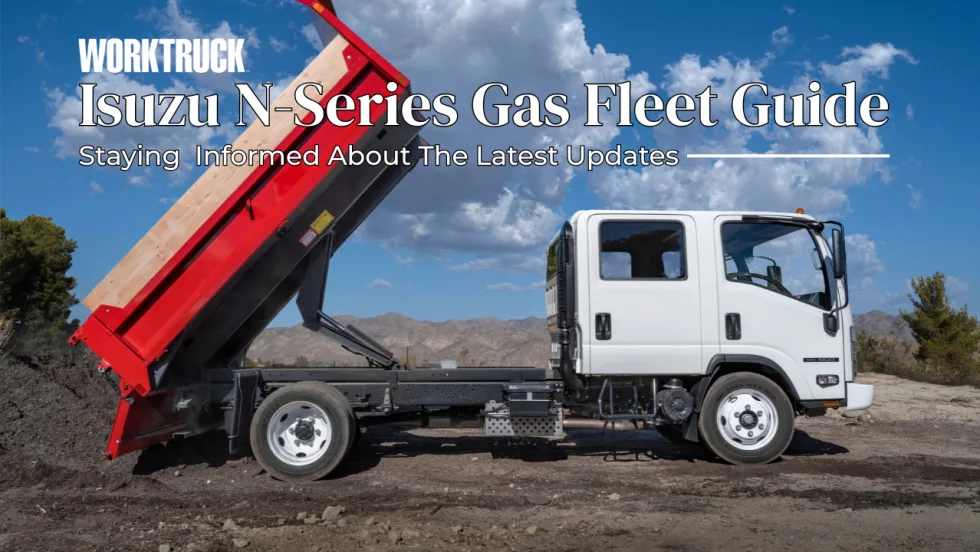
Explore Isuzu Truck North America’s N-Series Gas fleet specs, engine performance, GVWR and payload capability, configurations, chassis dimensions, work-focused features, and 2027 model-year information.
Read More →
Work Truck’s Ram ProMaster City Fleet Guide tracks the latest specifications, cargo capability, configurations, fleet technology, pricing, and model-year updates for Ram’s mid-size commercial van.
Read More →
Explore 2026 Ford F-150 fleet specs, engines, towing and payload capability, configurations, work features, technology, and model-year updates.
Read More →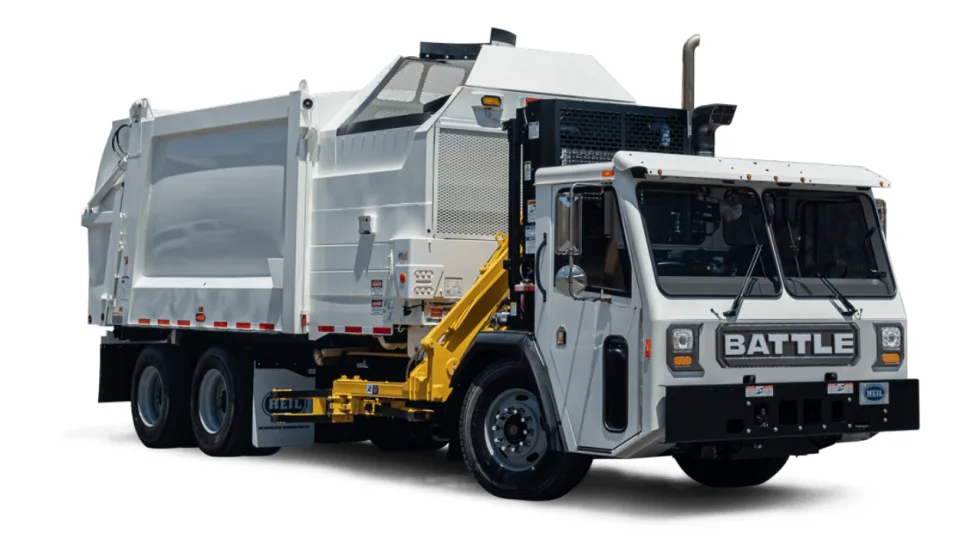
Midwest truck dealer Truck Centers, Inc. (TCI) has expanded its transportation solutions with sales and service support for Battle Motors’ heavy-duty vocational trucks at locations in locations in Indiana, Illinois, and Missouri
Read More →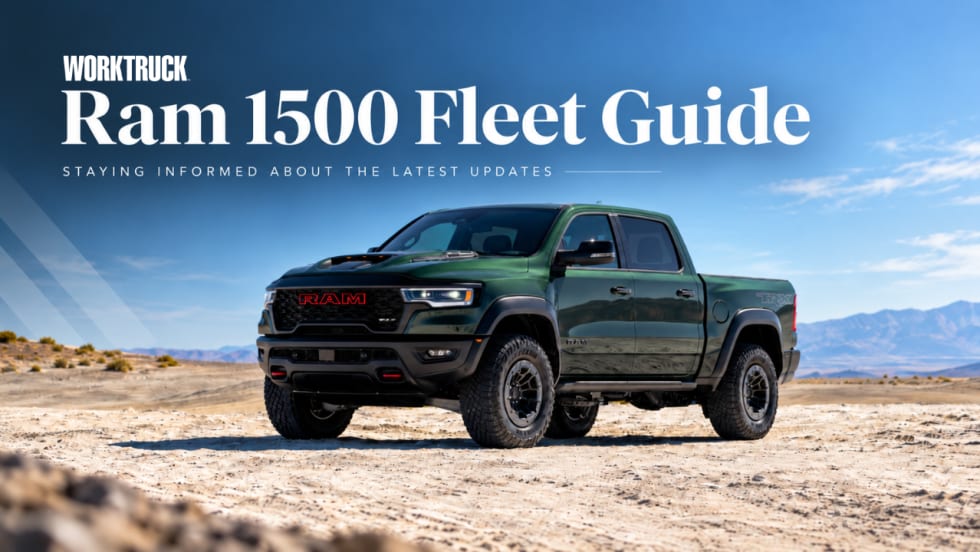
Explore always up-to-date Ram 1500 fleet specs, engines, towing and payload capability, configurations, technology, pricing updates, and model-year changes.
Read More →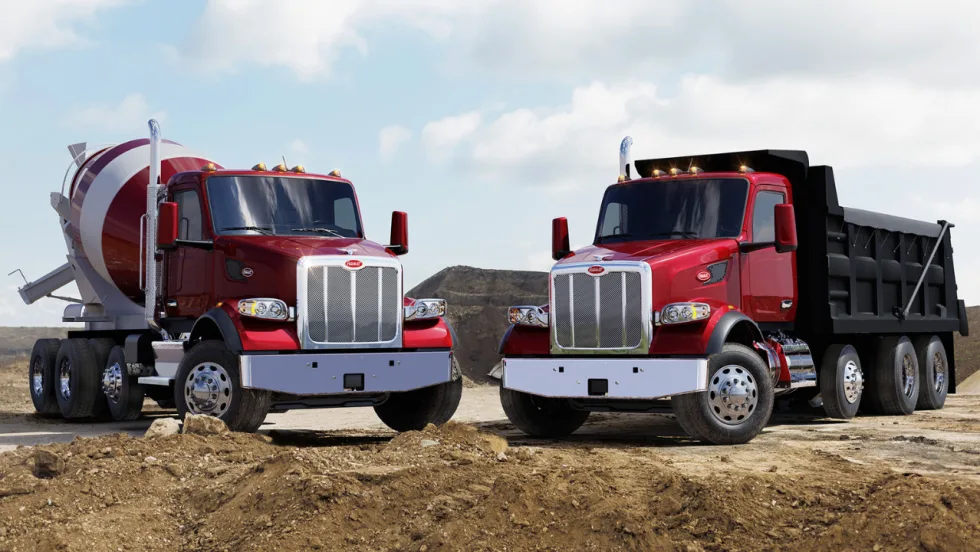
Patuxent Companies is replacing aging trucks with the Peterbilt Model 567 and Model 589, specified with the Paccar TX-18 Pro 18-speed automated transmissions, and is reporting an 8% to 10% improvement in fuel economy.
Read More →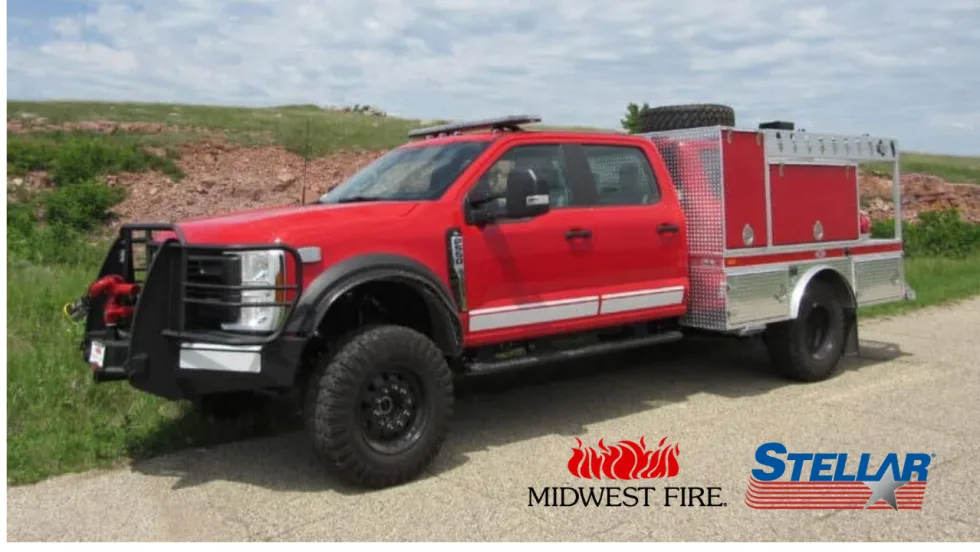
Stellar Industries has acquired Midwest Fire, a custom fire apparatus manufacturer headquartered in Luverne, Minnesota, with nearly four decades of specialized apparatus experience.
Read More →