


About The Author
Greg Dziewit is the vice president, commercial OEM, at Telogis. Visit www.telogis.com/ford to learn more about Ford Telematics powered by Telogis.
 MENU
MENU SEARCH
This organic food distributor uses Ford telematics to track a vehicle's location, see a driver's status and minimize vehicle idling time.

One of Global Organics' fleet trucks, which is part of the company's 20-vehicle fleet. The truck is labeled as BioFlora, Global Organics' sister company and agricultural division.
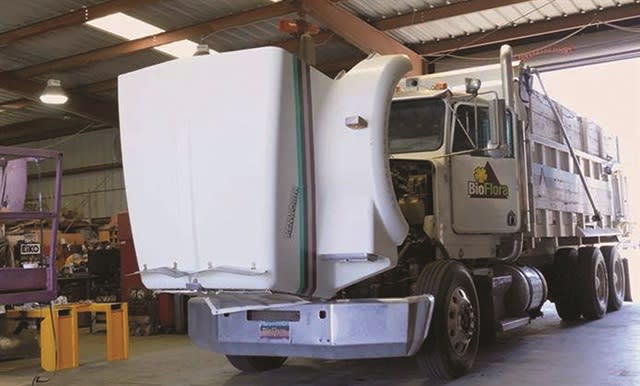
One of Global Organics' fleet trucks, which is part of the company's 20-vehicle fleet. The truck is labeled as BioFlora, Global Organics' sister company and agricultural division.
Technology may not be the first thing that comes to mind when you think of an organic food distributor, but Global Organics has transformed its fleet operations with the power of Ford Telematics powered by Telogis.
Ordered from the Ford factory or installed at a Ford dealership, Ford Telematics provides real-time and historical status of vehicles, enabling businesses to get a 360-degree view across their entire fleet.
Customers like Global Organics use their online Ford Telematics accounts to see a vehicle’s location, health and driver status as well as to view dashboards, run reports and customize alerts.
“We have hundreds of assets deployed throughout our operations, but we maintain a fleet of over 20 vehicles, and we track them through the Ford Telematics portal online,” says Jeff Hoelzel, chief operating officer, Global Organics, a life sciences company involved in the development and manufacturing of organic plant nutrition.
One of the biggest challenges Global Organics faced was being unaware where its products were at a specific time — the company was unable to see which driver had what product and where it was located. This was an issue Ford Telematics helped to resolve.
“If you know where your product is, if you know what your product is doing, if you know how much product you have, then you really know your company,” says Jim Mitchell, fleet director of Rodeo Ford, a dealership in Goodyear, Ariz., who sold the telematics system to Global Organics.
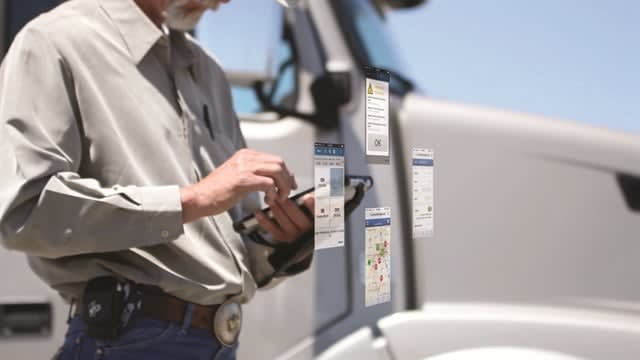
Telogis provides telematics, compliance and navigation software integrated with vehicles from several auto manufacturers, including Ford, General Motors, Hino Trucks, Volvo and Isuzu.
Ford Telematics can be used to help drivers solve unexpected emergencies on the road. With the telematics system, Global Organics can locate and dispatch the nearest mobile worker with the right vehicle, tools and skills for the job, which has reduced per-mile cost, streamlined job management and increased productivity.
Global Organics also wanted to avoid fuel waste and reduce wear on tear on the vehicles. Ford Telematics revealed that the company’s employees were allowing vehicles to idle during lunch breaks. Those lunch breaks had an impact across the business, triggering fuel waste, costly vehicle breakdowns and a loss of worker and vehicle productivity.
“If they don’t know that idling vehicles are going to hurt the company as far as fuel economy, and if they don’t know it’s going to hurt the company as far as excessive wear and tear on the vehicle, than the telematics software will alert the company,” says Mitchell. “Using this software, the company can alert the driver and educate him. It’s all about educating the [drivers], and if they know more, they can be a better asset to the company.”
Overall, the addition of telematics systems has proven beneficial to Global Organics.
“I wasn’t aware that the device existed,” says Hoelzel. “We started using it online, and I liked it, so every truck we bought thereafter has had (Ford Telematics) installed. And then again, as we moved forward, we decided to retrofit all of our other vehicles with the device. It has proven to be a worthwhile experience for us.”


From driver training and safety meetings to one-on-one coaching and incentive programs, several small fleets share how they have developed a safety culture with their drivers using low- to no-cost resources.
Read More →
AI-powered inspections are transforming last-mile fleets by replacing manual checks with highly accurate automated scans that detect defects in seconds. By giving fleet operations visibility into the daily condition of their vehicles, you can identify trends over the vehicle’s lifecycle that enable improved procurement decisions, route management, driver training and accountability.
Read More →
There are five ways seat belts protect occupants from injuries, according to the Tennessee Department of Safety and Homeland Security.
Read More →
What does AI mean for fleets? Get the answer — and learn other top tech trends.
Read More →
Check out how small fleets and independent drivers power Wreaths Across America each December and why their impact matters more than ever.
Read More →
A new VMS survey shows small fleet managers are stretched thin, with most handling operations solo and eager to adopt digital tools for relief.
Read More →
This video features a reminder from the Connecticut Department of Transportation (DOT) and the Connecticut Police Chiefs Association, urging drivers to prioritize safety this Halloween.
Read More →
VMS’s new Co-CEO, David Prusinski, shares how an AI-first approach will give small fleets and repair shops the tools to compete like big players.
Read More →
Three fleets share best practices to prep vehicles for winter and prevent downtime when the cold sets in.
Read More →