





RELATED: Overcoming 7 Van Upfit Challenges
Can Truck Capsules Effectively Replace Cargo Vans?
Manufacturers that build pickup bed capsules discuss the advantages and limitations of the fiberglass-enclosed bodies and explain when fleets should consider replacing cargo vans with truck bed capsules.
March 1, 2011
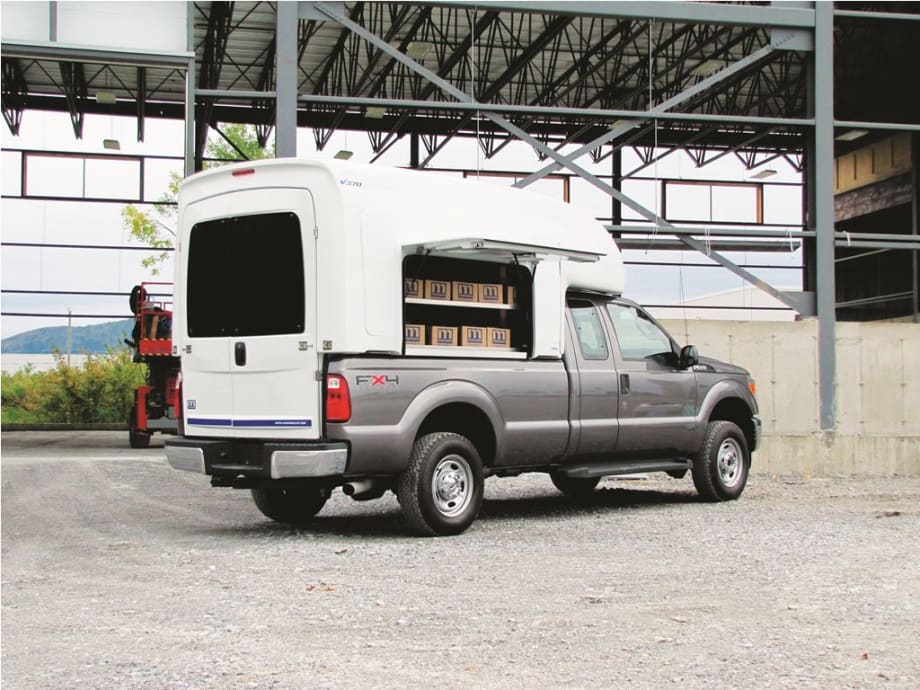
Maranda manufactures a one-piece, fully transferable workshop capsule that, according to the company, features a proprietary body anchoring system, unique water management system, and universal fit.
Photo: Maranda
8 min to read
Body manufacturers that build fiberglass-enclosed bodies that slide into and attach to pickup truck beds claim their "inserts" or "capsules" are a more cost-effective alternative to standard cargo vans.
Also called truck caps or covers, these upfits come in multiple variations.
Several large commercial fleets seem to agree, including Verizon Wireless, Cable One, CenturyLink, Qwest Communications, and other independent telecom companies across the country. According to Eric Paul, VP of sales and marketing at Fort Worth, Texas-based BrandFX Body Company, Verizon recently took delivery of 715 Chevrolet Silverado 1500 Hybrids, with BrandFX's fiberglass inserts as direct replacements for cargo vans.
Why shift from vans to pickups with self-contained inserts, or capsules? The following explains the advantages and limitations of pickup bed inserts over cargo vans and how management can determine which is a better fit for a fleet's application.
The Advantages of Capsules
Why should fleets consider shifting from cargo vans to pickup bed capsules? Body manufacturers point to these seven advantages:
1. Improved Fuel Economy with 1/2-Ton Configurations
"Your van is averaging about 10.2-10.4 mpg when loaded. With a 1/2-ton pickup, fuel economy can be increased up to 20 mpg unloaded and 14.5 mpg loaded up to 80% capacity. That's a 50% increase in fuel economy," Paul said.
Dan O'Connell, director of sales and marketing of Paul Maranda Enterprises, a fiberglass capsule manufacturer, agreed. "Without exception, I'm hearing 9.8-10.2 mpg for the van," O'Connell said. "But [fleet managers] tell us they get 14-15 mpg on a pickup. You get a substantial increase in fuel economy and decrease carbon footprint dramatically."
These numbers don't factor in the fuel economy ratings from the new fuel-efficient engines OEMs are rolling out for 1/2-ton pickups, including the Chevrolet Silverado 1500 Hybrid (20 mpg city/23 mpg highway) and Ford's new 3.5L EcoBoost engine, an option for the 2011 F-150 pickup, expected to achieve up to mid-20s mpg.
The critical point to keep in mind is that fuel economy savings is realized with 1/2-ton pickups. When moving up to the 3/4- or 1-ton class, the pickup truck's advantage diminishes, with fuel economy more comparable to the van.
2. Optimized Cargo Management
If looking strictly at cubic feet or inches when comparing cargo capacity, the van wins big over the comparable-
size pickup bed capsule.
However, Paul of BrandFX said there's a significant difference between cargo capacity and actual usable space.
"When you measure the useable cargo inches in the van versus that of a 5½-foot pickup bed insert, [the difference between the insert and cargo van] is actually a wash in cubic inches," Paul said.
"One of our customers commented, 'Why buy this van and haul around a bunch of empty air?' This is because the cargo inches calculated [for the van] are basically air - unusable space," Paul explained. "When you're looking at setting up a truck insert versus a van, remember that big sliding door on the van and the two double doors on the rear of the van. And you have only one set of shelves running down the street-side of that van. Very seldom will you have anything down the passenger side because of that door. This all adds up to wasted space.
"The insert offers you a much more efficient and scalable system to manage cargo," Paul continued. "When you have a large inventory of parts - small components and connectors - that needs to be organized in such a way that allows for easy retrieval from the exterior of the vehicle, which is about 90% of your utility/telecommunications applications, then the insert clearly wins out. It cuts time at the jobsite because technicians do not have to rummage through piles of parts to find what they need for the job."
3. Enhanced Ergonomics
O'Connell of Maranda said one fleet he works with pays $20 million annually in Workers' Compensation claims, with a large percentage of those claims related to three key elements:
Slips and falls out of trucks.
Bending and lifting inside confined compartments, such as in a van.
Reaching and managing the ladder on top of a van roof.
O'Connell suggested that a pickup bed capsule is designed to reduce these types of Workers' Compensation claims. "With the capsule, you can reach everything from a standing position. No bending or lifting is required," he said.
Paul of BrandFX added, "If you're 5 feet 4 inches, 5 feet 6 six inches, or 5 feet 7 inches, can you imagine trying to reach up to the top of a van to grab a ladder? You're talking about an 80-90-lb., 32-foot extension ladder. How do you get it? What if, with an insert, you didn't have to reach that high because the height of that insert from the ground to the highest point is less than 7 feet?"
4. Lower Lifecycle Cost
Truck inserts provide lower costs than van upfits when transitioned to new vehicles. "When comparing initial acquisition cost between the insert and van, it's pretty much a wash. But with the second and third vehicle cycle, that's when you gain the cost advantage with the insert," Paul said. "Fleets spend $23,000-$26,000 on a turnkey van and, at the end of the rotation, it starts all over again - with a new van and new upfit. Whereas with the insert, it's paid for just once - with the first truck - and then it can be used for at least two more vehicle cycles."
"At the end of the life of the van, the upfit can be thrown away," O'Connell said. "The shelving typically stays with the van, and so does the ladder rack. But at the end of the life of the pickup, take the capsule out, buff it so it looks like new, and place it into the new truck."
5. Lower Maintenance Costs
Using a pickup may also result in lower maintenance costs. "According to what our fleet managers tell us, vans run from 15% to 20% more in maintenance costs than pickups because pickups are built heavier than vans," Paul of BrandFX said. "The maintenance with vans is mostly transmission and suspension related. The components on the pickup are much more robust - the suspension, braking systems, springs, and transmission. The pickup is a dual-purpose vehicle, designed for both hauling and pulling. So those components are significantly more beefed up on a pickup compared to what you would find with a van."
6. Minimized Downtime
Proponents also point to the capsule's transferability as a key factor in lowering maintenance costs because it minimizes downtime.
When a van breaks down, technicians need to empty all tools, parts, and equipment, then load that cargo into a rental or replacement van (that most likely doesn't offer an identical storage system), causing several hours of non-revenue downtime. And, when the original van is out of the shop, technicians must repeat the process.
With the self-contained pickup bed insert, staff can use a forklift to lift the insert (fully loaded with technician tools, parts, and equipment) out of the pickup and transfer it to a rental truck - a process that takes about 30 minutes.
7. Higher Resale Value
According to O'Connell of Maranda, a pickup with a capsule is typically worth more than a van at disposition.
How so? "There is a smaller market for cargo vans because they're used almost exclusively for commercial applications," O'Connell explained. "Also, fleet management needs to find a buyer that will appreciate the shelving systems installed in the van. Pickups can be used for both personal and professional use. You can easily take out the capsule, reinstall the tailgate, and convert it back to a regular pickup truck. This broadens the resale market."
The Limitations of Capsules
Despite their advantages, even proponents concede capsules aren't a good fit for every application. The following details three key examples where a van may make more sense for a fleet:
1. When hauling large equipment or bulky cargo
"Applications, like Stanley Steamer, that carry very tall equipment inside of the vehicle would not be a good application for a capsule," said Dan O'Connell, director of sales and marketing for Paul Maranda Enterprises. "The primary target for capsules is power companies, telecommunications, cable companies - people who carry intricate, sophisticated equipment."
2. When doing considerable work from inside the vehicle
"There is a philosophical difference between the van and the insert," explained Eric Paul, VP of sales and marketing at BrandFX Body Company. "The van is designed to store everything inside. If you're a technician, your accessibility to that van is from the inside. If you're setting up a mobile office, or the technician would be otherwise working from inside the vehicle, especially in Canada, the Northeast, and other parts of the U.S. where there is a lot of inclement weather, the van would win out."
3. When hauling more than 1,200 lbs.
This would require bumping up from a 1/2-ton class vehicle to a ¾- or 1-ton. In this case, the pickup truck loses its fuel-economy advantage over the van. Also, instead of the acquisition cost being about equal between the two types of vehicles (including upfit costs) in the 1/2-ton class, the larger pickups can cost up to $4,000-$5,000 more than the van before factoring in upfits.
The Bottom Line
Can pickup bed capsules effectively replace cargo vans? Not altogether. Both the capsule and van each have their own "sweet spot," where one or the other performs better and/or is most cost effective. How, then, does fleet management determine which is right for the fleet? Identify the "sweet spot" that best describes the application - and choose accordingly.
Subscribe to Our Newsletter
More Upfitting
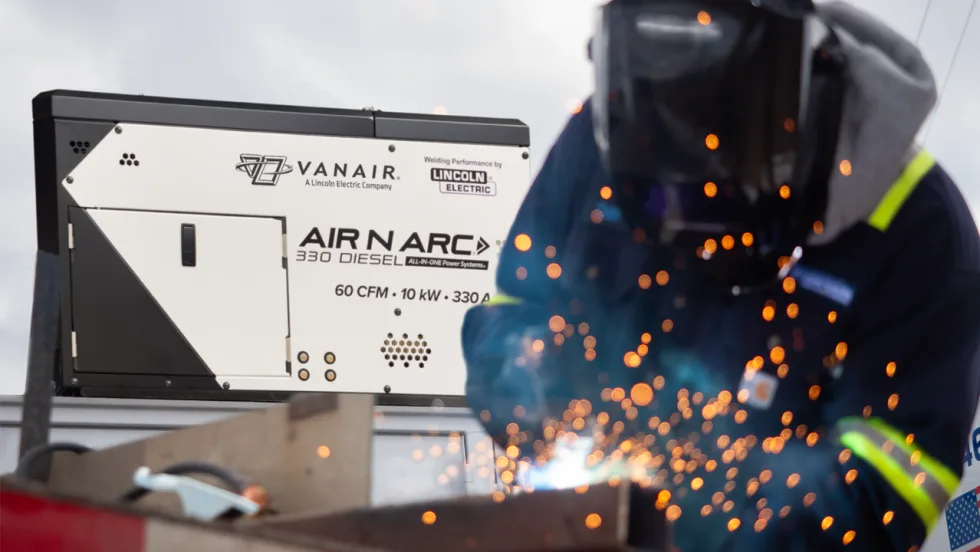
Multitasking: Vanair’s Air N Arc 330 Diesel 60 CFM All-In-One Power System
The Air N Arc 330 Diesel 60 CFM from Vanair consolidates a welder, generator, rotary screw air compressor, battery booster, battery charger, and EV charger into a single 750-pound enclosure driven by one 24.8-horsepower Kubota diesel engine.
Read More →
Buyers Products Awarded Sourcewell Cooperative Purchasing Contract for Snow & Ice Equipment
Buyers Products has been awarded a Sourcewell contract for a wide range of winter maintenance equipment and accessories, including snowplows, municipal plow systems, wing plows, spreaders, and more.
Read More →
Hilltip Introduces the SnowStriker SFT Flex Expandable Box Plow
Hilltip’s new SnowStriker SFT Flex expandable box plow features hydraulically extendable sections that allow operators to adapt the clearing width to changing conditions and applications on the go.
Read More →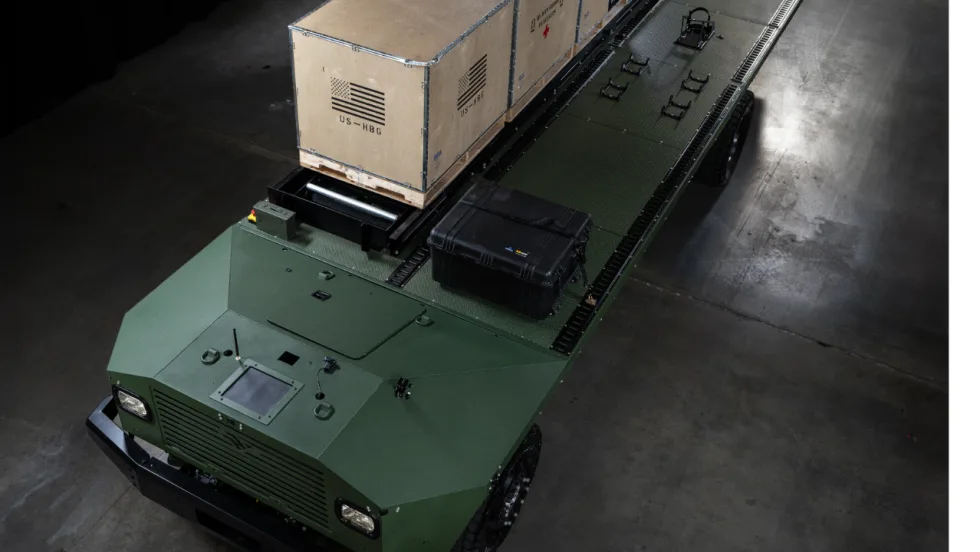
Harbinger Part of Effort to Deliver Autonomous Logistics Capabilities for U.S. Army
American Rheinmetall received an 18-month U.S. Army contract to deliver autonomous, hybrid-powered uncrewed ground vehicles. Harbinger is providing the truck platform for those vehicles.
Read More →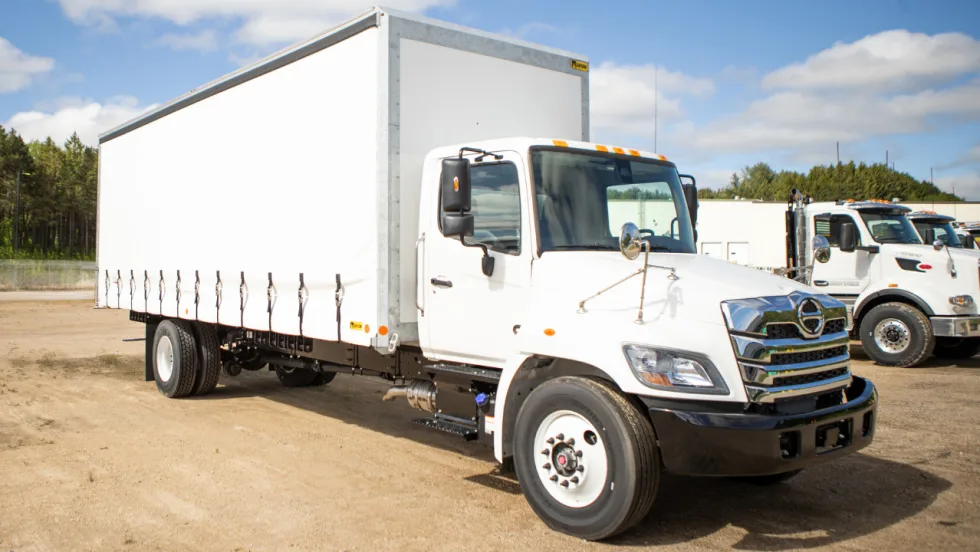
Thinking Outside of the Box: Choosing the Right Truck Body for Your Fleet
Choosing the right truck body can have a major impact on loading efficiency, cargo protection, downtime, and long-term operating costs. Here’s how dry vans, platforms, and curtainsiders compare, plus what fleets should consider before spec’ing their next truck.
Read More →
Fourth Annual Upfit Package of the Year Awards Open for 2027 Entries: One Month Left!
Think your upfit deserves industry recognition? Enter the 2027 Work Truck Upfit Package of the Year Awards before the Sept. 30 deadline. There is less than a month left to get your submissions in!
Read More →
Reading Truck Equipment & Masterack Unite as One of North America's Largest Commercial Vehicle Upfit Networks
Reading Truck Equipment and Masterack have integrated operations to create one of North America's largest and most comprehensive commercial vehicle upfit organizations.
Read More →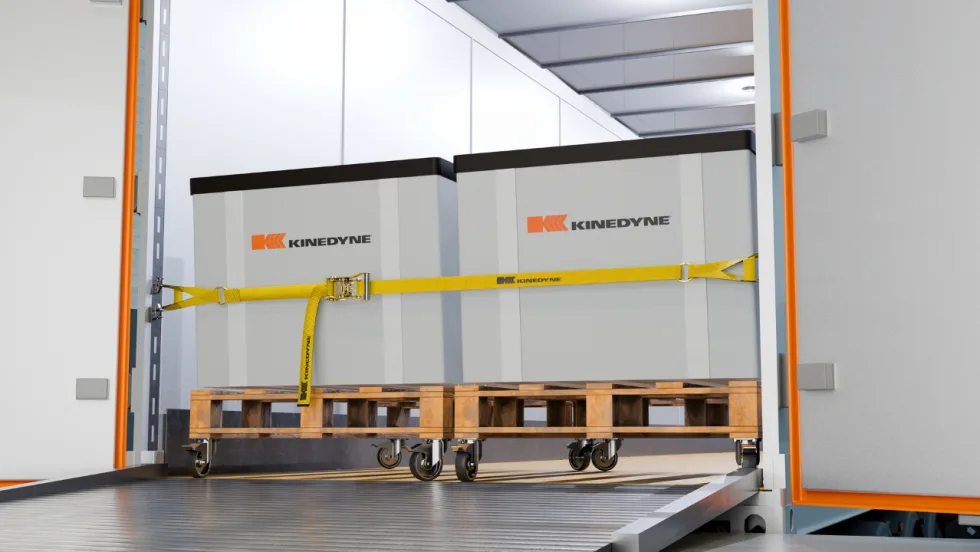
Kinedyne Launches Heavy Duty Logistic Shoring Strap
Kinedyne’s new Heavy Duty Logistic Shoring Strap features a patent-pending four-point design to deliver greater cargo stability, increased strength, and easier handling for rolling and shifting freight.
Read More →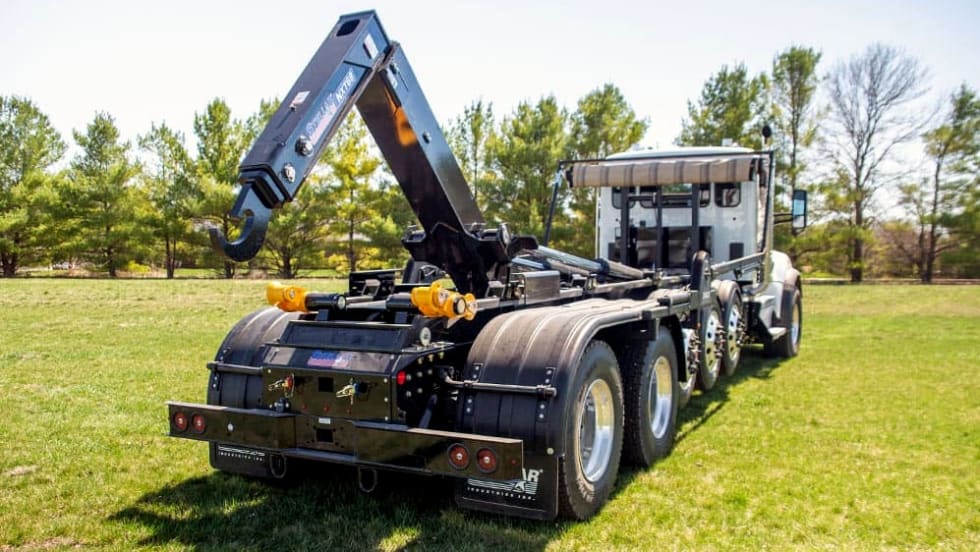
Hooklift Bumper Design from Stellar Showcases Strength & Versatility
Stellar Industries’ new bumper for the NZT Series Hooklifts come in two capacity options: the 20K, designed for Class 3 – 6 chassis with a 20,000-pound pull capacity, and the 90K, built for Class 7 and 8 chassis with a 90,000-pound pull capacity.
Read More →
Maxon Lift Awarded the Wabash Platinum Award for Supply Chain Performance
Maxon Lift, a liftgate manufacturer since 1957, received the Wabash Platinum Award for supply chain performance in 2025. Each year, Wabash presents awards to top suppliers for excellence in supply chain performance.
Read More →