




6 Questions to Consider When Evaluating Lightweight Materials for Truck Upfits
While lightweight materials have many benefits, fleet managers should pause and consider if they’re the right fit before spec’ing them.


Using the right lightweight material for the right job can help a fleet operate more effectively and efficiently.
Photo: The Knapheide Company
When used in the manufacture of truck bodies and van equipment, lightweight materials — such as thinner gauge high-strength steel, aluminum, fiberglass, and plastic composites — enable fleets to reduce vehicle weight to improve fuel economy, increase legal payload, and even drop down to a smaller (often more fuel-efficient) vehicle.
But, lightweight materials aren’t for every truck application and often come with trade-offs in terms of higher up-front costs and, in many cases, lower strength than traditional steel.
What should fleet managers consider when evaluating whether to spec lightweight materials for their truck and van upfits? Here are six questions to ask when spec’ing lightweight materials:
1. What is the Primary Objective?
Why is the fleet pursuing lightweight options? Is it for fuel savings? Is it for increased payload?
“If a fleet is doing it for fuel savings, but still loading the truck to full capacity, then there is an issue — there won’t be fuel savings,” said Chris Weiss, vice president of engineering with The Knapheide Company, a truck and van equipment manufacturer based in Quincy, Ill. “You’ve got to be really clear about what you’re trying to achieve so that you’ll have realistic expectations and generate the payback you’re looking for from using lighter materials.”
2. Will There be Sufficient Cost Savings?
One of the trade-offs for lightweight materials is the roughly 20- to 40-percent higher initial cost relative to conventional steel, depending on the type of material and amount of that material used in the upfit design. How can that incremental cost be recouped?
One way is through greater fuel efficiency. According to the U.S. Department of Energy, an extra 100 pounds in vehicle weight can reduce fuel economy by up to 2 percent. In other words, with payload being equal, a truck equipped with a lighter body will have the fuel economy advantage over a comparable steel body.
Will the upfit vehicle travel sufficient miles per year to recoup the higher price of the lighter weight material with fuel cost savings? If so, the lightweight material body could be a good fit for that application. However, in a low-mileage duty cycle, a steel body may make more financial sense because the vehicle won’t be driven enough to justify the lightweight material premium.
Another consideration is increased payload from the lighter weight body or equipment. Will the additional payload capacity pay for itself in fewer trips per day (because the vehicle can carry more product and gear) and increased productivity?
There is also the potential downsizing opportunity. Will the lightweight material upfit enable the fleet to select a smaller chassis? This would not only improve fuel economy but also lower vehicle acquisition cost by $4,000-$5,000 for light-duty trucks — and substantially more on medium-duty units.
3. Is the Material Appropriate for the Application?
Joe Birren, truck application specialist for Donlen, a full-service fleet management company headquartered in Northbrook, Ill., and a wholly own subsidiary of the Hertz Corporation, posed this question: “If a lightweight material is replacing a stressed component (such as a shelf, tie-down, step bumper) will the component require the thickness of the material to increase to the point that the weight savings is negated?”
It all boils down to matching the right material to the application.
“If it’s a heavy- or severe-use application and the vehicle is operated daily in these conditions, then lightweight materials may not be appropriate or cost effective,” said Tom Keilty, senior vice president of customer and vehicle services and chief operating officer of PHH Arval. “And, some lightweight materials may not have the durability for long or extended lifecycles, so the higher up-front cost of some lightweight materials could yield unfavorable payback or total cost of ownership (TCO), depending on length of lifecycle,”
Weiss from Knapheide added: “If the customer is not really loading a lot of heavy items on the floor of the body, for example, that’s an opportunity to use lighter weight material, like aluminum or plastic. Sometimes you can even alter the design of the steel to take a pretty significant amount of weight out of the upfit, while achieving sufficient strength and keeping costs low.”
Weiss recommended taking a hybrid approach to lightweight material selection to strike an optimal balance between desired weight savings, strength, durability, and cost.
“Let’s say you’re designing a steel service body. As you look for ways to reduce weight, you notice a component that’s acting more as a cover, with very little structural purpose,” Weiss said. “Many times we may take that part and, instead of using steel, make it out of aluminum or thermal form plastic or fiberglass. You can significantly reduce weight by pinpointing components within the upfit design that can be built out of any number of lightweight materials, depending on the application, versus being locked into one material.”
4. Will Using Lightweight Components Increase Upfit Lead Time?
How soon will the vehicle need to be put into service? If the upfit includes lightweight materials in the design, will this create any substantive delays versus using traditional materials?
This is important to clarify up front with the upfitter to ensure the vehicle is completed when it’s needed.
5. How Difficult or Convenient Will it be to Repair the Body?
Also, look at the maintenance and reparability of the material as well.
“Reparability is often one of the tradeoffs you make. You make an all-aluminum body, but if it gets damaged, you can’t just take it to any welding shop to get it repaired. The process is a little more complicated. That has to be factored into your analysis,” said Weiss of Knapheide.
6. Will the Upfit Material Lifecycle Exceed Vehicle Lifecycle?
“If yes — unless the lightweight material upfit can be cost effectively transferred to the new vehicle — it’s unlikely you will recoup the initial upcharge,” said Birren with Donlen. “This is also dependent on the fleet’s vehicle replacement parameters. Consider these replacement parameters to determine if the overall cost per mile justifies the premium for the lightweight material.”
The Bottom Line
“A common misconception is that one material fits all situations,” said Weiss of Knapheide. “There are so many applications out there and every fleet has different needs. For some fleets, they want to carry more on the truck without bumping up to a bigger chassis. Some want to go the opposite direction and fit the body on a smaller vehicle without sacrificing payload. Others say, ‘I want to increase fuel mileage.’ Then you have those who say, ‘I’m cost sensitive.’ You’re mixing and matching to try to find the right solution for the job. There are tradeoffs with all these lightweight and traditional materials — positives and negatives.”
More Upfitting

DECKED Expands Signature Drawer System to Most Popular SUVs
DECKED's signature Drawer System, a fixture in truck beds since 2014, now fits a full lineup of SUVs, including the Jeep Wrangler, Toyota 4Runner, Ford Bronco, Toyota Land Cruiser, and more.
Read More →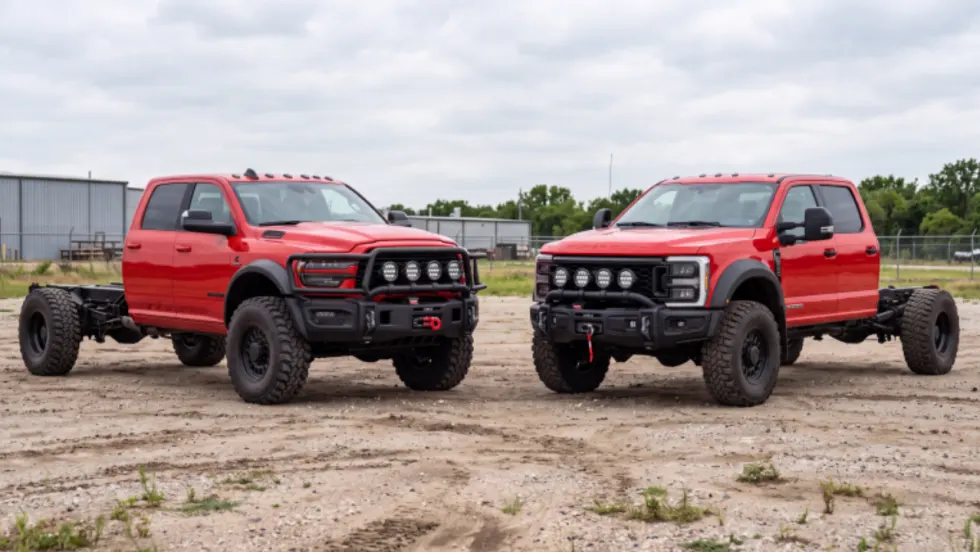
Acela Adds Ford and Ram Platforms With DuraLink Suspension
Acela adds Class 3-5 Ford and Ram chassis with DuraLink suspension, giving upfitters new options for demanding on- and off-road fleet applications.
Read More →
Re-rating Gross Vehicle Weight Ratings (GVWR): Why and How it's Done
Sometimes, it is not in a fleet’s best interests to have a vehicle at a given GVWR. Changing the GVWR to a special value can be done, but the process is complicated.
Read More →

Tekmodo Introduces CargoBright Brand of Translucent Roofs
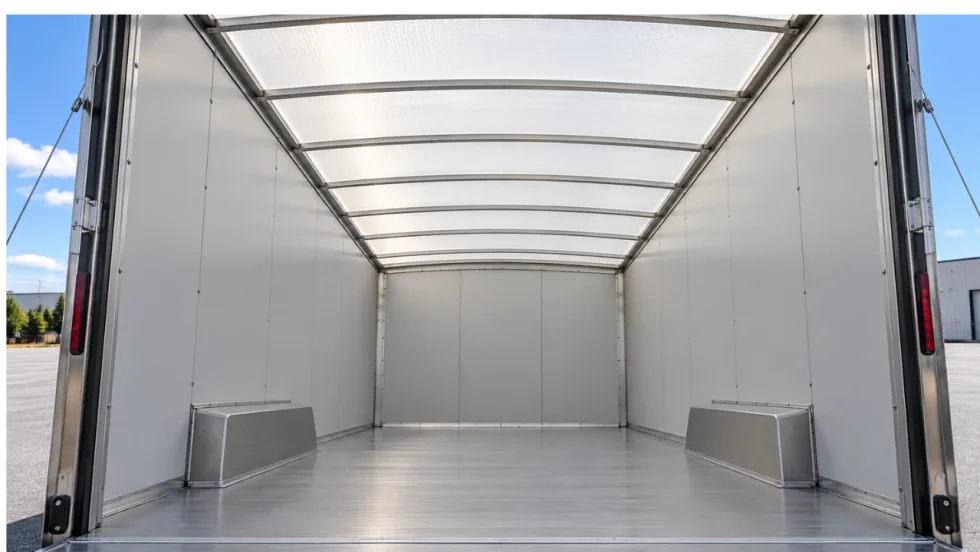
CargoBright is designed to diffuse daylight across the cargo area while performing as a working vehicle roof. Its reinforced composite construction is designed for impact, abrasion, moisture exposure, and UV exposure.
Read More →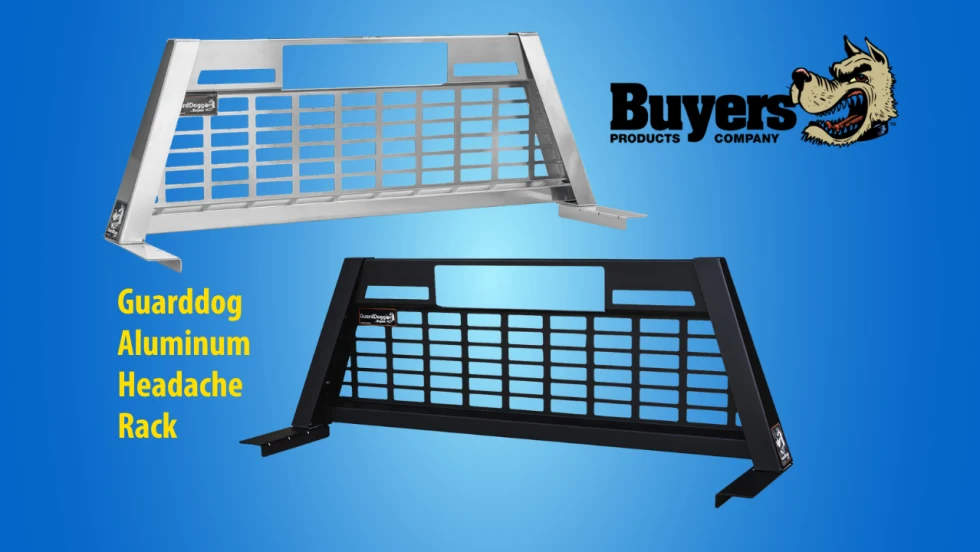
Buyers Products Expands Popular GuardDogg Headache Rack Line
Buyers Products’ aluminum GuardDogg headache rack is now available to contractors, construction crews, and utility fleets that want to reduce vehicle weight without sacrificing functionality.
Read More →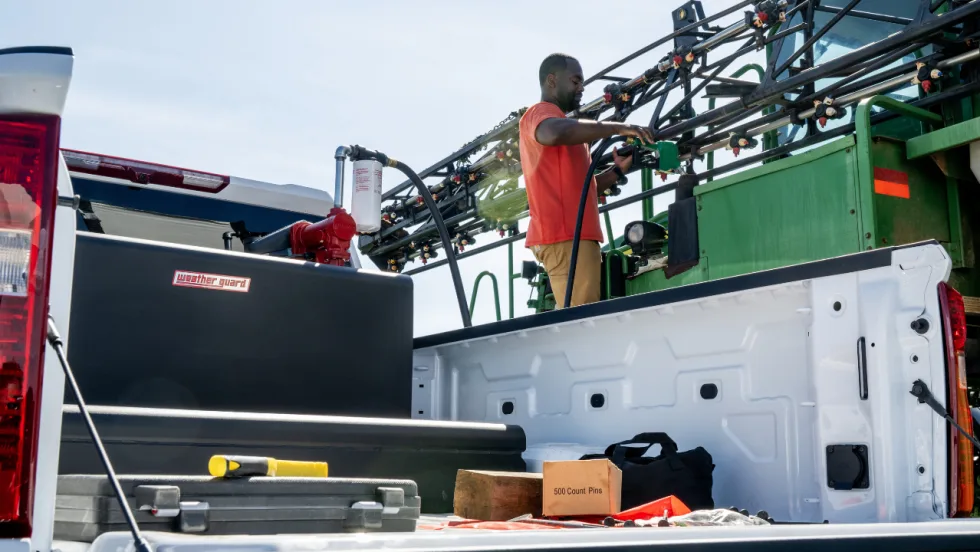
New Weather Guard Transfer Tank Engineered to Reduce Downtime and Improve Fleet Productivity
Weather Guard completely redesigned its line of transfer tanks to improve durability, simplify installation, and keep equipment running in demanding field conditions.
Read More →
How Machine Lifts Drive Safety & Efficiency for Fleets
What is a machine lift, what fleets need them, and how do they improve safety and drive efficiency? What advantages do they have over ramps and liftgates?
Read More →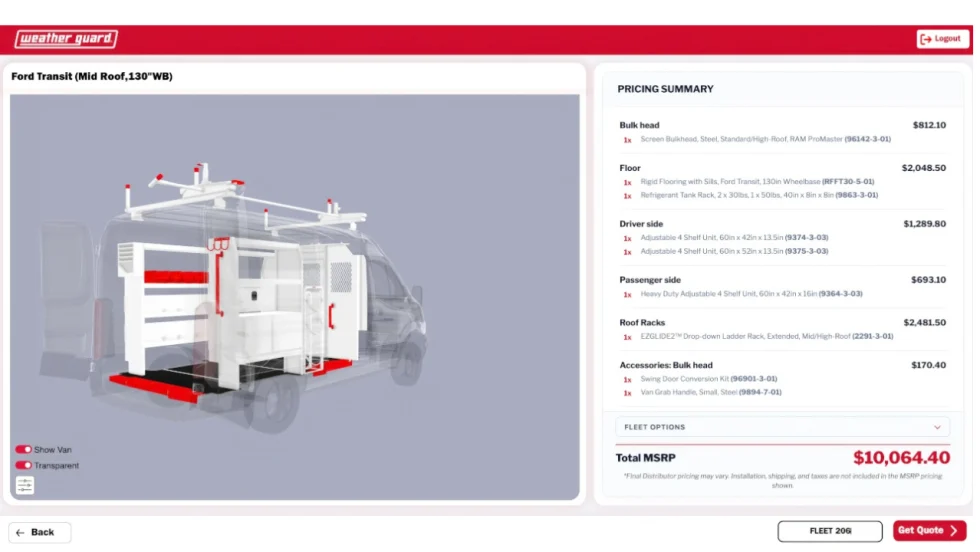
New Weather Guard Configurator Simplifies Planning and Design of Van Upfits
The Weather Guard Configurator combines vehicle-specific product compatibility with real-time 3D visualization to streamline design, quoting, and ordering for fleet managers, upfitters, and professional users. The latest version is now available for vans, with truck upfitting being added in early 2027.
Read More →
Isuzu Donates New N-Series NRR Truck to South Greenville Fire District to Support Community Outreach
Isuzu North America Corporation donated a new Isuzu N-Series NRR, equipped with a Morgan truck body and a Palfinger liftgate, to support fire safety education, community engagement, and outreach programs throughout Southern Greenville County, South Carolina.
Read More →
M.H. Eby Announces Bostick Truck Center as Michigan Distributor
Bostick Truck Center in Pontiac, Michigan, is now the official distributor for Eby Truck Bodies in Michigan. It will have access to Eby’s Ford, GM, and Ram chassis pool programs.
Read More →