





Best Practices for Safe Driving in Light- and Medium-Duty Trucks
5 Things to Know When Selecting Cargo Van Loading Ramps
Why should you install folding loading ramps in your cargo vans, and what considerations do you need to keep in mind when selecting the proper ramp for your specific application? Here are five things you need to know when purchasing ramps.
December 18, 2024
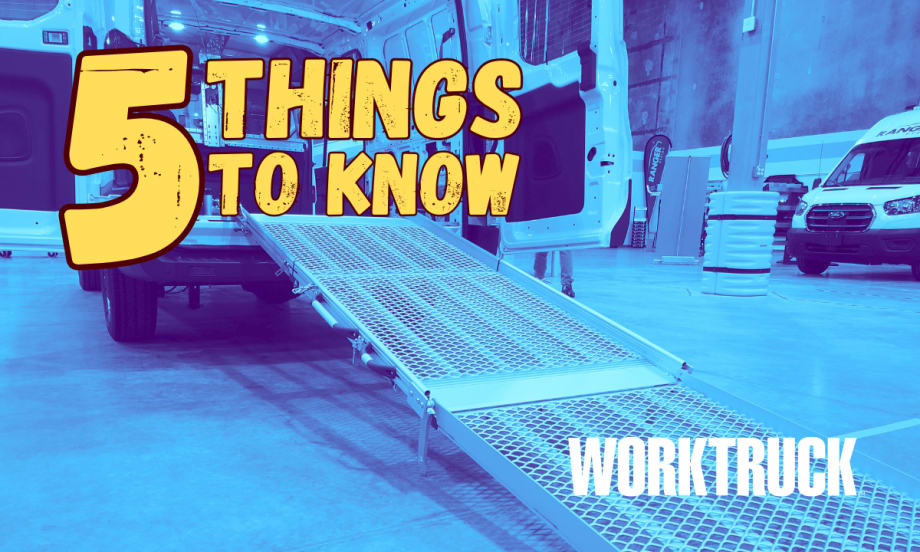
Lightweight folding cargo ramps can provide a measure of safety for drivers who unload cargo.
Photo: Feal/Work Truck
4 min to read
Delivery fleet drivers know what it is like to be in and out of the cargo area of a van all day. Of course, there are slip-and-fall considerations, but adding a folding loading ramp can mitigate those risks, make unloading easier, and help keep drivers happier.
The cargo van segment has grown to include fleets with technicians, service professionals, electricians, DJs, caterers, and many more occupational roles where workers must transport tools of the trade or supplies. Those workers also can face multiple entries and exits of the van throughout the day.
“Cargo vans are growing in popularity as people conduct business out of these,” said Marat Shterenberg, US sales director, FeAl Ramp, a Sweden-based leader in producing aluminum ramps.
Shterenberg said that, in all those scenarios, a small, lightweight ramp could prove to be a wise upfit. It is no longer just delivery fleets that can benefit from loading ramps.
“Really, the biggest point of contention has been safety, and right now, people are looking to mitigate that manual loading and unloading point,” Shterenberg explained. “Typically, that's where we see most injuries occur.”
By creating a safer work environment for employees by installing ramps, a fleet may also benefit from reductions in insurance rates, he added.
Loading ramps need to be sturdy, able to handle the weight of a worker and cargo that is being loaded and unloaded, and provide a safe non-slip surface even during inclement weather.
Other considerations include the ease of deployment and closing the ramp, which is often done with assistance from gas struts rather than straight brute strength. Plus, they must be compact and not detract from interior cargo space.
“We feel there are businesses, small fleets, large fleets, that don't know yet that this is the type of solution they need in their cargo vans,” Shterenberg added.
FeAl entered the US market in late 2018 and onboarded its first customer, one with a nearly 3,000-vehicle fleet, soon after. Shterenberg said ramp installation was prioritized for delivery technicians who deliver and service the company’s products in that company's case.
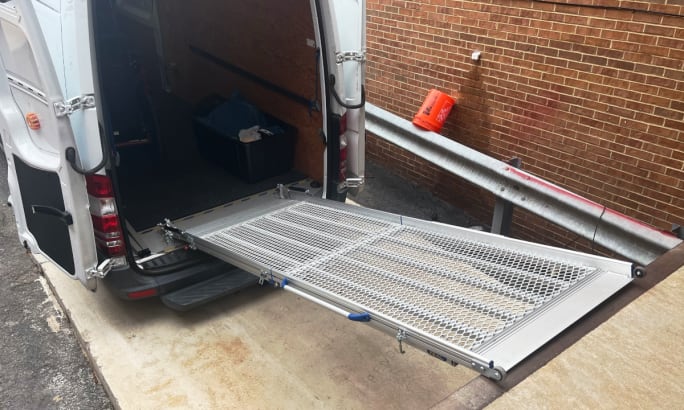
Loading ramps can also be deployed to reach loading docks.
Photo: Feal
Installing a loading ramp can be an easy process. For FeAl, a common option is a quick-release ramp, which Shterenberg said with that approach, two people can install or remove a ramp in about 30 seconds. If the ramp is not needed, remove it and set it aside. Then when it needs to go back into the van, it’s quick and easy.
But, there are several forms of installation.
“What we introduced in North American market earlier this year are our adapter plates. You don't have to drill anything into the floor of the van. With a quick release, you do need to drill through the floor, but the hardware is minimal in size,” Shterenberg added.
He noted that the adapter plates are important when installing ramps in battery-electric cargo vans.
“The adapter plate was created to accommodate electric vans because, of course, you cannot drill into the floor. The adapter plate interfaces with the OEM D rings,” he said. ”So, your Ford Transits and your Ram Pro Masters and others have these D rings at the rear of the van. Our adapter plate is already pre-drilled for how the OEM D rings are positioned.”
“It's an installation that can literally take under five minutes because you're just interfacing with the existing OEM D rings already that come right off the assembly line,” said Shterenberg.
However, even with those installation options, a fleet can still choose to just drill through the feet of the ramp and use four mounting bolts to permanently attach the hardware.
With most installation approaches, when it is time to remarket a vehicle, a fleet can remove a loading ramp and install it in a new vehicle.
However, fleet managers must understand all the considerations when purchasing loading ramps for the first time. For that reason, Shterenberg has provided five tips, which are:
1. Match Load Capacity to Your Needs
Ensuring your ramp meets the right load capacity is essential for both safety and efficiency. Too low a capacity can create hazardous situations while over-engineering can be unnecessarily costly. For peace of mind, select a ramp that comfortably fits your cargo requirements.
2. Consider Installation and Transfer Options
For fleet operations, flexibility is key. Ramps with quick-release options or no-drill installation make it easy to transfer ramps between vehicles, ideal for rental or rotating fleets. This not only improves fleet efficiency but also reduces downtime during maintenance.
3. Prioritize Safety with All-Weather Surfaces
Ramps are used rain or shine, so choosing a non-slip surface that holds up in wet, snowy, or muddy conditions is crucial. Mesh surfaces or textured designs offer reliable grip, reducing the risk of slips and keeping your workforce safe.
4. Optimize Space Efficiency
In fleet vehicles, every inch counts. Compact ramp designs save space and keep loading areas clear for cargo. Look for ramps that fold or store in minimal space to maximize the functionality of your vehicle’s storage.
5. Ensure Versatility for Various Loading Scenarios
A versatile ramp can handle more than one type of job. Ramps that connect to loading docks or bridge between vehicles bring added value, making them suitable for a range of fleet applications and reducing the need for additional equipment.
Subscribe to Our Newsletter
More Upfitting
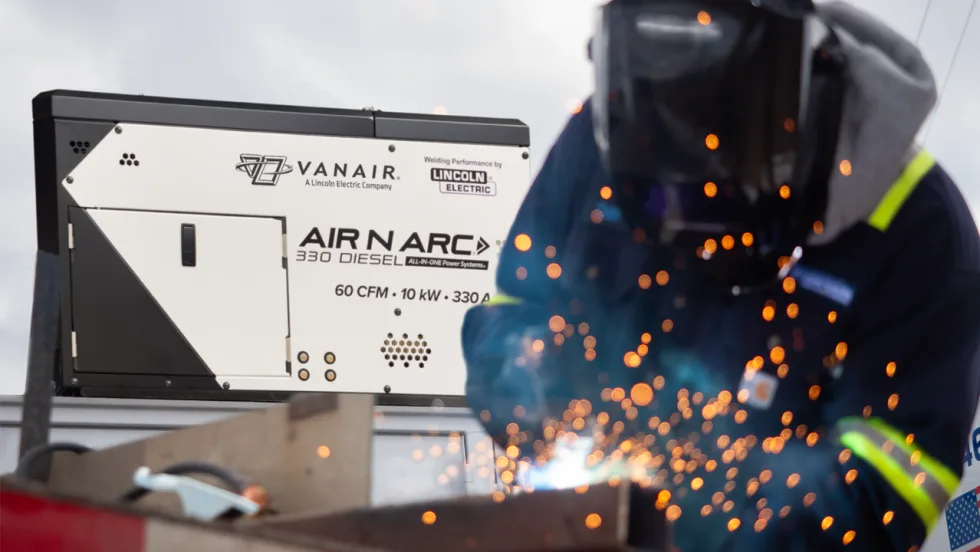
Multitasking: Vanair’s Air N Arc 330 Diesel 60 CFM All-In-One Power System
The Air N Arc 330 Diesel 60 CFM from Vanair consolidates a welder, generator, rotary screw air compressor, battery booster, battery charger, and EV charger into a single 750-pound enclosure driven by one 24.8-horsepower Kubota diesel engine.
Read More →
Buyers Products Awarded Sourcewell Cooperative Purchasing Contract for Snow & Ice Equipment
Buyers Products has been awarded a Sourcewell contract for a wide range of winter maintenance equipment and accessories, including snowplows, municipal plow systems, wing plows, spreaders, and more.
Read More →
Hilltip Introduces the SnowStriker SFT Flex Expandable Box Plow
Hilltip’s new SnowStriker SFT Flex expandable box plow features hydraulically extendable sections that allow operators to adapt the clearing width to changing conditions and applications on the go.
Read More →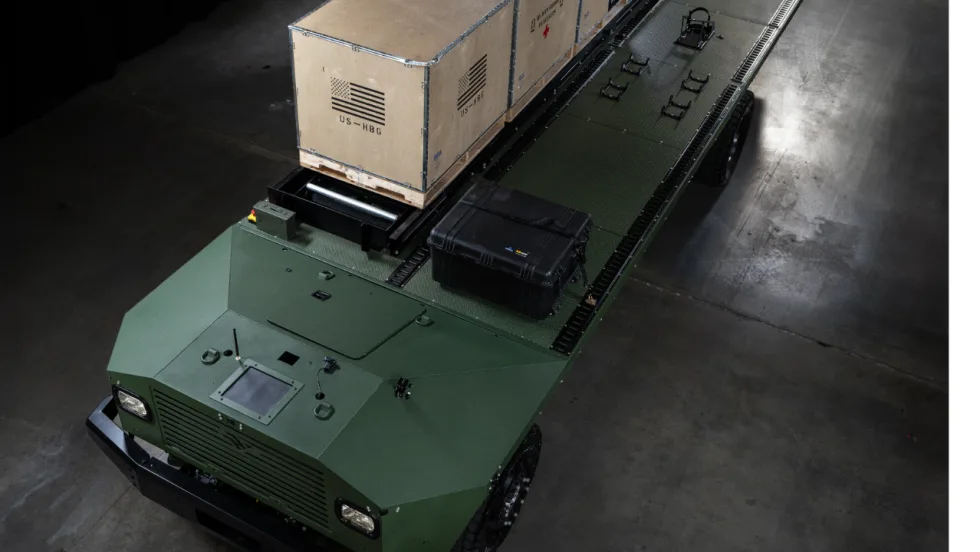
Harbinger Part of Effort to Deliver Autonomous Logistics Capabilities for U.S. Army
American Rheinmetall received an 18-month U.S. Army contract to deliver autonomous, hybrid-powered uncrewed ground vehicles. Harbinger is providing the truck platform for those vehicles.
Read More →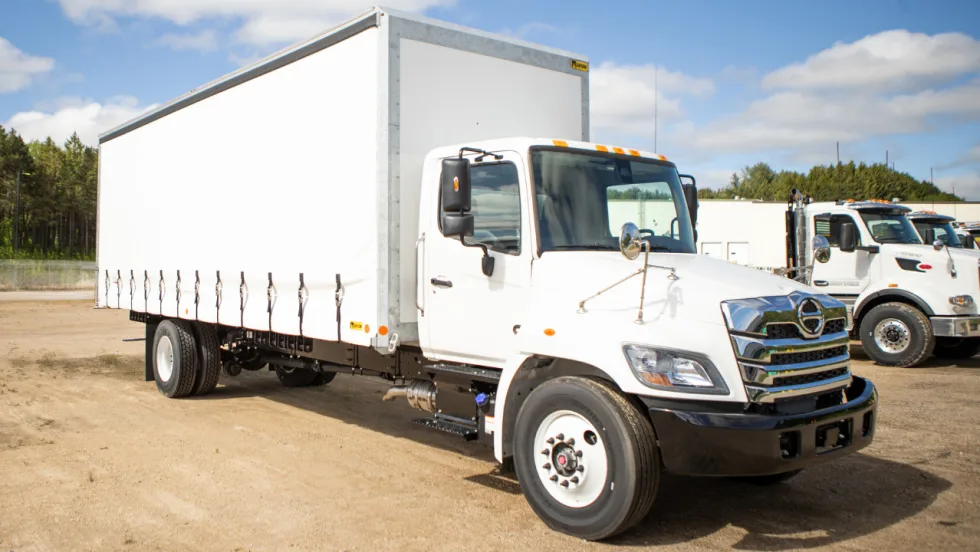
Thinking Outside of the Box: Choosing the Right Truck Body for Your Fleet
Choosing the right truck body can have a major impact on loading efficiency, cargo protection, downtime, and long-term operating costs. Here’s how dry vans, platforms, and curtainsiders compare, plus what fleets should consider before spec’ing their next truck.
Read More →
Fourth Annual Upfit Package of the Year Awards Open for 2027 Entries: One Month Left!
Think your upfit deserves industry recognition? Enter the 2027 Work Truck Upfit Package of the Year Awards before the Sept. 30 deadline. There is less than a month left to get your submissions in!
Read More →
Reading Truck Equipment & Masterack Unite as One of North America's Largest Commercial Vehicle Upfit Networks
Reading Truck Equipment and Masterack have integrated operations to create one of North America's largest and most comprehensive commercial vehicle upfit organizations.
Read More →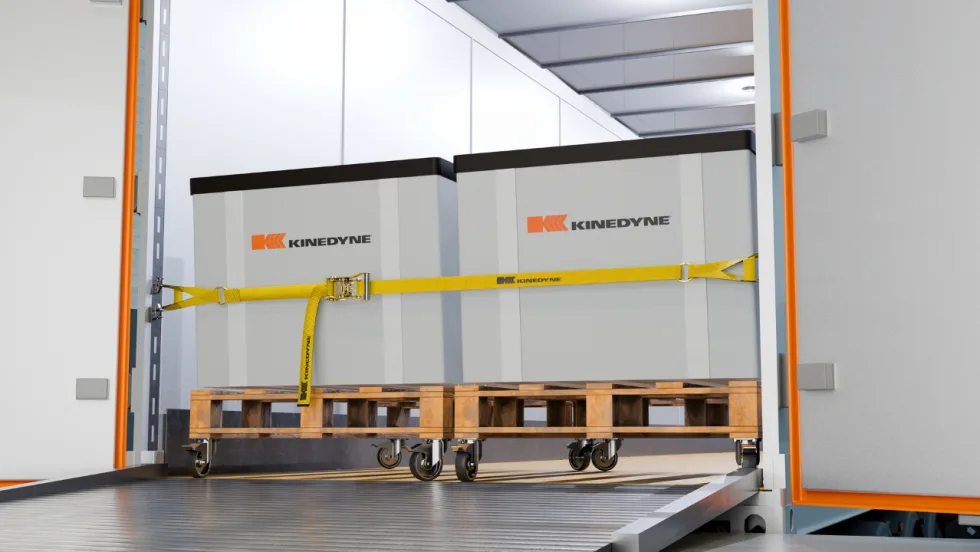
Kinedyne Launches Heavy Duty Logistic Shoring Strap
Kinedyne’s new Heavy Duty Logistic Shoring Strap features a patent-pending four-point design to deliver greater cargo stability, increased strength, and easier handling for rolling and shifting freight.
Read More →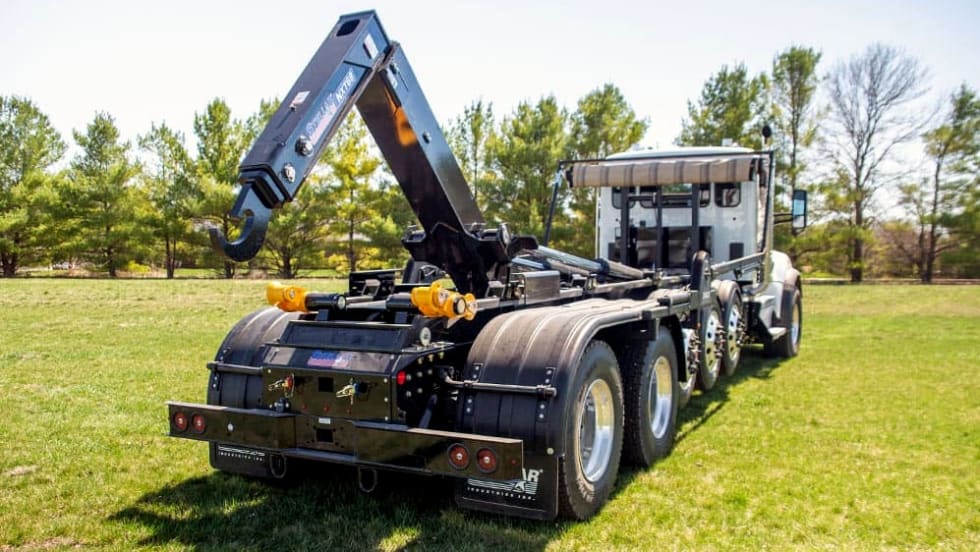
Hooklift Bumper Design from Stellar Showcases Strength & Versatility
Stellar Industries’ new bumper for the NZT Series Hooklifts come in two capacity options: the 20K, designed for Class 3 – 6 chassis with a 20,000-pound pull capacity, and the 90K, built for Class 7 and 8 chassis with a 90,000-pound pull capacity.
Read More →
Maxon Lift Awarded the Wabash Platinum Award for Supply Chain Performance
Maxon Lift, a liftgate manufacturer since 1957, received the Wabash Platinum Award for supply chain performance in 2025. Each year, Wabash presents awards to top suppliers for excellence in supply chain performance.
Read More →