




2024 Work Truck Trends: Navigating Disruptions and Building Resilience
Fleet supply chains face lingering disruptions from natural disasters, strikes, and global crises. Is your fleet ready to build resilience for the future?

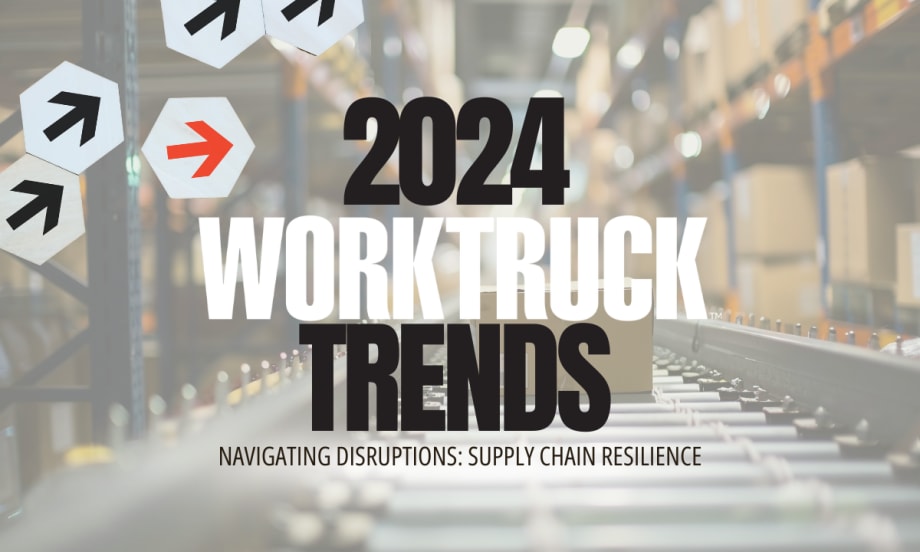
Fleet managers continue to navigate supply chain setbacks caused by global events, labor strikes, and natural disasters, ensuring operations stay on track.
Photo: Work Truck
The fleet industry’s supply chain challenges underscore how interconnected global events, natural disasters, and economic pressures impact operations. While 2024 brought some relief to vehicle production and inventory levels, the lingering effects of parts shortages, manufacturing disruptions, and logistical crises are still being felt across the industry.
This article is part of our seven-part series exploring 2024 commercial vehicle market trends, from new inventory recovery to evolving buyer behaviors.
The Ripple Effects of Global Disruptions
The pandemic recovery began in 2020 and 2021 and began a long and winding road for fleet supply chains. Fleets faced bottlenecks across multiple fronts, particularly with the availability of semiconductors and vehicle components.
“One of the first hurdles was the global semiconductor shortage,” said Tony Yankovich, Director of Fleet Consulting at RTA. “These chips, essential for nearly all modern vehicles, became a bottleneck for production. OEMs faced delays of up to two years in delivering new vehicles, leaving fleets unable to replace aging assets.”
With new vehicles delayed, fleets were forced to rely on older assets, leading to surging demand for replacement parts.
“This higher demand exacerbated parts shortages,” Yankovich added, “forcing fleet operators to source components from unconventional avenues such as aftermarket dealers, scrapyards, and even salvaging out-of-service vehicles.”
Compounding the challenge was the United Auto Workers (UAW) strike in late 2023. While short-lived, the strike further strained an already fragile production pipeline. Yankovich also highlighted significant events that rippled through early 2024.
“In March, a container ship collision at the Port of Baltimore — one of the nation’s key ports for automotive imports — shut down operations for 11 weeks, disrupting the flow of critical fleet resources,” he explained. “Then, in April, a 7.4-magnitude earthquake in Taiwan, the world’s largest semiconductor producer, further strained supply lines and left fleet managers scrambling for solutions.”
The combined impact of natural disasters, labor strikes, and geopolitical events has made one thing abundantly clear: resiliency is no longer optional.
“These challenges are a sobering reminder that the world economy directly impacts a fleet’s ability to acquire vehicles, parts, and components,” Yankovich said. “Success in fleet management will depend on recognizing potential risks, developing contingency plans, and maintaining the flexibility to adapt to unforeseen challenges.”
Improving Supply Conditions and New Opportunities
Despite persistent disruptions, there are signs of recovery in vehicle supply.
“Throughout 2024, the overall supply of new vehicles has improved significantly, and dealer inventory levels continue to increase,” said Patrick Doyle, Director of Supply Chain Solutions at Holman. “Nearly all manufacturers have returned to open ordering across most segments, including essential light-duty truck models.”
This recovery is helping fleet operators pivot back to traditionally popular fleet vehicles after years of exploring alternative options. Doyle also pointed out that incentives play a key role in easing supply chain burdens.
“The vast majority of manufacturers are offering increasingly competitive incentives across many 2025 model-year vehicles,” he explained. “This trend is helping operators reassess their vehicle cycling strategies, identify opportunities to leverage favorable market conditions, and reduce costs.”
While the challenges of the last few years have not entirely disappeared, these incentives and improved inventory provide much-needed relief for fleet managers working to balance costs and operations.
Fleet Maintenance and Supply Chain Diversification
Lisa Paul, chief strategy office for Hub International, emphasized that despite improvements in the supply chain since the pandemic, certain replacement parts — particularly powertrain and electronic components — continued to face delays in 2023.
These ongoing challenges have created additional hurdles for fleet maintenance operations, often leading to long wait times for equipment repairs. To address these persistent issues, Paul recommended a proactive and flexible approach for fleets:
Integrate Telematics and Fleet Data: "Integrating your maintenance program with telematics and fleet data is critical," Paul noted. "It helps fleets improve their overall risk profile and paints a more accurate picture of that risk for underwriters."
Consider Non-Traditional Leasing Solutions: Paul suggested that fleets evaluate alternative ownership models. "Moving away from traditional owned autos to leased solutions that include embedded maintenance, and insurance can help fleets manage costs more predictably and reduce downtime," she explained.
Leverage Broker Relationships: Paul also encouraged fleet managers to explore marketplace options with their brokers. "Aggregating purchases and leveraging bargaining power can secure better pricing on insurance solutions," she said.
"Creative approaches to vehicle ownership, maintenance, and insurance can provide fleets with the flexibility they need to overcome these challenges," Paul added.
This strategy underscores the importance of adaptability and innovation as fleets navigate ongoing supply chain disruptions.
Building Resilience for the Future
While the worst supply chain disruptions may be behind us, 2024 has shown that fleets must remain vigilant. Whether navigating delayed parts, adopting strategic vehicle cycling plans, or reevaluating asset ownership models, fleet managers must balance short-term needs with long-term resiliency.
“The increasing complexity of global logistics highlights the importance of being proactive,” Yankovich concluded. “Fleet operators who address vulnerabilities now will be better positioned to handle the next unexpected challenge.”
Check Out the Full 2024 Trends Series
Don’t miss the rest of the series:
Overall Market and Used Vehicle Outlook – A recovery in new inventory, challenges in used markets, aging fleets, and shifting buyer demands.
Emissions and Regulatory Impacts – What EPA mandates and CARB rules mean for your fleet.
Electrification and EV Adoption – Why medium-duty fleets are leading the EV charge.
Technology and AI Innovation – Transforming safety, efficiency, and decision-making.
Labor and Workforce Shortages – How fleets are fighting back with training and retention strategies.
Cost Management and Resiliency – Strategies to control TCO and build economic stability.
More Operations
Family Ties Inside the Fleet Families Building Careers Across Generations
Three fleet families share what it really takes to work together, learn across generations, and keep business from following them home.
Read More →
Shades of Fleet Call for Voices: Fleet's Hidden Heroes
Fleet’s hidden heroes are often the ones keeping everything moving behind the scenes. September’s Shades of Fleet is looking for dispatchers, coordinators, parts specialists, and other support pros to share their stories.
Read More →
Truck Centers, Inc. Celebrates National Truck Driver Appreciation Week with $1,000 Fuel Card Giveaways
During National Truck Driver Appreciation Week, Truck Centers, Inc. is offering customers a chance to fuel up for free. Customers at all Truck Centers locations can enter to win one of four $1,000 fuel cards from Sept. 14 - 18.
Read More →
Fleet Guides, AI Time-Savers, Truck Tariffs & Fuel Strategy Lead the News
This week’s Truck Chat Cheat Sheet covers new fleet vehicle guides, practical AI use cases, U.S.-Canada truck production, mixed-energy strategy, and more.
Read More →
What Fleet Employers Are Missing When Hiring Veterans
What if some of the strongest candidates for fleet are already out there, but their experience is written in a language our industry does not always recognize?
Read More →
Automotive Fleet Opens 2026 Personal Use Survey for Commercial Fleet Managers
Less than two weeks left! Commercial and corporate fleet managers are invited to share how their organizations handle company vehicle personal-use policies, charges, and driver eligibility.
Read More →
What Resilient Fleets Do Differently When Conditions Change
Fleet resilience is about more than reacting to disruption. Lauren Fletcher talks with AP Fleet’s Alex Coveney about flexibility, planning, scaling, and what helps fleets adapt when business conditions shift.
Read More →
If We Want the Next Generation in Automotive, We Have to Give Them a Reason to Care
The automotive industry talks constantly about its workforce shortage. But before we can recruit the next generation, we may need to do a better job giving kids a reason to care about automotive in the first place.
Read More →
Ram ProMaster City Under $40K, Truck Tariffs, and AI Maintenance Lead the News
A sub-$40K commercial van, tariff questions, AI-powered maintenance, and a new EV production strategy headline this week’s Truck Chat Cheat Sheet.
Read More →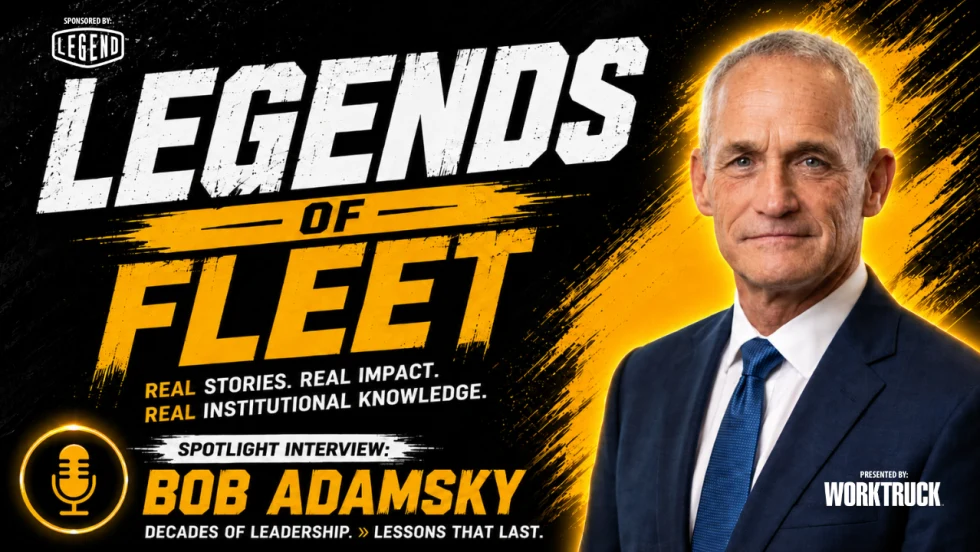
Bob Adamsky Shares the Fleet Lessons You Usually Learn the Hard Way
After more than 30 years in fleet, Arrow International’s Bob Adamsky has learned that the job is about far more than vehicles. He shares the lessons he wishes every fleet manager could learn a little earlier.
Read More →