




2024 Work Truck Trends: Labor and Workforce Shortages, Addressing the Growing Gaps
Labor shortages hit fleets hard in 2024. From technician gaps to driver retention, see how managers are using training, tech, and innovation to stay ahead.

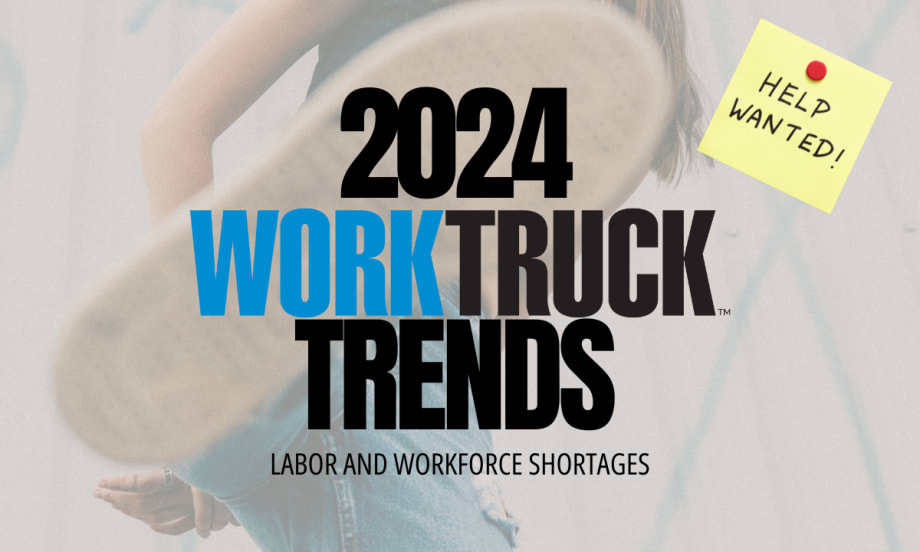
Fleets are addressing technician and driver shortages with innovative training, advanced safety tech, and operational efficiencies to meet growing demands.
Photo: Work Truck
Labor shortages continue challenging the fleet industry, with technician and driver deficits becoming more pronounced in 2024. These shortages are further compounded by rising operational costs, workforce attrition, and the need for improved strategies to attract and retain talent.
Fleet managers are adapting through innovative training programs, technology integration, and creative workforce solutions to ensure efficiency and stability.
This article is part of our seven-part series exploring 2024 commercial vehicle market trends, from new inventory recovery to evolving buyer behaviors.
Technician Shortages: A Growing Concern
The demand for skilled maintenance technicians has reached critical levels, with no immediate relief. “The fleet industry has been grappling with a shortage of skilled maintenance technicians for years, and the outlook shows little improvement on the horizon,” said Tony Yankovich, Director of Fleet Consulting at RTA. “According to the U.S. Bureau of Labor Statistics, demand for new technicians in the automotive, light, and medium truck sectors is projected to grow by 3% over the next decade. The need is even greater in the heavy vehicle and mobile equipment service sector, with a nearly 10% increase anticipated.”
These shortages are exacerbated by the retirement of seasoned professionals and industry fatigue driving workforce attrition. “An annual churn rate of approximately 120,000 technicians intensifies competition for qualified candidates,” Yankovich explained. “The result? Many individuals outside the fleet industry are being asked to step into leadership positions. While they often bring strong management skills, their limited understanding of fleet operations presents challenges.”
To address this, Yankovich emphasized the need for proactive solutions. “Investing in technician training programs, creating pathways for career advancement, and fostering mentorship opportunities are essential steps. Organizations must also bridge the knowledge gap for new leaders, equipping them with the tools and insights needed to succeed in fleet-specific roles.”
Driver Shortages and Retention Strategies
Driver shortages persist as another major challenge for fleets. “With a persistent shortage of skilled drivers, fleets are prioritizing driver retention strategies and enhanced training programs,” said Mike Willey, Assistant General Manager at PacLease. “Investments in employee well-being, safety protocols, and ongoing education are essential for maintaining a skilled workforce and reducing turnover rates.”
Technology also plays a role in enhancing safety and retaining drivers. “The integration of advanced safety features, such as collision avoidance systems and lane-keeping assistance, has become more prevalent,” Willey added. “These technologies are crucial for reducing accidents and insurance costs, enhancing overall fleet safety.”
Operational Efficiency: Alleviating Labor Pressures
Fleet managers are also looking for innovative ways to alleviate the burden of labor shortages through operational efficiencies. Tucker Perkins, President & CEO of the Propane Education & Research Council (PERC), highlighted how alternative energy solutions contribute to this effort.
“Propane autogas vehicles can play a role in addressing this issue by helping fleets manage resources more efficiently and create a better experience for drivers,” Perkins said.
With their lower fuel, maintenance, and infrastructure costs, propane autogas vehicles are helping fleets streamline operations and reduce downtime.
“Propane autogas vehicles typically experience less downtime for maintenance compared to other energy sources, helping fleet managers increase efficiency,” Perkins explained. “Drivers also appreciate the reduced noise and emissions, propane autogas vehicles’ reliable startups, and faster cabin warmups. These factors can help propane autogas fleet managers retain their best employees.”
The Cost Factor: Rising Expenses and Strategic Adaptation
The ongoing labor shortages are further complicated by economic pressures increasing the cost of operating fleets.
“There has been a significant increase in operating costs for fleets in 2023 due to inflation, rising interest rates, and limited vehicle availability,” said Lisa Paul, Chief Strategy Officer for Transportation at Hub International. “Nearly every line item on a fleet carrier’s budget increased, including vehicle insurance, new- and used-vehicle prices, and the cost of gas.”
Paul noted that fleet managers must adapt strategies to minimize costs while maintaining operations. “Using telematics and data-driven solutions as part of your business planning and strategy is key to minimizing cost increases and the economic uncertainty that comes with it,” she explained.
Fleets increasingly look at data-driven tools to improve driver performance and reduce risk. “Commercial fleets of all sizes need to ask themselves: How can I deploy a mobile app on a mobile device that my driver can use to become a better overall driver?” Paul said. “Using telematics and driver behavior tools, fleets can glean actionable insights that improve safety and insurance buying decisions.”
Bridging the Workforce Gap
As the fleet industry navigates technician and driver shortages alongside rising costs, a clear takeaway emerges: proactive strategies are no longer optional but necessary. From workforce development programs and alternative energy solutions to advanced safety technologies and telematics, fleets are finding ways to bridge gaps and ensure operational efficiency.
“The fleet industry must address these workforce challenges proactively,” said Yankovich. “By investing in talent development, creating advancement pathways, and embracing technology, fleets can position themselves to meet today’s challenges and build a sustainable foundation for the future.”
Check Out the Full 2024 Trends Series
Don’t miss the rest of the series:
Overall Market and Used Vehicle Outlook – A recovery in new inventory, challenges in used markets, aging fleets, and shifting buyer demands.
Navigating Disruptions: Supply Chain Resilience – How fleets are overcoming parts shortages and global challenges.
Emissions and Regulatory Impacts – What EPA mandates and CARB rules mean for your fleet.
Electrification and EV Adoption – Why medium-duty fleets are leading the EV charge.
Technology and AI Innovation – Transforming safety, efficiency, and decision-making.
Cost Management and Resiliency – Strategies to control TCO and build economic stability.
More Operations
Family Ties Inside the Fleet Families Building Careers Across Generations
Three fleet families share what it really takes to work together, learn across generations, and keep business from following them home.
Read More →
Shades of Fleet Call for Voices: Fleet's Hidden Heroes
Fleet’s hidden heroes are often the ones keeping everything moving behind the scenes. September’s Shades of Fleet is looking for dispatchers, coordinators, parts specialists, and other support pros to share their stories.
Read More →
Truck Centers, Inc. Celebrates National Truck Driver Appreciation Week with $1,000 Fuel Card Giveaways
During National Truck Driver Appreciation Week, Truck Centers, Inc. is offering customers a chance to fuel up for free. Customers at all Truck Centers locations can enter to win one of four $1,000 fuel cards from Sept. 14 - 18.
Read More →
Fleet Guides, AI Time-Savers, Truck Tariffs & Fuel Strategy Lead the News
This week’s Truck Chat Cheat Sheet covers new fleet vehicle guides, practical AI use cases, U.S.-Canada truck production, mixed-energy strategy, and more.
Read More →
What Fleet Employers Are Missing When Hiring Veterans
What if some of the strongest candidates for fleet are already out there, but their experience is written in a language our industry does not always recognize?
Read More →
Automotive Fleet Opens 2026 Personal Use Survey for Commercial Fleet Managers
Less than two weeks left! Commercial and corporate fleet managers are invited to share how their organizations handle company vehicle personal-use policies, charges, and driver eligibility.
Read More →
What Resilient Fleets Do Differently When Conditions Change
Fleet resilience is about more than reacting to disruption. Lauren Fletcher talks with AP Fleet’s Alex Coveney about flexibility, planning, scaling, and what helps fleets adapt when business conditions shift.
Read More →
If We Want the Next Generation in Automotive, We Have to Give Them a Reason to Care
The automotive industry talks constantly about its workforce shortage. But before we can recruit the next generation, we may need to do a better job giving kids a reason to care about automotive in the first place.
Read More →
Ram ProMaster City Under $40K, Truck Tariffs, and AI Maintenance Lead the News
A sub-$40K commercial van, tariff questions, AI-powered maintenance, and a new EV production strategy headline this week’s Truck Chat Cheat Sheet.
Read More →
Bob Adamsky Shares the Fleet Lessons You Usually Learn the Hard Way
After more than 30 years in fleet, Arrow International’s Bob Adamsky has learned that the job is about far more than vehicles. He shares the lessons he wishes every fleet manager could learn a little earlier.
Read More →