




2024 Work Truck Safety Study Shows Growing Focus on Technology
Discover the latest findings from the 2024 Work Truck Safety Study in partnership with Heavy Duty Trucking. Learn about fleet safety strategies, technology, and more.

The 2024 Work Truck Fleet Safety Study shows a growing focus on fleet safety technologies to help enhance safety and crash-reduction efforts.
Photo: Work Truck
Work Truck's latest fleet safety study, conducted in partnership with sister publication Heavy Duty Trucking, examines the top findings we heard from our light- and medium-duty truck fleet respondents.
Of the 94 fleet respondents, just over 45% said they operated Class 1-6 light- and medium-duty trucks in their fleet operations.
Responses feature private, government, and for-hire fleets, including construction, mining, utilities, agriculture, refuse and recycling, HVAC and plumbing, and more.
When respondents were grouped by fleet size, 40% operated mid-size fleets of 100-499 vehicles, 52% operated smaller fleets under 99 units, and 9% operated fleets with more than 500 vehicles.
A focus on fleet safety is a core component to ensuring fleet drivers return home to their families everyday. Safer vehicles stay on the road, working for your operation. And a focus on safety prevents unnecessary breakdowns, incidents, and headaches.
Increasing Insurance Costs
How did vehicle liability and insurance costs change in 2023 compared with the year prior?
Only 2% of light—and medium-duty fleets noted that they experienced a decrease in costs, with around 19% stating that costs were essentially unchanged. However, 58% of the respondents indicated costs increased anywhere from 1-10% to doubled.
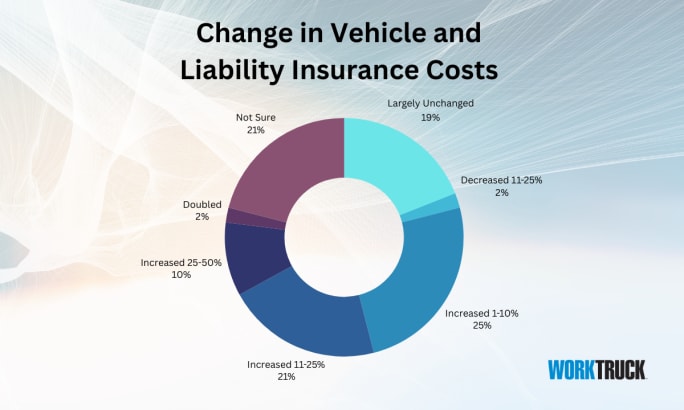
The majority of respondents noted they have seen an increase in vehicle and liability insurance costs.
Source: Work Truck
Focusing on Work Truck Fleet Safety Strategies
When digging into the top safety strategies light- and medium-duty truck fleets follow, well-maintained vehicles topped the list at 88% of fleets, noting it was a top strategy.
Rounding out the top five were written policies and procedures (66%), driver training (63%), emphasizing a culture of safety (61%), and strict driver-hiring standards (46%). Fleets were asked to select all strategies they currently use to increase fleet safety efforts.
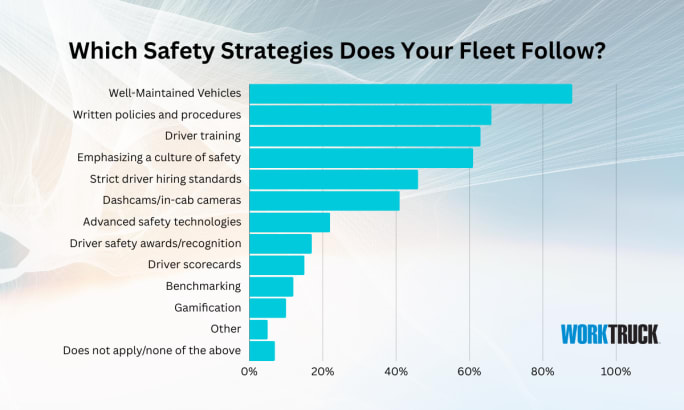
The majority of fleets (88%) found stated a well-maintained vehicle was an essential component of their fleet safety efforts.
Source: Work Truck
Using Technology to Enhance Fleet Safety Efforts
The top safety technologies that light- and medium-duty fleet respondents noted they utilize were back-up cameras (55%), air disc brakes (48%), speed limiters (40%), in-cab cameras - forward-facing only (33%), and lane-departure warnings (30%). Back-up cameras were the top safety tech utilized by these commercial fleets for two reports in a row.
Fleets are still considering dual-facing cameras (about 15%), as well as tech like see-through cameras that allow drivers to see through trailers (8%) and fatigue monitoring (10%).
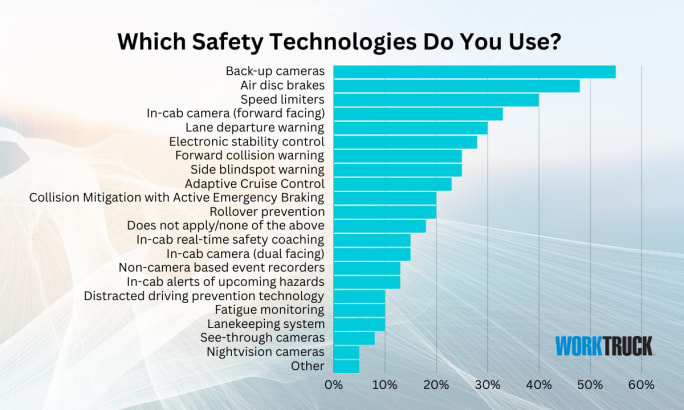
Back-up cameras are becoming a commonplace feature of many fleet vehicles and becoming a more depended on safety feature for fleet operators.
Source: Work Truck
Work Truck asked our fleet survey respondents to consider the future of fleet safety and share what tech they plan to use.
The top tech that light- and medium-duty fleets are looking to adopt in the future includes back-up cameras (23%), side blindspot warning (21%), air disk brakes (18%), and in-cab cameras – forward facing (18%). Additional tech fleets are looking to add in the future includes:
In-cab real-time driver coaching.
Rollover prevention.
In-cab alerts of upcoming hazards.

Looking to the future of safer fleets, commercial operations are looking to continue to utilize back-up cameras as well as invest more in side blindspot warning systems.
Source: Work Truck
Commercial Fleets Focus on Driver Safety Training
There are several top ways to ensure drivers are trained for safety. Light- and medium-duty fleet drivers most-often use in-person/classroom training (74%), followed by hands-on/behind-the-wheel training (69%), and independent video/online training (44%). Fleets were asked to select all training options their fleets utilize.
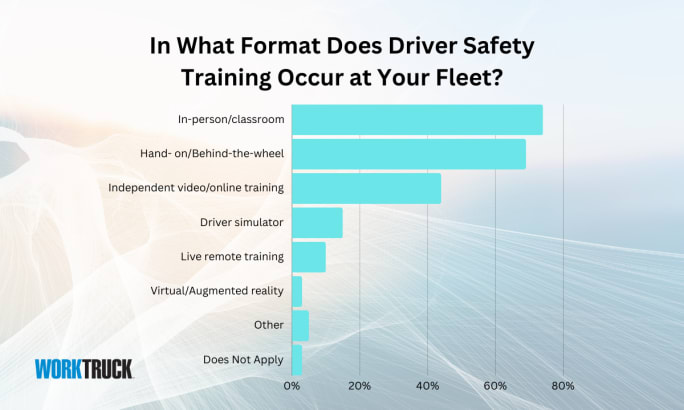
The most popular format for driver safety training continues to be in-person/classroom training, although the use of technology in this space is also growing with online and virtual options.
Source: Work Truck
When do fleets make safety-related training happen? Most of this occurs when first onboarding (79%), when new technology or equipment is introduced (67%), and after there is an incident (56%). About 41% of fleets do regular annual training, while 21% do something on a monthly rhythm.

Most fleets surveyed stated that driver safety training occurs during the onboarding process and at least once a year.
Source: Work Truck
Speed Limiting Efforts for Safety
Speed limiter use is a hot topic in commercial fleets, but they are available and used for safety and crash-reduction efforts.
There isn't a one-size-fits-all solution for commercial fleets that utilize speed limiters. The numbers depend on factors such as top speed, use of cruise control, and when additional safety systems such as automatic braking are available. The 68-70 mph speed range was the most popular limit when looking at top speeds and during manual operation.
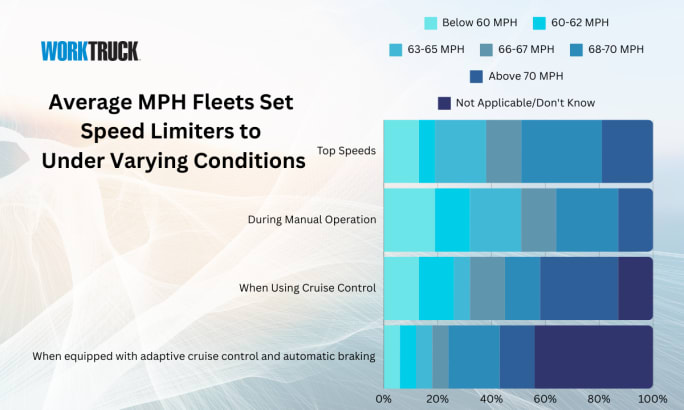
For fleets that utilize speed limiters for increased safety efforts, we broke out the top speeds in a variety of conditions.
Source: Work Truck
Fleet managers were also asked for their opinion on federal maximums for mandatory speed limiters, with the majority (36%) stating they need to be above 70 mph and the smallest percentage (3%) noting it should be below 60 mph. This is one area where a group consensus will take more work to reach.
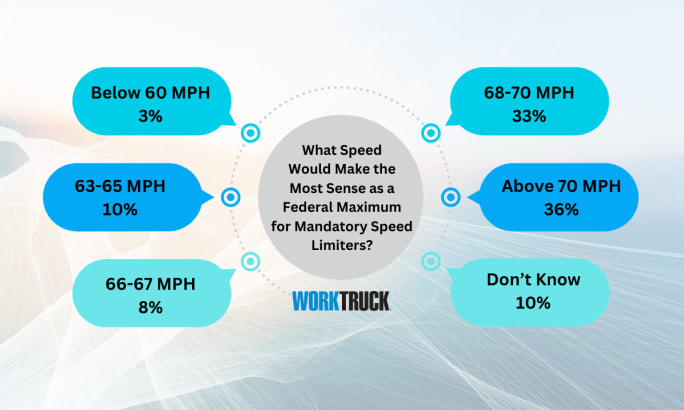
For light- and medium-duty fleets that operate heavy-duty vehicles as well, the upcoming mandatory speed limiter rule has a wide variety of opinions on what the top speed should be limited to.
Source: Work Truck
Federal Help for Crash Evaluations
The Federal Motor Carrier Safety Administration's (FMCSA) Crash Preventability Determination Program (CPDP) allows drivers and motor carriers to request a review of crash details to determine if a crash was preventable. The program is available for crashes on or after August 1, 2019.
Our survey asked fleets if they had taken advantage of this program yet. The large majority (77%) have not.
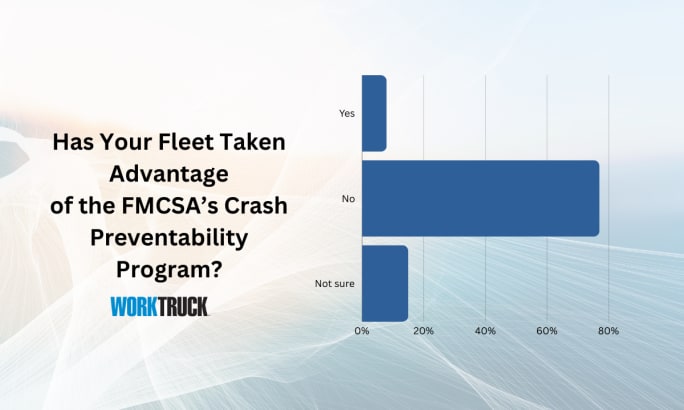
Since May 2020, FMCSA has been operating the Crash Preventability Determination Program (CPDP) and reviewing 16 specific crash types. But most of our surveyed fleets have not taken advantage of the program.
Source: Work Truck
Where Do Crashes Occur?
Our light- and medium-duty fleet manager respondents were asked to rank where their crashes occur most often.
Most respondents ranked urban streets as their top location for accidents (43%), followed by parking lots as the second most popular location (36%), followed by limited access or interstate highways, then other highways.
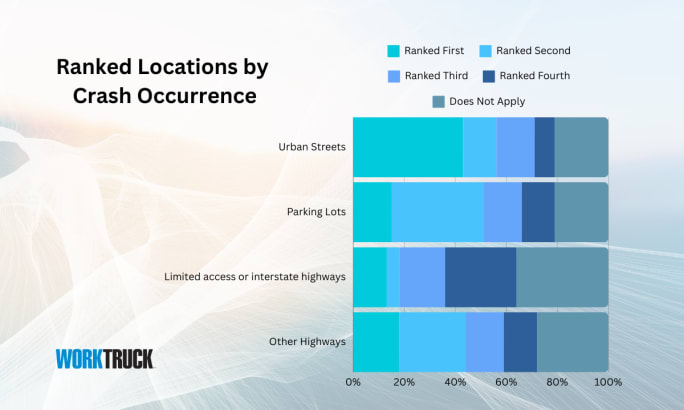
Knowing where crashes occur is an important factor in working to reduce them. Right now, urban streets are the current fleet danger zone.
Source: Work Truck
Speaking of parking lots, one of the big topics of conversation lately is the overall parking shortage for trucks.
We asked our survey respondents if this parking shortage was impacting their driver safety, and 67% of our light- and medium-duty fleets were not feeling the impact their heavy-duty counterparts were experiencing.
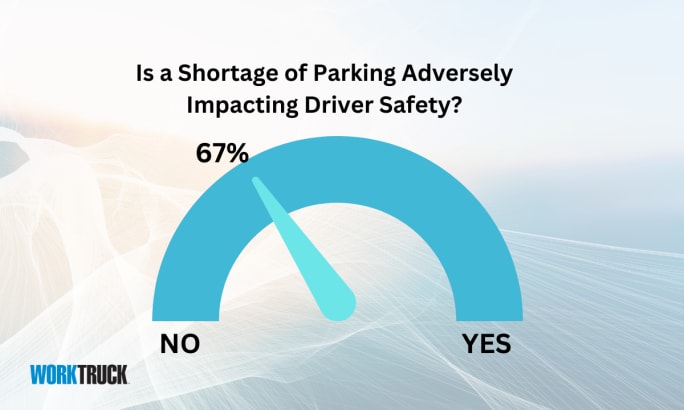
More of a concern for heavy-duty fleet operators, ongoing parking shortages are not impacting safety for the majority of our light- and medium-duty fleet operators.
Source: Work Truck
Keeping Up with Safety Regulations and Solutions
Staying on top of the changing regulations, new solutions, and safety technologies can be overwhelming.
Most of our light- and medium-duty fleet survey respondents reported sometimes feeling overwhelmed by these regulations and solutions, with 29% admitting it's becoming a bit much.
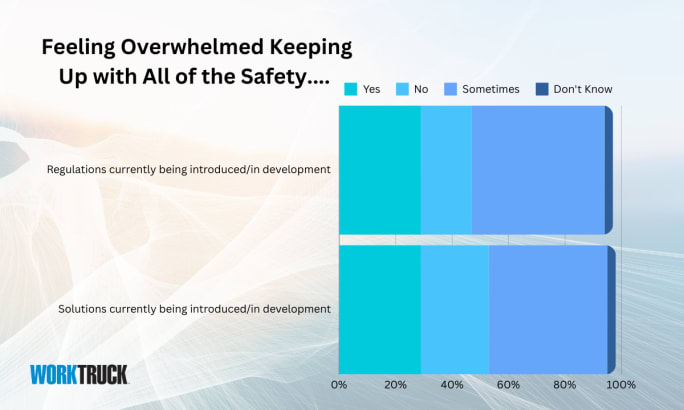
There is a lot to learn and a lot is changing when it comes to fleet safety, and most of our respondents noted they sometimes or do feel overwhelmed by it all.
Source: Work Truck
To stay informed about the latest news, solutions, tips, and more, subscribe to the Work Truck newsletter and bookmark our website so you never miss an update that will help keep your fleet drivers safer and returning home to their families every day.
More Safety
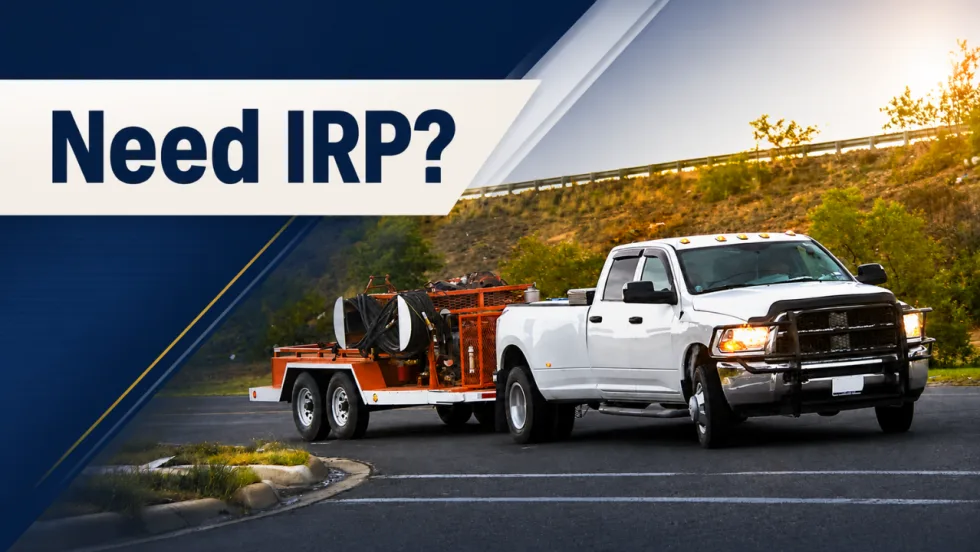
When Work Trucks Under 26,001 Pounds Need IRP Registration
Think trucks under 26,001 pounds are automatically in the clear when it comes to IRP? Not always. Learn where lighter vehicles can still run into trip permit, apportioned registration, and IFTA compliance requirements when crossing state or provincial lines.
Read More →
Volvo Trucks Releases New Safety Recommendations for Traveling with Pets
One of the most important recommendations for professional drivers traveling with pets is to ensure pets are properly restrained while the truck is moving. Other tips are available in the new guide from Volvo Trucks North America and Center for Pet Safety.
Read More →
API Issues Refueling Safety Guidelines
The American Petroleum Institute offers a list of safe vehicle refueling guidelines, including ways to avoid potential problems with static electricity discharges in fall, winter, and early spring.
Read More →
Winter Fleet Prep: Expert Tips to Keep Vehicles Running Smoothly
Cold weather can expose weak batteries, tires, fuel systems, and maintenance gaps fast. Use this winter fleet checklist to prepare trucks and drivers before temperatures drop.
Read More →
When a Work Truck Breaks Down, the Job Can Stop, Too
A work truck breakdown can stop more than the vehicle. Discover how payloads, jobsites, and specialty equipment change the roadside response.
Read More →
What Stronger Long-Term Fleet Service Partnerships Actually Require
Fleet service partnerships rarely fall apart all at once. Learn the three warning signs that trust is eroding and what fleets and providers can do before downtime, frustration, and lost revenue follow.
Read More →
Applause & TRUCE Software Partner to Improve Driver Safety Through AI-Powered Telematics & Employee Performance Management
Applause has integrated TRUCE driving metrics directly into its employee-first performance and safety platform that transforms mobile devices into AI-powered telematics.
Read More →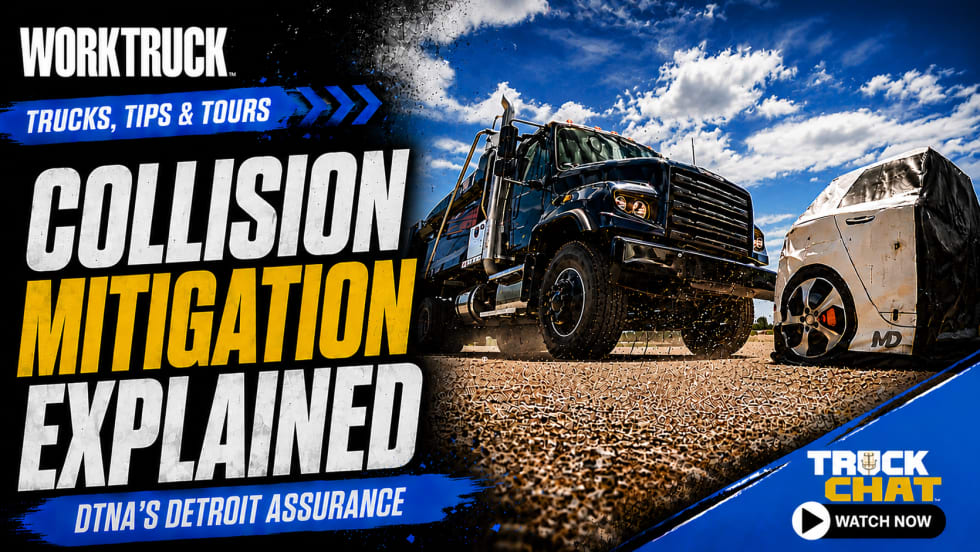
How Detroit Assurance with Active Brake Assist Works
Do you want to see what it is like to experience Detroit Assurance’s Active Brake Assist? In this video, Work Truck will put you in the cab to see how it all works and then hear more details from DTNA’s Mike Young.
Read More →
Get Left of Loss: A 5-Step Workplace Violence Prevention Framework for Fleet Operators
Violence risks do not stop at the driver’s door. Learn five practical steps fleets can take to spot threats early and protect workers before loss occurs.
Read More →
How Better Visibility Cut Speeding Violations by 48%
Fleet leaders don't need more data, they need clearer visibility into what the data is saying. This case study explores how one utility replaced speeding-event counts with a single metric — miles driven in violation — to strengthen safety and significantly reduce speeding violations.
Read More →