





Related: The Importance of Revisiting Technology
How to Reduce Fuel Costs and Increase Efficiency with Technology
Taking the time to revisit adopted technology solutions provides fleet managers with peace of mind that a solution is being used to its fullest potential.
November 5, 2019
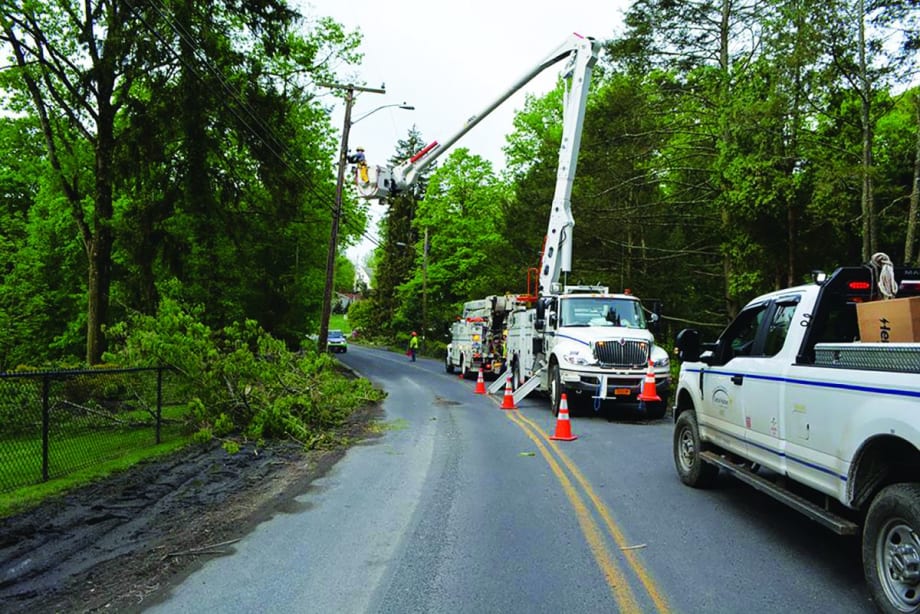
Central Hudson uses several fleet technology solutions and reviews plans annually.
Photo: Central Hudson
5 min to read
In the busy, day-to-day life of a fleet manager, it’s easy to get caught up in the status quo. If a device or piece of tech isn’t broken, why fix it?
Several fleets share their challenges and how revisiting their tech solutions has saved time and money in the long run.
Utility Fleets Improve Safety with Technology
Washington Gas depends on Chevin Fleet Solutions for its cradle-to-grave asset vehicle and asset management software system.
“We also utilize Geotab for GPS tracking and driver identification via ID reader/scanning. Additionally, DriveCam by Lytx for incident/accident audio and video recording helps encourage and improve safe driving habits,” said
Michele Davis, fleet manager at the Washington, D.C.-headquartered Washington Gas.
The 1,300-vehicle fleet typically revisits its tech every three to five years, depending on changing company needs and the advancement of technology.
The fleet also recently reviewed the technology utilized to develop synergy with its sister companies.
“The effectiveness of technology is something that is reviewed by the Safety and Using Departments, in addition to Fleet Management, via our Vehicle Spec Committee (VSC), which meets quarterly,” Davis explained. “Our VSC discusses vehicle needs, process changes, departmental growth, etc., all of which affect the types of vehicles we purchase and build and the technology we utilize within those vehicles.”
Davis noted that most fleet challenges are the same, regardless of the company.
“Our challenges at Washington Gas include vehicle location in real-time, vehicle use, driver identification, and accurate odometer readings. Couple these challenges with the necessity to keep a finger on the pulse of the fleet and track idle time, fuel usage, and liquid fuel displacement using compressed natural gas (CNG), cost-per-mile, and budget expenditures, and then report up to the executive level using understandable key performance indicators. Our fleet management information software, FleetWave, is helping us do all of this and more,” she concluded.
Central Hudson is a gas and electric utility in Poughkeepsie, N.Y.
“Our fleet registry and maintenance management are completed using Chevin’s FleetWave. We utilize Verizon Connect (formerly Telogis) as our telematics solution. Additionally, we have integrated Verizon Connect into Navistar’s OnCommand Connect system. This allows us to have real-time diagnostics information on our international fleet,” explained Michael Dooley, director, supply chain & transportation for Central Hudson.
During the fleet’s annual planning cycle, initiatives for the coming year are reviewed.
“This involves looking at our current systems and processes, and determining if they are working effectively and efficiently, or if there is room improve,” Dooley said. “During the planning process, we look at several factors when determining whether technology in place is effective, including speaking with end-users for feedback, customer service experience, and system performance and any associated downtime and operational impact.”
Using FleetWave, the 1,000-vehicle utility fleet can service trucks on intervals other than by calendar year, such as mileage or engine hours. This adjustment allows the fleet to ensure it is meeting manufacturer-specified service intervals while saving on over-servicing a vehicle by date alone.
“By using Navistar’s OnCommand Connect, we can proactively identify upcoming problems with trucks and make the preventive repair versus the more expensive reactive repair,” Dooley added.
DC Water utilizes Geotab, FleetWave, and rideshare for its 638-vehicle fleet.
Timothy Fitzgerald, fleet director for DC Water, understands the need to revisit tech regularly.
“We review our tech as often as needed to enhance the scalability; restructure, reconfigure, or upgrade; and improve the ease of use,” he explained. “We evaluate our technology’s effectiveness daily, weekly, monthly, or as needed. Our evaluations can also be random."
Tech is helping DC Water understand the viable usage operationally for its different units.
Commercial Fleets Depend on Tech
Satellites Unlimited is a professional cable installation company that decided to reevaluate its fleet tracking technology a few years ago.
The company was initially using a hard-wired fleet tracking solution. It was looking for something with a more straightforward setup that could be plugged in directly throughout the OBD-II port and zeroed-in on Azuga.
One of the features Satellite Unlimited’s fleet manager most enjoys about Azuga’s product is that specific OBD-II devices have buzzers that alert drivers when they need to slow down or are hard braking, which is excellent for real-time awareness.
According to the fleet manager, “it’s hard to say how much this has helped us out, but without a doubt, it has been a factor in saving us from some uncalled-for incidents.”
County Fleets Stay Vigilant on Tech Use
Dallas County depends on tech for data, communication, and more. One piece of tech accessed three to five times a week by Donna Billman, director of consolidated services for Dallas County in Texas, is GPS Insight.
“GPS Insight provides the ability to set up automated reports, which are excellent. I access the live data/map to spot check the 630 vehicles with the device installed. Each user department will access the site as well,” noted Billman, who also receives daily, weekly, and monthly reports.
Overall, tech is helping Dallas County’s 1,300-vehicle fleet reduce and eliminate fuel theft, reduce idling, and reduce speeding. And regularly revisiting the reports and tech used ensures the fleet continues to get the most out of its solutions.
Additionally, Billman and the accounting team watch user access to the system.
“We find we can be helpful, and we reach out to see if there is anything we can do. We encourage all users to access the systems regularly,” Billman added.
Dallas County reviews its fuel and fuel exception reports weekly.
“Since using the GPS Insight fuel reports, we have reported $7,291 of fuel theft (outside individuals), recovered $4,470, and the remaining $2,821 is currently being investigated (by the vendor and our Sheriff investigators),” Billman noted.
The team also sends weekly “friendly” e-mails to departments when idling is reported.
“A recent data analyst showed we increased our fleet by 203 vehicles and decreased our idling by 4%. Our current idling time is 31%, but we are reaching for 25%. We focus on idling, monitoring it at our facilities closely,” Billman concluded.
Subscribe to Our Newsletter
More Technology & AI

The Second Trip and What Missing Tools Really Cost a Service Business
For service fleets, missing tools and equipment can lead to second trips, lost technician time, higher operating costs, and delayed jobs. Equipment tracking can help HVAC, plumbing, electrical, landscaping, and other service businesses improve visibility and reduce downtime.
Read More →
GeoFencing Adds to Your Truck Security Arsenal
Geofencing is a familiar fleet tool today, but its early adoption marked a major shift in vehicle tracking, route monitoring, and the debate over employee privacy.
Read More →
Geotab Data Shows Regional Trucking Growing Faster as Last Mile Routes Get Denser
Geotab's first U.S. supply chain report finds stable long-haul activity, stronger regional freight movement, tighter hub-and-spoke utilization, and more last-mile trips on shorter routes.
Read More →From Our Partners
Basic Tracking vs Next Generation Fleet Technology
Sponsored by AT&T Business
5 Facts Every Fleet Manager Should Know About Embedded Telematics
Sponsored by Stellantis/Mobilisights
How AI Video Telematics Boosts Driver Safety and Helps to Avoid Unnecessary Costs
Sponsored by Verizon Connect

Charting the 8 Bottom-Line Benefits of Workforce Optimization
Sponsored by Verizon Connect


When Fleet Technology Helps and When It Just Adds Complexity
New technology can help fleets work smarter, but only if it solves the right problem. Lauren Fletcher talks with AP Fleet’s Alex Coveney about innovation, AI, data, and knowing when a new solution is actually worth adopting.
Read More →
Volvo Trucks’ 'Lock and Leave' Software Updates Go Live Across North America
Unattended over-the-air software updates are now available in Volvo trucks across the U.S. and Canada. The new capability lets trucks stay current with the latest software without interrupting operations or requiring a dealership visit.
Read More →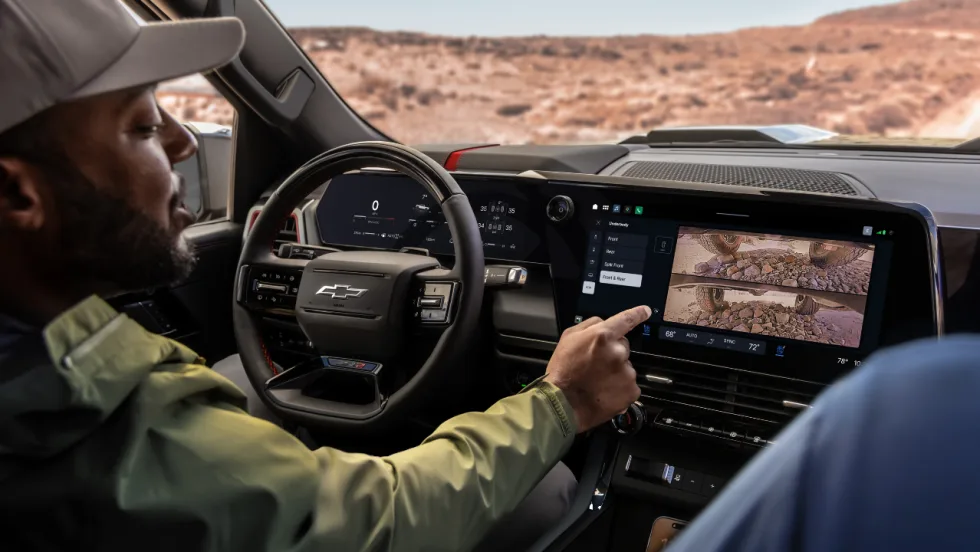
GM Brings New Truck Focused Interface to 2027 Silverado and Sierra
GM's new pickup interface puts trailering data, camera views, vehicle controls, and smartphone integration closer to the driver in the 2027 Silverado and Sierra.
Read More →
Samsara Driver Perks Expands Rewards Beyond the Long Haul Driver
Samsara’s new driver rewards program was built with a broader professional driver in mind, including employees who split their day between driving, job sites, service calls, and other work.
Read More →
AI Service Advisor Aims to Cut Fleet Repair Downtime
Fleetio said its AI Service Advisor can help fleets cut repair downtime by an average of 2.5 hours per repair while reducing manual maintenance work.
Read More →
Verra Mobility Launches AI-Driven Title & Registration Solution
Verra Mobility has launched a new AI-driven Title & Registration platform to help fleets move vehicles from acquisition to the road the same day while reducing compliance risk.
Read More →
Wialon Unlocks OEM Data to Give Fleet Owners Data Ownership & Operational Clarity
Wialon has introduced hardware-free OEM integration as the EU Data Act accelerates the shift in vehicle data access across the fleet industry in many countries.
Read More →